“The problem with secrets is that they’re like an illness. They start small, a cough, a sniffle, but left untreated, they can become a full-blown disease.”
— A reflection on the nature and danger of keeping secrets.

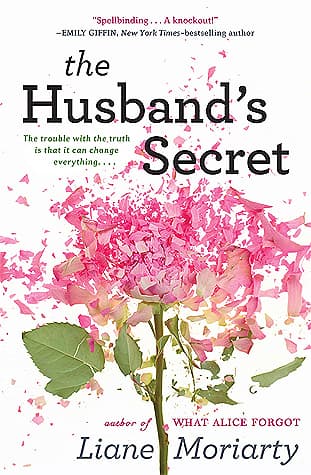
Liane Moriarty (2013)
Genre
Thriller / Mystery
Reading Time
450 min
Key Themes
See below
Sign in to track this book
A woman's perfectly ordered life falls apart when she finds a letter from her husband, revealing a devastating secret that affects other unsuspecting women.
Cecilia Fitzpatrick, a very organized mother of three and successful businesswoman in Sydney, Australia, finds an old envelope in her attic. It's addressed in her husband John-Paul's handwriting: 'To my wife Cecilia Fitzpatrick. To be opened only in the event of my death.' At first, she puts it back, but her curiosity grows. Meanwhile, Rachel Crowley, still sad about her teenage daughter Janie's unsolved murder decades ago, struggles with her son Rob's plan to move his family to New York. Tess O'Leary, Cecilia's distant cousin, moves back to Sydney with her son Liam after her husband Will admits he loves her best friend and business partner, Felicity.
Unable to stop herself, Cecilia opens John-Paul's letter. Inside, he confesses a terrible secret: he caused the death of Janie Crowley, Rachel's daughter, decades ago. He explains it was an accident – he was driving drunk, hit her, and left the scene in a panic. The news shatters Cecilia's perfect world and her view of her husband. She confronts John-Paul, who is upset and sorry, confirming what the letter said. He begs her to keep his secret, fearing it would destroy their family and his reputation, and hurt Janie's family.
Cecilia is torn by her discovery. She loves John-Paul, but knowing his crime makes it impossible to see him the same way. She thinks about going to the police, but the idea of ruining her children's lives and her own carefully built existence stops her. She also struggles with the unfairness to Rachel Crowley, who has lived for decades with the painful mystery of her daughter's death. Cecilia tries to act normal, but her inner battle is huge, affecting her sleep, appetite, and family interactions. The secret becomes a suffocating presence in their home.
Tess O'Leary settles into her new life in Sydney with her son Liam, staying with her mother. She tries to distance herself from Will and Felicity, but their shared business and history make it hard. Will often calls and visits, trying to win her back, saying he regrets his affair. Tess is caught between her remaining feelings for Will and her desire for self-respect and a fresh start. She enrolls Liam in the local school, where she meets Cecilia and Rachel, not knowing their connection. Tess also starts working for a public relations firm, trying to build an independent life.
Rachel Crowley remains focused on Janie's unsolved murder. Her son Rob and his family moving to New York brings back old pain, making her feel even more alone and desperate for answers. She often visits Janie's memorial, searches old newspaper clippings, and even contacts a retired detective, unable to give up hope of finding Janie's killer. Rachel also works at the local school, where she sees Cecilia and her children, and notices John-Paul's nervous behavior, though she doesn't directly link it to Janie.
At the school fair, all three women meet. Cecilia, still reeling from John-Paul's confession, tries to avoid Rachel. Tess, attending with Liam, watches the community. Rachel, working at a stall, has a brief, unsettling talk with John-Paul. She notices his discomfort and a flash of something in his eyes, a memory perhaps, that she can't place. This meeting, though seeming harmless to others, leaves Rachel with a vague unease and a feeling that John-Paul knows more about Janie's death than he lets on, though she can't explain why.
Overwhelmed by guilt and wanting justice for Rachel, Cecilia decides she can no longer keep John-Paul's secret. She approaches Rachel and, in a tearful confession, reveals that John-Paul was the hit-and-run driver who killed Janie Crowley. Rachel is completely devastated and angry, collapsing in shock and grief. The news, while giving an answer, shatters her world again. She confronts John-Paul, who has to face the results of his actions and the huge pain he caused. The community is shaken by the revelation, and John-Paul is arrested.
John-Paul is charged with Janie's death. The legal process begins, and the media comes to their quiet suburb. Cecilia and her children face public scrutiny and the painful truth of their father's crime. Rachel, while finally having answers, struggles with the complicated feelings of justice mixed with decades of hidden grief and anger. The community is split, with some supporting Cecilia and her children, others condemning John-Paul. Tess, seeing the chaos, thinks about how fragile life and secrets are, and her own relationship problems with Will take on a new meaning.
Seeing the destructive power of John-Paul's secret, Tess gets clarity on her own marriage. She realizes that while Will's infidelity was painful, it was not a deliberate act of malice like John-Paul's cover-up. Will, truly sorry, continues to fight for their relationship. Tess decides to give him another chance, understanding that forgiveness and rebuilding are possible, unlike the irreversible damage caused by John-Paul's actions. Their reunion is hesitant but hopeful, based on honesty and a renewed commitment to their family, a sharp contrast to the broken Fitzpatrick family.
The epilogue, set years later, shows the lasting effects. John-Paul serves time in prison, and his marriage to Cecilia ends. Cecilia, though changed forever, finds new strength and purpose. Rachel finds some peace but carries the scars of her loss. Tess and Will rebuild their marriage, valuing honesty above all. The story also introduces a new character, an elderly woman who, in a twist, reveals she was the one who actually hit Janie Crowley, not John-Paul, and that John-Paul, seeing the accident, had taken the blame to protect someone else. This final twist recontextualizes everything, adding another layer of tragedy and moral complexity.
The Protagonist
Cecilia transforms from a woman obsessed with control and appearances into someone willing to sacrifice her perfect life for truth and justice, ultimately finding a new, more authentic strength.
The Antagonist/Secret-keeper
John-Paul's arc is one of exposure and eventual reckoning, forcing him to face the devastating consequences of his actions and the truth he hid.
The Supporting/Victim's Mother
Rachel's arc is one of prolonged suffering leading to a painful truth, which, while providing answers, forces her to confront the complex reality of justice and forgiveness.
The Supporting/Parallel Storyline
Tess's arc is about navigating personal betrayal and rebuilding her life, ultimately choosing forgiveness and a renewed commitment to honesty in her marriage.
The Supporting
Will's arc involves acknowledging his mistakes, fighting for his family, and ultimately earning back Tess's trust through persistent effort and honesty.
The Mentioned/Catalyst
Janie's role is largely static as the victim, but the revelation of her killer and the circumstances surrounding her death brings closure, albeit painful, to her story.
The Supporting
Felicity's arc is not fully explored, but she represents the immediate, painful consequence of infidelity and the disruption it causes.
The Supporting
Rob's arc involves him trying to forge his own future while still being tied to his family's past tragedy, ultimately supporting his mother through the truth's revelation.
The main theme is how secrets, especially dark ones, can destroy lives and relationships. John-Paul's hidden truth about Janie's death slowly ruins Cecilia's perfect life, showing the weak foundation of their marriage. The decades of silence have tormented Rachel and created a barrier between John-Paul and true closeness. Even Tess's story shows how Will's secret affair, though less disastrous, still causes great pain and forces a re-evaluation of trust. The book demonstrates that secrets, no matter how well-kept, eventually demand a price.
“A secret is a seed, Cecilia. It's planted, and it grows, and it affects everything around it, even if you don't know it's there.”
The novel explores the complex nature of truth and justice. Is it always better to know the truth, even if it causes great pain? For Rachel, the truth about Janie's death brings a form of justice, but it doesn't remove her grief or decades of suffering. For Cecilia, revealing the truth means destroying her family. The book questions whether justice is only legal or if there is a moral, personal justice. The final twist further complicates this, suggesting that 'truth' itself can have many layers and be even more tragic than first thought, making the search for clear justice hard to achieve.
“She had wanted the truth. But the truth was a monster, and it was going to destroy everything.”
Cecilia Fitzpatrick represents the theme of striving for perfection, both in her home and her life. She carefully creates an image of an ideal wife, mother, and community member. However, John-Paul's secret shatters this illusion, revealing the messy, imperfect, and sometimes dark reality beneath the polished surface. The book suggests that trying to be perfect often comes at the cost of real honesty and vulnerability, and that true strength comes from facing imperfections rather than hiding them. Tess's initially perfect-seeming marriage also falls apart, showing that no relationship is safe from problems.
“Her house was perfect, her children were perfect, her life was perfect. And it was all a lie.”
Rachel Crowley's character embodies unresolved grief. Her daughter Janie's unsolved murder has left her emotionally stuck for decades, unable to move on or find peace. The story powerfully shows how grief, when not dealt with or given closure, can consume a person's life. Even after the truth is revealed, Rachel's pain doesn't magically disappear; it simply changes. The novel highlights the long-term, devastating psychological and emotional toll that loss and uncertainty can have on individuals and families.
“Grief was a house that had been built around her, and she had no idea how to get out.”
Both Cecilia and Tess's stories look at how fragile marriage is and how important trust is. Cecilia's marriage to John-Paul, built on an unspoken, devastating secret, breaks down once the truth is out. The betrayal is too deep to overcome. Tess's marriage to Will, though stressed by infidelity, finds a way to possibly heal because Will confessed his secret and actively seeks forgiveness. The novel compares these two situations to show that while betrayal can cause damage, the willingness to be honest and work through it is vital for a marriage's survival, whereas a deep, hidden crime can be impossible to fix.
“Marriage was a house built on trust, and John-Paul had burned it down.”
A letter from John-Paul to Cecilia, to be opened only after his death, containing his deepest secret.
This is the primary inciting incident and a classic MacGuffin, driving the entire plot. The existence of the letter creates immediate suspense and curiosity, both for Cecilia and the reader. It serves as the physical manifestation of John-Paul's secret, and its premature opening sets off the chain of events that unravels the lives of the main characters. It's a powerful symbol of buried truths and the consequences of their revelation, acting as a ticking time bomb within Cecilia's seemingly perfect life.
The story follows the separate lives of Cecilia, Rachel, and Tess before their eventual convergence.
The novel uses three distinct narrative threads, focusing on Cecilia, Rachel, and Tess. This allows the author to build tension and reveal character depth independently before their lives dramatically intersect. It creates a sense of foreboding as the reader knows these seemingly disparate stories are destined to collide due to John-Paul's secret. This structure also provides different perspectives on themes like secrets, grief, and marital breakdown, enriching the overall narrative and demonstrating the widespread impact of a single event.
The reader is aware of John-Paul's secret before Rachel or Tess, creating suspense and tension.
Dramatic irony is heavily employed, particularly once Cecilia reads the letter. The reader knows John-Paul's secret and its devastating implications, while Rachel continues to search for Janie's killer, unaware that he is living in her community. This creates constant tension, as the reader anticipates the inevitable confrontation and the fallout. It also heightens the emotional impact of scenes where Rachel interacts with John-Paul or Cecilia, as the reader understands the unspoken weight of the truth hanging between them.
A final revelation in the epilogue that recontextualizes John-Paul's secret.
The novel employs a significant twist in its epilogue, revealing that John-Paul was not actually the one who killed Janie Crowley, but rather covered for someone else (an elderly woman). This device serves to challenge the reader's perception of truth, justice, and culpability. It adds another layer of moral complexity to John-Paul's character, transforming him from a simple villain into a tragic figure who sacrificed his life for another. This twist forces a re-evaluation of all previous events and character judgments, leaving a lasting impact on the reader.
“The problem with secrets is that they’re like an illness. They start small, a cough, a sniffle, but left untreated, they can become a full-blown disease.”
— A reflection on the nature and danger of keeping secrets.
“How many secrets could one person have? And what did they do to you, those secrets? Did they make you stronger, or did they slowly eat away at your soul?”
— Cecilia ponders the psychological toll of secrets after discovering her husband's letter.
“Sometimes the most ordinary things are the ones worth holding on to.”
— A character reflects on the value of everyday life amidst significant turmoil.
“It was impossible to predict the ripple effect of a single action. One small stone thrown into a pond, and the waves just kept going.”
— The characters grapple with the far-reaching consequences of past decisions.
“The truth was like a wildfire. Once it started, it was almost impossible to contain.”
— A character considers the inevitability of the truth coming out.
“Grief was like a living thing, a shadow that followed you everywhere, even when you thought you’d outrun it.”
— Tess reflects on the lingering presence of grief after a significant loss.
“We all have a story, and sometimes, those stories are not as simple as they appear on the surface.”
— A general observation about the complexity of human lives.
“Sometimes good people do bad things. And sometimes bad people do good things. It’s not always black and white.”
— A character grapples with the moral ambiguity of actions and intentions.
“The past was never truly dead. It was just waiting for the right moment to resurface.”
— The characters experience how past events continue to influence their present.
“Love was a complicated thing. It could be a comfort, a joy, but also a burden, a responsibility.”
— A character reflects on the multifaceted nature of love.
“It was amazing how quickly life could change. One minute you were sailing along, thinking you had it all figured out, and the next, everything was upside down.”
— A sudden turn of events shifts a character's perception of their life.
“Forgiveness was a funny thing. You gave it to others, but sometimes, the hardest person to forgive was yourself.”
— A character struggles with self-forgiveness after making difficult choices.
“Every family had its secrets, its unspoken truths, its hidden pains. It was just a matter of how well they were kept.”
— A general observation about the dynamics of family relationships.
“The burden of knowing was sometimes heavier than the burden of not knowing.”
— Cecilia feels the weight of the truth after discovering her husband's secret.
Ready to see how well you understood this book? Take our interactive quiz with 10 questions.

Biography coming soon.







