“The forest knows many secrets, my lady. Some are best left undisturbed.”
— A warning given to Lady Anne by a wise old woman about the ancient forest.

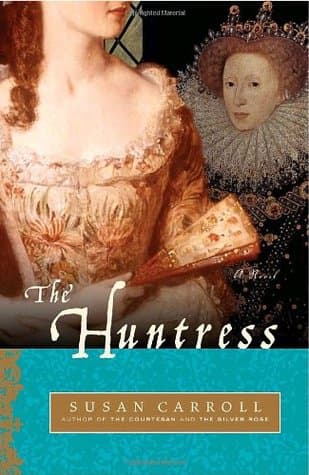
Susan Carroll (2007)
Genre
Fantasy / Historical Fiction / Romance
Reading Time
12-15 hours
Key Themes
See below
Sign in to track this book
In 1585, a weapon-wielding Huntress must protect a prophesied girl with world-altering powers from Catherine de Medici and the courts of Elizabeth I, even as the girl's own father poses a threat.
In 1585, with political tensions high between England and France, Catriona O'Hanlon, the Huntress, is called by her coven in Brittany. They speak of a prophecy: a 'daughter of the Earth' with great mystical powers is born, whose abilities could challenge Catherine de Medici, the Dark Queen. Catriona, a skilled warrior and tracker, is tasked with finding this child and protecting her from those who would use or harm her. The mission becomes urgent as rumors suggest Catherine's agents are already searching for the girl. Catriona must leave the familiar forests of Brittany for the dangerous courts of England, where the child is believed to be, relying on her instincts and fighting skills.
Catriona arrives in London, a city full of spies and political plots. She navigates Queen Elizabeth I's complex court, an environment very different from her home. Her initial investigations are slow and risky, as she must remain unnoticed by both English and French agents. She uses her subtle senses to detect magical energies, searching for any sign of the child. Catriona learns that the child's father is thought to be Lord Ashworth, a man whose loyalties are split between England and secret dealings with French groups, making him a possible threat or an unwitting pawn.
Catriona tracks Lord Ashworth, a man burdened by debt and political pressure. She watches him closely, noticing his conflicted manner. When she confronts him, Ashworth is at first wary and defensive, but Catriona's directness and subtle display of her own unusual abilities convince him. He reluctantly reveals that his daughter, Lyra, has extraordinary gifts – she can control nature and heal with a touch, confirming her as the prophesied child. Ashworth confesses he has been trying to protect Lyra from Catherine de Medici's agents and from those in England who might use her, but his resources are low, and he fears for her safety.
Catriona takes Lyra under her protection, forming a strong bond with the young girl. Lyra's powers, while amazing, are also uncontrolled, appearing in unpredictable ways and attracting unwanted attention. Catriona works to teach Lyra some basic control and to shield her. However, the search for the 'daughter of the Earth' grows more intense. Catherine de Medici's agents, including the sorceress Madame de Valois, close in. At the same time, English figures, suspicious of Ashworth's connections and Lyra's strange occurrences, also begin to investigate, creating multiple threats that Catriona must constantly avoid. Lord Ashworth, despite his flaws, helps them where he can, torn between his duty and his love for his daughter.
The pressure on Lord Ashworth becomes too much. Under duress or misinformation, a trusted servant or minor noble, to whom Ashworth confided, betrays Lyra's location to Madame de Valois. This leads to a dramatic confrontation and a narrow escape for Catriona and Lyra. They are forced to flee London, leaving the relative safety of Ashworth's estate. The escape is dangerous, involving chases through the city's streets and countryside, testing Catriona's combat skills and Lyra's developing abilities in a desperate fight for survival. Ashworth, devastated by the betrayal, promises to help them from afar.
On the run, Catriona and Lyra travel through the English countryside, finding refuge in hidden places and relying on Catriona's tracking and survival skills. During this time, Catriona helps Lyra understand and control her powers. Lyra, initially overwhelmed, slowly learns to use her connection to nature, healing small animals and influencing plant growth. Their bond deepens; Lyra sees Catriona as a protector and mentor, and Catriona finds purpose in guarding the child. They face various challenges, from harsh weather to suspicious villagers, but also experience unexpected kindness and natural beauty.
Madame de Valois, relentless in her pursuit, finally traps Catriona and Lyra in a remote area. The confrontation is a clash of mystical forces, with Valois using dark magic from Catherine de Medici's coven. Catriona, though not a sorceress, uses her senses and warrior skills to defend Lyra, deflecting spells and fighting in close combat. Lyra, pushed to her limits, unleashes a burst of her nature-based magic, creating a protective barrier of vines and thorns, temporarily repelling Valois. The encounter leaves them shaken but alive, with a clearer understanding of their formidable enemy.
Realizing the scale of the threat, Catriona sends a desperate plea for help to her coven in Brittany, using an ancient communication method. She hopes they can offer guidance or sanctuary. Meanwhile, Lyra's powers continue to grow quickly. She begins to show not just control over nature, but also an ability to sense others' intentions and glimpse possible futures. Catriona works to guide Lyra, understanding that the child's power is both her greatest strength and her greatest danger. They find temporary refuge in a secluded, old forest, a place that resonates with Lyra's natural magic.
Catherine de Medici, growing impatient, sets a trap, using false information to lure Catriona and Lyra into a vulnerable spot. Lord Ashworth, having tracked their movements and learned of the danger, realizes the only way to save his daughter is to create a diversion. He bravely confronts Catherine's agents, drawing their full attention, even at the cost of his own life. His sacrifice gives Catriona and Lyra precious time to escape, though it leaves Lyra heartbroken and Catriona with renewed urgency and determination.
The climax sees Catriona and Lyra cornered by Catherine de Medici's strongest forces, including Madame de Valois and French soldiers. The fight is intense, with Catriona fighting fiercely against overwhelming odds. Lyra, seeing the violence and the threat to her protector, makes a choice. Instead of using her powers for destruction or escape, she unleashes a wave of purifying, life-affirming energy that neutralizes the dark magic and disorients the attackers without harming them. She asserts her independence, refusing to be a pawn, showing the true, benevolent nature of her power.
After Lyra's powerful display, Catherine de Medici's agents are defeated and scattered, their dark magic inactive. Madame de Valois is stripped of her power or captured. The prophecy is fulfilled, not by force, but by the assertion of a new, benevolent power. Catriona, having completed her mission, chooses to stay with Lyra, as a mentor and friend. Lyra, no longer a child in hiding, begins to understand her role as a guardian of nature and a force for balance in a world of conflict. They start a new path, seeking to heal and protect, with Catriona's coven offering support and guidance.
The Protagonist
Catriona evolves from a solitary protector to a nurturing mentor, finding a deeper purpose beyond mere duty in her bond with Lyra.
The The Prophesied Child
Lyra transforms from a vulnerable, uncontrolled child into a powerful, self-aware guardian of nature, choosing peace over conflict.
The Supporting Character
Ashworth's arc is one of redemption, moving from a compromised, fearful father to a selfless protector who makes the ultimate sacrifice for his daughter.
The Antagonist
Catherine's arc is one of consistent villainy, her power and influence being challenged and ultimately thwarted, but not truly changed.
The Antagonist
Madame de Valois remains a steadfast agent of evil, her power and influence directly reflecting Catherine's, until she is defeated by Lyra's pure magic.
The Mentioned/Supporting
Elizabeth's role is largely static, serving as a powerful, historical backdrop against which the magical conflict unfolds.
The Supporting
The coven's role is to initiate the quest and provide a spiritual anchor, remaining a constant source of wisdom and support.
The novel explores the balance between political power, often corrupt, and the inherent, healing power of nature. Catherine de Medici's dark magic represents the misuse of natural forces for selfish gain, while Lyra's abilities embody nature's benevolent and restorative aspects. Catriona, as a 'Huntress' connected to the wild, bridges these worlds, fighting to protect the natural order. The conflict shows how human ambition can disrupt natural harmony, and how true power may lie not in domination, but in connection and stewardship, as seen when Lyra's pure magic neutralizes Valois's dark arts.
“''The true power, child, is not to command, but to be one with the Earth, to listen to its heartbeat and mend its wounds.''”
A main theme is fierce, selfless protection, whether biological or chosen. Catriona, though not Lyra's biological mother, develops a deep, protective bond, becoming a mother figure who risks everything for the child. This contrasts with Lord Ashworth's more compromised paternal protection, highlighting different aspects of parental love and sacrifice. The entire mission stems from the coven's desire to protect a vulnerable child from exploitation, echoing ancient stories of a 'divine child' needing protection, and showing how love and guardianship can go beyond bloodlines.
“''She was not of my blood, but her beating heart was now intertwined with mine, and I would face hell itself to keep it safe.''”
The story deals with prophecy and whether destiny is set or shaped by individual choices. Lyra is born into a prophecy, destined to either challenge or be used by the Dark Queen. However, her choice to use her powers for healing and balance, rather than conflict, shows free will that goes beyond the initial prediction. Catriona's mission, guided by prophecy, is carried out through her own decisions and actions, suggesting that while fate may set the stage, individual courage and morality dictate the outcome. The 'daughter of the Earth' fulfills her destiny by choosing her own path.
“''The stars may whisper of what is to come, but it is in the heart of the individual that destiny finds its true voice.''”
The novel shows how power, especially unchecked and self-serving power, can corrupt. Catherine de Medici is the main example; her ambition leads her to use dark magic and manipulate nations for personal control. Her agents, like Madame de Valois, are extensions of this corruption, driven by cruelty and a desire to serve their powerful mistress. This contrasts sharply with Lyra's pure, untainted power, which naturally seeks balance and healing. The story serves as a warning against the tempting nature of absolute power and its potential to destroy.
“''Power, when grasped too tightly, becomes a poison, consuming all it touches, even the hand that wields it.''”
A foretelling of a powerful child who will challenge the status quo.
The prophecy acts as the central inciting incident, driving Catriona's quest and establishing the stakes of the entire narrative. It creates a sense of urgency and destiny, framing Lyra's existence as pivotal to the balance of power between light and dark magic, and between the political machinations of two queens. It serves to both foreshadow Lyra's immense potential and justify the extreme measures taken by both those who seek to protect her and those who seek to control or destroy her.
The extraordinary mystical abilities of Lyra, sought by multiple factions.
Lyra's unique and potent connection to nature, her ability to heal and influence the natural world, functions as a MacGuffin. It is the object of desire for Catherine de Medici (who wants to control or eliminate it) and the object of protection for Catriona and her coven. While Lyra is a character, her specific powers are the driving force of the plot, dictating chases, conflicts, and alliances. The reveal and development of these powers are central to the story's progression and climax.
Catriona's exceptional combat, tracking, and intuitive abilities.
Catriona's specialized skills, honed by her coven and her life in the wild, serve as a crucial plot device enabling the narrative. Her prowess with weapons, her acute senses, and her intuitive understanding of danger allow her to track Lyra, navigate dangerous courts, evade capture, and defend against both mundane and magical threats. Without her specific abilities, the mission to protect Lyra would quickly fail, making her skills not just character traits, but essential tools for advancing the plot and resolving conflicts.
The espionage and shifting loyalties within the courts of Elizabeth I and Catherine de Medici.
The historical setting of 16th-century European courts, rife with spies, shifting alliances, and religious tensions, acts as a constant source of conflict and complication. This backdrop provides the perfect environment for secret missions, betrayals, and the constant threat of discovery. The political machinations of Queen Elizabeth and Catherine de Medici directly influence the dangers Catriona and Lyra face, adding layers of non-magical, yet equally perilous, obstacles to their journey. It grounds the fantasy elements in a tangible, historical reality.
“The forest knows many secrets, my lady. Some are best left undisturbed.”
— A warning given to Lady Anne by a wise old woman about the ancient forest.
“Love is a wild thing, Anne, not to be tamed by convention or expectation.”
— Lady Anne reflects on her unconventional feelings for the enigmatic hunter.
“Every creature has its place in the great tapestry of life, even the ones we fear.”
— The Huntress's philosophy about the balance of nature.
“A true heart does not seek to possess, but to understand and protect.”
— A lesson learned by the protagonist about the nature of genuine affection.
“The past is a whisper, the future a dream. Only the present holds true power.”
— A mystical character's perspective on time.
“Sometimes, the greatest strength lies in vulnerability, in daring to show your true self.”
— Lady Anne contemplating the risks of revealing her feelings.
“Magic is not a trick, child. It is the breath of the world, flowing through all things.”
— An explanation of magic's true nature by a powerful practitioner.
“Fear is a cage, forged by our own minds. Break free, and you will find wings.”
— A mentor encouraging the protagonist to overcome her fears.
“The whispers of the ancient ones are not always heard with the ears, but with the soul.”
— Describing how ancient knowledge is perceived.
“To truly know a creature, you must walk in its tracks, feel the earth beneath its paws.”
— The Huntress explaining her deep connection to the wild.
“Duty can bind a heart, but it cannot extinguish the fire of desire.”
— Lady Anne struggles with her societal obligations versus her personal longings.
“The moon knows secrets the sun will never see.”
— A mystical reference to hidden knowledge and the nocturnal world.
“Destiny is not a road, but a river. It flows, changes, and sometimes, you must simply let it carry you.”
— A character's philosophical view on fate and free will.
“The greatest battles are often fought within the heart, not on the field of war.”
— Lady Anne's internal struggles throughout her journey.
Ready to see how well you understood this book? Take our interactive quiz with 10 questions.

Biography coming soon.







