“‘It’s a Snark!’ was the sound that first came to their ears, / And they cheered with a shout of delight.”
— The crew hears the Snark for the first time.

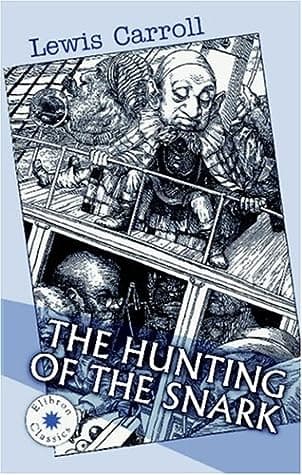
Lewis Carroll (1876)
Genre
Fantasy / Children's
Reading Time
30 min
Key Themes
See below
Sign in to track this book
In a world of pure nonsense, a peculiar crew goes on an absurd, rhyming quest to hunt the elusive, imaginary Snark, armed with thimbles, smiles, and a firm, if misguided, sense of hope.
The story begins with the Bellman, leader of an absurd expedition, gathering his crew of ten, all with names starting with 'B' (Baker, Butcher, Barrister, etc.). He explains their quest to hunt a mysterious creature, the Snark. The Bellman's map is a blank sheet of paper, which he says represents the vastness of the ocean. His compass points randomly. He then describes the five marks of a Snark, warning them about the most dangerous kind: the Boojum, a Snark whose gaze makes the viewer 'softly and suddenly vanish away, and never be met with again.'
The Bellman continues his unhelpful briefing, detailing the Snark's habits and preferences. He says Snarks like bathing machines, are late for the train, and enjoy arguments. He also lists the tools and methods the crew will use: thimbles, care, forks, hope, railway-shares, smiles, and soap. He stresses that the hunt is serious, despite its nonsensical nature, and that the crew must work together. The crew, despite their varied jobs, seems to accept the Bellman's leadership and the peculiar rules of their quest.
One crew member, the Baker (whose real name is 'Bill'), admits his great fear of the Snark, especially the Boojum. He recalls a warning from his eccentric uncle: if he meets a Boojum, he will 'softly and suddenly vanish away.' This prophecy has haunted him, and he often forgets his own name, which he blames on his uncle's strange advice to 'never forget it.' The Baker's anxieties are clear, adding a sense of dread to the otherwise lighthearted absurdity of the poem.
The hunt officially begins. Each crew member uses their specific, often comical, methods to find the Snark. The Butcher, skilled but perhaps overzealous, tries to explain complex math to a Beaver, hoping to lure the Snark. The Barrister dreams of a courtroom drama with a pig and a Snark. The Banker, scared by the thought of a Snark, eventually goes mad and loses his money. The crew's uncoordinated efforts show the pointlessness and absurdity of their quest, as they search for a creature that may not even exist.
This section focuses on the strange interaction between the Butcher and the Beaver. The Butcher, despite his profession, acts as a tutor, trying to teach the Beaver geometry and other abstract ideas. The Beaver, at first uninterested, eventually shows some interest, though its understanding remains unclear. This scene further emphasizes the expedition's nonsensical nature, as the characters do things unrelated to hunting the Snark. It also shows the Butcher's mix of aggression and intellectual curiosity.
The Barrister shares a vivid and confusing dream with the crew. In his dream, he is in a courtroom where a pig is the plaintiff and a Snark is on trial for 'deserting its pig.' The jury has twelve animals, and the judge is an owl. The dream is chaotic and illogical, mirroring the poem's overall atmosphere. The Barrister's account further highlights the Snark's elusive and fantastical nature, as it appears even in the hunters' subconscious minds, though in a distorted way.
The Banker, already nervous and easily frightened, has a terrifying experience. He believes he sees a Snark, an event that shatters his sanity. He falls into madness, losing all his money and his mind. His fear of the Snark, a constant feeling, finally overwhelms him. This incident serves as a warning to the other crew members about the dangers of their quest, even if the Snark itself remains unseen and its true nature unknown.
The Baker, filled with sudden excitement and hope, rushes ahead of the crew. He spots a creature, which he joyfully calls a Snark. His triumph is short-lived. As he calls out to the others, his voice fades, and he 'softly and suddenly vanish[es] away.' This fulfills his uncle's prophecy: he has met a Boojum, the most dangerous kind of Snark. The crew is left in shock and disbelief, confirming the dire warnings.
The remaining crew members rush to where the Baker was last seen, but they find nothing. The Baker is gone, vanished without a trace, just as foretold. The poem ends with the realization that the Snark they hunted was indeed a Boojum, and the Baker met the fate described in his uncle's warning. The expedition ends not with triumph, but with loss and the chilling confirmation of a fantastical danger. The Snark remains a mystery, its existence confirmed only by the Baker's disappearance.
The Protagonist/Leader
The Bellman remains steadfast in his peculiar leadership, never wavering in his conviction, even in the face of the Baker's disappearance.
The Protagonist
The Baker's journey culminates in the fulfillment of his uncle's prophecy, as he vanishes after encountering the Boojum.
The Supporting
The Butcher remains a consistent figure, showcasing his peculiar blend of strength and intellect throughout the hunt.
The Supporting
The Barrister's character is largely static, serving to introduce a bizarre legal dream that reflects the poem's absurdity.
The Supporting
The Banker's arc is one of descent into madness, driven by his overwhelming fear of the Snark.
The Supporting
The Beaver's arc is minimal, showing a slight progression from apathy to mild engagement in the Butcher's lessons.
The Antagonist/Mysterious Goal
The Snark remains an elusive, mysterious entity throughout, only confirming its terrifying Boojum form through the Baker's disappearance.
The Antagonist
The Boojum's arc culminates in the fulfillment of its deadly prophecy, claiming the Baker as its victim.
Carroll consistently upends usual logic and language throughout the poem. The Bellman's blank map, random compass, and contradictory Snark descriptions all show the uselessness of applying rational thought to an irrational world. The characters' hunting methods—using thimbles and soap—are inherently nonsensical, showing the poem's embrace of the absurd. This theme challenges the reader to find meaning in the illogical, reflecting the nature of nonsense literature, where the journey is more about the bizarre experience than a clear solution. The Barrister's dream of a pig suing a Snark is another clear example.
“He had forty-two boxes, all carefully packed, / With his name painted clearly on each: / But since he forgot his own name when he snacked, / He never could remember to teach.”
The Snark, especially its Boojum form, represents the ultimate unknown and the fear it causes. The Baker's constant worry and eventual disappearance due to the Boojum show the destructive power of this fear. The crew goes on a quest for something vaguely defined and potentially dangerous, reflecting humanity's natural apprehension towards what cannot be understood or controlled. The Banker's descent into madness after a perceived encounter with a Snark further shows how the unknown can destroy sanity, even without a direct, physical threat.
“For the Snark's a peculiar creature, that won't / Be caught in a commonplace way. / Do all that you know, and don't do what you don't; / And don't waste your time in a play.”
The entire expedition to hunt the Snark appears as a pointless effort from the start. The Bellman's inadequate tools and instructions, combined with the Snark's elusive and undefined nature, suggest that success is impossible. Each character's bizarre and ineffective hunting methods further emphasize this futility. The final outcome—the Baker vanishing without the Snark ever truly being 'caught' or understood—shows that the journey itself, with all its absurdities and dangers, is the only real 'event,' rather than a successful capture. The quest is pointless, yet the characters pursue it with firm, if misguided, determination.
“They sought it with thimbles, they sought it with care; / They pursued it with forks and hope; / They threatened its life with a railway-share; / They charmed it with smiles and soap.”
Despite its clear nonsensical nature, the poem invites readers to find deeper meanings within its absurdity. The illogical events and characters can be seen as a comment on various parts of life, such as the pursuit of impossible goals, the irrationality of human behavior, or the random nature of existence. The poem shows that meaning can come even from chaos and that seeking understanding, even when faced with the incomprehensible, is a human effort. The mix of humor and underlying dread contributes to this complex interaction between nonsense and possible meaning.
“And the Banker, inspired with a courage so new / It was hardly, he felt, his own, / Was heard to exclaim, 'Let us take it as true / That the Snark is a species of Bohn!'”
Poetry characterized by its deliberate illogicality and playful use of language.
Nonsense verse is the fundamental device of 'The Hunting of the Snark.' Carroll employs absurd situations, illogical arguments, and whimsical wordplay to create a world where conventional rules do not apply. This device is evident in the Bellman's blank map, the contradictory descriptions of the Snark, and the nonsensical methods used to hunt it. It challenges the reader's expectations of narrative coherence, inviting them to embrace the joy of the illogical and the creative freedom of language itself. The humor and charm of the poem derive directly from its commitment to nonsense.
A prediction of future events, often with a sense of inevitability.
The prophecy delivered by the Baker's uncle regarding the Boojum is a crucial plot device. It introduces a specific, terrifying danger into the otherwise whimsical narrative, creating a sense of foreboding. The repeated mention of 'softly and suddenly vanish away' builds tension and ensures that the Baker's ultimate fate feels both shocking and inevitable. This device transforms the abstract fear of the Snark into a concrete, personal threat, giving the hunt a tragic dimension and fulfilling the narrative arc of the Baker's character.
The use of characters or events to represent abstract ideas or principles.
While 'The Hunting of the Snark' is primarily a work of nonsense, it can be interpreted allegorically. The Snark itself can symbolize elusive goals, abstract concepts, or even death. The various crew members, with their distinct professions, could represent different facets of human society or approaches to problem-solving, all ultimately rendered ineffective in the face of the unknown. The quest itself can be seen as an allegory for life's journey, filled with arbitrary rules, unexpected dangers, and an often ambiguous purpose, where the pursuit is more significant than the attainment of a clear goal.
Recurring patterns of characters with universal traits or roles.
Carroll uses character archetypes to populate his crew, even while subverting their traditional roles. The Bellman acts as the 'leader' (albeit a misguided one), the Baker as the 'fearful one,' the Butcher as the 'strong but sensitive one,' and the Barrister as the 'intellectual.' These archetypes provide a familiar framework for the reader, even as their actions and dialogue are entirely unconventional. By employing these recognizable types within a nonsensical context, Carroll highlights the inherent absurdities of human nature and societal roles when confronted with the truly bizarre.
“‘It’s a Snark!’ was the sound that first came to their ears, / And they cheered with a shout of delight.”
— The crew hears the Snark for the first time.
“‘You may seek it with thimbles—and seek it with care; / You may hunt it with forks and a hope; / You may threaten its life with a railway-share; / You may charm it with smiles and soap—’”
— The Bellman describes various ineffective methods for hunting the Snark.
“‘For the Snark, ever eager to go on new quests, / Is a creature of infinite jest.’”
— The Bellman further characterizes the Snark.
“‘He had forty-two boxes, all carefully packed, / With his name painted clearly on each: / But, since he omitted to mention the fact, / They remained on the top of the beach.’”
— The Baker's luggage is left behind due to a lack of communication.
“‘But oh, beamish nephew, beware of the day, / If your Snark be a Boojum! For then / You will softly and suddenly vanish away, / And never be met with again!’”
— The Baker recalls his uncle's warning about the dangerous Boojum.
“‘They sought it with thimbles, they sought it with care; / They pursued it with forks and hope; / They threatened its life with a railway-share; / They charmed it with smiles and soap.’”
— The crew actively hunts the Snark using the methods described by the Bellman.
“‘There was one who was famed for the number of things / He forgot when he entered the ship: / His slippers, his toasting-fork, even the springs / Of that grand Patent Double-Edged Clip.’”
— Description of the Baker's absent-mindedness.
“‘The Bellman himself they all praised to the skies— / For his skill in inventing such names: / But they added, ‘As soon as we’ve caught it, it dies!’ / Which shewed that they weren’t playing games.’”
— The crew's appreciation for the Bellman's naming skills, coupled with their serious intent.
“‘He had bought a large map representing the sea, / Without the least vestige of land: / And the crew were much pleased when they found it to be / A perfect and absolute blank.’”
— The Bellman's map proves to be entirely blank, yet the crew is pleased.
“‘He had forty-two boxes, all carefully packed, / With his name painted clearly on each: / But, since he omitted to mention the fact, / They remained on the top of the beach.’”
— The Baker's luggage is left behind due to a lack of communication.
“‘It was a Snark, by the way, that he thought it was, / And he said so in solemn tones: / For he knew very well that the Snark of the Snarks / Was a creature of infinite bones.’”
— The Barrister's musings on the nature of the Snark.
“‘In the midst of the word he was trying to say, / In the midst of his laughter and glee, / He had softly and suddenly vanished away— / For the Snark was a Boojum, you see.’”
— The Baker vanishes after encountering what he believes is the Snark.
“‘And if ever I meet with a Boojum again, / I will give him a sound box on the ear.’”
— The Bellman's resolute, if futile, declaration after the Baker's disappearance.
“‘They knew that a Snark was a Snark, and no more— / Nothing more, and nothing less.’”
— The crew's simple understanding of their quarry.
Ready to see how well you understood this book? Take our interactive quiz with 10 questions.
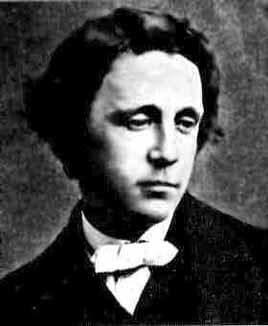
Charles Lutwidge Dodgson, better known by his pen name Lewis Carroll, was an English author, poet and mathematician. His most notable works are Alice's Adventures in Wonderland (1865) and its sequel Through the Looking-Glass (1871). He was noted for his facility with word play, logic, and fantasy. His poems Jabberwocky (1871) and The Hunting of the Snark (1876) are classified in the genre of literary nonsense.







