“The past is a stubborn thing. It clings to you, no matter how hard you try to shake it off.”
— A character reflecting on the lasting impact of past events and decisions.

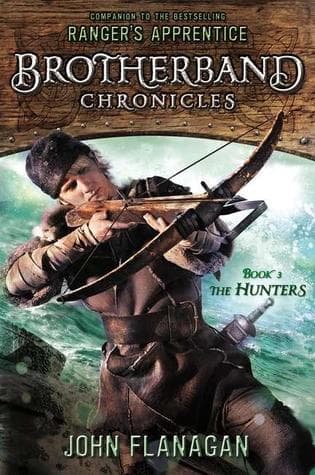
John Flanagan (2012)
Genre
Literary Fiction / Historical Fiction
Reading Time
540 min
Key Themes
See below
Sign in to track this book
In a land ruined by plague, a desperate father and his daughter journey through ancient, monster-haunted forests to find a mythical cure, only to learn the real horror is in the choices they make to survive.
Will, a Ranger apprentice, is sent by Halt to the northern village of Caraway to investigate reports of disappearing livestock and a missing boy. Caraway is isolated, and its villagers rely on hunting. Will finds the villagers scared and superstitious, blaming the disappearances on a mythical beast. While tracking, Will meets Mauric, a silent hunter on a similar quest but unwilling to talk. Will's first attempts to find clues are difficult because of the harsh winter and the villagers' unwillingness to share information, leading him to think there is more to the story than just animal attacks.
Following tracks in the snow, Will confirms a large, unusually coordinated wolf pack, bigger and smarter than typical. However, his Ranger instincts tell him wolves alone would not abduct a child without leaving clearer signs of a struggle or a body. He finds subtle clues suggesting human involvement, such as hidden tracks and no blood where a killing should have happened. He watches Mauric's movements, noting the hunter's excellent tracking skills and quiet efficiency, which deepens the mystery of who Mauric is and what his goal in Caraway might be.
Concerned by Will's lack of progress and the increasing reports, Halt arrives in Caraway. His presence brings a new level of scrutiny to the situation. Working together, Halt and Will combine their skills, with Halt's experience adding important insights. They soon confirm that the wolf attacks are a cover for a more serious operation: human hunters, led by a ruthless man named Kael, are abducting villagers, especially children and young adults, for unknown reasons. The wolves are used to herd and distract, creating fear that stops villagers from looking too closely at the real criminals.
Once the truth about Kael's human trafficking is known, Halt and Will, now reluctantly allied with Mauric, pursue them into the northern mountains. Mauric shows himself to be an unmatched tracker, driven by a personal vendetta against Kael. The chase is difficult, with harsh weather, hard terrain, and the need to move silently. They follow Kael's cleverly hidden trail, realizing the hunters are taking their captives to a hidden stronghold deep in the wilderness, far from any settlements.
As they get closer to Kael's hidden camp, Halt and Will uncover the truth behind the abductions. Kael is not just a trafficker; he and his men are part of a barbaric cult that practices human sacrifice, believing it will give them power from dark spirits. The abducted villagers are meant for ritual killings, a discovery that strengthens the resolve of Halt, Will, and Mauric. The mission becomes more urgent as they realize they are saving lives from a terrible fate.
Locating Kael's stronghold – a cave system fortified with crude defenses – Halt, Will, and Mauric plan their assault. The stronghold is well-guarded, and the terrain is dangerous, making a direct attack impossible. They plan to use their Ranger skills in stealth and archery, combined with Mauric's knowledge of mountain passes, to infiltrate the camp. Surprise is key as they aim to disable the guards and free the captives before the cult can perform their rituals. The severe weather adds another difficulty to their mission.
The infiltration quickly turns into a fierce battle. Halt's cunning and archery skills are clear, as are Will's developing skills with the bow and sling. Mauric, a powerful warrior with his axe, fights with silent, deadly efficiency, clearly driven by personal revenge. They face Kael and his fanatical followers, who fight with desperate passion. The Rangers prioritize the safety of the disoriented and terrified captives. Amidst the chaos, they manage to secure the villagers, but the fight for the stronghold and Kael's defeat is not over.
During the chaotic battle, Mauric finally corners Kael. It is revealed that Kael was responsible for the death of Mauric's family years ago, and Mauric has been tracking him ever since. Their confrontation is brutal and personal, the end of Mauric's long quest for vengeance. While Halt and Will handle the remaining cultists and ensure the safety of the rescued, Mauric swiftly and decisively kills Kael, fulfilling his grim promise. The act is cold and efficient, reflecting Mauric's years of single-minded pursuit.
With Kael and his cultists defeated, Halt, Will, and Mauric secure the stronghold and neutralize any remaining threats. They then begin the difficult journey back to Caraway, guiding the rescued villagers through the harsh wilderness. The villagers are weak and traumatized but relieved to be free. Upon their return to Caraway, there is a cautious celebration and deep gratitude from the community. Halt and Will begin reporting their findings and ensuring justice for the cult's crimes, bringing closure to the village's ordeal.
After the mission is complete and the rescued villagers are safe, Mauric, his vengeance fulfilled, quietly leaves without fanfare, disappearing into the wilderness as he had appeared. He leaves a lasting impression on Will, who has seen human cruelty and the resolve of a man driven by revenge. This mission is a significant step in Will's development as a Ranger. He has faced real evil, worked with a seasoned warrior, and used his skills under extreme pressure, showing his growing maturity and capability as an apprentice. Halt observes Will's growth with quiet pride, knowing his apprentice is becoming a formidable Ranger.
The Protagonist
Will begins as an apprentice on a solo mission, facing fear and uncertainty, and ends having proven his burgeoning skills and maturity in a life-or-death situation.
The Supporting
Halt's arc focuses on his role as a mentor, guiding Will through a dangerous mission while demonstrating his own unwavering commitment to justice.
The Supporting
Mauric's arc is one of singular, relentless vengeance, which he achieves by the end of the book, finding a grim closure.
The Antagonist
Kael's arc is one of escalating villainy, culminating in his defeat and death at Mauric's hands.
The Mentioned
Their arc is one of fear and victimization, leading to relief and gratitude after their rescue.
The Supporting
Their arc is one of collective villainy, culminating in their defeat and the collapse of their cult.
The Mentioned
Their role is static, serving as a plot device rather than having a character arc.
The theme of justice versus vengeance is key, mainly through Halt, Will, and Mauric. Halt and Will seek justice, aiming to stop Kael's crimes and protect the innocent as part of their Ranger duties. Mauric, however, is driven by personal vengeance for his family's murder. His single-minded pursuit and ultimate killing of Kael make the reader consider different reasons for seeking retribution and the satisfaction or emptiness that comes with it. The book explores if Mauric's vengeance, though brutal, is a form of justice in this lawless setting.
““There are some things that only death can atone for.””
"The Hunters" explores human evil, contrasting it with the 'evil' of wild animals. At first, the villagers fear a mythical beast, but the real horror is the calculated and ritualistic cruelty of Kael and his cult. This theme shows how human fanaticism and a desire for power can lead to terrible acts, more terrifying than any natural predator. The book portrays Kael's evil as cold, manipulative, and disturbing, showing the dark potential within humanity.
““The wolves were a distraction, a shield for something far more sinister.””
Will's journey in "The Hunters" is an important part of his growth as a Ranger. On his first major solo mission, he faces fear, uncertainty, and a terrible crime. Halt's arrival shows the importance of mentorship, providing guidance, experience, and support when Will needs it most. Through Halt, Will learns to use his skills under pressure, make difficult decisions, and confront evil. The mission strengthens his understanding of a Ranger's responsibilities and his own abilities, marking a step in his transition from apprentice to a capable Ranger.
““You handled yourself well, Will. Better than I expected, even.””
The harsh wilderness of the northern mountains acts almost as an antagonist. The characters must deal with brutal cold, dangerous terrain, and the need for self-sufficiency. This theme shows the resilience needed to survive in such an environment, for both hunters and hunted. Kael uses the wilderness to his advantage, creating a remote, impenetrable stronghold. The Rangers and Mauric, masters of the wild, must use their knowledge of the land to track, infiltrate, and survive their mission.
““The mountains themselves seemed to conspire against them, a silent, frozen enemy.””
The remote village of Caraway and its isolated people are central to the theme of isolation and the fear it creates. Cut off from larger communities and authority, the villagers are vulnerable to superstition and exploitation. Their fear of a mythical beast makes them easy targets for Kael's cult, who thrive on their isolation and terror. This theme explores how fear can paralyze a community and how isolation can make people susceptible to manipulation and danger, showing the vital role Rangers play in protecting even the most remote settlements.
““Fear was a palpable thing in Caraway, a thick, suffocating blanket.””
A misleading clue used to misdirect the initial investigation.
Initially, the disappearances in Caraway are attributed to an unusually large and coordinated wolf pack, which serves as a red herring. This misleads Will and the villagers, making them focus on a natural, albeit dangerous, threat. The true perpetrators, Kael's human cultists, use the wolves as a deliberate diversion, allowing them to abduct villagers without immediate suspicion. This device builds suspense and highlights the Rangers' need to look beyond the obvious, eventually revealing a far more sinister human element at play.
A mysterious character whose true motives and skills are gradually revealed.
Mauric is introduced as a silent, formidable hunter whose intentions are initially unclear to Will. He operates independently, tracking the same quarry as the Rangers, but for undisclosed reasons. This device creates intrigue and suspense around his character, making the reader question his allegiance. His eventual revelation as a man driven by personal vengeance against Kael adds a layer of emotional depth and a powerful, if grim, motivation to the narrative, making him a compelling and essential ally.
An isolated environment that enhances vulnerability and intensifies the threat.
The remote village of Caraway and the forbidding northern mountains serve as a crucial plot device by amplifying the sense of isolation and vulnerability. The distance from established law and order allows Kael's cult to operate with impunity, fostering fear and superstition among the villagers. The harsh, treacherous mountain environment also complicates the pursuit and rescue mission, making every step perilous and underscoring the Rangers' exceptional skills and resilience. This setting effectively heightens the stakes and the challenge faced by the protagonists.
Subtle hints that suggest a deeper, human-driven mystery.
From Will's initial investigation, subtle clues foreshadow the human involvement behind the disappearances, rather than solely wild animals. These include the unusual coordination of the wolf attacks, the lack of typical struggle or blood evidence for an animal killing, and deliberately obscured tracks. These details, though seemingly minor at first, prompt Will and later Halt to dig deeper, guiding them away from the obvious animal threat towards the more sinister human conspiracy, building anticipation for the eventual revelation of Kael's cult.
“The past is a stubborn thing. It clings to you, no matter how hard you try to shake it off.”
— A character reflecting on the lasting impact of past events and decisions.
“There are some things a man can never outrun, no matter how fast his legs or how clear his conscience.”
— A protagonist contemplating the inescapable consequences of his actions.
“In the wild, the hunter and the hunted are two sides of the same coin. One cannot exist without the other.”
— A seasoned hunter explaining the natural order of the wilderness to a younger companion.
“Fear is a weapon, but it can also be a shield. It depends on whose hands it's in.”
— A character discussing the dual nature of fear in combat or dangerous situations.
“The greatest battles are not fought with swords, but in the quiet chambers of the heart.”
— A wise elder offering counsel on internal struggles and moral dilemmas.
“Loyalty is a rare commodity. Once given, it should never be squandered.”
— A leader emphasizing the importance of trust and fidelity among his group.
“The forest keeps its secrets well, but it always whispers them to those who listen closely.”
— A character describing the hidden knowledge and mysteries of the natural world.
“Every man has a price, and some pay it with their soul.”
— A cynical observation about human corruption and moral compromise.
“It's not the arrow that kills, but the hand that guides it.”
— A mentor teaching a young archer about the importance of skill and intent.
“Sometimes, the only way to find your way home is to get lost first.”
— A character reflecting on a long journey and the detours taken to self-discovery.
“The weight of a promise can be heavier than any burden of war.”
— A character grappling with the solemnity and difficulty of keeping a vow.
“A true hunter respects his quarry, even as he takes its life.”
— An experienced hunter sharing his philosophy on the ethics of hunting.
“History is written by the victors, but the truth is often found in the shadows.”
— A character questioning official narratives and seeking alternative perspectives on past events.
“The greatest strength is not in never falling, but in rising every time you fall.”
— A character offering encouragement and resilience to someone facing defeat.
Ready to see how well you understood this book? Take our interactive quiz with 10 questions.

Biography coming soon.







