“The truth is that the islands were not made for humans, and humans were not made for the islands.”
— Piya reflects on the harsh, untamed nature of the Sundarbans.


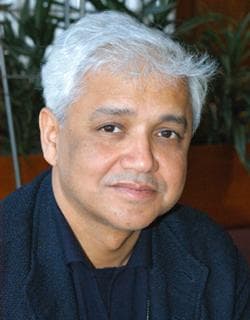
Amitav Ghosh (2004)
Genre
Literary Fiction / Historical Fiction
Reading Time
7-8 hours
Key Themes
See below
Sign in to track this book
In the tiger-filled Sundarbans, an American biologist's search for rare dolphins connects her with a local fisherman and a translator, pulling them into a political struggle as unforgiving as the landscape.
Piya Roy, an Indian-American cetologist, travels to Canning in the Sundarbans, a remote region of West Bengal, India. Her goal is to research the Irrawaddy dolphin, a rare species thought to live there. She struggles with the language barrier and local customs. While trying to find a boat and guide, she meets Horen, a government official who directs her to a local ferry. On the ferry, she accidentally drops her bag, containing her passport and research equipment, overboard. This leads to her first meeting with Fokir, a local fisherman, who bravely dives into the water to get her belongings.
After the ferry incident, Piya is grateful to Fokir for recovering her bag. Realizing she needs a translator for her research, she meets Kanai Dutt, a sophisticated businessman from Delhi visiting his aunt, Nilima. Kanai, fluent in English and Bengali, agrees to translate for Piya, partly out of curiosity and a desire to escape city life. He helps Piya and Fokir communicate. Fokir, despite being illiterate, knows the Sundarbans' waterways and wildlife intimately, making him an important guide for Piya's dolphin research.
Piya, Kanai, and Fokir set out on Fokir's fishing boat, the 'Balaram,' to explore the Sundarbans' waterways for Irrawaddy dolphins. The journey involves navigating strong tides and dense mangrove forests, with constant threats from crocodiles and tigers. Kanai translates Piya's scientific questions for Fokir, whose answers show a deep connection to nature. Piya observes the dolphins' adaptations to the brackish waters and begins to appreciate Fokir's intuitive understanding of the environment, which often goes beyond scientific knowledge.
While staying with his aunt Nilima in Lusibari, Kanai finds a sealed notebook among his uncle Nirmal's old papers. Nirmal, Nilima's deceased husband, was a poet and social worker. The journal details the Marichjhapi massacre in 1979, where thousands of Bengali refugees who had settled on Marichjhapi island were forcibly removed and many killed by the state government. This historical account deeply affects Kanai, revealing a darker history of the region. He begins to read passages to Nilima, who was also involved in the events.
Nirmal's journal gives a detailed, firsthand account of the Marichjhapi massacre. It describes how refugees from Bangladesh, displaced after the Partition, tried to build new lives on Marichjhapi island, but faced brutal resistance from the West Bengal government. The government, citing environmental concerns and legal reasons, deemed their settlement illegal. Nirmal’s writing portrays the refugees' struggle for survival, their attempts to farm the land, and the violent intervention by armed police that led to widespread death, starvation, and forced displacement. The journal highlights the injustice and human cost of the conflict.
As Kanai continues to read Nirmal's journal, he learns that Fokir's family was directly affected by the Marichjhapi massacre. Fokir was a child during the events, and his parents were among the refugees who tried to settle on the island. The journal tells of the bravery and strength of people like Fokir's parents, who fought for their right to live and farm land in the Sundarbans. This discovery adds a layer of personal tragedy and historical injustice to Fokir's character, explaining his deep connection to the land and his careful distrust of outsiders and authority.
As Piya's research continues, she spends more time with Fokir on the 'Balaram.' Despite the language barrier, a deep connection forms between them, based on their shared respect for nature. Piya is drawn to Fokir's honesty and his understanding of the Sundarbans. Kanai observes this developing bond with a mix of fascination and unease, feeling more like an outsider caught between Piya's science and Fokir's local knowledge. He also feels a growing responsibility to the historical truths found in his uncle's journal, which weigh on him.
A strong cyclone suddenly hits the Sundarbans, trapping Piya and Fokir in the waterways on the 'Balaram.' Kanai, who had returned to Lusibari, is left behind, worried for their safety. The storm is shown with intense detail, displaying nature's raw power in the region. Piya and Fokir struggle to survive, battling winds, rain, and waves. The 'Balaram' is tossed about, and they seek refuge where they can, relying on Fokir's navigation skills and knowledge of the dangerous environment.
Piya and Fokir survive the cyclone together, finding temporary shelter in an abandoned hut. During this difficult time, their bond deepens, moving beyond language and cultural differences. However, as the storm lessens, a large tidal wave crashes over their refuge. In an act of self-sacrifice, Fokir pushes Piya to safety, tying her to a tree, but he is swept away and drowns. Piya is left heartbroken, having witnessed his sacrifice. She is later found by a search party led by Kanai and local villagers, barely alive.
After the cyclone, Piya is rescued and recovers, but Fokir's death deeply affects her. She attends his funeral, feeling the community's grief. Kanai, also affected by the tragedy, takes responsibility for Fokir's family. He also decides to publish his uncle Nirmal's journal, recognizing the importance of sharing the truth about the Marichjhapi massacre and ensuring the voices of the marginalized are heard. Piya decides to stay in the Sundarbans longer, to continue her research, honor Fokir's memory, and contribute to the community's well-being.
Throughout these events, Nilima, Kanai's aunt, remains a strong and compassionate figure. Her organization, the Badabon Trust, continues its work providing healthcare and education to the poor communities of the Sundarbans. Despite setbacks and tragedies, including the Marichjhapi incident and the constant struggle against nature, Nilima's commitment to her people never wavers. She shows the lasting spirit of strength and hope in the face of great difficulty, providing a grounding force for both Kanai and Piya, and a living link to the region's complex history.
After grieving Fokir, Piya chooses to stay in the Sundarbans. Her scientific mission becomes more than just research; she dedicates herself to broader conservation, working to protect both the Irrawaddy dolphins and the fragile ecosystem, while also supporting local communities. She collaborates with Nilima's Badabon Trust, using her expertise to advocate for sustainable practices and raise awareness about the environmental and social challenges in the region. Her initial scientific detachment changes into a personal commitment, linking her professional goals with a sense of belonging and responsibility to the people and place that have changed her.
The Protagonist
Piya transforms from a scientifically detached researcher into a deeply empathetic individual, integrating her scientific knowledge with a profound understanding of human suffering and ecological interconnectedness. She finds a new purpose beyond pure research, committing to conservation and community aid.
The Supporting/Love Interest
Fokir remains steadfast in his connection to the land and his people, serving as a guide and protector. His arc culminates in a heroic act of self-sacrifice, solidifying his role as a symbol of the Sundarbans' enduring spirit and the sacrifices made by its people.
The Supporting/Narrative Catalyst
Kanai evolves from a detached observer to an engaged participant, taking responsibility for preserving the historical truth of the Marichjhapi massacre and supporting the local community. He finds a new sense of purpose beyond his urban life.
The Supporting/Moral Compass
Nilima remains a constant force of good and resilience, embodying the enduring spirit of humanitarianism in the face of adversity. Her work continues to provide a beacon of hope for the communities of the Sundarbans.
The Mentioned/Catalyst
Nirmal's arc is completed through his journal, which posthumously serves to expose historical injustices and inspire future generations to remember and act.
The Supporting
Moyna's arc is one of enduring the hardships of life in the Sundarbans, culminating in the tragic loss of her husband and the challenge of continuing to provide for her family.
The Supporting
Horen's role is largely functional, serving to initiate Piya's journey into the Sundarbans.
The Mentioned
Sudha's arc is implicitly tied to the future of the Sundarbans, representing the hope and vulnerability of its children.
The Sundarbans itself is a powerful presence, showing nature's relentless forces. The characters constantly face tides, cyclones, dangerous wildlife (tigers, crocodiles), and the sea. This theme is clear in Piya's journey, as her scientific understanding often meets the unpredictable power of the environment. Fokir, in contrast, represents harmony with nature, showing how survival depends on respect and intuition. The tragic ending, where Fokir dies in the cyclone, highlights humanity's vulnerability to nature's power.
“The tide country was a place of in-between things, a world of estuaries, where the river was not quite river, nor sea quite sea.”
The novel highlights the balance of the Sundarbans ecosystem and the need for its protection. Piya's scientific search for dolphins grows into a broader commitment to conservation, recognizing how species and habitats are connected. The impact of human activity, both from the Marichjhapi refugee settlement and the daily lives of fishing communities, is explored regarding environmental sustainability. The story supports the idea that conservation must include and benefit local populations, rather than pushing them aside, as seen in the government's approach to Marichjhapi.
“To be able to speak of the creatures of the tide country, of their lives and ways, was to acknowledge that the world was not made for humans alone.”
The contrast between Piya's Western scientific view and Fokir's local knowledge is a central part of this theme. The language barrier initially makes communication hard, but a deeper, non-verbal understanding develops between them. Kanai acts as a bridge, but even he struggles to fully translate the details of local culture and history. The novel questions the idea that one form of knowledge is better than another, suggesting that true understanding requires combining different perspectives. This is also clear in the historical conflict, where the government's 'modern' view clashed with the refugees' traditional ways of life.
“It was not just a question of words, but of worlds. Their worlds were so far apart that sometimes she wondered if they were even on the same planet.”
The Marichjhapi massacre symbolizes historical injustice and the silencing of marginalized voices. Nirmal's journal, found by Kanai, brings this hidden history to light, making characters and readers confront the ethics of development and state power. The novel argues for the importance of remembering and acknowledging past wrongs, for both victims and collective conscience. Kanai's decision to publish the journal and Piya's commitment to the community are acts of seeking justice and ensuring such tragedies are not forgotten.
“History was not a line, but a tide, always ebbing and flowing, always returning to the same shore.”
Piya, as an Indian-American, deals with her dual identity and her connection to her ancestral land. She initially feels like an outsider, but through her experiences and her bond with Fokir, she begins to find a sense of belonging in the Sundarbans. Kanai also confronts his urban identity when faced with the realities of the tide country and his family's history. The Marichjhapi refugees show the struggle for identity and belonging, desperately seeking a home, only to be denied by the state. The novel explores how place shapes identity and the human need for a sense of rootedness.
“She had always thought of herself as an American, but here, in this strange, beautiful, dangerous place, she felt a different kind of belonging.”
A discovered notebook that reveals the hidden history of the Marichjhapi massacre.
Nirmal's journal functions as a crucial narrative device, providing a parallel storyline that delves into the historical and political context of the Sundarbans. It serves as a window into the past, revealing the tragic Marichjhapi massacre and the plight of Bengali refugees. This journal not only educates Kanai (and the reader) about the region's complex history but also acts as a moral compass, challenging the characters' perceptions of justice, development, and human rights. Its discovery and subsequent revelation create a profound emotional and intellectual impact, intertwining personal narratives with larger historical injustices.
A devastating natural disaster that serves as a climax and turning point.
The cyclone is a powerful plot device that acts as the climax of the narrative, bringing the forces of nature to a devastating head. It forces Piya and Fokir into a life-or-death struggle, intensifying their bond and ultimately leading to Fokir's heroic sacrifice. The storm symbolizes the unpredictable and overwhelming power of the Sundarbans, highlighting humanity's vulnerability. It also serves as a catalyst for Piya's transformation, cementing her commitment to the region and its people, and for Kanai's realization of responsibility, pushing him to act on the truths revealed in his uncle's journal.
The rare river dolphin species that draws Piya to the Sundarbans.
The Irrawaddy dolphins are more than just a scientific subject; they serve as a symbolic plot device. They represent the fragile beauty and unique biodiversity of the Sundarbans, drawing Piya into this remote world. Their elusive nature reflects the hidden depths and mysteries of the region itself, both natural and human. As Piya's focus shifts from purely scientific observation to a broader understanding of the ecosystem and its human inhabitants, the dolphins become a symbol of the interconnectedness of all life in the tide country, and the need for holistic conservation efforts.
The linguistic divide between Piya and Fokir, necessitating Kanai's role.
The language barrier between Piya, who speaks English, and Fokir, who speaks Bengali, is a significant plot device. It initially highlights their cultural differences and Piya's outsider status, necessitating Kanai's role as an interpreter. However, as the story progresses, the barrier also underscores the development of a deeper, non-verbal understanding and emotional connection between Piya and Fokir, demonstrating that communication transcends mere words. It emphasizes the power of shared experience and empathy, while also illustrating the challenges of cross-cultural interaction and the limitations of purely intellectual understanding.
“The truth is that the islands were not made for humans, and humans were not made for the islands.”
— Piya reflects on the harsh, untamed nature of the Sundarbans.
“There are some things that cannot be done by machines. And there are some things that cannot be done by men.”
— Fokir muses on the limitations of both technology and human effort in the face of nature.
“They were people of the tide, their lives shaped by its ebb and flow, its bounty and its destruction.”
— Describing the inhabitants of the Sundarbans and their intimate connection to the water.
“For the Sundarbans, the forest and the water are one. They cannot be separated.”
— Kanai explains the unique, integrated ecosystem of the Sundarbans.
“Every creature, no matter how small, has a story, and every story is a part of the greater narrative of the world.”
— Piya's perspective as a cetologist, emphasizing the importance of all life.
“When you live in a place like this, the line between myth and reality becomes very thin.”
— Kanai reflects on the mystical elements and folklore prevalent in the Sundarbans.
“The river is like a god here. It gives, and it takes away.”
— A local's view on the powerful and unpredictable nature of the rivers in the delta.
“To be truly free, one must first understand the chains that bind them.”
— A philosophical thought on liberation, often in the context of historical injustice.
“The past is not dead. It is not even past.”
— A recurring theme in the novel, highlighting the enduring impact of history.
“Ghoramara, a place that exists only on the fringes of memory, a name whispered in hushed tones.”
— Referring to a lost island, symbolizing the transient nature of the delta.
“It was a loneliness that came not from being alone, but from the vastness of the world around her.”
— Piya's feeling of isolation amidst the immense, wild landscape.
“The tide never forgets. It always comes back for what is its own.”
— A metaphor for the relentless power of nature and the inevitability of change.
“There are many kinds of courage. Some are loud, and some are quiet.”
— Reflecting on the different forms of bravery exhibited by the characters.
“Language is a river, and it flows where it will, carrying all kinds of debris with it.”
— Kanai's contemplation on the nature of language and its fluid, encompassing quality.
Ready to see how well you understood this book? Take our interactive quiz with 10 questions.
Biography coming soon.







