“May the odds be ever in your favor.”
— A recurring phrase used by the Capitol to wish tributes luck in the Hunger Games.


Suzanne Collins (2008)
Genre
Fantasy / Science Fiction / Young Adult / Romance
Reading Time
19 hr 15 min
Key Themes
See below
Sign in to track this book
In a dystopian future, a defiant teenage girl from the poorest district volunteers for a brutal televised death match, igniting a rebellion against the tyrannical Capitol.
In the impoverished District 12 of Panem, sixteen-year-old Katniss Everdeen illegally hunts to feed her family. The annual Reaping ceremony for the 74th Hunger Games arrives, and her twelve-year-old sister, Primrose, is chosen as the female tribute. Katniss volunteers to take Prim's place, a rare act of defiance in their district. The male tribute selected is Peeta Mellark, a baker's son who once saved Katniss from starvation with a loaf of bread. They are taken to the Capitol, leaving behind their families and the only life they've ever known, to face a brutal battle to the death against twenty-two other tributes.
Upon arriving in the Capitol, Katniss and Peeta are prepped for the Games by their drunken mentor, Haymitch Abernathy, and their styling team, led by Cinna. During the pre-Games interviews, Peeta publicly declares his unrequited love for Katniss. This is a strategic move orchestrated by Haymitch to get sympathy and sponsors for them as 'star-crossed lovers' from District 12. Katniss is initially furious, believing it to be a ploy to make her appear weak, but she soon realizes the power of public perception in the arena. They train, where Katniss impresses with her archery skills, and form a tentative alliance, though trust remains fragile.
The Games begin, and Katniss narrowly escapes the initial bloodbath at the Cornucopia. She struggles to find water and food, relying on her hunting skills. She forms an alliance with Rue, a small, agile tribute from District 11, who reminds Katniss of Prim. Together, they plan to destroy the Career Tributes' food supply. This move is successful but costly. Marvel, a Career Tribute, kills Rue. Katniss, deeply affected, honors Rue's death by covering her body with flowers. This symbolic act of rebellion against the Capitol resonates throughout Panem.
After Rue's death, an announcement changes the rules: two tributes from the same district can now win if they are the last ones standing. This news immediately sends Katniss searching for Peeta, whom she finds severely wounded and camouflaged in the mud. She nurses him back to health in a cave, playing up their 'star-crossed lovers' act for the cameras, including sharing a kiss that earns them a pot of healing medicine from sponsors. Their bond deepens amidst the danger, blurring the lines between strategy and genuine affection, as they face the remaining tributes, including the formidable Cato.
As the Games near their end, the Gamemakers drive the remaining tributes, Katniss, Peeta, and Cato, to the Cornucopia, releasing mutated wolf-like creatures called 'mutts.' Cato is ultimately cornered and killed, leaving Katniss and Peeta as the last two survivors. However, the Gamemakers revoke the rule change, demanding one must kill the other. In a final act of defiance against the Capitol's control, Katniss pulls out a handful of poisonous nightlock berries, suggesting they both eat them. Faced with having no victor, the Gamemakers hastily declare both Katniss and Peeta winners of the 74th Hunger Games.
After their joint victory, Katniss and Peeta return to District 12, hailed as heroes. Their act of defiance with the berries has sparked unrest across Panem. President Snow visits Katniss, warning her that her actions are seen as rebellion and threatening her loved ones if she doesn't maintain the 'star-crossed lovers' façade. During their Victory Tour through the districts, Katniss sees subtle signs of rebellion, like the three-finger salute, and realizes the Capitol's grip is loosening. Peeta, unaware of Snow's threat, struggles with Katniss's emotional distance and the manufactured nature of their public romance.
As the 75th Hunger Games approaches, it is revealed to be a Quarter Quell, a special edition of the Games held every 25 years with unique rules. President Snow announces that for this Quell, the tributes will be chosen from the existing pool of victors from each district. This news means Katniss, as the only living female victor from District 12, will return to the arena. Peeta, as one of two male victors, also faces a high probability of selection. The Capitol's intention is clear: to eliminate the symbols of hope and rebellion that Katniss and Peeta have become, and to crush any rising dissent.
Katniss and Peeta are chosen for the 75th Hunger Games. In the Capitol, they strategically form alliances with other victors who also resent the Capitol, including Finnick Odair from District 4 and Johanna Mason from District 7. Haymitch advises them to make allies, hinting at a larger plan. The arena for this Quell is a giant clock, with each hour segment containing a different deadly trap. Katniss, Peeta, and their allies navigate the dangerous environment, facing electric force fields, blood rain, and aggressive jabberjays, all while trying to protect each other and understand the arena's secrets.
As the Quarter Quell progresses, Katniss realizes that many of the victors are working together, and the arena itself holds a secret. During a climactic moment, Katniss shoots an arrow into a weak point in the arena's force field, causing it to collapse and destroy the entire structure. A hovercraft from District 13 rescues her. She awakens to find Haymitch, Finnick, and Gale. She learns that there was a long-standing rebellion plan, and many of the victors were part of it, including Haymitch. However, the Capitol captured Peeta, Johanna, and Enobaria, leaving Katniss distraught.
Katniss is brought to the underground bunkers of District 13, which was believed to be destroyed but has been operating in secret as the heart of the rebellion, led by President Alma Coin. Initially resistant, Katniss eventually agrees to become the 'Mockingjay,' the propaganda symbol for the rebellion, to inspire the other districts. She films 'propos' (propaganda videos) in various war-torn districts, seeing the Capitol's brutality firsthand and fueling her desire for vengeance. She struggles with the psychological toll of the Games and Peeta's capture, as well as the manipulation by Coin and Plutarch Heavensbee.
The rebellion successfully conducts a raid on the Capitol to rescue Peeta and the other captured victors. However, upon his return, it is clear that Peeta has been 'hijacked' – tortured and brainwashed by the Capitol using tracker jacker venom to fear and hate Katniss, perceiving her as a mutt. He attempts to strangle her, and his recovery becomes a challenge for Katniss and the medical team. Katniss is devastated by his condition, feeling immense guilt and a fierce determination to help him recover, even as he struggles with his fragmented memories and violent impulses towards her.
As the war intensifies, Katniss joins a special squad, including Gale and Finnick, tasked with filming propos as they advance on the Capitol. Her true intention is to assassinate President Snow. The Capitol is transformed into a deadly battlefield, rigged with countless 'pods' – booby traps designed to kill the invading rebels. The squad faces relentless assaults, including exploding streets, hidden machine guns, and lethal 'mutts.' Many of her comrades are killed, including Finnick, in the brutal street-by-street fighting. This shows the devastating cost of war.
Near President Snow's mansion, a hovercraft drops bombs on a group of Capitol children. A second wave kills the medics rushing to help, including Prim. Katniss is devastated, realizing the bombs were similar to those designed by Gale and targeted at children to maximize civilian casualties and turn Capitol citizens against Snow. Snow, imprisoned, tells Katniss that Coin was responsible for the attack, a tactic to discredit him and secure her power. At Snow's public execution, Katniss, instead of killing Snow, shoots an arrow through President Coin, avenging Prim and preventing Coin from becoming a new tyrant.
After assassinating Coin, Katniss is arrested but later acquitted. She returns to a desolate District 12, suffering from severe PTSD and grief. Peeta, still recovering from his hijacking but slowly regaining himself, eventually returns as well. Together, they begin to rebuild their lives and their district, planting flowers and finding solace in their shared trauma and quiet companionship. Years later, they marry and have two children. Though the scars of the war and the Games remain, they find peace in their new, simple life, knowing that the Hunger Games are finally over, and they are free.
The Protagonist
From a self-preserving survivor, Katniss evolves into a reluctant revolutionary leader, ultimately choosing peace over continued violence.
The Protagonist/Love Interest
Peeta transitions from a strategic ally to a victim of Capitol torture, eventually recovering and finding a quiet life with Katniss.
The Supporting
Gale transforms from a loyal friend to a hardened rebel leader, his uncompromising ideology leading to a tragic separation from Katniss.
The Supporting
Haymitch moves from a jaded, alcoholic mentor to a crucial strategist and ally in the rebellion, finding purpose in fighting for a better future.
The Antagonist
Snow remains a steadfast antagonist, ultimately overthrown and executed, but his influence on Katniss's worldview persists.
The Supporting
Prim matures from a helpless child into a capable medic, only to be tragically killed, sparking Katniss's ultimate act of rebellion.
The Supporting
Cinna remains a steadfast, supportive figure for Katniss, his tragic death serving as a turning point for her commitment to the rebellion.
The Antagonist
Coin rises as a formidable rebel leader but reveals herself to be a power-hungry tyrant, ultimately assassinated by Katniss.
The Supporting
Finnick transforms from a seemingly superficial victor to a loyal ally and loving partner, ultimately sacrificing himself for the rebellion.
The Supporting
Johanna remains a hardened survivor and rebel, her bitterness a testament to the Capitol's cruelty, but she forms a bond with Katniss.
This theme explores Katniss's constant struggle for survival in the arena and her willingness to sacrifice everything for her loved ones. Her volunteering for Prim, her search for food and water, and her defiance with the nightlock berries all show the lengths to which individuals will go to preserve life and protect those they care about. This theme extends to the broader rebellion, where countless lives are sacrificed for the hope of freedom, as seen in the deaths of Rue, Cinna, Finnick, and ultimately, Prim.
““I volunteer! I volunteer as tribute!””
The Capitol uses the Hunger Games as media spectacle and propaganda to maintain control and instill fear. Katniss and Peeta are forced to play roles for the cameras, and their 'star-crossed lovers' act becomes a survival strategy. Later, the rebellion, led by District 13, also uses media, transforming Katniss into the 'Mockingjay' symbol through 'propos' to inspire the districts. This theme explores how stories are crafted and manipulated to control public perception and incite action, showing the blurred lines between truth and manufactured reality in times of conflict.
““A little hope is effective. A lot of hope is dangerous. A spark is fine, as long as it's contained.””
The Hunger Games trilogy shows the dehumanizing effects of war and oppression. The tributes are treated as pawns and entertainment, stripped of their individuality. Victors, like Haymitch and Finnick, are left with deep psychological scars and forced into prostitution or other forms of exploitation. Katniss herself suffers from severe PTSD, experiencing nightmares, emotional numbness, and difficulty forming relationships after her experiences. Peeta's 'hijacking' directly shows the Capitol's brutal psychological warfare, showing how war can twist and break the human mind, leaving lasting trauma on its survivors.
““You can torture us, starve us, burn us and throw us into arenas with wild animals, but you won't ever break us.””
The trilogy's story is about rebellion against tyranny. Katniss's initial acts of defiance, such as honoring Rue and the nightlock berry stunt, accidentally start a widespread uprising. The shift from individual acts of resistance to an organized, large-scale revolution led by District 13 is central. The theme explores the complexities of revolution, including the moral compromises, the inevitable violence, and the danger of replacing one tyrant with another, as seen in President Coin's ambition. It questions whether freedom is truly achievable without sacrificing core values.
““If we burn, you burn with us!””
Love, in its various forms, shapes identity and motivates characters. Katniss's love for Prim is her initial driving force. Her complex romantic relationships with Peeta and Gale make her confront her own feelings and priorities. Peeta's love for Katniss is unwavering, even through his hijacking. The theme also explores how external forces (the Games, the Capitol) try to define or erase identity, and how characters fight to retain their true selves. Katniss's journey is one of self-discovery, understanding her own heart and what truly matters to her beyond the fight.
““You love me. Real or not real?””
A controlled environment designed for televised death matches.
The arena is the primary setting for the first two books, serving as a meticulously designed, deadly battlefield. It is a sophisticated plot device, constantly manipulated by the Gamemakers to create drama and increase casualties. From the forest of the 74th Games to the clock-shaped arena of the Quarter Quell, its changing landscapes and pre-programmed dangers (fireballs, muttations, poisonous fog) directly drive the plot, force tributes into conflict, and test their survival skills. It symbolizes the Capitol's absolute power and its ability to turn human lives into entertainment.
A symbolic piece of jewelry that becomes a symbol of hope and rebellion.
The Mockingjay pin, given to Katniss by Madge Undersee (or found by Prim in the movie), starts as a small token of good luck. Its significance grows immensely after Katniss wears it into the arena, where the Mockingjay bird itself is a symbol of defiance (a muttation that survived despite the Capitol's intentions). It quickly becomes the visual emblem for Katniss and, by extension, the entire rebellion. This device provides a tangible, easily recognizable icon that unites the oppressed districts and fuels their hope, transforming a simple accessory into a powerful tool for revolution.
A strategic romantic ruse that garners sympathy and sponsors.
This is a crucial narrative device introduced by Peeta and Haymitch in the first Games. By publicly declaring his love for Katniss, Peeta creates a compelling storyline for the Capitol audience, earning them crucial sponsors who provide life-saving aid. This act blurs the lines between performance and genuine emotion, fueling internal conflict for Katniss and shaping her relationship with Peeta. It highlights the manipulative nature of the Games and media, showing how perceived narratives can be used for survival, even if they aren't entirely true.
A special edition of the Hunger Games with unique, more brutal rules.
The Quarter Quell is a recurring device every 25 years that significantly raises the stakes of the Hunger Games. The 75th Quell, which reaps tributes from the existing pool of victors, is a direct plot driver that forces Katniss back into the arena. It serves to eliminate powerful symbols of hope (the victors) and further terrorize the districts. This device allows for the introduction of new, experienced characters, creates a more complex and dangerous arena, and ultimately provides the catalyst for the full-scale rebellion by uniting the victors against the Capitol.
A Capitol brainwashing technique using tracker jacker venom.
Hijacking is a brutal psychological torture method employed by the Capitol, specifically used on Peeta. It involves using tracker jacker venom to distort memories and implant false ones, making the victim associate positive stimuli with negative feelings and vice versa, particularly targeting those they love. This device serves to demonstrate the Capitol's extreme cruelty and advanced psychological warfare. For the plot, it creates a major obstacle for Katniss and Peeta's relationship, showcasing the lasting trauma of war and forcing Katniss to confront a damaged version of the person she loves, adding a deep emotional layer to the final book.
“May the odds be ever in your favor.”
— A recurring phrase used by the Capitol to wish tributes luck in the Hunger Games.
“I volunteer as tribute!”
— Katniss Everdeen volunteers to take her sister Prim's place in the Hunger Games.
“Hope is the only thing stronger than fear.”
— President Snow discusses the power of hope with Katniss.
“Fire is catching! And if we burn, you burn with us!”
— Katniss's defiant speech to President Snow during the rebellion.
“Remember who the real enemy is.”
— Haymitch advises Katniss to focus on the Capitol, not other tributes.
“You don't forget the face of the person who was your last hope.”
— Katniss reflects on Peeta giving her bread when she was starving.
“I am not pretty. I am not beautiful. I am as radiant as the sun.”
— Katniss's internal thoughts after being styled for the Games.
“It takes ten times as long to put yourself back together as it does to fall apart.”
— Finnick Odair shares wisdom about recovery from trauma.
“Destroying things is much easier than making them.”
— Katniss reflects on the aftermath of war and destruction.
“I wish I could freeze this moment, right here, right now, and live in it forever.”
— Peeta expresses a desire to preserve a peaceful moment with Katniss.
“The only thing stronger than fear is hope.”
— A variation on President Snow's theme, emphasizing hope's power.
“I am the Mockingjay. The one that survived despite the Capitol's plans.”
— Katniss embraces her role as symbol of the rebellion.
“We save each other.”
— Katniss and Peeta discuss their mutual survival in the Games.
“It's the things we love most that destroy us.”
— President Snow warns Katniss about the dangers of attachment.
Ready to see how well you understood this book? Take our interactive quiz with 10 questions.
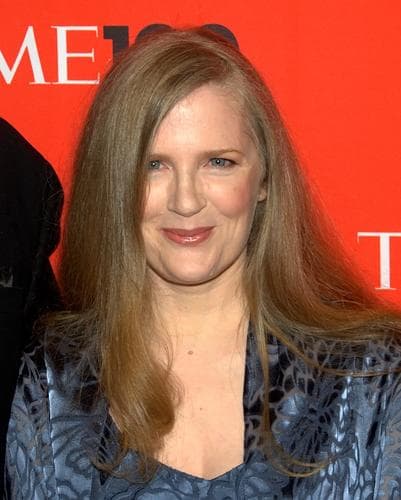
Suzanne Collins is an American author and television writer. She is best known as the author of the young adult dystopian book series The Hunger Games.







