“You can't know anything. The things you don't know are the things that matter.”
— Coleman Silk reflects on the unknowability of others and the secrets that define lives.

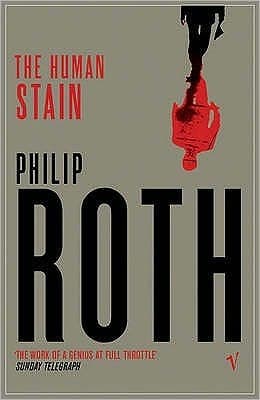
Philip Roth (1999)
Genre
Literary Fiction
Reading Time
720 min
Key Themes
See below
Sign in to track this book
In the public eye of 1998 America, a classics professor's carefully built life falls apart, revealing a fifty-year secret about identity, race, and the American dream.
In 1998, Coleman Silk, a seventy-one-year-old classics professor and former dean at Athena College in New England, finds his academic career ending. During a lecture, he calls two absent African-American students 'spooks,' not knowing their race or even that they exist. His colleagues use this remark as proof of racism, leading to a campus scandal and a formal hearing. Feeling unfairly treated and refusing to apologize for what he saw as a non-offense, Coleman resigns. The stress and shame contribute to his wife Iris's sudden death from a stroke. Coleman is left with grief and a strong desire to prove wrong the moral hypocrisy of the college faculty.
After Iris's death and his forced resignation, Coleman Silk contacts the writer Nathan Zuckerman, who lives nearby. Coleman feels a deep injustice and needs to tell his side of the story. He wants Zuckerman to write it, specifically to expose the 'human stain' of hypocrisy and moralizing he believes caused his downfall at Athena College. Zuckerman is unsure at first, not wanting to get involved in Coleman's personal fight, but he is interested by the professor's anger and the complex situation around his public shaming. Their first meetings set up a relationship where Coleman wants to control his story and Zuckerman seeks deeper truths.
Adding more scandal to his life, Coleman Silk begins an affair with Faunia Farley, a thirty-four-year-old illiterate cleaner who works at the college and on a local farm. Faunia has a difficult past, including child abuse and the accidental deaths of her two young children in a fire. Their relationship is unusual and very physical, driven by loneliness and a shared feeling of being outsiders. Faunia's rough manner, lack of education, and working-class background are very different from Coleman's intellectual world. This further fuels gossip and disapproval from his former colleagues and even his own children, who see the relationship as undignified for his age.
The affair between Coleman and Faunia is made harder and more dangerous by Faunia's ex-husband, Lester Farley, a troubled Vietnam veteran. Lester blames Faunia for their children's deaths and for leaving him. He becomes more unstable and violent. He stalks Faunia, leaving threats and showing up menacingly, convinced that Coleman is corrupting her. His increasing harassment is a constant threat to the couple, showing Faunia's vulnerability and Coleman's protective feelings. Lester's mental state and history of violence make him a truly dangerous person, casting a dark shadow over Coleman and Faunia's attempts to find comfort together.
As Zuckerman looks deeper into Coleman's past, interviewing his family and putting together clues, the truth about Coleman Silk's identity comes out. Coleman, born Steely Dan Silk, is a light-skinned African-American man from East Orange, New Jersey. He chose to 'pass' as white after serving in the Navy during World War II. He cut all ties with his family, including his mother, father, and siblings, to live a life free from racial prejudice and the limits on Black men in mid-20th century America. This discovery completely changes how Coleman's anger over the 'spooks' accusation is seen, showing deep irony and a lifetime of deception.
Zuckerman finds out the painful details of Coleman's youth in a respected Black family in East Orange. Coleman was a smart student, a good boxer, and loved by his family. However, he felt limited by the racial rules of his time and wanted to create his own identity. In the Navy, he felt free being seen as white and decided to permanently leave his past and family. This choice, made for individual freedom, came at a huge personal cost. He had to live a lie and deny his heritage, a secret he kept for over fifty years, even from his wife, Iris.
The truth about Coleman's identity makes the 'spooks' accusation very ironic. The man accused of racism by his white liberal colleagues and forced to resign was, in fact, African-American. He was a man who had given up everything to avoid the very racial category that caused his downfall. This irony highlights the novel's main ideas about identity, performance, and the destructive power of quick judgments. Coleman's anger, first seen as self-righteousness, is now understood as the fury of a man whose life, built on denying his race, was destroyed by an accusation of racial insensitivity – an accusation that, to him, was not only false but deeply, tragically wrong.
Despite society's disapproval and Lester's threats, Coleman and Faunia's relationship grows. They find in each other a shared feeling of being outsiders and survivors. Faunia, with her honesty and passion, gives Coleman a connection beyond his intellectual world. For Faunia, Coleman is a gentle, protective presence she rarely had. Their bond is physical, emotional, and very private, giving both of them a refuge from their pains and pasts. Their relationship, though scandalous to others, is shown as a real and important connection for two people on the edges of society.
Lester Farley's obsession with Faunia and his hatred for Coleman grows. He confronts them repeatedly, his mental state getting worse. He sends threatening letters, makes threatening calls, and even shows up where they are. Coleman, despite his age, tries to protect Faunia, but Lester's unpredictable and violent nature makes him a constant and scary threat. The police get involved, but their efforts are limited by Lester's cleverness and lack of clear evidence of direct physical harm. The growing tension around Lester creates a sense of dread, suggesting a tragic event is coming.
One winter night, Coleman and Faunia die in a car crash. The details are unclear at first, but Lester Farley later confesses to his lawyer that he caused the accident. He had been following them, waited for the right moment, and rammed their car off the road, killing them both. This tragic event ends their unusual love story and Coleman's complex, secret life. The deaths are surrounded by public guesses, with many assuming Coleman, being old, simply lost control of the car, never knowing the real, murderous reason behind it.
After Coleman and Faunia's deaths, Nathan Zuckerman feels he must put together the full story of Coleman Silk. He continues his research, interviewing Coleman's remaining family, including his sister Ernestine, who confirms Coleman's African-American heritage and the pain his 'passing' caused the family. Zuckerman also talks to Lester Farley's lawyer, who reveals Lester's confession about causing the accident. Through these accounts, Zuckerman slowly builds a complete story of Coleman's life, from his beginnings as a brilliant Black man to his reinvention as a white intellectual, and the tragic end of his life. He wants to understand the 'human stain' not just of hypocrisy, but of identity, secrecy, and the American racial experience.
Afterward, Zuckerman thinks about the meaning of Coleman's life and death. He considers the courage and great cost of Coleman's decision to 'pass,' a choice made to control his own life in a racially separated America. He considers the irony that Coleman, who spent his life denying his Blackness, became a victim of the very racial politics he tried to escape, though indirectly. Zuckerman's story becomes a reflection on identity, how we present ourselves, the destructive power of societal judgment, and the lasting complexity of the American experience. It leaves the reader to consider the real 'human stain' that affects individual lives and history.
The Protagonist
Coleman's arc moves from a position of respected academic and a man in control of his constructed identity, through public humiliation and personal tragedy, to a final, violent end that posthumously reveals the truth of his lifelong deception.
The Narrator and Supporting
Zuckerman evolves from a detached observer to an empathetic chronicler, deeply invested in understanding and narrating Coleman's extraordinary and tragic life, ultimately finding a renewed purpose in his craft.
The Supporting
Faunia's arc involves finding temporary solace and a measure of peace in her relationship with Coleman, only to be tragically cut short by her ex-husband's violence.
The Antagonist
Lester's arc is one of escalating mental deterioration and violent obsession, culminating in the murder of Coleman and Faunia.
The Supporting
Ernestine serves as a crucial figure who reveals the long-held secret of Coleman's identity, providing the missing pieces of his history to Zuckerman.
The Supporting/Mentioned
Iris's arc is brief and tragic, serving as a catalyst for Coleman's subsequent actions and grief.
The Supporting
Delphine Roux remains largely static, representing the judgmental, politically correct faction of the academic world that persecutes Coleman.
The Supporting
Walter's arc involves coming to terms, albeit reluctantly, with his father's unconventional choices and posthumously learning the truth of his heritage.
The novel explores how identity is made, shown, and changed. Coleman Silk's lifelong choice to 'pass' as white is the main example of this, showing his act of self-creation to escape racial limits in mid-20th century America. His identity is a performance, kept up for decades, and the revelation of his true background makes people re-evaluate everything he seemed to be. The book questions if one's true identity is from birth or chosen experience, and the great personal cost of such a deep deception.
“What do you do with a life that isn't yours? He'd wanted to be free. He'd wanted to be nobody. He'd wanted to be anybody but who he was.”
Roth looks at race in America, especially the historical practice of 'passing.' Coleman's choice to leave his African-American family and heritage shows the strict racial lines of the past and the desperate actions people took to escape their limits. The novel examines the societal pressures that led to such a choice and the irony that Coleman, a man who denied his Blackness his whole life, is undone by a racism accusation. It looks at how race, perceived or real, shapes one's life and how America deals with its own 'stain' of racial prejudice and classification.
“He chose not to be a Negro. He chose not to be a Jew. He chose not to be anything but himself.”
A main idea is the harm caused by moralistic judgment and public shaming. Coleman Silk's downfall begins with a racism accusation based on a misunderstanding, driven by the self-righteousness of his academic colleagues. The novel criticizes political correctness and how easily people can be condemned without real understanding or empathy. The 'human stain' refers not only to Coleman's secret but also to the moral failures of those who judge him, especially the intellectuals who claim moral superiority while often acting out of ignorance or personal reasons, like Delphine Roux.
“The human stain. And it is a stain. The stain that comes from being human.”
The unusual affair between Coleman Silk and Faunia Farley explores late-life desire, sex across age and class, and society's discomfort with such relationships. Their affair is physical and passionate, giving them both comfort and a defiant statement of life in the face of loss and disapproval. It challenges common ideas of romance and respectability, showing the judgmental attitudes of those around them. Their bond, though scandalous, is shown as a real and important connection between two outsiders finding refuge in each other.
“What she wanted from him, what he wanted from her, was an intimacy that went beyond words.”
Coleman's lifelong secret of passing as white is a heavy burden that isolates him and affects every part of his life. The novel shows the psychological toll of living a lie, the constant watchfulness needed to keep the deception going, and the emotional distance it creates even from loved ones. This idea explores how secrets, even those chosen for personal freedom, can become confining, affecting not only the person but also those around them, as seen in the shock and betrayal felt by his family when the truth comes out. The secret is both Coleman's protection and his weak spot.
“To be free, he had to be nobody. To be free, he had to be somebody else.”
A recurring Roth alter-ego who pieces together the story of Coleman Silk.
Nathan Zuckerman, a reclusive writer, serves as the primary narrator, but his narration is not omniscient. He reconstructs Coleman Silk's story through interviews, speculation, and his own interpretations, creating a layered and somewhat subjective account. This device allows for the gradual unveiling of Coleman's secret, mirroring Zuckerman's own process of discovery. It also provides a meta-commentary on the act of storytelling itself, the challenges of knowing another person's full truth, and the writer's responsibility in shaping a narrative. Zuckerman's presence adds a layer of intellectual reflection and moral inquiry to the plot.
The audience is aware of Coleman's secret before most characters, intensifying the 'spooks' accusation.
The novel employs dramatic irony, particularly around the central conflict of Coleman's 'racism.' The reader eventually learns Coleman's secret – that he is a Black man passing as white – long before many of the characters in the story, including his accusers. This creates a profound sense of irony when Coleman is accused of being a racist for using the term 'spooks.' The dramatic irony highlights the absurdity and injustice of the accusation, underscoring the novel's critique of superficial judgment and the destructive power of identity politics, while also deepening the tragic dimensions of Coleman's meticulously constructed life.
Zuckerman's narrative shifts between present events and Coleman's past to reveal his history.
The narrative structure frequently employs flashbacks and retrospective narration as Zuckerman pieces together Coleman's life story. While the 'present' action concerns Coleman's affair with Faunia and the aftermath of his resignation, Zuckerman continually delves into Coleman's past, particularly his youth in East Orange and his decision to 'pass.' This non-linear approach allows for the slow, deliberate revelation of Coleman's profound secret, building suspense and gradually enriching the reader's understanding of his motivations and the complex ironies of his life. It emphasizes that a full understanding of the present requires a deep excavation of the past.
A symbolic phrase representing various forms of human imperfection and societal judgment.
The title itself, 'The Human Stain,' functions as a powerful, multifaceted metaphor throughout the novel. Initially, Coleman uses it to refer to the moral hypocrisy and judgmental nature of his colleagues and society. However, as the story unfolds, it expands to encompass various forms of human imperfection: the indelible mark of racial identity, the stain of secrets and lies, the scars of trauma (Faunia), the moral failings of individuals, and the collective 'stain' of American history regarding race and class. The metaphor invites readers to consider the inescapable flaws and judgments that define the human condition.
“You can't know anything. The things you don't know are the things that matter.”
— Coleman Silk reflects on the unknowability of others and the secrets that define lives.
“We leave a stain, we leave a trail, we leave our imprint. Impurity, cruelty, abuse, error, excrement, semen—there's no other way to be here.”
— The narrator describes the novel's central metaphor of human imperfection and legacy.
“He had learned the worst lesson that life can teach—that it makes no sense.”
— Describing Coleman Silk's disillusionment after a personal and professional crisis.
“The tyranny of propriety is the tyranny of the small-minded.”
— Coleman Silk criticizes the rigid social norms that constrain individual freedom.
“What underlies the anarchy of the train of events, the uncertainties, the mishaps, the disunity, the shocking irregularities that define human affairs? Nothing.”
— The narrator muses on the chaotic and unpredictable nature of life.
“To be alive is to be stained.”
— A concise summation of the novel's theme about inherent human flaws.
“The terror of the unforeseen is what the science of history hides, turning a disaster into an epic.”
— Reflecting on how history sanitizes the chaotic and unexpected nature of events.
“He had decided to take the future into his own hands rather than to leave it to an unenlightened society.”
— Describing Coleman Silk's choice to reinvent himself by passing as white.
“The desire to be free of the past is as powerful as the desire to be free of the future.”
— Exploring characters' struggles with their histories and destinies.
“We are all impostors, aren't we?”
— A character questions the authenticity of identity and social roles.
“The human stain is the stain of being human.”
— A direct statement of the novel's central philosophical idea.
“What we know about people is only what they choose to tell us.”
— Highlighting the gaps between public personas and private realities.
“The past is not a place to live, but it's the only place we can understand.”
— Reflecting on how history shapes identity and comprehension.
“To be truly free, one must first be truly hidden.”
— Touching on Coleman Silk's belief that concealing his race allowed him autonomy.
Ready to see how well you understood this book? Take our interactive quiz with 10 questions.

Philip Milton Roth was an American novelist and short story writer. Roth's fiction—often set in his birthplace of Newark, New Jersey—is known for its intensely autobiographical character, for philosophically and formally blurring the distinction between reality and fiction, for its "sensual, ingenious style" and for its provocative explorations of American identity. He first gained attention with the 1959 short story collection Goodbye, Columbus, which won the U.S. National Book Award for Fiction. Ten years later, he published the bestseller Portnoy's Complaint. Nathan Zuckerman, Roth's literary alter ego, narrates several of his books. A fictionalized Philip Roth narrates some of his others, such as the alternate history The Plot Against America.







