“One could bear anything if it were not for the thought of the future.”
— Maurice Castle reflecting on his life and the weight of his past choices.


Graham Greene (1803)
Genre
Literary Fiction / Thriller / Mystery
Reading Time
368 min
Key Themes
See below
Sign in to track this book
A veteran spy, nearing retirement, races against a leak investigation to protect his African wife and the secrets he holds, facing the personal cost of loyalty in a world where trust is a deadly luxury.
Maurice Castle, an unremarkable, older civil servant in Section 6A of the British Secret Intelligence Service (SIS), lives a quiet life in Berkhamsted with his younger Black South African wife, Sarah, and their young son, Sam. He spends his days in bureaucratic routine, looking forward to retirement. However, the calm of Section 6A is broken by news of a leak from their Africa desk. Colonel Daintry, a new, ambitious security officer, comes in to investigate, making the small team uneasy. This team includes Castle, his younger colleague Davis, and their boss, Dr. Percival. The investigation creates paranoia and suspicion, though Castle appears calm.
The investigation intensifies, and suspicion falls on Davis, the junior colleague in Section 6A. Davis, a somewhat naive and talkative young man, has been seen with a woman suspected of having communist ties. Despite Castle's quiet observations, he does not get involved. One evening, after a tense day at the office, Davis goes out for drinks. The next morning, he is found dead, officially due to a hunting accident. However, the circumstances of his death are suspicious, suggesting something more sinister. Castle, while accepting the official report, has private doubts about the real cause of Davis's death.
The story explores Maurice Castle's past, revealing why he became a leak. Years ago, while in South Africa, Castle fell in love with Sarah, a Black woman. Their relationship was forbidden under apartheid. A communist agent, Carson, helped him smuggle Sarah out of the country after she became pregnant. In return for Carson's help, and out of deep gratitude and loyalty, Castle agreed to pass information, code-named 'Operation Uncle Remus,' to Moscow. His reason is personal: to protect Sarah and repay his debt. He has been giving seemingly harmless information.
It is revealed that Dr. Percival, the head of Section 6A, along with Colonel Daintry and other high-ranking SIS officials, believed Davis was the leak. To avoid a public scandal or a long trial, Percival, a cold and calculating man, decides on a 'solution' to silently remove the problem. He arranges for Davis to be poisoned, making his death look like an accident. This morally wrong act shows the ruthless pragmatism and lack of empathy in parts of the intelligence service, a strong contrast to Castle's personal reasons.
Despite Davis's death, the leak continues, meaning the real source is still active. The security services remain alert, and pressure on Section 6A increases. Castle's Soviet handler, Boris, contacts him, worried about the situation and warning Castle that the net is closing. Boris, a jovial but practical agent, advises Castle to be very careful. This interaction highlights the danger of Castle's position and the constant threat of exposure, reminding him that his double life is becoming dangerous for him and potentially his family.
Castle receives an unexpected summons to London, supposedly for a routine meeting. However, he senses this is not an ordinary request. His instincts, sharpened by years of secret activity, tell him he is being drawn into a trap. He makes quiet arrangements to protect Sarah and Sam, preparing for the worst. The journey to London is full of internal tension as Castle thinks about his choices and the possible consequences for his family. He knows his life is about to change forever, and he prepares for confrontation.
On arrival in London, Castle is taken to a secluded place and intensely questioned by Daintry and other security officers. They show him clear evidence of his contacts with Boris and the information he has been passing. Realizing that denying it further is pointless, and wanting to protect Sarah and Sam from involvement, Castle confesses to being the leak. He explains his reasons, stressing his gratitude to Carson and his desire to protect his family, rather than any ideological loyalty. His confession is a quiet act of resignation, accepting the end of his double life.
After his confession, the British authorities face a problem. A public trial would expose their mistakes and Percival's morally questionable actions. To avoid scandal, they quietly allow the Soviets to arrange Castle's defection to Moscow. Castle is taken away, leaving Sarah and Sam in England. This forced separation is a tragedy for Castle, who made his choices to protect his family. He arrives in a foreign land, a hero to the Soviets but a man alone, stripped of what he tried to preserve.
Back in England, Sarah deals with the shocking news of her husband's double life and sudden disappearance. She is questioned by authorities but is mostly kept in the dark about the full situation. Her world is shattered, and she struggles to reconcile the loving, quiet man she knew with the spy he turned out to be. The emotional toll on her is immense, as she faces an uncertain future as a single mother in a country that is not truly her home, with the added stigma of her husband's betrayal.
In Moscow, Castle is given a comfortable apartment and treated with respect by his Soviet hosts, but he is isolated. He is a man without a country, separated from the only people he cared about. His days are filled with loneliness and regret. He tries to contact Sarah, but communication is difficult and censored. The reason that drove him – his love for Sarah and Sam – is exactly what has been denied to him in his new life. He is a pawn in a larger game, his personal sacrifice made meaningless by his forced solitude.
Dr. Percival, who arranged Davis's murder and helped unravel Castle's life, continues his work in the SIS, unpunished. His cold, practical approach to intelligence work, where human lives are expendable for 'the service,' remains unchallenged. His continued presence and lack of accountability show the novel's criticism of institutional amorality and the dangerous power held by those who believe the ends justify the means. Percival represents the chilling, dehumanizing side of state security, contrasting sharply with Castle's personal motivations.
As the novel ends, Castle remains in Moscow, a perpetual exile. His hopes of reuniting with Sarah and Sam slowly fade into the bleak reality of his situation. He is a man haunted by his past, his actions, and the emptiness of his present. The personal ties that once defined him – love, loyalty, gratitude – have been severed, leaving him with a lasting sense of loss. His story ends not with triumph or resolution, but with a quiet, pervasive sadness, a stark portrayal of the devastating personal cost of espionage and political maneuvering.
The Protagonist
Castle transforms from a seemingly passive, almost invisible man into a figure of quiet tragedy, sacrificing his freedom and family for his principles.
The Supporting
Sarah moves from a state of contented ignorance to one of shock, confusion, and profound loss, forced to navigate a shattered reality.
The Antagonist
Percival remains static, a consistent force of amoral pragmatism, illustrating the entrenched nature of institutional corruption.
The Supporting
Davis's brief arc is one of unwitting victimhood, moving from an ordinary young man to a collateral casualty of the intelligence world.
The Supporting
Daintry remains a consistent, if morally compromised, professional, focused on his duties.
The Supporting
Sam remains a constant, innocent presence, a symbol of the family unit that is ultimately shattered.
The Supporting
Boris remains a consistent, if somewhat ambiguous, figure, a necessary evil in Castle's double life.
The Mentioned
Carson's influence is a static, foundational element of Castle's character.
The novel shows how large ideological conflicts and state intelligence systems crush individual lives. Maurice Castle's story is an example: his reasons are personal—gratitude, love, and loyalty to his family—yet he becomes a pawn in a geopolitical game. The personal element he tries to protect is ultimately taken from him, as he loses his family and freedom. Davis's death, arranged by Percival, further shows this, demonstrating how easily individuals are sacrificed for the 'greater good' of the service, highlighting the dehumanizing nature of the spy world.
“A man's life, that's what it was. A man's life. And it didn't count for anything.”
This theme explores the complex, often contradictory nature of loyalty. Maurice Castle is loyal to his wife, Sarah, and to the man (Carson) who saved her life, which leads him to 'betray' his country. However, his betrayal comes from a deeper, more personal loyalty. Conversely, characters like Dr. Percival show a ruthless loyalty to 'the service' that overrides moral considerations, leading to the betrayal of colleagues like Davis. The novel questions where true loyalty lies and how it is defined in a world of shifting alliances and hidden agendas, suggesting that personal loyalty can be stronger than national duty.
“One had to choose. There wasn't any middle way. Loyalty to a country, loyalty to a person.”
Greene portrays a world without clear good and evil, replaced by shades of grey. The British Secret Service, supposedly on the 'right' side, is shown to be morally corrupt, willing to commit murder (Davis's death) and cover up its failures to protect its image. Dr. Percival embodies this chilling amorality. Maurice Castle, while a 'traitor,' acts from a place of deep personal ethics and gratitude. The novel suggests that institutions, even those meant to protect, can become as ruthless and corrupt as the enemies they fight, blurring the lines of what is moral.
“When you've been in this game as long as I have, you learn that morality is a luxury the service can't afford.”
Maurice Castle's life as a double agent is inherently isolating, requiring him to hide his true self even from those closest to him. This isolation grows after his defection to Moscow, where he is physically and emotionally cut off from his family, the very reason for his actions. He is a man without a country, living in a comfortable prison, longing for connection. Sarah also experiences loneliness and confusion after Maurice's disappearance. The theme emphasizes that even when surrounded by people, the burden of secrets and forced separation can lead to unbearable solitude, a profound human cost of the spy's life.
“He had never felt so alone, not even in the days before Sarah, when loneliness had been a habit.”
The initial misdirection of suspicion onto Davis as the leak.
The novel expertly uses Davis as a red herring to divert attention from Maurice Castle. Davis's naive indiscretions and perceived communist sympathies make him an easy and convenient suspect for the SIS. This misdirection not only drives a significant portion of the early plot, leading to Davis's tragic murder, but also highlights the flawed and often unjust methods of the intelligence service. It allows Castle to operate longer, while simultaneously building tension and foreshadowing the ruthless pragmatism of characters like Percival.
The audience is aware of Castle's double life and Percival's actions, while other characters are not.
Dramatic irony is a pervasive device, creating tension and moral complexity. The reader knows from early on that Maurice Castle is the 'leak' and understands his deeply personal motivations, contrasting with the official hunt for a purely ideological traitor. More significantly, the reader is privy to Dr. Percival's decision to eliminate Davis, making his 'accidental' death chillingly deliberate. This allows the audience to critically evaluate the actions of the intelligence service and the characters' moral choices, deepening the novel's thematic exploration of justice and corruption.
Recalling Maurice's past in South Africa to explain his motivations.
The use of flashback is crucial for revealing Maurice Castle's backstory and, critically, his motivations for becoming a double agent. The detailed recollections of his time in South Africa, his love for Sarah, and the life-saving intervention of Carson, explain why a seemingly conventional man would engage in espionage. This device provides essential context, humanizing Castle's 'betrayal' and grounding it in personal loyalty and gratitude rather than abstract ideology, thereby reinforcing the novel's central 'human factor' theme.
While not strictly unreliable, the narrative often reflects Castle's limited perspective and self-deception.
While the primary narration is third-person omniscient, there's a subtle element of unreliable perspective, particularly concerning Castle's internal justification and understanding of the wider implications of his actions. Castle genuinely believes his leaks are harmless and that he's controlling the situation, underestimating the ruthlessness of both sides. This subtle unreliability highlights his naivety and the way individuals can rationalize their choices, making his eventual downfall even more poignant as he confronts the true, devastating impact of his decisions.
“One could bear anything if it were not for the thought of the future.”
— Maurice Castle reflecting on his life and the weight of his past choices.
“Innocence is a kind of insanity.”
— Discussing the naivety of some characters in the world of espionage.
“There are no friends at the top, only accomplices.”
— Colonel Daintry's cynical view of relationships within the intelligence service.
“A man's private life is his own affair, until it becomes a security risk.”
— The constant tension between personal freedom and national security.
“The great advantage of being a fool is that you are never bored.”
— Reflecting on the simplicity and lack of introspection of some characters.
“How many times had he been told that one couldn't trust anyone? And how many times had he forgotten?”
— Maurice Castle's recurring struggle with trust in his profession.
“Love was a country he had visited only once, and that was a long time ago.”
— Castle's feelings about his past and his current emotional state.
“The human factor… it’s what we can’t calculate. It’s what spoils all our best laid plans.”
— The overarching theme of the novel, spoken in the context of intelligence operations.
“He sometimes thought that the only true freedom was to be found in loneliness.”
— A character contemplating the nature of freedom and isolation.
“One never knows how much one can bear until one is forced to bear it.”
— Reflecting on resilience in the face of unexpected adversity.
“The world was full of people who were only waiting for a chance to be kind.”
— A rare moment of optimism or observation amidst the cynicism.
“A secret is not a secret if it is shared with one other person.”
— The inherent risk of sharing sensitive information, even with trusted individuals.
“He had learned that the most dangerous lies were the ones you told yourself.”
— Maurice Castle's internal struggle with self-deception.
Ready to see how well you understood this book? Take our interactive quiz with 10 questions.
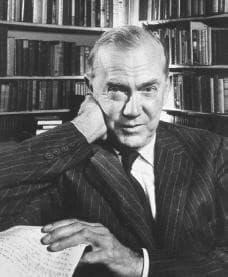
Henry Graham Greene was an English writer and journalist regarded by many as one of the leading English novelists of the 20th century.







