“The house with chicken legs is not a prison; it's a home that moves when it's time to move on.”
— Marinka reflects on her nomadic life as a Yaga's apprentice.

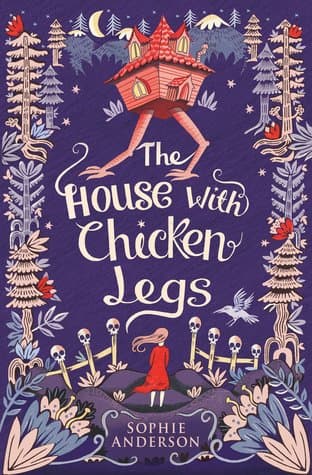
Sophie Anderson (2018)
Genre
Fantasy / Children's
Reading Time
420 min
Key Themes
See below
Sign in to track this book
Twelve-year-old Marinka wants a human friend, defying her destiny as a Yaga who guides the dead, then goes on a journey to the afterlife when her rule-breaking causes her grandmother's disappearance.
Marinka, a twelve-year-old girl, lives an isolated life with her grandmother, Baba Yaga, in a house that moves on giant chicken legs. Her grandmother is a Yaga, a guardian who guides the dead through the Gate to the afterlife. Marinka trains to follow her, which means she cannot form lasting friendships with the living. The house is a companion, but Marinka wants a human friend. She often watches her grandmother's brief meetings with the living, especially a family near a well, and dreams of a normal life where she can stay in one place and have friends.
Despite her grandmother's warnings, Marinka wants a friend. One day, while the house is stopped near a village, she meets a boy named Benjamin. Happy to have someone her age, Marinka secretly meets with Benjamin, playing games and sharing stories. She tells herself that as long as she does not tell him about her Yaga life or the house, it does not count as breaking rules. Their friendship grows, and Marinka feels a sense of normalcy and belonging she has always wanted, strengthening her desire to avoid her destiny as a Yaga.
The night after Marinka's last secret meeting with Benjamin, the house, usually ready to move, refuses to budge. Baba Yaga becomes worried by the house's inaction. During a ritual to open the Gate for the dead, a storm starts. Marinka, feeling guilty and sensing something is wrong, sees a flash of light and hears a scream. The next morning, Baba Yaga is gone, leaving only her Yaga skull lantern. Marinka is left alone with the still house and the growing realization that her rule-breaking, especially her friendship with Benjamin, caused her grandmother's disappearance.
Overwhelmed by grief and guilt, Marinka decides to find Baba Yaga. The house, sensing Marinka's distress, finally moves, but in an unusual direction. Guided by the house and Baba Yaga's skull lantern, Marinka goes on a journey that leads her to the boundary between the living and the dead. She realizes she must follow her grandmother's path, into the afterlife, a place she has only seen from afar. This journey is dangerous, as Marinka is not yet a trained Yaga and is entering a place where she does not belong.
As Marinka travels through the land of the dead, she meets many spirits, some helpful, some lost. She learns more about the afterlife and the Yaga's role in guiding souls. She meets a gatekeeper named Jack, who guards a passage. Jack speaks in riddles and gives warnings about the dangers of her quest and the importance of understanding her destiny. He tests Marinka's resolve and knowledge, hinting at the true nature of her grandmother's disappearance and the effects of Marinka's past actions. Marinka starts to understand the weight of her Yaga responsibilities.
Following clues and solving riddles, Marinka discovers the truth. Her friendship with Benjamin, and her desire to avoid her Yaga destiny, had made a tear between the living and dead worlds, causing chaos and danger. To prevent disaster and protect Marinka, Baba Yaga sacrificed herself, using her life force to seal the tear and ensure the safe passage of souls. This revelation deeply affects Marinka, making her understand the impact of her selfish desires and the love her grandmother had for her.
Faced with her grandmother's sacrifice, Marinka changes. She realizes that her longing for a 'normal' life kept her from seeing the importance and beauty of her destiny. She chooses to fully embrace her role as a Yaga, understanding that it is not a burden but a duty to guide the dead. With new purpose, Marinka begins to take on the responsibilities her grandmother once held, learning to open the Gate and help the spirits, accepting the solitude that comes with it, but finding a new kind of connection in her work.
Marinka, now a Yaga, continues her journey with the house, guiding the dead. While she has accepted her destiny, she remembers Benjamin. One day, the house stops near a familiar well, and Marinka sees Benjamin again, older and wiser. They share a moment of understanding, an acknowledgment of their past and the paths they have taken. Marinka realizes that while her life is different, she does not have to be entirely alone. She finds a way to connect with the living world, not by breaking rules, but by understanding the balance between her two worlds, finding a way to bridge them.
The Protagonist
Marinka transforms from a lonely, rebellious girl who rejects her Yaga destiny into a compassionate and responsible Yaga who embraces her unique role in guiding the dead.
The Supporting
Though absent for much of the story, Baba Yaga's character arc is revealed through her ultimate sacrifice, demonstrating the depth of her love and commitment to her role and Marinka's future.
The Supporting
The House remains largely consistent as a loyal companion, but its actions become more purposeful and guiding as Marinka steps into her Yaga role.
The Supporting
Benjamin's role is primarily to act as a catalyst for Marinka's choices and subsequent growth, though he matures slightly in his understanding of Marinka's unique existence.
The Supporting
Jack's arc is less about personal change and more about his role as a wise guide, revealing information and challenging Marinka to grow.
The Mentioned
Her story is a fixed narrative from the past, serving as a lesson for Marinka.
The Supporting
The Dead collectively represent the unchanging flow of souls, their 'arc' being their individual journey towards the Gate, aided by the Yaga.
Marinka struggles with her destiny as a Yaga, a role that requires isolation and sacrifice, which conflicts with her desire for a 'normal' life and human connection. Her struggle shows the tension between accepting an inherited path and making one's own. The story explores whether destiny is fate or a choice made with understanding and purpose. Ultimately, Marinka chooses to be a Yaga, but on her own terms, finding agency within her inherited role.
““My life isn’t my own. It belongs to the dead.””
A main theme is Marinka's loneliness living with her wandering house and the constant presence of the dead. Her desire for a real friend drives many of her actions, including breaking Yaga rules to befriend Benjamin. The story explores the human need for connection and belonging, and how far one might go to get it. It also shows how true connection can be found not just in traditional friendships but in fulfilling one's purpose and understanding one's place, even if it is a solitary one.
““All I wanted was a friend. A real, human friend.””
The theme of sacrifice is shown by Baba Yaga, who gives her life to protect Marinka and keep the balance between worlds. This act of love makes Marinka face the results of her actions and understand her grandmother's care. Marinka's own journey involves learning to sacrifice her desires for the good of her Yaga duty, changing her understanding of love from selfish longing to selfless commitment.
““A Yaga’s love is not a soft thing. It is fierce. It is protective. It is sacrifice.””
Marinka's journey is about learning to accept her role and its responsibilities. Initially resentful, she eventually understands the importance of the Yaga's work in guiding the dead and keeping cosmic balance. Her growth involves moving past self-pity and embracing the power and purpose of her heritage. This theme shows that maturity comes from acknowledging one's place and helping something larger than oneself, even when it is difficult.
““The Gate doesn’t open for those who wish to escape. It opens for those who understand their purpose.””
The book explores the cycle of life and death, showing the afterlife not as a scary void but as a place of transition and memory. It looks at the Yaga's role as guardians who help this natural process, ensuring peace for the dead. This theme encourages an understanding of death as part of existence, and shows the importance of remembrance and letting go. The interactions with various spirits offer different views on what it means to live and to die.
““Death is not an ending. It is a journey. And the Yaga are its guides.””
A sentient, mobile dwelling that reflects the Yaga's nomadic life and emotional state.
The House is a central symbolic and literal plot device. Its ability to move on chicken legs dictates Marinka's transient lifestyle and her inability to form lasting connections. As a sentient being, it acts as a companion and a protector, often reflecting the emotional state of its Yaga. Its refusal to move after Marinka breaks the rules is a direct consequence of her actions, propelling the plot forward and emphasizing the magical repercussions of her choices. It embodies the Yaga's unique existence and serves as a constant reminder of Marinka's destiny.
A magical portal to the afterlife, central to the Yaga's duty.
The Gate is the mystical portal through which the Yaga guide the dead into the afterlife. It is the core of the Yaga's purpose and a powerful symbol of the boundary between life and death. The stability of the Gate is directly linked to the Yaga's adherence to their rules, and its disruption (caused by Marinka's actions) is the catalyst for Baba Yaga's sacrifice and Marinka's quest. Learning to open and close the Gate is the ultimate test of Marinka's readiness to become a Yaga, representing her acceptance of her destiny.
A magical artifact that serves as a guide and a symbol of Yaga lineage.
The skull lantern is a crucial magical artifact passed down through the Yaga line. After Baba Yaga's disappearance, it becomes Marinka's primary guide, emitting light and sometimes subtly indicating direction. It symbolizes Baba Yaga's continued presence and guidance, even in her absence, and represents the weight of the Yaga lineage and the responsibilities that come with it. The lantern's diminishing light also signals the urgency of Marinka's quest and the fading hope of finding her grandmother.
Cryptic messages that guide Marinka and reveal deeper truths.
Riddles and prophecies, particularly those spoken by Jack and hinted at by Baba Yaga, serve as a narrative device to propel Marinka's understanding and guide her through the afterlife. They force Marinka to think critically about her situation, her grandmother's actions, and her own destiny. Rather than simply giving her answers, these enigmatic clues challenge her to interpret meaning and connect disparate pieces of information, reflecting her journey of self-discovery and the complex nature of the Yaga world.
“The house with chicken legs is not a prison; it's a home that moves when it's time to move on.”
— Marinka reflects on her nomadic life as a Yaga's apprentice.
“Stories are the bones of the world. They hold everything together.”
— Baba Yaga explains the importance of storytelling to Marinka.
“Sometimes the hardest thing is to stay still when all you want to do is run.”
— Marinka struggles with her desire for a normal, settled life.
“You don't choose your family, but you can choose your friends.”
— Marinka learns about relationships from her encounters with others.
“The dead are not gone as long as we remember them.”
— A comforting thought shared during a guide's duty.
“Fear is just a story you tell yourself. Change the story, change the fear.”
— Marinka confronts her anxieties about her future.
“Every ending is a beginning in disguise.”
— Reflection on the cyclical nature of life and death.
“A home isn't a place; it's the people who make you feel you belong.”
— Marinka realizes this after forming bonds with others.
“The stars are the eyes of the ancestors, watching over us.”
— A piece of Yaga folklore shared in the story.
“You can't guide others if you're lost yourself.”
— Marinka learns this lesson on her journey of self-discovery.
“Magic is not in the wand, but in the will to make a difference.”
— A subtle insight about the true nature of magic in their world.
“The wind carries whispers of all the stories ever told.”
— Descriptive line evoking the mystical atmosphere of the book.
“To be a Yaga is to walk between worlds, but never truly belong to either.”
— Marinka grapples with her unique role and identity.
Ready to see how well you understood this book? Take our interactive quiz with 10 questions.







