“The house was a living thing, breathing in the wind, groaning in the night. It had a personality, a will of its own.”
— Describing the oppressive nature of the house.

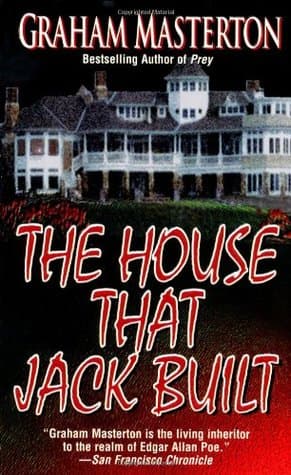
Graham Masterton (1996)
Genre
Thriller
Reading Time
10-12 hours
Key Themes
See below
Sign in to track this book
A lawyer's quest to restore a cursed Hudson Valley mansion after a brutal attack unleashes a possessive, tragic legacy that threatens to consume his sanity and his marriage.
Craig Bellman, a successful New York lawyer, is severely injured during a violent street mugging. This event leaves him scarred, affecting his personality and his relationship with his wife, Effie. To help his recovery and mend their strained marriage, Craig and Effie leave the city. They move to the Hudson Valley, hoping the change will help Craig heal and allow them to reconnect. Effie worries about Craig's withdrawn state and the distance between them, seeing the move as a step towards reclaiming their life after the incident.
In the Hudson Valley, Craig and Effie find Valhalla, a grand but decaying mansion. Effie is unsettled by its age and atmosphere, but Craig is drawn to it. He becomes fascinated by the house, ignoring Effie's growing unease that something is wrong. Despite its disrepair and cost, Craig starts to inquire about buying Valhalla, his obsession growing daily. Effie's initial worry turns to concern as she sees Craig's focus on the ominous property.
Craig's inquiries reveal Valhalla's dark past. Jack Belias, a legendary gambler and womanizer, built the mansion. His life was full of excess and scandal. More disturbingly, every owner since Belias has met a tragic end, adding to the house's sinister reputation. This history does not deter Craig; it fuels his obsession. Effie finds the tales disturbing, feeling a growing dread about the house's influence. The echoes of Belias's life and the misfortunes of his successors seem to fill Valhalla, creating a sense of impending doom.
Driven by loyalty to Craig and a hope to save their marriage, Effie tries to overcome her fears about Valhalla. But the house's atmosphere and unsettling events become too much. She secretly gets help from a local spiritualist, hoping to rid Valhalla of its 'threatening vibrations' and presence. Effie believes that if the house is cleansed, Craig's obsession might fade, and their life can return to normal. This desperate act shows the growing gap between her anxieties and Craig's increasing fixation on the mansion.
Effie's attempts to cleanse Valhalla are useless, or perhaps they provoke the forces within. Soon after her intervention, death and destruction return to the house and those connected to it. These events are not random; they mirror the tragic fates of previous owners, reinforcing the belief that Valhalla is cursed. The spiritualist's efforts seem to have failed, or worse, agitated the entity. The tragedies deepen Effie's despair and confirm her suspicions about the house's evil, making her feel helpless against the encroaching darkness.
As tragic events happen around them, Craig's obsession with Valhalla deepens. He becomes more withdrawn, his personality changing subtly. Effie sees him become a stranger, focused only on the house and its secrets, seemingly unaffected by the danger and sorrow it brings. His loving demeanor is replaced by a detached, almost predatory intensity. This change is not just emotional; there are hints of a deeper, spiritual change, suggesting the house, or something within it, is corrupting him, further isolating Effie in her struggle.
Effie suspects Craig's change is supernatural. His behavior, reckless decisions, and growing interest in gambling and womanizing — traits similar to Jack Belias — lead her to believe the original owner's spirit is still in Valhalla. More terrifyingly, she fears Belias is possessing Craig, using her husband's body to relive his destructive life. This realization puts Effie into a battle for her husband and her sanity against an unseen, malevolent entity.
Recognizing the threat, Effie determines to save Craig from Jack Belias. She tries various methods, from confronting Craig about his altered behavior to seeking more spiritual guidance, but her efforts are met with resistance, denial, or hostility from her possessed husband. The house itself seems to work against her, creating illusions and playing on her fears. Effie's desperation grows as she realizes Belias's spirit is gaining more control, threatening to consume the man she loves and destroy their lives, trapping her in a nightmare.
As Effie's attempts to free Craig increase, Valhalla responds with more malevolence. The house's supernatural phenomena become more violent and frequent, creating a terrifying and dangerous environment. Effie experiences disturbing visions, sounds, and physical manifestations of the house's power, all designed to break her will and protect its hold over Craig. The story builds as Effie is forced into a direct confrontation with Valhalla's evil and Belias's spirit, realizing she must fight for Craig's soul and her own survival against the house's destructive power.
In a harrowing climax, Effie confronts the full force of Jack Belias's spirit in Valhalla. She discovers the extent of Belias's depravity and the dark rituals that bound him to the house. Effie must find a way to sever the connection between Belias and Craig, a task that demands courage and sacrifice. The struggle is physical and spiritual, with Effie facing supernatural threats and the terrifying reality of her husband's hostile persona. She fights to reclaim Craig's soul from the powerful, ancient evil that has consumed him, knowing that failure means losing him forever to the house and its past.
The Protagonist/Victim
From a traumatized victim, Craig transforms into a vessel for a malevolent spirit, losing his identity before Effie's desperate attempts to reclaim him.
The Protagonist
Effie evolves from a supportive, fearful wife into a resolute and brave combatant against a powerful supernatural entity to save her husband and herself.
The Antagonist
As a persistent, malevolent spirit, Belias does not have an arc but acts as a constant, corrupting force, seeking to perpetuate his dark legacy.
The Supporting
Introduced as a source of potential aid, her limited impact underscores the immense power of Valhalla's evil.
The novel shows how obsession can consume a person, leading to their downfall and the destruction of those around them. Craig's fascination with Valhalla quickly becomes an obsession, blinding him to its dangers and alienating him from Effie. This is clear when Craig ignores Effie's fear and the house's dark history, focusing solely on acquiring and restoring it. His obsession makes him vulnerable to Belias's influence, showing how unchecked desire can lead to a loss of self and moral decay.
“He ignored Effie's misgivings and starts to make inquiries about buying it, undeterred by the expense and its history.”
Valhalla is a symbol of evil that spans time, suggesting that malevolence can become part of a place and continue to influence it. The tragic fates of every owner since Jack Belias show this theme; the house is not just old but cursed. Belias's spirit, refusing to leave, embodies this enduring evil, seeking to continue his destructive life through new hosts. This theme highlights that some evils are not easily defeated and can lie dormant, waiting for a chance to resurface.
“Even today, Valhalla echoes with its terrible past.”
At its core, the story is a struggle for Craig's identity and soul against Jack Belias's influence. Craig's transformation from a loving husband into a stranger driven by Belias's desires represents the loss of self. Effie's fight is not just to save Craig's life, but to reclaim the man she married from the entity that possesses him. This theme is clear in Effie's growing realization that Craig is not just changing but is being taken over by another personality, forcing her to confront what makes up an individual's true self when it is under attack.
“Craig, obsessed by the house, becomes more of a stranger to Effie every day.”
The novel demonstrates how trauma and vulnerability can open individuals to darker influences. Craig's mugging leaves him psychologically scarred and fragile, making him susceptible to Valhalla's appeal and Belias's spiritual attack. This shows how a weakened mind can be a gateway for malevolent forces. Effie also experiences the psychological toll of fighting an unseen enemy, constantly questioning her sanity in the face of supernatural events and her husband's alarming transformation. The narrative explores how easily the human mind can be manipulated and broken under extreme stress.
“After Craig Bellman, a successful young New York lawyer, is horribly injured in a street mugging, he and his wife, Effie, retreat to the Hudson Valley to restore his health and save their relationship.”
Valhalla, a derelict mansion imbued with a malevolent history.
Valhalla serves as the central haunted house, a classic horror trope. It is not merely a setting but an active character, exerting a palpable, malevolent influence on those who inhabit it. Its dilapidated state and tragic history create an immediate sense of dread, drawing Craig in while repelling Effie. The house's 'threatening vibrations' and the recurring misfortunes of its owners make it a potent symbol of inherited evil, driving much of the plot's supernatural conflict and character development. It acts as a prison and a catalyst for the spiritual possession.
The spirit of Jack Belias takes control of Craig Bellman's body and mind.
Supernatural possession is the core plot device driving Craig's transformation and the central conflict. Jack Belias's spirit, bound to Valhalla, gradually overtakes Craig, using his body to relive his decadent life. This device allows for a deeply personal and terrifying antagonist, as Effie is forced to confront the evil entity inhabiting her husband. It creates a powerful sense of helplessness and urgency, as Effie battles not an external monster, but the corruption of the man she loves from within, making the threat intimate and devastating.
The pattern of tragic ends for Valhalla's owners.
The 'curse' on Valhalla, where every owner since Jack Belias has met a tragic end, is a crucial plot device that establishes the house's malevolent nature and foreshadows the dangers Craig and Effie face. It creates a sense of inevitable doom and raises the stakes, as the characters become aware of the pattern. This device builds suspense and justifies Effie's fears, making her attempts to cleanse the house a desperate, logical response to a long-standing supernatural threat. It grounds the supernatural elements in a historical, repeated context.
An external source of supernatural knowledge and attempted intervention.
The introduction of the local spiritualist serves as a plot device to validate Effie's supernatural suspicions and to briefly offer a potential solution. Her presence confirms that Effie is not imagining the malevolent forces at play. While her direct intervention may not succeed in cleansing the house, it externalizes the supernatural threat and provides Effie with some initial understanding of the forces she is up against. This device also highlights the limitations of human intervention against deeply entrenched supernatural evil.
“The house was a living thing, breathing in the wind, groaning in the night. It had a personality, a will of its own.”
— Describing the oppressive nature of the house.
“Some things are better left buried, some doors better left unopened. Especially when they lead to places you can't imagine.”
— Reflecting on the consequences of delving into the house's secrets.
“Fear has a smell, a taste. It clings to you, gets under your skin, whispers in your ear.”
— The protagonist experiencing intense terror.
“The past is never truly gone. It just waits, patiently, for its chance to reach out and grab you.”
— Hinting at the historical evil within the house.
“Madness, like a virus, can spread from person to person, from place to place. And this house was an incubator.”
— Considering the psychological toll the house takes on its inhabitants.
“He felt a cold dread, not just for himself, but for what he was becoming, what the house was making him.”
— The protagonist's internal struggle against the house's influence.
“There are screams that no one hears, and horrors that no one believes. And sometimes, those are the worst kind.”
— Reflecting on the isolation of the terror.
“The shadows in that house weren't just the absence of light; they were a presence, watching, waiting.”
— Describing the pervasive sense of being observed.
“Every nail, every beam, every brick in that house held a memory, a fragment of pain, a whisper of torment.”
— Detailing the deep-seated evil embedded in the house's structure.
“You can lock the doors, but you can't lock out what's already inside your mind. Or what's trying to get in.”
— The futility of physical barriers against the psychological assault.
“The line between reality and nightmare blurred until it was impossible to tell which was which.”
— The protagonist's deteriorating mental state.
“It wasn't just a house; it was a hungry mouth, and he was slowly, inexorably, being swallowed whole.”
— Metaphorically describing the house's consuming power.
“Some curses aren't just spoken; they're built into the very foundations of a place, growing stronger with every new tenant.”
— Explaining the nature of the house's enduring evil.
Ready to see how well you understood this book? Take our interactive quiz with 10 questions.

Biography coming soon.







