“The past is a foreign country; they do things differently there.”
— Though often misattributed to this book, a similar sentiment about the past's foreignness pervades the narrative as Magnus experiences it through the drug.

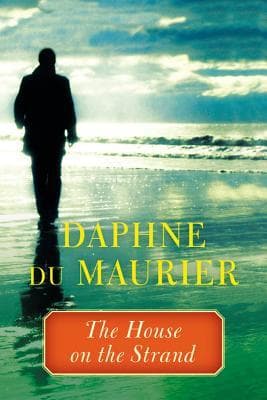
Daphne du Maurier (1705)
Genre
Fantasy / Historical Fiction / Mystery / Science Fiction
Reading Time
420 min
Key Themes
See below
Sign in to track this book
A man in Cornwall finds a drug that sends his mind back to a 14th-century love affair, making him abandon his present for a past he can only watch.
Dick Young, a disillusioned Londoner, is offered a temporary stay at Kilmarth, a remote house in Cornwall, by his old university friend, Professor Magnus Lane. Magnus, a brilliant but eccentric scientist, reveals he has developed a new drug from a local fungus. He suggests Dick be his test subject, claiming the drug allows a form of 'time-travel' — specifically, experiencing past events from the exact present location. Dick, bored with his life and interested by Magnus's strong belief, agrees. He arrives at Kilmarth, a place full of history, and prepares for his first dose, unaware of the journey ahead.
Under Magnus's watch, Dick takes the first dose of the drug. He feels a confusing shift, finding himself an invisible observer in 14th-century Kilmarth. He sees a manor house, not the ruins of his present, and meets a young woman, Isolda, and her husband, Sir Henry Champernowne. Dick sees a violent fight where Henry beats Isolda, accusing her of cheating. The scene is vivid and disturbing, leaving Dick shaken but also drawn to Isolda's beauty and struggle. He notes the landscape, clothing, and old language, confirming the drug's effect. The experience ends quickly as the drug wears off, pulling him back to the present.
After his first journey, Dick feels both scared and excited. He starts researching the history of Kilmarth and the Champernowne family, finding details about Sir Henry and Lady Isolda that match what he saw. He feels increasingly drawn to Isolda, developing a strong connection to her tragic story. Magnus encourages his observations, asking for more detailed accounts. Dick begins taking the drug more often, often alone, despite Magnus's warnings about its dangers and its physical toll. He finds the modern world dull, wanting only to return to Isolda's time and understand her life.
Through later trips, Dick learns more about Isolda's life. He discovers her secret love affair with Roger, a younger man and her cousin. He sees their hidden meetings and tender moments, which increases his fascination and protective feelings toward Isolda. Dick also observes a sinister plot by Sir Henry Champernowne, who knows about the affair and plans to kill Roger. He sees Henry conspiring with other men, discussing how to ambush Roger and make his death look like an accident. Dick, helpless as an observer, feels a growing sense of dread and urgency to understand the full tragedy.
Dick is present, though unseen, when Sir Henry's plot happens. He watches in horror as Roger is ambushed and killed, his body thrown into the river, made to look like an accidental drowning. Isolda, crushed by Roger's death, is consumed by grief. Dick sees her attempts to find comfort and understanding, her growing suspicion of Henry, and her deep sense of loss. He feels great frustration at his inability to help or talk to her, his invisible existence a torment. Each return to the present leaves him more emotionally drained and separated from his own life.
Magnus becomes worried by Dick's worsening physical state and his growing obsession. He notices Dick's strange behavior, his lack of appetite, and his disinterest in anything outside the medieval past. Magnus warns Dick about the drug's potential for lasting mental harm, explaining that long-term use could lead to a complete separation from the present. However, Dick ignores these warnings, convinced that Magnus wants to control his access to Isolda. He starts hiding doses and taking the drug without Magnus's knowledge, pushing his temporal excursions further.
During his later trips, Dick notices Lady Eleanor in the medieval household. She is a calculating woman, seemingly influencing Sir Henry. Dick observes her actions, her whispers to Henry, and her desire to secure her own position and perhaps replace Isolda. He begins to suspect that Eleanor is not just a guest but a participant in the drama, possibly even encouraging Henry's cruel treatment of Isolda and his plot against Roger. Her presence adds another layer of danger to the past.
Driven by grief and a desire for revenge, Isolda poisons Sir Henry. Dick silently watches this act, seeing Isolda give the poison and Henry's painful death. He also observes Lady Eleanor's reaction, which is not shock or sorrow, but a calm composure, suggesting she knew about or was involved in the events. This shows the full extent of the betrayals within the Champernowne household. Dick realizes that Isolda, once a victim, has become an avenger, a change he finds both unsettling and understandable.
The arrival of Dick's estranged wife, Vita, and Magnus's wife, Jenny, at Kilmarth disrupts Dick's fragile life. They are concerned about his health and mental state, noticing his thinness, his blank stares, and his obsessive behavior. Their presence represents the modern world he has come to dislike, and their attempts to engage him are met with irritation and resistance. Dick resents their intrusion, seeing them as obstacles to his journeys into the past. He tries to act normal while secretly planning his next dose and escape.
Tragedy occurs when Magnus, driving his car, has a fatal heart attack, causing a terrible accident. This event deeply affects Dick, not only because he lost his friend but also because Magnus was the source of the drug. Desperate for one last journey, and now with no one to watch or stop him, Dick takes a large, uncontrolled dose of the remaining drug. He knows the extreme danger, but his longing for the past, especially for Isolda, overrides all caution. He hopes to find closure or a permanent escape in the medieval world.
The large dose overwhelms Dick's mind. He finds himself unable to fully return to the present, or rather, the past blends into his current reality. He hallucinates medieval figures in modern Kilmarth, hears their voices, and feels their presence. His wife, Vita, and Jenny try to help him, but he is unresponsive, muttering about Isolda and events from centuries ago. He is completely lost in his delusion, his mind broken by the drug. He makes a desperate, unclear plea, perhaps to Isolda, perhaps to be freed from his torment, as the two worlds permanently merge.
In the end, Dick is completely consumed by his visions. He is found in a catatonic state, his eyes wide and unseeing, his mind seemingly trapped in the past. The story suggests he has made a permanent, though tragic, escape from his present reality into the medieval world he wanted. His physical body stays in Kilmarth, but his consciousness is lost, a victim of Magnus's experiment and his own obsession. The ending is ambiguous, leaving the reader to wonder if he found a twisted form of peace or simply went mad.
The Protagonist
From a cynical but curious individual, Dick descends into a profound obsession, ultimately losing his grip on reality and becoming permanently trapped in a mental past.
The Supporting
Magnus remains largely unchanged in his scientific drive, but his accidental death removes the last safeguard for Dick.
The Supporting
From a tormented wife and secret lover, Isolda transforms into a vengeful figure who poisons her husband.
The Antagonist
Henry remains a consistently cruel and vengeful character, ultimately meeting his end by Isolda's hand.
The Supporting
Roger's brief arc is marked by his passionate affair and his untimely, violent death.
The Supporting
Vita's arc is one of increasing concern and helplessness as she witnesses Dick's mental decline.
The Supporting
Jenny's role is to observe and react to the tragic events, providing a grounded perspective.
The Supporting
Eleanor's role is revealed to be one of subtle manipulation, contributing to the tragic events.
The novel shows how obsession and addiction can destroy a person. Dick Young's initial interest in Magnus's drug quickly becomes an addiction, not just to the substance, but to the past and Isolda. He neglects his health, his present life, and his relationships, becoming fully absorbed by his journeys. This theme is clear in his disregard for Magnus's warnings and his frantic drug use near the end, showing how an escape can become a trap. His longing for Isolda goes beyond reason, blurring the lines between love, fantasy, and self-destruction.
“What was real, what was not real? I knew, yet I did not know. The past had become the present, and the present was but a shadow.”
Escapism is a main theme, as Dick seeks comfort from his unsatisfying modern life in the vivid past. The medieval world, at first a fascinating distraction, becomes his only focus, offering a sense of purpose and romantic intensity his present lacks. However, the novel shows the dangers of such escape. By fully immersing himself in the past, Dick loses his grip on reality, pushes away those who care for him, and loses his sanity. The appeal of a seemingly more exciting past turns out to be a dangerous illusion.
“I was escaping from myself, from the dull, grey Dick Young of the twentieth century, into the colour and drama of another age.”
Du Maurier blurs the lines between past and present, challenging how the reader sees reality. The drug allows Dick to 'see' the past as if it were happening now, raising questions about how time moves and if historical events persist. As Dick's mental state worsens, the two realities merge, showing how subjective and fragile our understanding of time can be. The novel suggests that the past is not just gone but exists in some form, able to greatly affect the present, especially through a person's consciousness.
“The past was not dead, it was not even past. It was here, it was now, it was me.”
Dick's role as an unseen observer in the past highlights helplessness. Despite seeing horrific events, betrayals, and murders, he cannot intervene or change history. This inability to act frustrates and torments him, especially as he develops an emotional connection to Isolda. The novel explores the psychological cost of watching tragedy without being able to change it, increasing Dick's inner conflict and contributing to his mental breakdown.
“To watch, to know, yet to be powerless to help – this was the ultimate torment.”
The novel subtly questions the ethics of scientific experimentation and the unexpected results of unchecked curiosity. Magnus Lane, driven by scientific ambition, develops a powerful drug without fully understanding its long-term effects on the human mind. His initial lack of concern for Dick's well-being, despite later warnings, sets the stage for the tragedy. The drug itself, a product of scientific discovery, becomes the cause of Dick's downfall, showing how scientific advancements, without ethical consideration, can cause great harm.
“He saw himself as a pioneer, a Columbus of the mind, and I, poor fool, was his ship.”
A fictional hallucinogenic substance that allows Dick to experience the past.
The drug, derived from a local fungus by Professor Magnus Lane, is the primary plot device that propels the narrative. It enables Dick Young to become a 'spectral' observer of 14th-century events unfolding in the exact locations of present-day Kilmarth. Its properties — vivid sensory experience, limited duration, and increasing psychological toll — are meticulously detailed. The drug serves as a literal gateway to the past, but also metaphorically represents addiction and escapism, ultimately becoming the instrument of Dick's mental collapse as he abuses its power.
The physical setting that acts as a fixed point for temporal observation.
Kilmarth is more than just a house; it's a crucial plot device that anchors Dick's temporal journeys. Its ancient stones and ruins serve as the fixed point in space from which Dick observes the past. The house itself, with its layers of history, becomes a character in its own right, a silent witness to centuries of human drama. Its present-day state contrasts sharply with its medieval grandeur, emphasizing the passage of time and the persistence of memory within its walls. The house effectively binds Dick to a specific historical narrative.
The story is told entirely from Dick's subjective and increasingly unreliable perspective.
The novel employs a first-person narrative through Dick Young's eyes, which is vital to its psychological depth. This perspective immerses the reader directly into Dick's experiences, his fascination, his growing obsession, and ultimately, his mental deterioration. As his grip on reality loosens, his narration becomes increasingly unreliable, blurring the lines between what is truly happening and what he is hallucinating. This device effectively conveys the subjective nature of his journey and heightens the sense of claustrophobia and impending madness.
Dick's attempts to corroborate his visions with historical records.
Initially, Dick attempts to verify his drug-induced visions by researching historical records, particularly those pertaining to the Champernowne family and Kilmarth. This plot device serves to ground the fantastical elements of the story in a semblance of reality, making the time-travel more believable. It also highlights Dick's initial scientific curiosity. However, as his obsession grows, his reliance on external verification diminishes, replaced by an uncritical acceptance of his subjective experiences, further signaling his descent into delusion.
“The past is a foreign country; they do things differently there.”
— Though often misattributed to this book, a similar sentiment about the past's foreignness pervades the narrative as Magnus experiences it through the drug.
“It was not a question of going back in time, but of being there.”
— Magnus reflects on the nature of his drug-induced visions, emphasizing the immersive and present experience rather than mere observation.
“The house was a sentinel, a witness to centuries.”
— Magnus contemplates the ancient house on the strand, recognizing its enduring presence and connection to the past events he witnesses.
“I was a ghost, and they were flesh and blood.”
— Magnus describes his feeling of detachment and invisibility as he observes the lives of the past inhabitants, unable to interact.
“The drug was a key, unlocking doors I never knew existed.”
— Magnus reflects on the powerful effect of the experimental drug, which opens his mind to historical visions.
“Every stone, every tree, held a memory.”
— Magnus senses the deep history embedded in the landscape around the house, feeling the echoes of past lives.
“The present became a blurred, insignificant thing.”
— As Magnus delves deeper into his visions, his own contemporary life fades into the background, overshadowed by the past.
“He lived in two worlds, and one was slowly consuming the other.”
— A description of Magnus's deteriorating mental state as his immersion in the past begins to overwhelm his present reality.
“Their passions, their betrayals, their loves – they were as real to me as my own.”
— Magnus expresses the intensity and vividness of the emotions he perceives from the historical figures, making them deeply personal.
“The line between what was real and what was imagined blurred irrevocably.”
— As Magnus's drug use continues, his ability to distinguish between his visions and his actual life diminishes.
“He was a trespasser in time, an unwanted observer.”
— Magnus feels the weight of his intrusion into the past, recognizing his role as an outsider witnessing private moments.
“The house itself seemed to breathe with the lives it had held.”
— Magnus's perception of the house is imbued with the spirits and histories of its former occupants, making it a living entity.
“There was a yearning in me for that other time, that simpler, harsher world.”
— Magnus admits to a growing desire to escape his modern life and remain immersed in the perceived simplicity of the past.
“Consequences, like shadows, follow every action, even those in the past.”
— Magnus begins to understand the lasting impact of historical events and the interconnectedness of time.
Ready to see how well you understood this book? Take our interactive quiz with 10 questions.
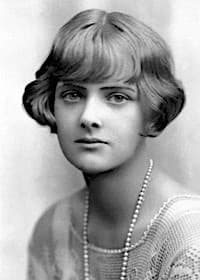
Daphne du Maurier was a celebrated English author renowned for her gothic suspense novels. Her most famous work, "Rebecca," is a classic of psychological suspense and mystery. Other notable works include "Jamaica Inn" and "The House on the Strand," solidifying her legacy as a master storyteller in the realm of atmospheric fiction.







