““I’m not a baby, I’m almost twelve!””
— Rosie's frustration with her younger sister, Emily, and being treated like a child.

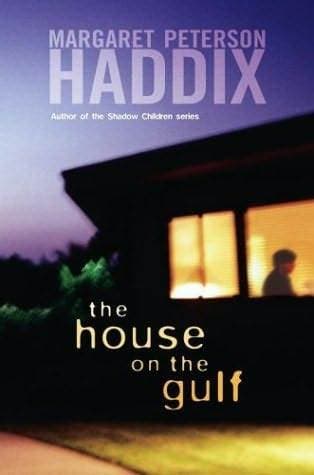
Margaret Peterson Haddix (2004)
Genre
Children's / Mystery / Young Adult
Reading Time
180 min
Key Themes
See below
Sign in to track this book
When her brother's strange behavior in a borrowed house leads to hidden mail and odd rules, Britt uncovers a shocking truth about their luxurious summer home and its real owners.
Britt and her older brother, Bran, move to Florida with their mother, who is starting college. They have always lived in apartments, so Britt is excited when Bran says he found a summer house-sitting job for an elderly couple, the Marquises. This job will let their mom quit her current job and focus on her studies. The house is large and luxurious, on the Gulf, very different from their old homes. Britt is happy with the new arrangement, enjoying the space and the newness of a real house, but she soon notices Bran acting strangely.
Almost at once, Bran sets strict, seemingly random rules for Britt and their mom. He is very protective of the house, forbidding anyone from touching the thermostat, opening the mail, or talking to neighbors. He becomes defensive and avoids questions when Britt asks about his behavior or the Marquises' supposed instructions. Britt sees him hiding mail and acting secretive, which makes her more suspicious. Bran's usual relaxed manner contrasts sharply with his current anxious, controlling behavior, making Britt wonder what he is hiding.
Britt's suspicions grow when she finds a stack of hidden mail addressed to 'Mr. and Mrs. Peterson.' This name does not match the 'Marquises' Bran claimed owned the house. This discovery is a major warning sign for Britt, confirming her feeling that something is wrong. She confronts Bran, but he gives vague and unconvincing explanations, making her more determined to find the truth. The hidden mail is the first solid evidence in her quiet investigation.
Despite Bran's warnings, Britt's curiosity leads her to talk to a neighbor, an elderly woman named Mrs. Peterson. Mrs. Peterson casually mentions that the 'Petersons' are away, confirming Britt's earlier discovery about the mail. Mrs. Peterson also makes it clear that she does not recognize Britt or Bran, and certainly has not heard of any 'house-sitters' arranged by the Petersons. This conversation contradicts Bran's story about the Marquises, strengthening Britt's fear that they are not supposed to be in the house at all. She realizes Bran has lied about the owners.
Driven by her growing suspicions, Britt does some research and finds that the 'Marquises' are a fictional couple, a detail from a story Bran wrote years ago. This revelation shatters Bran's entire made-up story and confirms that he intentionally misled her and their mother. The house-sitting job is a complete lie, and they are living in someone else's home under false pretenses. Britt is deeply troubled by Bran's deception and their unstable situation.
As Britt keeps looking, she finds a hidden compartment with old newspaper clippings about a missing child named Stephanie Peterson, who disappeared from the house years ago. The articles describe a tragic event and hint at the lingering mystery around the Peterson family. This discovery adds danger and urgency to Britt's investigation, suggesting the house holds a darker secret than just a simple squatting situation. She realizes Bran's connection to the house might be deeper and more complex than she imagined.
Cornered by Britt's questions and the growing evidence, Bran finally confesses. He reveals that he found an old photograph of himself as a baby with a woman he believes is his birth mother, taken in this house. He thinks he was Stephanie Peterson's brother, adopted after her disappearance. He brought them to the house to uncover the truth about his past and Stephanie's fate, hoping to find answers within the house. His motivation comes from a deep personal search for identity and family history.
With Bran's confession, Britt helps him look deeper into the house's history. They find more clues and eventually piece together the truth: their mother, Mrs. Miller, was the Petersons' nanny when Stephanie disappeared. Bran was indeed the Petersons' baby, but their mother was not his birth mother; she adopted him after the tragedy. Their mother had fled the house with Bran, haunted by the events and fearing for his safety, choosing to raise him as her own and protect him from the past.
When confronted with their discoveries, Mrs. Miller tearfully confirms the story. She explains that she was the nanny for the Petersons and saw Stephanie disappear, which she believes was an accident, not an abduction. Overwhelmed by grief and fear, and seeing the Petersons' inability to cope, she took baby Bran, believing she could offer him a better, safer life away from the tragedy. She had always planned to tell them the truth someday but found it too painful. Her actions came from love and protection.
The final piece of the puzzle comes when Britt and Bran find Stephanie's remains in a hidden, forgotten part of the house, likely from an accidental fall or getting stuck while playing. The long-lost truth of Stephanie's disappearance is finally revealed, bringing a tragic end to the mystery. It confirms their mother's belief that it was an accident, not a crime, and provides closure for the Peterson family, even years later.
The Miller family, now united by the shared truth, decides to contact the Petersons. They explain what happened, returning Bran's true identity to his birth parents and providing the long-sought answers about Stephanie. The Petersons, though heartbroken by the truth, are also relieved to finally know what happened to their daughter. The families begin a difficult but necessary process of reconciliation. While the past is tragic, the truth allows everyone to start healing and form new, honest relationships.
The Protagonist
Britt transforms from an initially naive girl into a courageous detective, ultimately becoming the catalyst for her family's truth and healing.
The Protagonist/Conflicted Brother
Bran moves from a state of secretive deception and isolation to one of vulnerability and honesty, finding peace and identity through the truth.
The Supporting/Key Figure
She moves from a life of concealed truths and burden to one of honest revelation and the potential for healing.
The Supporting/Informant
She serves as a catalyst for Britt's investigation, unknowingly providing key information without undergoing a personal arc.
The Mentioned/Supporting
They experience a delayed form of closure and the unexpected return of a son, moving from prolonged grief to a new, complex reality.
The Mentioned/Central Mystery
Her story is revealed, bringing closure to a long-unsolved mystery.
The novel shows how secrets, even those meant to protect, can cause isolation, anxiety, and more problems. Bran's elaborate lies about the house-sitting job and the Marquises create tension and distrust in his family. Mrs. Miller's long-kept secret about Bran's adoption and Stephanie's disappearance, while born of love and fear, prevents true family connection and healing until it is revealed. The house itself holds the secret of Stephanie's fate, which affects everyone connected to it, showing how hidden truths can linger and haunt.
“Probably he had a perfectly reasonable explanation for everything. I just couldn't imagine what it would be.”
Bran's reason for bringing his family to the house on the Gulf is his desperate search to understand his own origins. He feels a deep need to know who he truly is and where he comes from, believing the house holds the key to his birth family. This search for identity is a powerful force, driving him to extreme actions. The eventual discovery of his biological parents and the truth about his adoption, while painful, gives him a sense of self and belonging he lacked.
“He just had to know. He just had to find out who he was.”
Despite the deception, the underlying theme of family love and protection is strong. Mrs. Miller's decision to adopt Bran and keep his past a secret came from a deep desire to protect him from the trauma around Stephanie's disappearance. Bran, in his own mistaken way, thinks he is protecting his mother and Britt by getting a 'better' life in the house. Britt, in turn, is motivated by her love for her family to find the truth, not to expose them, but to understand and help them. The story's resolution emphasizes that honesty, though difficult, ultimately strengthens family bonds.
“I knew it was wrong, but I didn't know how to do anything else. I just wanted to keep you safe.”
The house on the Gulf is more than just a setting; it holds a tragic past that still affects the present. The mystery of Stephanie Peterson's disappearance hangs over the property, drawing Bran back and influencing his actions. The newspaper clippings, hidden compartments, and the general feel of the house all suggest that the past is not truly gone. The story shows how unresolved events and unaddressed grief can linger for years, affecting generations until the truth is finally brought to light and acknowledged.
“The house had secrets, I knew that now. And they weren't just Bran's secrets.”
Misleading clues that divert attention from the true mystery.
The 'Marquises' are a major red herring. Bran invents this elderly couple as the supposed owners of the house, leading Britt and the reader to believe the mystery revolves around their absence or identity. This diverts attention from the true owners, the Petersons, and the deeper, more personal connection Bran has to the house, making his deception seem like a simple squatting situation rather than a quest for identity.
A character whose account of events is intentionally misleading or incomplete.
Bran acts as an unreliable source of information throughout the initial parts of the story. He invents the 'Marquises' and creates a false narrative about their house-sitting arrangement. His secretive behavior, evasive answers, and fabricated rules force Britt to question everything he says, creating suspense and driving her independent investigation. His unreliability is key to establishing the central mystery and Britt's role as the truth-seeker.
A location that represents deeper themes or secrets.
The house on the Gulf is more than just a place to live; it symbolizes the buried secrets and unresolved past of the characters. It is a physical manifestation of the family's hidden history, holding the clues to Bran's identity and Stephanie's fate. Its hidden compartments, old photographs, and lingering atmosphere all contribute to its symbolic role as a vessel of memory and truth, a place where the past literally waits to be uncovered.
The use of physical items found by characters to reveal crucial information.
Britt's discovery of the hidden mail addressed to 'Mr. and Mrs. Peterson' is the first critical hidden object that unravels Bran's lie. Later, the newspaper clippings about Stephanie Peterson's disappearance, also found hidden, provide the true historical context for the house's significance. Finally, the discovery of Stephanie's remains within the house brings definitive closure to the central mystery, demonstrating how physical objects serve as tangible keys to unlocking the narrative's secrets.
““I’m not a baby, I’m almost twelve!””
— Rosie's frustration with her younger sister, Emily, and being treated like a child.
““It was just a house. But it was *their* house.””
— Rosie reflecting on the importance of their home, especially after their father's death.
““Secrets are like shadows, they follow you even when you try to run away.””
— Rosie's growing awareness of the hidden truths surrounding her family and the house.
““Some things you just know, deep down, even if you can’t explain why.””
— Rosie's intuition guiding her through the unfolding mystery.
““The past isn't always gone. Sometimes it just waits.””
— A realization about how past events continue to influence the present.
““It’s amazing how much you can miss someone even when they’re still right there.””
— Rosie's feelings about her mother's emotional distance after their father's death.
““Sometimes the quietest people have the loudest stories.””
— Rosie observing a reserved character and suspecting they hold important information.
““Fear makes you see things that aren’t there, and sometimes it makes you miss what is.””
— Rosie reflecting on how fear can distort perception and hinder problem-solving.
““You can’t just pretend things didn’t happen. Eventually, they catch up to you.””
— Rosie's understanding that avoiding problems only postpones them.
““The gulf was always there, a constant presence, sometimes calm, sometimes wild, always watching.””
— A description of the setting and its symbolic role in the story.
““Being brave isn’t about not being scared. It’s about doing what you have to do even when you are.””
— Rosie's internal monologue as she faces danger and uncertainty.
““Every family has its own kind of weird, its own kind of normal.””
— Rosie reflecting on the unique dynamics and hidden aspects of her own family.
““It was hard to know who to trust when everyone seemed to be hiding something.””
— Rosie's struggle with discerning truth and deception amidst the mystery.
““Sometimes the answers are right in front of you, but you’re looking too hard for something complicated.””
— Rosie's realization that the solution to a puzzle might be simpler than she imagined.
Ready to see how well you understood this book? Take our interactive quiz with 10 questions.

Biography coming soon.

Dan Gemeinhart
4.5

Kate O'Hearn
4.4

Jeanne Birdsall
4.4

Jen Wang
4.4

Wendelin Van Draanen
4.3

John Marsden
4.3

Chris Van Allsburg
4.3
Jennifer A. Nielsen
4.2