“For know you, that it is a dreadful thing to be an old man, and to have no peace of mind. And I am an old man, and have no peace of mind.”
— From the diary of the Recluse, reflecting on his tormented existence.


William Hope Hodgson (2019)
Genre
Fantasy / Science Fiction
Reading Time
140 min
Key Themes
See below
Sign in to track this book
A secluded Irish cottage becomes a portal to cosmic horrors and the unimaginable reaches of time, forcing its occupant to confront the universe's terrifying indifference.
The unnamed narrator and his friend, Tonnison, are on a fishing vacation in the desolate, unmapped village of Kraighten, Ireland. While fishing in an unnamed river, they discover the ruins of an ancient, strangely oppressive house situated in a deep chasm. The house appears to have been built directly into the chasm's rock face. Intrigued, they explore the ruins and find a lead box containing a decaying, leather-bound journal written in an archaic script. The journal, which chronicles the experiences of an old recluse, immediately captivates them. They decide to take the manuscript back to their lodgings to decipher its contents, sensing a profound and unsettling story within its pages, despite its dilapidated state and the ominous aura of the house where it was found.
The journal, penned by an unnamed recluse, begins by detailing his solitary life in the ancient, isolated house on the borderland. He lives with only his sister and his unusual, quasi-human dog, which possesses an uncanny intelligence and a disturbing appearance. The recluse describes the house itself as a sentient entity, capable of shifting its internal structure, and a focal point for strange cosmic energies. He recounts his growing unease, particularly in the deep chasm where the house is built. The dog, despite its unsettling nature, is his constant companion, often reacting to unseen presences and foreshadowing the bizarre events to come, further isolating the recluse.
The recluse's journal describes the first terrifying incident: an assault on the house by grotesque, pig-like creatures referred to as 'Swine-Things.' These abominations emerge from the depths of the chasm, attempting to breach the house. The recluse, armed with a rifle, and his fiercely loyal, intelligent dog fight them off. The dog exhibits preternatural senses, detecting the creatures before they are visible and fighting with savage intensity. The attack is relentless and horrifying, revealing the house to be a target for forces beyond human comprehension. The recluse describes the creatures' repulsive appearance and their unsettling malevolence, deepening the mystery of their origin and purpose, and solidifying the house's role as a battleground.
Following the initial attacks, the recluse begins to experience involuntary out-of-body projections. He is hurled across vast stretches of cosmic time and space, witnessing the birth and death of stars, the evolution of alien worlds, and the ultimate heat death of the universe. A recurring motif in these visions is a mysterious 'Green Star' that seems to be a focal point of cosmic energy and perhaps a source or destination for these temporal dislocations. These journeys are deeply immersive and often terrifying, as he perceives the inexorable march of entropy and the insignificance of human existence in the face of cosmic immensity. He struggles to reconcile these experiences with his increasingly isolated reality.
The recluse slowly comes to the chilling realization that his house is not merely a dwelling but a nexus point for extraordinary, cosmic phenomena. It is the 'borderland' of the title, a place where dimensions thin and time becomes fluid. He understands that the house itself, perhaps due to its ancient construction or its unique location in the chasm, is a kind of anchor or conduit for his out-of-body experiences and the incursions of the Swine-Things. This understanding brings both terror and a strange sense of unique destiny, as he is now inextricably linked to forces far beyond his control or comprehension. The house becomes a character in itself, influencing and shaping his reality.
A second, more ferocious assault by the Swine-Things occurs. This time, the creatures manage to penetrate deeper into the house. During the desperate struggle, the recluse's sister, his only human companion, is killed by the creatures. This loss devastates the recluse, plunging him into grief and an even deeper sense of isolation. Her death underscores the danger he faces and the futility of his attempts to protect his loved ones from these otherworldly invaders. The event solidifies his understanding that the house is a place of inescapable peril, where even his closest kin are not safe from the malevolent forces that converge upon it.
The recluse's cosmic visions grow more frequent and vivid. He witnesses the slow, agonizing death of Earth itself, as the sun expands and eventually engulfs it. During these visions, he perceives himself as the 'Last Man,' a solitary figure observing the final stages of the universe's decay from a vantage point beyond normal time and space. This transformation is both metaphorical and seemingly literal, as he feels his own being stretched and altered by these experiences. He grapples with the immense loneliness of this ultimate perspective, contemplating the meaning of existence in the face of universal oblivion, and the terrifying prospect of being the sole witness to such cosmic finality.
Amidst his cosmic and temporal displacements, the recluse experiences a unique type of journey: he explores what he perceives as the 'spirit' or consciousness of the house. This realm is not outer space but an inner, metaphysical dimension connected directly to the structure and essence of his dwelling. He encounters strange, geometric forms and a pervasive, ancient intelligence that seems to guide or manipulate the house's shifting realities. This experience further blurs the lines between the physical house and a sentient entity, suggesting that the building itself is alive and possesses its own will and purpose, perhaps even being the source of many of the phenomena he experiences.
Through his prolonged and terrifying visions, the recluse comes to a more complete understanding of the mysterious Green Star. He perceives it not merely as a celestial body but as a colossal, ancient entity, possibly a cosmic observer, or even a form of deity, that presides over the universe's cycles of creation and destruction. It seems to be the ultimate destination or origin point of his temporal travels, a nexus of all existence. This revelation fills him with both awe and terror, as he realizes the sheer scale of the forces at play and the terrifying indifference of such cosmic powers to individual human suffering or existence. The Green Star becomes the embodiment of universal fate.
The journal's narrative accelerates towards its conclusion, describing the recluse's weakening state and the relentless, escalating attacks by the Swine-Things. He records his growing exhaustion, his dwindling resources, and the increasing futility of his resistance. The entries become more fragmented and desperate, reflecting his deteriorating mental and physical condition. The very last entries describe a final, overwhelming assault on the house. The journal abruptly cuts off mid-sentence, implying that the recluse was finally overcome by the creatures or by the cosmic forces he had been witnessing. His ultimate fate is left ambiguous, swallowed by the mysteries of the borderland house.
After completing the harrowing manuscript, the unnamed narrator and Tonnison are left deeply shaken. The journal's account of cosmic horror, temporal displacement, and interdimensional invasion has profoundly affected them. They reflect on the recluse's sanity, the veracity of his claims, and the unsettling possibility that his experiences were not mere delusion but glimpses into a terrifying underlying reality. The house itself, in its ruined state, now seems even more ominous, imbued with the echoes of the recluse's suffering. The experience leaves them with a lingering sense of dread and a questioning of their own perception of the world, realizing that the borderland may extend further than they ever imagined.
The Supporting
From a casual vacationer, he becomes a witness to cosmic horror, his worldview irrevocably altered by the journal's contents.
The Supporting
He transitions from an adventurous explorer to a disturbed witness of cosmic horror.
The Protagonist
He begins as an isolated scholar and transforms into a cosmic voyager and the 'Last Man,' ultimately succumbing to the forces of the borderland.
The Supporting
It remains a steadfast protector until the very end, a constant against the encroaching cosmic horror.
The Supporting
Her brief presence and tragic death serve to deepen the recluse's isolation and despair.
The Antagonist
They are a persistent, unchanging threat, representing the eternal, encroaching chaos.
The Mentioned
It remains a mysterious, powerful entity, representing the vast indifference of the cosmos.
The novel explores cosmic horror, presenting humanity as a fragile, insignificant speck in a vast, indifferent, and often hostile universe. The recluse's visions of the Earth's destruction, the heat death of the universe, and the presence of the colossal Green Star emphasize the ephemeral nature of human existence. The Swine-Things, as alien invaders, further illustrate that there are forces beyond human comprehension and control that can easily overwhelm and destroy. This theme is central to the recluse's increasing despair and the narrator's ultimate sense of dread after reading the manuscript.
“And I knew, in that moment, that I was the Last Man, watching the universe die. And there was none to mourn with me, save the stars themselves, which were also dying.”
Isolation is a pervasive theme, both physical and existential. The recluse deliberately chooses a life of extreme solitude in his remote house, which itself becomes a character, intensifying his detachment from humanity. This physical isolation, combined with the terrifying, incomprehensible experiences he undergoes, drives him towards what could be perceived as madness, or perhaps a unique, terrifying form of enlightenment. The lack of witnesses or corroboration for his experiences further isolates him, blurring the line between subjective delusion and objective reality. His sister's death only deepens this profound, unbreachable solitude.
“To be alone, utterly alone, with such knowledge – it is a burden that twists the very fabric of the soul.”
The book challenges conventional notions of time and reality through the recluse's out-of-body journeys. He experiences time non-linearly, witnessing past, present, and future simultaneously, and traversing vast cosmic distances. The house itself acts as a 'borderland,' a nexus where dimensions are thin and reality is malleable. This theme suggests that human perception of reality is limited and that there are greater, more complex truths underlying existence. The narrator and Tonnison's struggle to process the journal's contents reflects the difficulty of integrating such non-Euclidean, non-linear experiences into a conventional worldview.
“Time, as we know it, is but a ripple on the surface of a deeper, vaster ocean.”
The house itself is portrayed as more than just a dwelling; it is a sentient or quasi-sentient entity, capable of shifting its internal structure and acting as a conduit for cosmic forces. This 'sentient environment' adds to the uncanny atmosphere of the story. The house's location in a chasm, its ancient construction, and its role as a 'borderland' blur the lines between architecture and biology, safety and danger. The recluse's dog, with its human-like intelligence, also adds to this sense of the uncanny, making the familiar subtly disturbing. This theme ensures that even moments of peace are tinged with dread.
“The house breathed around me, a living, ancient thing that harbored secrets older than man.”
The entire story is presented as a journal discovered by the narrator.
The 'found manuscript' device immediately establishes a frame narrative, lending an air of authenticity and mystery to the recluse's fantastical and horrifying experiences. By presenting the story as a discovered document, it allows for ambiguity regarding the recluse's sanity and the objective truth of his claims, forcing the reader to question what is real. This device also creates a sense of voyeurism, as the narrator (and thus the reader) delves into the private, increasingly desperate thoughts of a man confronting the unknown, intensifying the personal horror.
The recluse's journal entries may describe delusion rather than objective reality.
The recluse, as the primary narrator of the journal, can be considered unreliable. His extreme isolation, the profound and bizarre nature of his experiences, and the psychological toll they take on him raise questions about his mental state. The reader is left to wonder whether his cosmic visions and battles with 'Swine-Things' are literal events, elaborate hallucinations, or a blend of both. This unreliability heightens the sense of dread and uncertainty, as the line between madness and cosmic truth is constantly blurred, making the horror more insidious.
The recluse experiences involuntary journeys through time and space.
This device is central to the novel's cosmic horror. The recluse's involuntary out-of-body journeys, where he witnesses the universe's vastness, its birth, and eventual death, serve to diminish humanity's perceived importance and expose the terrifying indifference of cosmic forces. These visions are not merely plot points but philosophical explorations, forcing the recluse (and the reader) to confront existential dread and the fragility of reality. They also provide a sense of scale and wonder, albeit a terrifying one, to the otherwise claustrophobic setting of the house.
The recluse's dog possesses unsettling, near-human characteristics.
The recluse's dog falls into the 'uncanny valley,' being both familiar (a loyal pet) and profoundly unsettling due to its described intelligence and almost human-like eyes. This device contributes to the pervasive sense of unease within the house. The dog's unnatural characteristics blur the line between animal and something 'other,' making it both a comforting presence and a subtle source of dread. Its ability to sense unseen threats also serves as an early warning system, foreshadowing the more overt horrors to come and further isolating the recluse with his strange companion.
“For know you, that it is a dreadful thing to be an old man, and to have no peace of mind. And I am an old man, and have no peace of mind.”
— From the diary of the Recluse, reflecting on his tormented existence.
“The House itself, or rather the ruined shell of it, stood on a peninsula of rock, which jutted out into a black, sluggish lake.”
— The initial description of the mysterious and isolated setting.
“And the thought came to me, that perhaps I was looking upon the very last of the human race.”
— The Recluse observes a distant, desolate future, pondering humanity's fate.
“There was a vastness about the silence, that was more dreadful than any sound.”
— Experiencing profound quiet in a desolate, otherworldly landscape.
“I saw, or seemed to see, the whole of time laid out before me, like a scroll.”
— During a profound cosmic vision, experiencing the entirety of time.
“And the sun was a red, dying ember, and the stars were cold and dead.”
— Describing the ultimate end of the universe, a bleak and final scene.
“It was as though the very fabric of space and time had become thin and transparent, allowing me to gaze beyond.”
— A moment of metaphysical revelation, seeing beyond ordinary reality.
“The swine-things! The swine-things! Always they returned!”
— The Recluse's desperate cry about the persistent, monstrous creatures besieging his house.
“And the loneliness of it all! That was the most terrible thing!”
— Reflecting on the profound isolation felt during his cosmic journey.
“I was a mere atom, adrift in an ocean of eternity.”
— Feeling insignificant in the face of vast cosmic scales.
“There was a sound as of a million wings, beating in the void.”
— A terrifying auditory experience during an otherworldly encounter.
“The House itself seemed to possess a personality, a brooding, watchful sentience.”
— Attributing an almost living quality to the mysterious dwelling.
“I have seen the ultimate horror, and it is not of this world.”
— A summary of the profound and disturbing nature of his experiences.
“And in the midst of that vast and terrible silence, I knew that I was utterly alone.”
— A moment of profound realization of his singular and isolated existence in the cosmos.
Ready to see how well you understood this book? Take our interactive quiz with 10 questions.
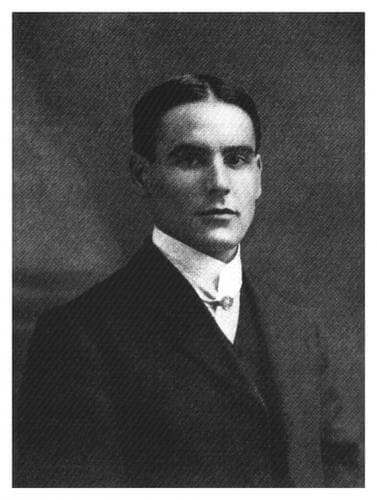
William Hope Hodgson was an English author. He produced a large body of work, consisting of essays, short fiction, and novels, spanning several overlapping genres including horror, fantastic fiction, and science fiction. Hodgson used his experiences at sea to lend authentic detail to his short horror stories, many of which are set on the ocean, including his series of linked tales forming the "Sargasso Sea Stories". His novels, such as The House on the Borderland (1908) and The Night Land (1912), feature more cosmic themes, but several of his novels also focus on horrors associated with the sea. Early in his writing career Hodgson dedicated effort to poetry, although few of his poems were published during his lifetime. He also attracted some notice as a photographer and achieved renown as a bodybuilder. He died in World War I at age 40.







