“You can never have too much sky. You can fall asleep and wake up drunk on sky, and sky can keep you safe when you are sad.”
— Esperanza reflects on the freedom and comfort she finds in the sky above Mango Street.

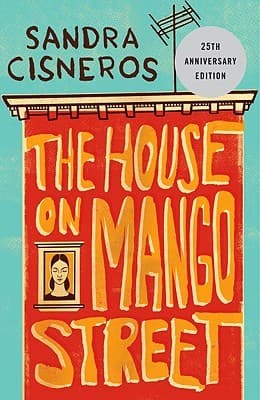
Sandra Cisneros (1983)
Genre
Young Adult
Reading Time
120 min
Key Themes
See below
Sign in to track this book
Esperanza Cordero's short stories show a young Latina girl finding her voice as she navigates identity, dreams, and the realities of her Chicago neighborhood on Mango Street.
Esperanza Cordero introduces her family: Papa, Mama, Carlos, Kiki, and Nenny. They have moved many times, but now they are moving into their own house on Mango Street. Esperanza is disappointed by the small, red house with a cramped interior and only four skinny trees. It is not the beautiful house with a big yard and trees she has always dreamed of. She feels shame about their new home, especially when a nun from her school points it out. This initial disappointment sets the tone for Esperanza's changing relationship with her home and her community.
Esperanza begins to explore her new neighborhood and make friends. She first feels alone, especially from her brothers who mainly play with boys. She befriends Cathy, who says she is from French royalty and plans to move soon. Later, she meets Lucy and Rachel, two sisters from Texas, with whom she shares a bicycle and many adventures. Through these interactions, and by watching other residents like Marin, a young woman from Puerto Rico who dreams of being taken away by a man, Esperanza starts to learn about womanhood, desire, and the limited chances for many in her community.
Esperanza experiences moments of self-consciousness and shame. At a school dance, she is embarrassed by her old shoes and tries to hide them, but her uncle pulls her onto the dance floor. Later, she gets her first job at a photography store, where an older man tricks her into kissing him. These events, along with her observations of other girls and women on Mango Street, contribute to her growing awareness of her body, her vulnerability, and the unfairness of the world, especially for young women. She starts to want a different life.
Esperanza observes the lives of several women on Mango Street, noting their struggles and lack of freedom. Minerva, a young mother, is often abused by her husband. Rafaela is locked in her apartment by her jealous husband. Sally, a beautiful girl, is controlled by her strict father and later by her husband, whom she marries young to escape her home. These stories affect Esperanza deeply. They make her realize the potential traps for women in her community. She vows to avoid such a fate and to make her own path, one where she is not confined or defined by a man.
Esperanza goes to a carnival where a group of boys sexually assaults her. This traumatic experience marks a loss of innocence. It strengthens her understanding of the dangers and vulnerabilities young women face in her environment and deepens her resolve to leave Mango Street. The event leaves her feeling violated and further separates her from her surroundings, confirming her belief that she must escape to protect herself and define her own future.
During a wake for a baby, Esperanza meets three mysterious old women, 'the three sisters,' who seem to have special wisdom. They tell her she is special and must leave Mango Street to find her own future. However, they also tell her she must remember where she comes from. More importantly, she must return to Mango Street for those who cannot leave. This prophecy gives Esperanza's journey two purposes: personal freedom and a commitment to her community. It suggests that her escape is not just for herself but also for those she leaves behind.
As Esperanza grows up, she increasingly uses writing to express herself and escape. She starts writing poems and stories, finding comfort and power in her words. She understands that by writing down her experiences and the stories of the people on Mango Street, she can process her reality and create a legacy. Her writing becomes her tool for defining herself, remembering her past, and shaping her future. Through writing, she plans to leave Mango Street, but also to bring it with her, turning her experiences into art.
Esperanza ends her story by stating her intention to leave Mango Street. She knows she will go to a place where she can be free and define her own identity, a place that is truly her own. However, she also repeats the promise she made to the three sisters: she will return. She will come back for the ones who cannot leave, for the people she has written about, carrying their stories with her. Her departure is not an abandonment but a journey towards empowerment, with a commitment to her roots and her community.
The Protagonist
Esperanza transforms from a shy, self-conscious girl into a self-aware young woman who understands her power through language and her responsibility to her community.
The Supporting
Nenny remains largely a static character, representing Esperanza's past and the childhood she is leaving behind.
The Supporting
Mama's character remains largely static, serving as a pillar of support and a cautionary tale for Esperanza.
The Supporting
Papa's character remains largely static, representing the traditional family structure Esperanza seeks to navigate.
The Supporting
Their relationship with Esperanza evolves as she matures and becomes more aware of the complexities of her world, while they largely remain figures of childhood innocence.
The Supporting
Marin's character remains largely static, embodying a particular path for women that Esperanza ultimately rejects.
The Supporting
Sally's character arc is one of attempted escape leading to a different form of entrapment, serving as a stark warning for Esperanza.
The Supporting
Minerva's character remains largely static, embodying the cyclical nature of hardship for women in the neighborhood.
The Supporting
Alicia's character remains largely static, serving as an inspiring figure who actively works to escape her circumstances.
The novel explores Esperanza's self-discovery as she navigates adolescence and her cultural background. She deals with her name, her appearance, and her place in the world, often feeling shame about her family's poverty and surroundings. Her observations of other women on Mango Street, both good and bad, shape her understanding of who she wants to be and who she does not want to become. Through writing, she starts to create her own identity, separate from the expectations and limits of her environment.
“I put it down on paper and then the ghost does not ache so much. I write it down and Mango Says goodbye sometimes. She does not hold me with both arms. She lets me go.”
The idea of 'home' is central to the novel. Esperanza wants a beautiful house, a place of stability and pride, which contrasts with the 'red house, a small one, but all our own' on Mango Street. This house, though hers, never truly feels like home because of its limits and the shame it causes. The theme explores the difference between a physical house and emotional belonging. It also shows Esperanza's struggle to find a place where she feels truly at home and free, both physically and spiritually. She eventually realizes that true home is within herself and her stories.
“I knew then I had to have a house. A real house. One I could point to. But this isn't it. The house on Mango Street isn't it.”
The novel examines the restrictive gender roles placed on women in Esperanza's community. Through the stories of Marin, Rafaela, Minerva, and Sally, Esperanza sees the cycles of abuse, dependence, and limited chances many women face. She observes how women are often confined to their homes, rely on men, or are trapped in early marriages that stop their growth. These observations fuel Esperanza's strong desire to make an independent path, to control her body and her future, and to escape traditional expectations that would otherwise define her.
“I have begun my own quiet war. Simple. Sure. I am one who leaves the table like a man, without putting back the chair or picking up the plate.”
Poverty is a constant background to Esperanza's life on Mango Street. The cramped living conditions, the shame of their house, and the limited resources for her family and neighbors show the impact of socio-economic inequality. Esperanza's hopes for a better life are always compared with the realities of her poor surroundings. The novel shows how poverty can limit opportunities, continue cycles of hardship, and influence self-perception, driving Esperanza's desire for a better life and escape from her circumstances.
“We didn't always live on Mango Street. Before that we lived on Loomis on the third floor, and before that we lived on Keeler. Before Keeler it was Paulina, and before that I can't remember. But what I remember most is that we never had a house to ourselves.”
Language, especially writing, is Esperanza's most powerful tool for self-expression, understanding, and escape. She is initially shy, but she finds her voice through words, turning her observations and experiences into stories and poems. Her writing helps her process trauma, express her dreams, and control her narrative. Through storytelling, she plans to leave Mango Street, but also to keep her promise of returning, carrying the stories of her community with her. This empowers both herself and those she represents.
“I like to tell stories. I am going to tell you a story about a girl who didn't want to belong.”
Short, poetic prose pieces that build a mosaic of Esperanza's life.
The novel is structured as a series of short, interconnected vignettes rather than a traditional linear narrative. Each vignette is a self-contained impression or observation, focusing on a specific character, event, or reflection. This fragmented structure mimics the way memory and experience are often recalled, creating a mosaic portrait of Esperanza's coming-of-age. It allows for a deep dive into specific moments and characters, building a rich, impressionistic understanding of Mango Street and its inhabitants through Esperanza's unique perspective.
The house represents identity, belonging, and the aspiration for a better life.
The 'house' is a central and recurring symbol. Initially, it represents Esperanza's shame and her family's poverty, as the house on Mango Street fails to meet her dreams of a beautiful, safe, and dignified home. Later, it symbolizes her yearning for independence, a place of her own where she can define herself. Ultimately, the idea of 'home' transcends a physical dwelling, evolving to represent Esperanza's inner self, her identity, and the stories she carries within her, emphasizing that true belonging is an internal state, not a physical location.
A story tracing Esperanza's journey from childhood innocence to mature self-awareness.
The entire novel functions as a coming-of-age narrative (Bildungsroman), chronicling Esperanza's transition from childhood to adolescence and her growing understanding of the world. Through her observations, friendships, and traumatic experiences, she learns about gender inequality, poverty, cultural identity, and the complexities of human relationships. Her journey culminates in a resolve to escape her circumstances and use her voice to tell her story and the stories of her community, marking her evolution into a self-aware and purposeful young woman.
The story is told entirely from Esperanza's subjective viewpoint, shaping reader perception.
The novel is narrated exclusively in the first person by Esperanza. This narrative choice provides intimate access to her thoughts, feelings, and perceptions, allowing readers to experience her world directly through her eyes. Her subjective and often poetic voice shapes the reader's understanding of the characters and events on Mango Street. The limited perspective highlights her journey of discovery and her evolving understanding of complex issues, emphasizing her personal growth and the subjective nature of her reality.
“You can never have too much sky. You can fall asleep and wake up drunk on sky, and sky can keep you safe when you are sad.”
— Esperanza reflects on the freedom and comfort she finds in the sky above Mango Street.
“I am an ugly daughter. I am the one nobody comes for.”
— Esperanza expresses feelings of insecurity and loneliness about her appearance and social standing.
“They are the only ones who understand me. I am the only one who understands them.”
— Esperanza describes her connection to the four skinny trees outside her house, seeing them as kindred spirits.
“I have inherited her name, but I don't want to inherit her place by the window.”
— Esperanza talks about her great-grandmother, a woman trapped in domestic life, and her desire to break free from that fate.
“Someday I will have a best friend all my own. One I can tell my secrets to.”
— Esperanza dreams of finding true friendship and emotional intimacy.
“The boys and the girls live in separate worlds.”
— Esperanza observes the gender divisions in her neighborhood and how they shape social interactions.
“I want to be like the waves on the sea, like the clouds in the wind, but I'm me.”
— Esperanza contemplates her identity and desires for freedom and change.
“A house of my own. Not a man's house. Not a daddy's. A house all my own.”
— Esperanza declares her independence and desire for a home that represents her autonomy.
“You must keep writing. It will keep you free.”
— Esperanza's aunt encourages her to pursue writing as a means of liberation and self-expression.
“I like to tell stories. I am going to tell you a story about a girl who didn't want to belong.”
— Esperanza introduces her narrative voice and her theme of resisting societal expectations.
“The moon did not answer, but the old man did. He said, 'Yes, little girl. The moon is a pearl.'”
— A moment of magical realism where Esperanza interacts with an old man who shares poetic wisdom.
“We are tired of being beautiful.”
— Esperanza and her friends discuss the pressures and burdens of female beauty standards.
“I have decided not to grow up tame like the others who lay their necks on the threshold waiting for the ball and chain.”
— Esperanza resolves to resist the traditional, restrictive paths laid out for women in her community.
“I put it down on paper and then the ghost does not ache so much.”
— Esperanza explains how writing helps her process pain and memories.
Ready to see how well you understood this book? Take our interactive quiz with 10 questions.
Biography coming soon.