“Barrabás came to us by sea, the child Clara wrote in her delicate calligraphy.”
— The very first line of the novel, introducing Clara and the dog Barrabás.

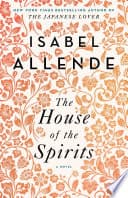
Isabel Allende (2015)
Genre
Fantasy / Historical Fiction
Reading Time
17 hours
Key Themes
See below
Sign in to track this book
For a century, the Trueba family's passionate, often difficult, lives unfold against political upheaval and mystical events in an unnamed Latin American country, leading to a dictatorship that reflects their own fiery spirits.
The story introduces the Del Valle family: Nívea and Severo Del Valle, and their eleven children. The youngest, Clara, has strong clairvoyant abilities. She talks to spirits and moves objects with her mind. Her older sister, Rosa the Beautiful, is known for her green hair and beauty, attracting many suitors, including Esteban Trueba, a poor but ambitious young man. Clara, however, predicts a tragic accident involving Rosa. This comes true when Rosa dies after accidentally eating poison meant for her father, Severo, a liberal politician. Clara, deeply affected by Rosa's death and her own role in foretelling it, vows never to speak again. She remains silent for ten years.
Devastated by Rosa's death, Esteban Trueba focuses all his energy on making his run-down family hacienda, Las Tres Marías, prosperous. He works tirelessly, exploiting local peasants and gaining a reputation for his harsh and often brutal treatment of them. He uses his growing wealth to improve the land, build new structures, and increase production, all while holding onto deep grief and anger over Rosa. During this time, he also rapes several peasant women, including Pancha García, who later has his son, Esteban García, though he never acknowledges him. His ambition and ruthlessness establish him as a powerful, though feared, landowner in the region.
After ten years of silence, Clara Del Valle, now a young woman, speaks again, surprising her family and Esteban Trueba. Esteban, still drawn to the Del Valle family and Clara's unique spirit, proposes marriage. Clara accepts, despite her family's concerns about Esteban's temper and reputation, feeling their union is meant to be. Their marriage is marked by Esteban's passionate but possessive love and Clara's calm independence and spiritual world. They move to Las Tres Marías, where Clara, despite her husband's harshness, brings warmth and magic to the house, filling it with music, guests, and spirits. She also starts a school for peasant children, initially annoying Esteban.
Clara and Esteban soon have a daughter, Blanca, who grows into a gentle and artistic child, often caught between her parents' different personalities. Later, Clara gives birth to twin sons, Jaime and Nicolás. Jaime is quiet, studious, and compassionate, dedicating himself to medicine and social justice. Nicolás is flamboyant, restless, and more interested in spiritualism and unusual pursuits, often disagreeing with his father's conservative views. The children represent different parts of the Trueba family, showing both Esteban's fiery passion and Clara's mystical and empathetic nature. Their childhood at Las Tres Marías and in the city is shaped by the family's growing wealth and the increasingly unstable political climate.
Blanca Trueba falls deeply in love with Pedro Tercero García, the son of a peasant foreman at Las Tres Marías and a talented folk singer with growing socialist leanings. Their secret romance lasts for years, growing amid the social divides of the hacienda. When Esteban Trueba discovers their affair, his violent temper erupts. He brutally beats Blanca and, in a fit of rage, cuts off three of Pedro Tercero's fingers with an axe, ending his musical career and forcing him to flee. This violence deeply traumatizes Blanca and further separates Clara from Esteban, leading to a permanent break in their marriage. Clara decides to leave Esteban's bed and live in her own part of the house.
After her brutal separation from Pedro Tercero, Esteban sends Blanca away. She later returns pregnant with Pedro Tercero's child. To save appearances, Esteban arranges for Blanca to marry a French count, Jean de Satigny, who is later revealed to be homosexual. Blanca eventually gives birth to a daughter, Alba, who becomes Clara's beloved granddaughter and Esteban's favorite. Alba inherits some of Clara's gentle nature and curiosity. Years later, Clara falls ill and, after a peaceful decline, dies surrounded by her family. Her death leaves a deep void in the Trueba household. Esteban, despite their distant relationship, is deeply affected by the loss of his wife, the only person who truly understood and calmed him.
As Alba grows up, the political situation in the unnamed Latin American country becomes more unstable. Esteban Trueba, now a prominent conservative senator, strongly opposes the growing socialist movement, which gains wide support among the working class and peasants. His son Jaime becomes a dedicated doctor serving the poor and secretly supports the Socialist Party, often clashing with his father. Nicolás, meanwhile, pursues various spiritual and business ventures, largely detached from politics. The country faces strikes, protests, and ideological conflicts. Eventually, the Socialist Party, led by 'the Candidate' (a clear reference to Salvador Allende), wins the presidential election, starting a period of major social and economic reforms that greatly alarm and anger Esteban Trueba and his conservative allies.
The Socialist government's reforms and nationalization policies intensify political division, causing a severe economic crisis and increasing social unrest. Esteban Trueba, along with other conservative forces, actively plots to overthrow the government. Eventually, a violent military coup, supported by foreign powers, occurs. The presidential palace is bombed, and 'the Candidate' dies (implied suicide). The military junta takes power, beginning a brutal period of repression, human rights abuses, and political persecution. Jaime Trueba, because of his socialist views and his connection to 'the Candidate,' is arrested, tortured, and killed. Pedro Tercero García goes into hiding, and many others connected with the former government face similar fates.
In the chaos after the coup, Alba Trueba, a university student and socialist activist, becomes a target of the military regime. She is arrested and taken to a secret detention center. There, her half-uncle, Esteban García, tortures her brutally, both physically and sexually. Esteban García, the illegitimate son of Esteban Trueba and Pancha García, has risen in the military police ranks and holds deep resentment against the Trueba family. Despite the horrific experience, Alba finds strength in the memory of her grandmother, Clara, and her family's love. She also befriends a fellow prisoner, a young woman who helps her survive the psychological torment.
Despite his political alignment with the new regime, Esteban Trueba is horrified by the torture of his beloved granddaughter, Alba. He uses all his remaining political influence, connections, and wealth to secure her release. After a long and difficult effort, Alba is finally freed, but she is deeply scarred by her experience. She returns home, frail and traumatized. With the help of Pedro Tercero García, who risks his life to visit her, and the ghost of Clara, Alba begins to recover. She finds Clara's old notebooks and, inspired by her grandmother's records and her own experiences, starts to write the Trueba family story, hoping to understand her past and move forward, breaking the cycle of violence and hatred.
After Alba's release, as she begins to write the family's history, Esteban Trueba, now an old and frail man, reflects on his life. He is haunted by his past actions, especially his violence and his treatment of the peasants and his family. He finds some peace in his reconciliation with Alba and in seeing her resilience. One day, sitting in his armchair, he dies peacefully, his hand held by Alba. His death marks the end of an era and the patriarchal line of the Trueba family, symbolizing the passing of the old order. Alba, now the last living Trueba, continues to write, turning their shared memory into a story of survival and hope.
The Protagonist
From a silent, traumatized child, Clara grows into a serene yet powerful matriarch who, through her spiritual gifts and quiet strength, becomes the moral center of the Trueba family, influencing generations.
The Protagonist/Antagonist
Esteban's arc is one of a ruthless, self-made man whose ambition and temper cause immense suffering, but who, through the love of his family, particularly Alba, ultimately confronts his past and finds a measure of peace and reconciliation.
The Protagonist/Narrator
Alba transforms from an innocent child into a resilient survivor and the chronicler of her family's saga, finding her voice and purpose in telling their story and breaking the cycle of violence.
The Supporting
Blanca's arc is one of enduring forbidden love and quiet resilience, defying her father's control to follow her heart and protect her daughter.
The Supporting
Pedro Tercero evolves from a passionate young lover and folk singer into a resilient revolutionary and devoted father, enduring persecution for his beliefs and his love.
The Supporting
Jaime's arc is one of unwavering dedication to justice and compassion, culminating in his tragic sacrifice for his ideals.
The Supporting
Nicolás's arc is one of an eccentric individual seeking his own path outside of traditional expectations, eventually finding a measure of stability in his unconventional pursuits.
The Antagonist
Esteban García's arc is one of resentment fueled by his illegitimate birth, leading him to become a cruel instrument of the military regime and a direct antagonist to the Trueba family.
The Mentioned
Her arc is cut short by her tragic death, but her memory profoundly shapes Esteban Trueba's life and the initial trajectory of the Trueba family saga.
The novel is a multi-generational family story, following the Trueba and Del Valle families from the early 20th century to the 1970s. It explores how personal choices, political events, and inherited traits shape individuals and a family line. The narrative highlights the cyclical nature of violence, love, and resilience passed down through generations, ending with Alba writing the family history to break these cycles. The 'big house on the corner' symbolizes the family's lasting presence and changing fortunes, witnessing all their triumphs and tragedies.
“Many years later, as she sat writing her memories, Alba found that the only way to begin was to recreate the past, to go back to the beginning, to the time of her grandmother Clara, who had written in her notebooks for the pure pleasure of it, without any thought of an audience.”
The connection between love and violence is a central theme. Esteban Trueba shows this paradox: his passionate love for Rosa, then Clara, and later Alba, often mixes with his possessiveness, rage, and physical abuse. His violence extends from personal relationships, like the assault on Blanca and Pedro Tercero, to his brutal treatment of peasants. The novel suggests that violence, whether personal or political, can be destructive and, at times, lead to deeper understanding or resistance. Ultimately, love, especially the lasting love between Blanca and Pedro Tercero, and Alba's love for her family, is a powerful counterforce to violence.
“He loved her with the passion of a brute, with the violence of a man who had never known tenderness and who mistook possession for love.”
The novel is deeply rooted in the political history of an unnamed Latin American country, mirroring Chile's 20th-century struggles. It clearly shows the class divisions, the rise of socialist ideas, and the brutal repression of a military coup. Characters like Severo Del Valle and Jaime Trueba represent liberal and socialist movements, while Esteban Trueba embodies the established conservative elite. The narrative highlights the devastating effects of political polarization and state violence on ordinary lives, particularly through the experiences of the peasants and Alba's torture. It emphasizes the fight for human rights and the memory of those who suffered.
“The memory of the people, their collective memory, was the only thing that would save them.”
Magical realism fills the narrative, blending the ordinary with the miraculous. Clara's clairvoyance, telekinesis, and communication with spirits are central, influencing events and offering a unique view of reality. Other elements, like Rosa's green hair, the ghosts in the Trueba house, and prophetic dreams, are presented as natural events within the novel's world. This magical dimension deepens the characters' inner lives, comments on spiritual aspects of existence, and provides a different way to understand the often brutal realities of the political world.
“Clara wrote in her notebooks for her whole life, and when she died, her notebooks contained so many pages that it was impossible to count them.”
Remembering and telling stories are central to the novel's structure and meaning. Clara's notebooks, filled with her observations and spiritual experiences, form the basis of the family's history. Alba, deeply affected by her own experiences, uses these notebooks and her own memories to construct the narrative. She gives voice to the past, seeking to understand her identity and the violence that shaped her. Storytelling becomes an act of healing, resistance, and preservation, ensuring that the injustices and her family's resilience are not forgotten.
“I write, she wrote, that memory is a fragile thing, a thread that can be broken, and that it must be carefully preserved.”
Integration of fantastical elements into a realistic setting.
Magical realism is a pervasive stylistic choice, seamlessly blending supernatural occurrences into the otherwise historical and realistic narrative. Clara's psychic abilities, the presence of ghosts, and prophetic dreams are presented without explanation or judgment, as integral parts of the Trueba family's reality. This device allows the author to explore themes of intuition, destiny, and the spiritual dimensions of human experience, providing a counterpoint to the harsh political realities and the often brutal actions of characters like Esteban Trueba.
The story is primarily told by Alba, with sections from Esteban Trueba.
The novel employs a complex narrative structure, primarily using a first-person plural 'I' voice, which is eventually revealed to be Alba, writing the family's history. This 'I' often refers to 'we,' encompassing Clara's spirit and the collective memory. Interspersed are sections told in the first-person 'I' of Esteban Trueba, offering his perspective and contrasting sharply with Alba's. This shifting narration provides multiple viewpoints, allowing for a richer, more nuanced understanding of events and characters, while also highlighting the subjective nature of memory and history. Clara's notebooks are also a key narrative device, providing the foundation for Alba's story.
Clara's predictions and dreams often hint at future events.
Foreshadowing is frequently used, primarily through Clara's clairvoyant abilities and dreams. Her early prediction of Rosa's death sets a precedent for the prophetic nature of the narrative. These premonitions build suspense and create a sense of inevitable destiny, even amidst the characters' struggles for free will. This device reinforces the magical realism of the story and suggests that certain events, particularly tragedies, are fated, while also emphasizing the characters' internal struggles against or acceptance of their fates.
The Trueba family home as a living entity and historical record.
The 'big house on the corner' is more than just a setting; it is a central symbol and almost a character in itself. It is where Clara lives, where her spirits reside, and where the family's history unfolds. Its changing appearance, from its initial grandeur to its eventual dilapidation and silent witness to the family's struggles, mirrors the fortunes of the Trueba family and the nation. It represents stability, memory, and the enduring legacy of the family, housing both their joys and their tragedies, and ultimately becoming the place where Alba records their story.
“Barrabás came to us by sea, the child Clara wrote in her delicate calligraphy.”
— The very first line of the novel, introducing Clara and the dog Barrabás.
“She was a small, silent child, with an occasional tendency to prophetic outbursts.”
— Describing Clara's early childhood and her unique abilities.
“He was a man of the earth, with a peasant's shrewdness and a landowner's ambition.”
— Characterizing Esteban Trueba, highlighting his origins and drive.
“Memory is a crazy woman that keeps throwing things at you.”
— A reflection on the nature of memory and how it functions.
“In the end, all that remains is the love you gave and the love you received.”
— A poignant statement about what truly matters in life.
“The world is a place where you can find anything, but you must know where to look.”
— A general observation on discovery and knowledge.
“She spent the rest of her life in the house, conversing with spirits and writing in her notebooks.”
— Describing Clara's later life, embracing her spiritual connections.
“He always said that the land was like a woman, that you had to treat her with respect and affection.”
— Esteban Trueba's perspective on his relationship with his land.
“Truth is not found in the facts, but in the story.”
— A meta-commentary on the nature of historical narration and truth.
“Fear is a habit, and one that is difficult to break.”
— A psychological insight into the pervasive nature of fear.
“She knew that her destiny was to be a bridge between the living and the dead.”
— Clara's understanding of her role and unique abilities.
“Every person is a world, and every world is a secret.”
— A statement about the individuality and complexity of human beings.
“The only thing that can truly save us from oblivion is love.”
— A profound reflection on the enduring power of love.
“The past is a stubborn thing, and it refuses to stay buried.”
— Reflecting on the persistent influence of past events and traumas.
“She was not afraid of death, but of not living.”
— A powerful statement about a character's perspective on life and death.
Ready to see how well you understood this book? Take our interactive quiz with 10 questions.
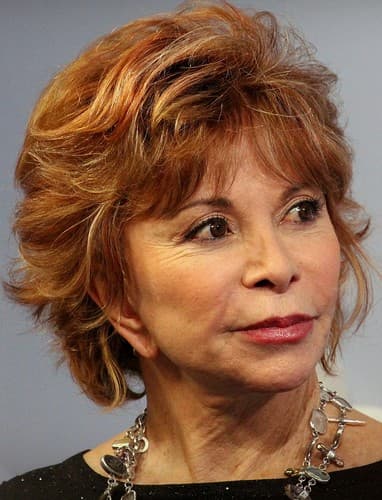
Isabel Angélica Allende Llona is a Chilean writer. Allende, whose works sometimes contain aspects of the genre magical realism, is known for novels such as The House of the Spirits and City of the Beasts, which have been commercially successful. Allende has been called "the world's most widely read Spanish-language author." In 2004, Allende was inducted into the American Academy of Arts and Letters, and in 2010, she received Chile's National Literature Prize. President Barack Obama awarded her the 2014 Presidential Medal of Freedom.







