“The original Adam, before he had sinned, was a better carpenter, a better mason, a better agriculturist, than the present Adam.”
— Pondering the decline of craftsmanship over generations.

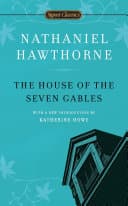
Nathaniel Hawthorne (1981)
Genre
Historical Fiction
Reading Time
360 min
Key Themes
See below
Sign in to track this book
A decaying New England mansion, steeped in a centuries-old curse and ancestral sin, traps the last Pyncheons in a gothic web of mysterious deaths and hidden documents that could either redeem or doom their fading legacy.
In the 17th century, Colonel Pyncheon, a rich and ambitious Puritan, wanted land owned by Matthew Maule, a poor carpenter. Pyncheon accused Maule of witchcraft, leading to his execution. Maule cursed him as he died: "God will give him blood to drink!" Pyncheon then built a large house, the House of the Seven Gables, on the land. On the day the house was finished and he held a celebration, Colonel Pyncheon was found dead in his armchair. There was a single drop of blood on his ruff, a mysterious smile on his face, and his deed to valuable land in Maine was missing. This event started the Pyncheon family's decline and the recurring curse.
Two centuries later, Hepzibah Pyncheon, an old, poor spinster, lives alone in the decaying House of the Seven Gables. Her only relative is her brother, Clifford Pyncheon, who is in prison for a murder he might not have committed. Facing poverty and unable to keep her pride, Hepzibah decides to open a small shop in one of the house's gables. This decision humiliates her, as it forces her to deal with the public and betray her family's perceived social status. She struggles with poor eyesight and shyness, making her first attempts at shopkeeping awkward and discouraging.
After thirty years in prison for his uncle's alleged murder, Clifford Pyncheon is released and returns to the House of the Seven Gables. Hepzibah eagerly waits for him, believing his return will bring joy and purpose back into her life. However, Clifford is a changed man. His long time in prison destroyed his once sensitive and artistic spirit, leaving him childlike, uncaring, and very sensitive to beauty and ugliness. He finds comfort only in simple things like blowing soap bubbles or watching street life from a hidden window, unable to engage with the world or their poor life.
Phoebe Pyncheon, a distant cousin from the country, arrives at the House of the Seven Gables looking for a place to stay and work. Unlike Hepzibah and Clifford, Phoebe is cheerful, practical, and full of youthful energy. Her presence immediately brightens the oppressive mood of the old house. She takes over the shop, making it profitable and inviting. Her sunny mood starts to soften Hepzibah's coldness and even brings brief moments of joy to the broken Clifford. Phoebe's simple kindness and hard work make her an essential part of the household, a sharp contrast to the Pyncheon family's usual sadness.
Judge Jaffrey Pyncheon, a powerful and seemingly kind figure, is Hepzibah and Clifford's wealthy and influential cousin. He often visits the house, pretending to be concerned, but his presence fills Hepzibah with fear. The Judge is a direct descendant of Colonel Pyncheon and looks very much like him, both physically and in his shrewd, self-serving ambition. He is especially interested in Clifford, whom he believes knows about a valuable missing family document or deed. The Judge's visits are always unsettling, as he subtly frightens Hepzibah and tries to manipulate Clifford, representing the corrupting effect of old sin and power.
Holgrave, a young, intelligent, and somewhat cynical daguerreotypist, rents a room in the House of the Seven Gables. He observes human nature well and quickly understands the Pyncheon family's complex relationships. He is fascinated by the house's history and the curse's lasting effects. Holgrave initially supports progress and change, often criticizing the past's hold. He develops a deep affection for Phoebe, admiring her natural goodness and practicality. He also strongly dislikes and distrusts Judge Jaffrey Pyncheon, sensing the dishonesty beneath his respectable appearance and believing he wronged Clifford.
A major side story involves a missing deed to a large piece of land in Maine, which Colonel Pyncheon thought was extremely valuable. This deed disappeared on the night of his death and was never found. Generations of Pyncheons searched for it without success, believing it held the key to restoring the family's wealth and status. Judge Jaffrey Pyncheon is particularly obsessed with finding it, thinking it is hidden inside the house. The search for this deed shows the family's lasting focus on material wealth and the curse's ongoing influence, as the land itself is later found to be worthless.
One day, Judge Jaffrey Pyncheon arrives at the House of the Seven Gables, demanding to speak with Clifford alone. He cornered Clifford, trying to get information about the missing deed, and threatened to have him institutionalized if he refused. Left alone in Colonel Pyncheon's armchair, the Judge is found dead by Hepzibah, with a single drop of blood on his ruff and a mysterious smile on his face. This mirrored the death of his ancestor, Colonel Pyncheon, centuries earlier. This strange repetition of the ancestral death terrifies Hepzibah and causes Clifford to flee the house in a moment of unexpected clarity.
After Judge Pyncheon's death, Clifford, seemingly reawakened by the shock, experiences a sudden burst of mental clarity and energy. He takes Hepzibah and boards a train, leaving the House of the Seven Gables behind. On the train, he talks deeply and clearly with a stranger, sharing his thoughts on the importance of progress, the need to let go of the past, and the freeing power of change. This unexpected intellectual revival shows how much his spirit had been suppressed by his imprisonment and the house's oppressive atmosphere, offering a glimpse of the man he once was.
Upon returning to the house, Phoebe finds Holgrave alone with the dead Judge. Holgrave, who has been watching the Pyncheon family closely, tells Phoebe he is a descendant of Matthew Maule, the carpenter cursed by Colonel Pyncheon. He explains that the Judge's death fulfills the ancestral curse of "blood to drink." Holgrave then tells Phoebe he loves her, and she loves him back. Their union, representing the coming together of the Maule and Pyncheon lines, breaks the centuries-old curse, promising a future free from the past's grip. He also reveals that the missing deed for the Maine land was hidden behind a portrait of Colonel Pyncheon all along.
After Holgrave's revelation, he finally discovers the missing deed to the Maine land, hidden behind Colonel Pyncheon's portrait within the House of the Seven Gables. This discovery, however, comes with a twist: the large piece of land, once thought to be extremely valuable and the reason for generations of Pyncheon ambition and conflict, turns out to be worthless. This shows the pointlessness of the Pyncheon family's obsession with inherited wealth and their ancestors' ill-gotten gains, demonstrating that true value is not in material possessions or old claims.
With the curse broken and the true nature of the Maine land revealed, Hepzibah, Clifford, Phoebe, and Holgrave decide to leave the House of the Seven Gables. They move to Judge Pyncheon's large country estate, a more modern and cheerful home free from the past's heavy weight. It is also revealed that the country estate is on the same land as the original Maule's Well, bringing the story full circle. This move symbolizes a complete break from the old sin and the gloom of the old house, allowing the characters to embrace a future built on love, practicality, and real human connection rather than inherited wealth and old grudges.
The Protagonist
Hepzibah slowly sheds her rigid pride and learns to embrace the practicalities of life and the warmth of human connection through Phoebe's influence.
The Protagonist
Clifford briefly regains his intellectual vigor after Judge Pyncheon's death, ultimately finding peace away from the oppressive house.
The Protagonist
Phoebe matures into a loving and capable woman, instrumental in breaking the curse and forming a new, healthier family unit.
The Protagonist
Holgrave evolves from a cynical reformer to a man who embraces love and the reconciliation of past wrongs.
The Antagonist
The Judge's pursuit of wealth and power ultimately leads to his demise, fulfilling the family curse.
The Mentioned
His actions establish the central conflict and curse that reverberates through the narrative.
The Mentioned
His curse drives the narrative, ultimately broken by the union of his descendant with a Pyncheon.
The Mentioned
His actions in the legend foreshadow the eventual reconciliation and breaking of the curse.
The novel's main theme explores how past generations' sins continue to affect the present. Colonel Pyncheon's unjust taking of Maule's land and his role in Maule's execution cast a centuries-old curse and a shadow of guilt over his descendants. This appears in the Pyncheon family's decline, their isolation, and the recurring mysterious deaths, especially Judge Jaffrey Pyncheon's, which mirrors his ancestor's death. The decaying House of the Seven Gables itself physically shows this inherited guilt, always reminding its residents of their tainted past and stopping them from moving forward until the curse is broken.
“"The truth was, that, until the present epoch, the architecture of the House of the Seven Gables had been so indescribably forlorn, so utterly destitute of any cheerful or hospitable aspect, that it seemed as if the very sunshine would avert its face from the dismal object, and prefer to gladden any other spot rather than the one where its ancestral gloom had so long been brooding."”
Hawthorne criticizes the damaging pursuit of wealth and material things. Colonel Pyncheon's greed for Maule's land and the mythical Maine tract starts the curse. Generations of Pyncheons are consumed by the fruitless search for the missing deed, showing their misplaced values. Judge Jaffrey Pyncheon's greed drives his manipulation of Clifford and his eventual death. The novel suggests that true happiness comes not from inherited wealth or social status, but from honest work, love, and human connection, as shown by Phoebe and Holgrave's eventual union and their disregard for the worthless Maine land.
““The Pyncheon family, moreover, were a family of worldly people. A century and a half ago, they had been great proprietors, and had been accustomed to live in state. The Colonel, by his will, had entailed the greater part of his property to his descendants, on condition that they should always retain the old house, and never part with any of the land upon which it stood.””
The novel explores the conflict between holding onto the past and embracing progress. The House of the Seven Gables represents the stifling weight of history, tradition, and ancestral sin, trapping Hepzibah and Clifford in its gloom. Holgrave, with his modern daguerreotype and reformist ideas, initially champions destroying the past to make way for a better future. Phoebe, however, shows a balanced approach, respecting tradition while actively working to improve the present. The eventual departure from the old house and the union of Phoebe and Holgrave symbolize the possibility of moving forward, learning from the past without being controlled by its curses, and building a new, healthier future.
““Shall we never, never get rid of this Past?” cried Holgrave, with a burst of impatience. “It lies upon the Present like a giant’s dead body! In fact, the case is just as if the Past were not dead at all, but only asleep, and as if it were to start up, at any moment, and walk about among us, as of yore, but with a still more ghostly stride.””
The novel suggests that redemption from the Pyncheon curse comes not through grand gestures or accumulated wealth, but through simple human kindness, love, and practical effort. Phoebe Pyncheon, with her cheerful nature and hard work, slowly revitalizes the gloomy household and brings moments of joy to Clifford and Hepzibah. Her love for Holgrave, a descendant of the wronged Maule, bridges the old divide between the families. Their union, based on mutual affection and a forward-looking view, ultimately breaks the curse. This theme highlights the changing power of real human connection and the importance of actively engaging with life over passively suffering.
““Phoebe, with her light, cheerful spirit, her activity, her warmth, her good sense, was a flower of Paradise, in a soil where so little else could flourish.””
Hawthorne looks into the complexities of guilt, both inherited and personal, and the unclear nature of innocence. Clifford Pyncheon's unjust imprisonment for a murder he did not commit is a strong example of wrongful accusation and the lasting harm it causes. The recurring theme of the mysterious Pyncheon deaths raises questions about whether the family is truly cursed or if their own actions and psychological states contribute to their fate. Judge Jaffrey Pyncheon's outwardly respectable but inwardly corrupt character further blurs the lines, suggesting that society's view of innocence can be misleading, and true guilt often hides beneath a show of virtue.
““All through life, for a full thirty years, he had been a prisoner only by the crime of another, and by the complicity of circumstances.””
A supernatural curse placed on the Pyncheon family by Matthew Maule.
The Maule's Curse, "God will give him blood to drink!", is the central supernatural element of the novel. Uttered by Matthew Maule as he was executed for witchcraft at Colonel Pyncheon's instigation, it manifests as a recurring pattern of sudden, mysterious deaths among Pyncheon men, often with a drop of blood on their ruff and a strange smile, mirroring Colonel Pyncheon's own death. This curse drives the plot, creating an atmosphere of dread and influencing the characters' fates until it is finally broken by the reconciliation of the Maule and Pyncheon lines through Phoebe and Holgrave's marriage.
A decaying, ancestral mansion that embodies the family's history and curse.
The House of the Seven Gables is more than just a setting; it is a character in itself, a physical manifestation of the Pyncheon family's pride, decline, and ancestral sin. Its decaying architecture, gloomy atmosphere, and hidden secrets (like the missing deed) reflect the family's own stagnation and the weight of their past. The house traps its inhabitants, particularly Hepzibah and Clifford, in a cycle of isolation and despair. Its eventual abandonment symbolizes the breaking of the curse and the family's liberation from the past's oppressive grip, allowing them to embrace a brighter future.
A lost document representing the Pyncheon family's obsession with inherited wealth.
The missing deed to a vast tract of land in Maine, believed to be immensely valuable, serves as a significant MacGuffin throughout the novel. It disappeared on the night of Colonel Pyncheon's death and its recovery becomes an obsession for generations of Pyncheons, most notably Judge Jaffrey Pyncheon. The search for this deed symbolizes the family's enduring avarice and their misguided belief that material wealth will restore their prestige. The ironic revelation that the land is worthless upon the deed's discovery underscores the futility of their generational pursuit and highlights the novel's critique of materialism.
Holgrave's photographic art, which reveals inner truths and exposes hypocrisy.
Holgrave's daguerreotype serves as a plot device to reveal character and theme. Unlike traditional portraits, which can flatter or idealize, the daguerreotype captures an unflinching, objective truth, often exposing the inner nature of its subjects. Holgrave's ability to create these images allows him to perceive the hidden hypocrisy of Judge Jaffrey Pyncheon, capturing his true, grasping nature beneath his benevolent facade. It functions as a tool for psychological insight and a symbol of modern truth-telling, contrasting with the Pyncheon family's reliance on superficial appearances and inherited status.
A painting that hides a secret and embodies the ancestral presence.
The portrait of Colonel Pyncheon, hanging prominently in the House of the Seven Gables, is a constant visual reminder of the ancestral sin and the curse. It is described as bearing a striking resemblance to Judge Jaffrey Pyncheon, emphasizing the enduring nature of the family's character flaws. More significantly, the portrait serves as a hiding place for the long-lost deed to the Maine land. Its role in concealing this key document makes it a symbolic focal point for the Pyncheon family's obsession with their past wealth and ultimately, its revelation helps to resolve the central mystery of the plot.
“The original Adam, before he had sinned, was a better carpenter, a better mason, a better agriculturist, than the present Adam.”
— Pondering the decline of craftsmanship over generations.
“Heaven sometimes permits a sin to perpetuate itself, and to grow more hideous with every generation, not for its own sake, but for the sake of the children.”
— Reflecting on the enduring curse on the Pyncheon family.
“The greatest obstacle to being master of an old house is the old house itself.”
— Judge Pyncheon's struggle to fully possess the ancient Pyncheon house.
“Human nature will not flourish, any more than a potato, if it be planted too often in the same soil.”
— Hepzibah's isolation and the need for new experiences.
“It is a truth, and an unpalatable one, that the most beautiful things in the world are the most perishable.”
— Observing the fleeting beauty of nature and life.
“The street itself, with its two rows of respectable though not magnificent houses, had an air of decorous gloom.”
— Describing the street where the House of the Seven Gables stands.
“Happiness is a butterfly, which, when pursued, is always just beyond your grasp, but which, if you will sit down quietly, may alight upon you.”
— Clifford's musings on the elusive nature of happiness.
“The world owes all its onward impulse to men ill at ease.”
— Pondering the motivations behind human progress.
“Man's great misfortune is that he has no organ for the truth; he is a born liar.”
— A cynical observation about human nature.
“There is no such thing as an impartial observer. All observation is colored by the past.”
— Considering how personal history influences perception.
“Every human being has a right to some happiness, and, if he cannot get it in one way, he must in another.”
— Phoebe's optimistic outlook on life and individual rights.
“The house itself, with its seven gables, may be considered as a character of the book.”
— A meta-commentary on the symbolic importance of the house.
“Few mortals know what it is to feel themselves an object of public notice, without the interposition of any kind of screen whatever.”
— Hepzibah's discomfort and self-consciousness when opening her cent-shop.
“The Pyncheon family, at the epoch of our story, was in a state of great decay.”
— Introducing the Pyncheon family's circumstances at the beginning of the novel.
Ready to see how well you understood this book? Take our interactive quiz with 10 questions.

Nathaniel Hawthorne was an American novelist and short story writer. His works often focus on history, morality, and religion.







