“The house was a place of secrets, and she was only just beginning to uncover them.”
— As Elizabeth starts to explore the mysterious house and its history.

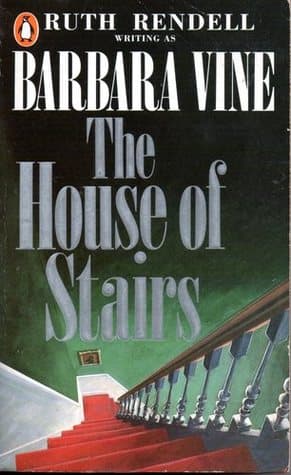
Barbara Vine (1988)
Genre
Thriller / Mystery
Reading Time
360 min
Key Themes
See below
Sign in to track this book
A chance encounter reignites a dormant, toxic friendship between two women, forcing them to confront the 'terrible things' of their past as a terrifying intimacy reclaims their lives in 1960s London.
The story begins with Lizzie, the narrator, spotting her old friend Bell from a taxi in a busy London street. Despite fourteen years of estrangement and 'terrible things' that happened between them, Lizzie impulsively jumps out and pursues Bell. Bell is at first hesitant and evasive, but Lizzie's persistence eventually leads to a tentative reunion. This chance encounter immediately sends Lizzie back to the past, specifically to the summer of 1964, when she first met Bell and became involved in the peculiar, isolated world of Bell's wealthy Aunt and Uncle, who lived in a grand, labyrinthine house with an imposing central staircase. Lizzie's present-day pursuit of Bell is driven by nostalgia, guilt, and an unresolved need to understand the events that shaped their youth and ultimately tore them apart.
In 1964, a young, orphaned Lizzie lives a solitary life in London when she gets an unexpected invitation from Bell. Bell, whom Lizzie vaguely knows from a brief encounter, invites her to spend the summer at the sprawling, eccentric home of her Aunt and Uncle, Cosette and Jago, in Regent's Park. Lizzie, feeling isolated and wanting connection, accepts. Upon her arrival, she is immediately struck by the house's unique architecture, especially the dominant and somewhat intimidating central staircase that gives the book its title. The atmosphere is one of genteel decay and unspoken rules, with Cosette and Jago maintaining a detached, almost theatrical presence. Lizzie, at first relieved to escape her loneliness, finds herself drawn into the peculiar dynamics of the household, where Bell seems both a resident and an outsider, constantly seeking the approval of her formidable relatives.
As Lizzie settles into the House of Stairs, she becomes aware of the unusual relationships within. Cosette, Bell's aunt, is a woman of immense wealth and a controlling nature, often appearing frail but having a sharp intellect and manipulative streak. Jago, her husband, is a quiet, scholarly man, seemingly subservient to Cosette but with his own hidden depths. Bell, Cosette's niece, lives under their strict guardianship, constantly trying for their affection and approval, yet often falling short in Cosette's eyes. Lizzie, an outsider, observes their intricate power struggles and the unspoken rules that govern their interactions. She notices Bell's desperate attempts to please Cosette, often leading to self-effacing behavior, and Jago's quiet, almost mournful presence. The house itself seems to amplify these dynamics, its vastness and many rooms creating a sense of both grandeur and isolation.
The staircase, a grand, winding structure dominating the center of the house, quickly becomes a focal point for Lizzie. It is not just an architectural feature but a symbol of the house's oppressive atmosphere and the characters' confined lives. Lizzie observes how Bell navigates the stairs with a peculiar mix of familiarity and apprehension, often using them as a stage for her attempts to gain Cosette's attention. The stairs represent the social hierarchy within the house, with Cosette often positioned at the top, observing and judging. They are also a constant reminder of the physical and psychological maze the characters inhabit. Lizzie herself feels both drawn to and intimidated by the staircase, sensing its silent witness to the unfolding dramas and the secrets it seems to guard within its many turns. The sheer number of stairs and their imposing presence contribute to the feeling of being trapped and observed.
As the summer goes on, Lizzie and Bell's friendship deepens. Lizzie, at first a quiet observer, finds herself drawn into Bell's world, becoming a confidante for Bell's frustrations and anxieties about her aunt and uncle. Bell reveals her deep insecurities, her yearning for freedom, and her profound dependence on Cosette and Jago, despite her resentment of their control. Lizzie, in turn, offers Bell a sense of understanding and companionship she has lacked. Their bond becomes a source of both comfort and increasing tension within the house, as Cosette subtly disapproves of their closeness. Lizzie witnesses Bell's fragile mental state, her mood swings, and her desperate attempts to assert herself, which often backfire and lead to further subjugation by Cosette. The friendship, while seemingly a refuge, inadvertently makes Bell more vulnerable to the manipulations around her.
Cosette's health, at first delicate, begins to visibly worsen. She suffers from a mysterious illness that causes her to experience episodes of confusion, memory loss, and physical weakness. This decline places a burden on Bell, who must act as Cosette's primary caregiver, attending to her needs and whims. Lizzie observes Bell's exhaustion and the emotional toll this responsibility takes on her. Cosette's illness also makes her manipulative tendencies worse, as she uses her frailty to exert even greater control over Bell, making her feel indispensable yet simultaneously inadequate. The tension in the house escalates, with Bell caught between her duty, her desire for independence, and the suffocating demands of her ailing aunt. Jago remains a quiet, almost spectral figure, offering little practical help or emotional support to Bell, further isolating her.
The story builds to an incident involving Cosette and the grand staircase. During one of Cosette's episodes of confusion, something happens on the stairs. The details are at first vague and shrouded in Lizzie's fragmented memories, but it involves Cosette falling or being found in a precarious position. This event, whether accidental or otherwise, has profound consequences. It solidifies Bell's role as Cosette's sole and indispensable caretaker, further trapping her within the confines of the house and her aunt's demands. It also creates a lingering sense of unease and suspicion, subtly shifting the power dynamics and the emotional atmosphere. Lizzie, a witness to the aftermath, begins to question the nature of the relationships and the true events of that day, sensing a deeper, darker undercurrent beneath the surface of their lives. This incident marks a point of no return for Bell.
Cosette eventually dies from her illness. Her death, while perhaps anticipated given her declining health, leaves a void and a complicated legacy. It is revealed that Cosette, despite her immense wealth, had made unusual provisions in her will, leaving Bell and Jago in a financially precarious and legally entangled situation. The details of the will are vague but imply a continued dependence or a challenge to their future. Lizzie observes Bell's complex reaction to her aunt's death – a mix of grief, relief, and a profound sense of being adrift without the structure, however oppressive, that Cosette provided. Jago's reaction is similarly muted and enigmatic. The house, once dominated by Cosette's presence, now feels eerily empty, yet still holds the echoes of her control and the unresolved questions surrounding her life and death. The bonds between Bell, Jago, and Lizzie are irrevocably altered by this loss.
Back in the present, Lizzie's renewed friendship with Bell, started by their chance encounter, forces a slow, painful unraveling of the past. As they spend time together, Lizzie, now in her late thirties, tries to piece together the fragmented memories and suppressed truths of that summer in 1964. Bell, at first resistant, gradually begins to open up, though her recollections are often contradictory or colored by her own trauma. Their conversations are full of unspoken resentments and the weight of shared secrets. Lizzie realizes that Bell is still deeply affected by the events and the lingering psychological impact of Cosette's death and the subsequent legal entanglements. The present-day interactions serve as a catalyst, pushing both women towards a confrontation with the 'terrible things' that drove them apart and the true nature of what happened in the House of Stairs.
As their present-day conversations intensify, Bell, under emotional duress, finally confesses to Lizzie that she murdered Cosette. She describes how, driven to desperation by her aunt's relentless control and the burden of her care, she pushed Cosette down the grand staircase. This confession is a devastating blow to Lizzie, who has carried her own burden of guilt and fragmented memories. However, the true shock comes when Bell's detailed account triggers a suppressed memory in Lizzie. Lizzie realizes that she was not merely a passive observer that day, but an active, though perhaps unwitting, participant. She recalls a moment of complicity, a silent agreement, or a failure to act that makes her equally culpable in Cosette's death. This revelation shatters Lizzie's self-perception and recontextualizes their entire shared history, revealing a darker truth about their youthful innocence and the insidious nature of the house's influence.
With Bell's confession and Lizzie's subsequent horrifying realization of her own complicity, the two women are bound by a terrible, shared secret. They grapple with the immense weight of their guilt, the moral implications of their actions, and the long-term psychological impact of having suppressed this truth for so long. Their rekindled friendship, once a source of comfort, becomes a crucible for their trauma. They discuss the immediate aftermath of Cosette's death, how they managed to conceal the truth, and the years of silence that followed. The present-day encounters are marked by a profound sense of unease and the question of what to do with this devastating knowledge. The bond between them is now forged in guilt and fear, leaving them to contemplate the possibility of exposure and the irreversible damage their past actions have wrought on their lives.
The novel concludes without a definitive legal resolution. Lizzie and Bell live with their shared secret and the knowledge of their crime. There is no confession to the authorities, no neat tying up of loose ends. Instead, the ending emphasizes the psychological burden they will carry indefinitely. Their relationship, now irrevocably altered by the truth, exists in a state of precarious intimacy, defined by their mutual complicity. The House of Stairs, though a physical location in their past, continues to haunt them, its secrets imprinted on their lives. The novel leaves the reader with a chilling sense of the lasting power of guilt, the corrosive nature of suppressed truth, and the idea that some crimes, even when unpunished by law, exact a far heavier toll on the human mind. Their future is one of perpetual watchfulness and the silent acknowledgment of their dark bond.
The Protagonist/Narrator
Lizzie transforms from a naive, observant outsider to a burdened participant, coming to terms with her own complicity in a past crime.
The Supporting/Central Figure
Bell moves from a suffocated, dependent young woman to a desperate murderer, and then to an adult burdened by guilt who finally confesses her crime.
The Antagonist/Catalyst
Cosette remains a static, controlling force whose decline and death trigger the novel's central conflict and its lasting psychological impact.
The Supporting
Jago remains a consistent, passive observer, his enigmatic presence contributing to the unsettling atmosphere rather than undergoing significant personal change.
The Mentioned/Setting
The house remains a static, oppressive presence, its influence shaping the characters' actions and memories.
The novel explores guilt and complicity. Lizzie's journey involves uncovering her suppressed involvement in Cosette's death, moving beyond mere observation to a horrifying realization of her active role. Bell carries the direct guilt of murder, but Lizzie's discovery shows how inaction, silent witness, or even subconscious agreement can bind one to a crime. The lasting psychological toll on both women, even decades later, demonstrates how guilt, whether direct or indirect, can shape and torment lives, forcing them to confront their past actions and the 'terrible things' they allowed to happen. The final scenes emphasize that even without legal punishment, the internal burden of shared guilt is a powerful, inescapable force.
“What had I seen? Nothing clear, nothing precise, yet something that had bound me to Bell forever.”
Memory, especially its fallibility and the human capacity for suppression, is a central theme. Lizzie's narrative is a process of piecing together fragmented, often unreliable, recollections of her youth. The 'terrible things' are at first vague, buried beneath layers of trauma and the passage of time. The reunion with Bell acts as a catalyst, forcing Lizzie to confront and reconstruct these memories, revealing how the mind can protect itself by obscuring painful truths. The slow, drip-fed release of information, both from Lizzie's present-day reflections and Bell's eventual confession, highlights the psychological defense mechanisms at play and the impact of finally unearthing suppressed trauma.
“The past is never dead. It's not even past.”
The theme of control and oppression runs through the House of Stairs, mainly through Cosette. Her wealth and manipulative personality give her absolute psychological and financial dominance over Bell and, to a lesser extent, Jago. Bell's life is defined by Cosette's rules, her constant need for approval, and her desperate longing for freedom. The house itself, with its imposing architecture and labyrinthine quality, symbolizes this entrapment. The narrative explores how such relentless control can lead to desperation, resentment, and ultimately, violent rebellion, showing the destructive power dynamics within an isolated, dysfunctional family unit. Even after Cosette's death, her controlling influence lingers through her will and the psychological scars she left.
“She was a spider, and Bell her fly, caught in the web of her affection and her will.”
The novel explores the complex and often dark nature of friendship, especially between Lizzie and Bell. What begins as a seemingly innocent bond between two lonely young women evolves into a relationship forged in shared secrets and complicity. Lizzie's initial attraction to Bell's vivacity and the House of Stairs' allure quickly transforms into a more complicated dynamic as she witnesses Bell's torment. Their present-day reunion forces them to confront the true depth of their connection – a bond that is both comforting and terrifying, built on a foundation of shared trauma and mutual guilt. The friendship becomes a psychological prison, binding them together in a way neither can escape, highlighting how deep connections can become corrupted by dark events.
“We were bound together, not by love, but by something far more terrible and enduring.”
Lizzie's fragmented, suppressed memories create an unreliable, subjective narrative.
Lizzie, the first-person narrator, initially presents her memories of the past as fragmented and incomplete, colored by the passage of time and the psychological impact of trauma. She admits to not fully understanding or remembering 'terrible things.' This unreliability is crucial, as it builds suspense and forces the reader to question her perceptions and interpretations. The gradual revelation of her own complicity, which she herself had suppressed, underscores how deeply subjective and self-protective memory can be, making her a classic unreliable narrator who must confront her own blind spots to uncover the full truth.
The present-day reunion frames the flashbacks to the past, driving the narrative forward.
The novel employs a framing device, with Lizzie's present-day encounter and rekindled friendship with Bell serving as the frame for extensive flashbacks to the summer of 1964. The present-day narrative provides the impetus for Lizzie to delve into her past, with each meeting and conversation with Bell acting as a trigger for new memories and insights. This structure allows for a slow, deliberate unveiling of the mystery, as the past is gradually pieced together through Lizzie's recollections and Bell's eventual confession. The framing device effectively builds suspense, as the reader, along with Lizzie, anticipates the full revelation of the 'terrible things' that transpired.
The physical setting represents entrapment, hierarchy, and a silent witness to crime.
The House of Stairs is not merely a setting but a powerful symbol. Its grand, labyrinthine architecture, particularly the dominant central staircase, represents the oppressive control exerted by Cosette, the social hierarchy within the family, and the sense of entrapment felt by Bell. The stairs themselves symbolize the ascent and descent of power, the silent witness to the characters' lives, and ultimately, the site of the crime. The house is a character in itself, embodying the secrets, the psychological complexities, and the suffocating atmosphere that ultimately leads to tragedy. It is a physical manifestation of the characters' internal states and their inescapable past.
Subtle hints and Lizzie's ominous reflections create a sense of impending doom.
The novel utilizes subtle but pervasive foreshadowing, primarily through Lizzie's reflections in the present day. Her initial statement about 'terrible things' having passed between them immediately sets an ominous tone. Throughout the flashbacks, there are recurring hints of Bell's fragility, Cosette's manipulative nature, and the escalating tension within the house, all pointing towards an inevitable, dark climax. Lizzie's adult insights often subtly reveal her later understanding of events, even as her younger self remains oblivious, creating a sense of dramatic irony and building anticipation for the eventual revelation of the past crime.
“The house was a place of secrets, and she was only just beginning to uncover them.”
— As Elizabeth starts to explore the mysterious house and its history.
“Memory plays tricks. It rearranges, embellishes, omits. What we remember is not always what happened.”
— A recurring theme as Elizabeth struggles to reconstruct past events and her own role.
“We all have our own versions of the past. Sometimes they don't quite fit together.”
— Reflecting on the differing accounts of various characters concerning the events at the house.
“The past is never truly dead. It just waits for the right moment to surface.”
— As the buried secrets of the house begin to re-emerge and impact the present.
“Fear has a way of distorting everything, making shadows into monsters.”
— Elizabeth's internal struggle with her anxieties and paranoia within the isolated setting.
“Sometimes the most dangerous places are the ones that seem safest.”
— The house, initially a refuge, slowly reveals its sinister undercurrents.
“A lie, once told, takes on a life of its own. It grows, it twists, it demands more lies to sustain it.”
— Examining the web of deceit woven by the characters over time.
“How much of what we are is shaped by the places we live?”
— Considering the profound influence of the house on its inhabitants and their fates.
“The silence in the house was often more unsettling than any noise could be.”
— Describing the oppressive atmosphere and sense of isolation within the old house.
“It's astonishing how quickly one can become accustomed to the abnormal.”
— Elizabeth's gradual adaptation to the strange routines and unsettling events in the house.
“Trust is a fragile thing, easily broken, almost impossible to repair.”
— As relationships among the characters are tested and shattered by revelations.
“We build our own prisons, sometimes without even realizing we've picked up the first brick.”
— Reflecting on the characters' self-imposed constraints and psychological traps.
“The truth has a way of coming out, no matter how deeply it's buried.”
— As the central mystery unravels and long-held secrets are finally exposed.
“Sometimes, the most terrifying monsters are not in the shadows, but in the human heart.”
— A realization about the true source of evil and danger in the narrative.
Ready to see how well you understood this book? Take our interactive quiz with 10 questions.

Barbara Vine is the pen name of celebrated crime novelist Ruth Rendell. Under this pseudonym, she explored darker, more complex psychological themes, as exemplified in her debut novel, 'A Dark-Adapted Eye.' Vine's works are known for their intricate plotting and unsettling atmosphere, often delving into the hidden lives and motivations of ordinary people.







