“Lily, for all her considerable intelligence and charm, was not yet awake to the fact that the price of life is more life.”
— Narrator's observation on Lily's early naivety.

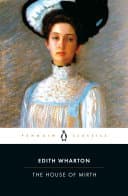
Edith Wharton (1993)
Genre
Historical Fiction
Reading Time
360 min
Key Themes
See below
Sign in to track this book
In Gilded Age New York, Lily Bart, beautiful and charming, navigates a society obsessed with wealth and status, where her allure becomes the trap that leads to her tragic downfall.
The novel begins with Lily Bart, a beautiful but financially unstable socialite, visiting Lawrence Selden's modest New York apartment. She is on her way to Bellomont, the country estate of the Trenors, where she often stays. Selden, a lawyer who values intellect more than money, finds Lily captivating but also sees her deep involvement in superficial high society. Their talk shows a mutual attraction, yet Lily's main goal is to find a rich husband to keep her lifestyle. She leaves suddenly, fearing discovery and scandal, after borrowing money from Selden for her train ticket. This first meeting sets up the main conflict between Lily's desire for love and her social duties.
At Bellomont, Lily is part of her group's elaborate social rituals. She sees the flirtations between Gus Trenor and Bertha Dorset, a married woman known for her affairs, and engages in her own calculated flirtations with Percy Gryce, a wealthy but uninteresting bachelor. Her main goal is to get a marriage proposal from Gryce, which would solve her money problems. However, her independent spirit and a mistake involving a late-night walk with Selden at a garden party alienate Gryce, who is quickly taken by the more traditional Carry Fisher. Lily's Aunt Peniston, her main financial supporter, disapproves of her spending, further showing Lily's uncertain position.
Needing money, Lily takes Gus Trenor's 'investment advice,' which he presents as a way to grow her small inheritance. Trenor, a married man, uses the situation to his advantage, making Lily believe she is profiting from stock market dealings when he is actually giving her money from his own pocket, expecting romantic favors in return. This arrangement puts Lily in a morally difficult spot, further harming her reputation. Meanwhile, Selden watches her social maneuvering with a mix of interest and dismay, seeing the self-destructive path she is on, but unable to help.
Bertha Dorset, jealous of Lily's perceived flirtation with her husband George, creates a scandal to damage Lily's reputation. She arranges for Lily to be seen leaving Gus Trenor's study late at night, suggesting an affair. The incident, combined with Trenor's increasingly aggressive advances and Lily's inability to repay the 'loan,' creates much gossip. Lily is publicly shamed and avoided by many in her social circle, including Judy Trenor, who feels betrayed. This marks a major turning point, as Lily's once strong social standing begins to fall apart, making her search for a rich husband even harder.
After the Bellomont scandal, Lily finds herself less and less welcome in her former circles. She tries to get away from the gossip by traveling to Europe with the wealthy but crude Mrs. Hatch, hoping to find a new social standing or a suitable marriage. However, Mrs. Hatch's own questionable reputation and Lily's past make these efforts useless. Lily's attempts to re-enter society through less traditional means, like becoming a social secretary, also face doubt and resistance. Her beauty, once her greatest asset, now seems to attract only suspicion and unwanted attention.
Simon Rosedale, a Jewish financier and social climber whom Lily first disliked, reappears and proposes marriage. Rosedale, now more established in society, truly admires Lily and offers her financial security and social repair. He knows about her past mistakes but is willing to ignore them, seeing her as a valuable asset to his own social ambitions. Lily, however, cannot commit to a marriage of pure convenience, despite her desperate situation. Her lingering feelings for Lawrence Selden and a deep pride stop her from accepting Rosedale's practical solution, a decision that further complicates her future.
Lily discovers letters from Gus Trenor to Bertha Dorset. Realizing their potential as leverage against Bertha, who helped cause her social downfall, Lily considers using them to clear her name or regain her standing. However, her moral compass and dignity stop her from using blackmail. She holds onto the letters, a symbol of her powerlessness and the corrupt nature of her society. This moral choice shows Lily's inner conflict between survival and her personal integrity, a struggle she ultimately loses.
With her reputation ruined and her inheritance shrinking, Lily is forced to work as a milliner. This drastic step places her outside her former social world, showing her the harsh realities of working-class life. She struggles with the physical demands and the loss of her former luxuries, finding herself unsuited for manual labor. Her attempts to keep some of her former elegance are met with pity or ridicule. This period marks her complete social and economic decline, a sharp contrast to her earlier life of ease and privilege.
In an act of self-sacrifice and integrity, Lily uses the last of her inheritance, a small sum from her aunt's will, to repay Gus Trenor the money she believes she owes him. This act, though financially ruinous, frees her from the moral burden of his 'loans.' She also confronts Bertha Dorset, returning the damaging letters without using them for blackmail. This decision shows Lily's moral purity in a corrupt world, but it leaves her completely broke and without any way to defend herself or find redemption within her society.
Completely alone, financially ruined, and emotionally exhausted, Lily returns to her shabby boarding house room. She takes an overdose of chloral hydrate, a sedative she uses to calm her nerves, in a fatal amount. The novel leaves her exact cause of death unclear – whether accidental or intentional. Lawrence Selden, who finally comes to her, finds her dead, holding the receipt for the repayment to Gus Trenor. Her death is a tragic criticism of the restrictive and unforgiving society that destroyed her, unable to accept her beauty and spirit with its strict expectations.
The Protagonist
Lily's arc is one of tragic decline, from a coveted socialite to an outcast, as she is systematically stripped of her social standing, financial security, and ultimately, her life. She grapples with societal pressures versus personal integrity, choosing integrity in her final acts.
The Supporting
Selden remains largely static, serving as a moral compass and a symbol of what Lily could have had, ultimately realizing the depth of his feelings for her only after her death.
The Antagonist
Bertha remains a consistently cruel and powerful figure, successfully maintaining her social standing despite her own immoral actions, highlighting the double standards of her society.
The Supporting
Trenor serves primarily as a catalyst for Lily's financial and social decline, his character remaining largely unchanged in his self-serving nature.
The Supporting
Rosedale successfully climbs the social ladder, contrasting with Lily's decline, and offers her a chance at stability that she tragically rejects.
The Supporting
Judy's character shows the superficiality of social connections, as her 'friendship' with Lily dissolves under pressure, reflecting the unforgiving nature of their world.
The Supporting
George remains a pitiable figure, a victim of his wife's cruelty and the societal norms that trap him in a loveless marriage.
The Supporting
Aunt Peniston remains a static figure of conservative judgment, representing the older generation's rigid expectations that Lily cannot fulfill.
The novel shows the stifling limits and moral compromises in New York's Gilded Age high society. Lily Bart's whole life is defined by her pursuit of wealth and social standing, not for their own sake, but to keep her position and avoid poverty. The grand estates like Bellomont, the constant social events, and the complex rules of behavior all show how people are judged and valued only by their money and their ability to fit in. Lily's downfall is directly linked to her failure to find a rich husband and her slow exclusion from these groups, showing that without wealth, social identity means nothing. Even love, as with Selden, is less important than financial security.
“What a hideous place it is! ... The House of Mirth! It's a dissecting-room where one's soul is anatomized!”
Wharton clearly criticizes the limited roles and financial weakness of women in early 20th-century high society. Lily Bart, despite her intelligence and charm, is reduced to a 'decoration,' her worth tied only to her beauty and her potential to attract a rich husband. She has no independent money or ways to support herself, making marriage her only real career. Her attempts to earn a living outside of marriage, like working as a milliner, are met with scorn and show her unsuitability for anything beyond social performance. The novel highlights the different standards for men and women, where men's mistakes are tolerated, while a woman's reputation is permanently ruined by even a hint of scandal, as seen with Bertha Dorset's successful manipulation of Lily's image.
“She was so evidently the victim of the civilization which had produced her, that the laws of an earlier social order might well prove too stringent for her.”
A main theme is the sharp contrast between the glittering surface of high society and the moral decay, hypocrisy, and desperation underneath. Characters like Bertha Dorset keep good social standing despite their clear immorality, while Lily Bart, whose moral failures are arguably less severe, is cruelly cast out. The 'house of mirth' itself, a biblical reference, suggests a place of superficial joy hiding inner emptiness and foolishness. Lily's struggle to keep up appearances, even as her life falls apart, reflects this theme. The lavish parties and elegant clothes hide a cutthroat world where reputation is everything, and true emotion or honesty is often sacrificed for social gain. The novel constantly reveals the performative nature of their interactions.
“The House of Mirth... a house where all the amusements were of a noisy kind, and where there was much jollity and laughter.”
Lily Bart's journey is a constant struggle between her desire for a luxurious life and her inner moral compass. She repeatedly finds herself in situations where she must choose between practical, often morally questionable, actions to secure her future and keeping her personal integrity. Her initial flirtations, her acceptance of Gus Trenor's 'loans,' and her thought of using Bertha Dorset's letters are all examples of moral compromise. Ultimately, her acts of repaying Trenor and destroying the letters, though leading to her complete ruin, show a win for integrity over survival. This theme shows the immense pressure society puts on individuals, especially women, to compromise their values for financial security.
“She had a confused sense that she must have been in some way to blame for her own misfortunes, since they had so persistently pursued her.”
Despite her beauty, charm, and seemingly privileged position, Lily Bart is not free. She is bound by the strict social rules, her financial dependence, and the expectations placed on her as an unmarried woman of her class. Her attempts to be independent or defy conventions, such as her visits to Selden or her refusal of Rosedale, always lead to negative results. The 'freedom' offered by wealth is shown to be an illusion, as even the wealthiest characters like Bertha Dorset are trapped by their own desires and the need to keep up appearances. Lily's ultimate 'freedom' comes only in death, suggesting that escaping the societal cage is impossible in life.
“She had been so long shut up in the stifling atmosphere of social exigencies that the mere fact of breathing was a joy.”
A packet of incriminating love letters used as a symbol of power and moral dilemma.
The letters from Gus Trenor to Bertha Dorset serve as a potent plot device. They represent a weapon Lily could use to clear her name and exact revenge on Bertha, who was instrumental in her social downfall. However, Lily's refusal to use them, despite her desperate circumstances, highlights her underlying moral integrity. The letters symbolize the hypocrisy and corruption within high society, where such illicit affairs are common, yet their exposure can be devastating. They also serve to deepen the moral conflict within Lily, as she grapples with using unethical means for self-preservation.
A sedative that becomes the instrument of Lily's ambiguous death.
The chloral hydrate is a recurring motif and the ultimate plot device leading to Lily's tragic end. Initially, it is presented as a mild sedative she uses to calm her nerves and escape the anxieties of her life. Its increasing dosage, however, foreshadows her growing desperation and eventual self-destruction. The ambiguity of her death – whether accidental overdose or intentional suicide – adds to the tragedy, leaving the reader to ponder the extent of her despair and the societal pressures that led her to such a fate. It symbolizes her attempt to find peace in a world that offered her none.
An ironic biblical allusion that frames the novel's central critique.
The title, taken from Ecclesiastes 7:4 ('The heart of the wise is in the house of mourning; but the heart of fools is in the house of mirth'), functions as a pervasive ironic plot device. It immediately sets a critical tone, suggesting that the glittering, pleasure-seeking world Lily inhabits is ultimately one of foolishness and superficiality, destined for sorrow rather than true joy. The 'house of mirth' is where the heart of fools resides, underscoring the moral emptiness and self-destructive nature of the society Lily is desperate to remain a part of. It foreshadows her tragic end, implying that her pursuit of 'mirth' through social climbing leads to her downfall.
A recurring social activity symbolizing strategy, risk, and Lily's precarious position.
Bridge, a popular card game among Lily's set, appears frequently throughout the novel. It serves as a microcosm of the social maneuvering and strategic calculations that define their lives. Lily is an excellent player, indicating her intelligence and ability to navigate complex situations. However, her occasional recklessness or her inability to play purely for gain (as seen when she loses money she cannot afford) reflects her larger struggles. The game symbolizes the risks involved in her social and financial gambles, where one wrong move can lead to significant losses, mirroring her real-life precariousness and eventual ruin.
“Lily, for all her considerable intelligence and charm, was not yet awake to the fact that the price of life is more life.”
— Narrator's observation on Lily's early naivety.
“She had a confused sense that she had been too passive in the hands of fate.”
— Lily reflecting on her past choices and lack of agency.
“Ah, how delicious it was to be poor for a day, and to know that one would be rich again to-morrow!”
— Bertha Dorset's cynical remark on slumming it for amusement.
“It was her habit to take refuge from the unpleasant by a flight to the agreeable.”
— Description of Lily's coping mechanism.
“She was like some rare flower, whose exotic beauty had been developed by a forced growth in an artificial atmosphere.”
— Narrator's description of Lily's sophisticated but fragile nature.
“The social free-masonry of the wealthy was a network of invisible threads.”
— Observation on the interconnectedness and exclusivity of high society.
“She had been fashioned to adorn and not to serve.”
— Narrator's summary of Lily's upbringing and societal role.
“The hardest thing for a woman to do was to make her way alone.”
— Lily's realization about the limited options for women in her era.
“She had a sense of having been flung out of the world she belonged to into a void.”
— Lily's feeling of displacement after her social downfall.
“It was not the money that counted, but the way one spent it.”
— Gus Trenor's cynical view on the superficiality of wealth.
“She saw that the most luxurious life was the one which would be most easily dispensed with.”
— Lily's growing understanding of the emptiness of her former life.
“The true business of life was to get what one wanted and to keep it.”
— Judy Trenor's pragmatic and self-serving philosophy.
“She was learning to live without the support of the things that had made up her social being.”
— Lily adapting to her reduced circumstances and loss of status.
“The house of mirth had been a house of bondage.”
— Lily's final, tragic realization about the restrictive nature of her past life.
“She had a momentary sense of all the world's richness, and of her own utter exclusion from it.”
— Lily's poignant reflection on her isolation amidst prosperity.
Ready to see how well you understood this book? Take our interactive quiz with 10 questions.

Edith Wharton was an American writer and designer. Wharton drew upon her insider's knowledge of the upper-class New York "aristocracy" to portray realistically the lives and morals of the Gilded Age. In 1921, she became the first woman to win the Pulitzer Prize in Fiction, for her novel The Age of Innocence. She was inducted into the National Women's Hall of Fame in 1996. Among her other well known works are The House of Mirth, the novella Ethan Frome, and several notable ghost stories.







