
David Davidar is a Canadian-born Indian author and publisher. He is best known for his debut novel, 'The House of Blue Mangoes,' which was a bestseller and nominated for the Booker Prize. Davidar's work often explores themes of family, identity, and the complexities of life in India.
Archivist's Choice
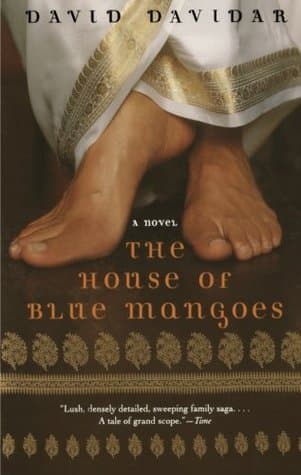
The House of Blue Mangoes
David Davidar (2002)
Genre
Literary Fiction / Historical Fiction
Reading Time
12 Minutes
Key Themes
See below
Track Your Reading
Sign in to track this book
Synopsis
Set in the south Indian village of Chevathar, "The House of Blue Mangoes" chronicles three generations of the Dorai family, beginning in 1899 with Solomon Dorai, the village headman. Solomon faces the imminent threat of colonialism and societal change, making decisions that will profoundly impact his descendants. The novel follows the Dorai family through nearly half a century, depicting their struggles and adaptations within a rapidly transforming India under British rule.
The story explores themes of tradition versus modernity, the devastating effects of colonialism, and the enduring search for identity and belonging. It paints a vivid picture of a specific corner of India, showcasing the social and political upheavals of the early 20th century through the intimate lens of one family's experiences.
Difficulty
Medium
Pacing
Moderate
Mood
Reflective, poignant, historical, culturally rich, somber
Plot Summary
The Thalaivar's Burden
The year is 1899 in the South Indian village of Chevathar. Solomon Dorai, the respected thalaivar (headman), is worried about an upcoming famine, shown by the dry monsoon season. He also worries about the British East India Company, whose tax collectors and land acquisition threats are growing. Solomon, a man tied to tradition and his community's welfare, feels a great responsibility to protect his village from both natural disaster and colonial takeover. He talks with elders and considers various plans, even appealing to the British for help, which he dislikes but sees as possibly needed. His decisions during this time will affect his family and Chevathar's future.
The Arrival of the Sahibs
British officials, like Mr. Henry and later Mr. Barnaby, arrive in the region. They set up a bungalow and start surveying land for plantations. Their presence brings new laws, economic systems, and a clear power difference. Some villagers see chances to work for or trade with the British. Solomon, though, is suspicious of their arrival. He understands the long-term threat they pose to the traditional way of life. Tensions grow as the British use their authority, often clashing with local customs and leaders. Solomon tries to manage this situation, protecting his people's independence while avoiding direct conflict that could ruin Chevathar.
Abraham's Ambition and Departure
Abraham Dorai, Solomon's son, is a bright, ambitious young man who feels held back by Chevathar's traditions. Unlike his father, he is drawn to the opportunities the British and the modern world offer. He wants a Western education and eventually leaves the village for Madras (now Chennai), a busy colonial city. This departure marks a big change for the Dorai family, showing the growing gap between tradition and modernity. Solomon is sad about his son's choice but eventually gives his reluctant blessing. He hopes Abraham will succeed but also fears he will lose his connection to the village and its values.
Daniel's Choice and the Rubber Plantation
Daniel Dorai, Solomon's other son, stays in Chevathar at first, seeming to agree more with his father's values. However, he is also practical and sees that change is unavoidable. He decides to work with the British. He buys land and starts a rubber plantation, hiring villagers and using British farming methods. This choice causes disagreement, upsetting some traditionalists but bringing money to the Dorai family. Daniel becomes a link between the old and new worlds, handling the difficulties of colonial rule while trying to keep some of his Indian identity. His plantation becomes a sign of both adapting and the slow loss of traditional self-sufficiency.
Esther's Rebellion and Love
Esther Dorai, Solomon's daughter, is a strong, independent young woman. She falls in love with Samuel, a man from a lower caste. Their relationship is strictly forbidden by their community's social rules. This forbidden romance creates great tension within the Dorai family, especially for Solomon. He is torn between his love for his daughter and his duty to uphold tradition and family honor. Esther's choice to follow her heart challenges the established social order and shows the changing values in the community. It forces the family to face deep-seated prejudices and the evolving nature of personal freedom versus societal expectations.
The Famine and Its Aftermath
The expected famine eventually comes, causing great suffering in Chevathar. Crops fail, water sources dry up, and the village faces widespread hunger and sickness. Solomon, despite his efforts, is mostly powerless against the natural disaster. The British offer some help, but it is often not enough and comes with conditions that strengthen their control. The famine shows how vulnerable the Indian people are under colonial rule and how limited traditional leadership is in such a widespread disaster. Many villagers die, and survivors are left with deep scars, permanently changing Chevathar's social and economic life. The event shows the harsh realities of life in colonial India.
The Rise of Nationalism
As the story moves into the early 20th century, India's political situation begins to change. The younger Dorais, especially Abraham's children and Daniel's son, become aware of and involved in the growing Indian nationalist movement. They learn about self-rule and resistance against British colonial rule. This involvement brings new dangers and problems to the family, as they deal with protests, arrests, and the moral choices of fighting for freedom. Their activism shows a growing collective awareness and a desire to reclaim India's future, moving past the individual struggles for survival and adaptation that marked their parents' generation.
The Family's Dispersion and Evolution
Over the decades, the Dorai family spreads out geographically and socially. Abraham's descendants do well in cities, taking on Western education and jobs, sometimes losing touch with their rural origins. Daniel's family continues to manage the plantation, becoming part of the new Indian elite, while still dealing with their heritage. Esther's family faces its own struggles and successes, showing resilience despite social exclusion. Each part of the family shows a different reaction to colonialism and modernity, illustrating the vast changes happening across India. Their stories show the breaking apart of traditional family structures and the making of new identities in a fast-changing nation.
The Second World War and Its Impact
The Second World War further disrupts life in India. The British increase their demands on Indian resources and people, leading to more resentment and fueling the independence movement. Some Dorai family members are directly affected, through conscription, economic hardship, or increased political activity. The war's end, with a weakened Britain, makes Indian independence seem more likely than ever. This time is marked by tension, political unrest, and a growing sense of anticipation for a new era. It also brings new challenges and uncertainties for the future of the subcontinent and its people.
The Partition and Independence
The novel ends with India gaining independence from British rule in 1947. This major event is met with widespread celebration, but it is tragically overshadowed by the violent Partition of India and Pakistan. The Dorai family, like millions of others, feels the deep impact of this historical turning point. While they are not directly involved in the communal violence of the Partition, they see its terrible effects and the immense human cost. The end of colonial rule closes one chapter and starts another, leaving the Dorai family, and India itself, to deal with their complex past and the difficult task of building a new nation.
Principal Figures
Solomon Dorai
The Protagonist
Solomon struggles to maintain traditional values and protect his village against the irresistible forces of colonialism and modernity, ultimately witnessing the gradual erosion of the world he knew.
Abraham Dorai
The Supporting
Abraham leaves his traditional village to pursue a modern, Western-influenced life, becoming a successful professional but also a bridge between two worlds.
Daniel Dorai
The Supporting
Daniel adapts to the changing landscape by embracing commercial agriculture under British rule, becoming a prosperous landowner who balances tradition with modern enterprise.
Esther Dorai
The Supporting
Esther defies societal expectations and caste barriers for love, enduring hardship but ultimately forging her own path and asserting her individuality.
Samuel
The Supporting
Samuel endures social ostracization due to his caste and forbidden love for Esther, demonstrating perseverance and loyalty.
Mr. Henry / Mr. Barnaby
The Antagonist
These officials represent the unyielding force of colonialism, consistently asserting British dominance and challenging local traditions without undergoing significant personal change.
Sita
The Supporting
Sita adapts to life in Madras as a modern Indian woman, supporting her husband's ambitions while raising their children with a blend of traditional and contemporary values.
Jagan
The Supporting
Jagan evolves from a young man into a fervent nationalist, actively participating in the independence movement and challenging British rule.
Themes & Insights
Colonialism and Resistance
The novel details how British colonialism affected Indian society, from new laws and taxes to changed economic structures and the loss of traditional ways of life. It shows how individuals and communities reacted to this foreign rule, from Solomon's quiet resistance and efforts to preserve customs, to Daniel's practical adaptation, and finally to the younger generation's active resistance in the nationalist movement. The theme shows both the destructive power of imperialism and the lasting spirit of a people fighting for self-rule.
“The white man's law was like a river that had changed its course, sweeping away everything familiar and carving new, unpredictable paths.”
Tradition vs. Modernity
A main conflict in the novel is the tension between deep-rooted Indian traditions and the unavoidable progress of modernity, largely caused by colonial influence. Solomon Dorai represents strong adherence to tradition, while his sons Abraham and Daniel, and later generations, accept or adapt to modern education, economic systems, and city life. This theme explores the difficulty of keeping cultural identity during fast change, the appeal and problems of Westernization, and the inner struggles faced by people caught between two worlds. It questions what is gained and lost in societal transformation.
“He knew that the old ways were like a house made of mud and thatch, sturdy for a time, but ultimately no match for the brick and steel of the new world.”
Family and Legacy
The Dorai family story is central to the novel, exploring how individual choices and historical events shape a family's future over generations. It examines family ties, the weight of ancestral expectations, and how family members take different paths while still connected by shared heritage. The theme looks at a patriarch's responsibilities, how parents' decisions affect children, and the changing definition of 'family' in a changing society. It suggests that a family's legacy is about values, struggles, and memories passed down, not just wealth or status.
“A family was like a banyan tree, its roots spreading far and wide, some visible, some hidden, but all connected to the ancient trunk.”
Social Change and Caste System
The novel shows the strictness of the Indian caste system and the slow, often difficult, process of social change. Esther's forbidden love for Samuel, a man from a lower caste, directly challenges these deep-set hierarchies and shows the personal cost of going against social norms. The story also shows how colonialism, while strengthening some divisions, also accidentally brought new social dynamics and chances that began to break down traditional caste structures. This theme examines the fight for individual freedom and dignity against an established social order, and the slow, complex evolution of Indian society.
“The lines of caste were etched deep, deeper than any furrow in the land, but even the deepest furrows could be washed away by a determined monsoon.”
Plot Devices & Literary Techniques
Generational Saga
A narrative spanning multiple generations of the Dorai family.
The novel employs a generational saga structure, following the Dorai family across nearly fifty years and three distinct generations. This allows the author to explore the long-term impact of historical events like colonialism and the independence movement on a single lineage. Each generation faces unique challenges and makes different choices, reflecting the evolving social and political landscape of India. This device provides a comprehensive view of change, demonstrating how individual lives are intertwined with broader historical forces and how legacies are shaped over time.
Foreshadowing
Hints and predictions of future events, particularly the famine and British impact.
Foreshadowing is used effectively, especially in the early chapters, to build tension and convey a sense of impending doom. Solomon Dorai's anxieties about the failing monsoons and the growing British presence are clear signals of the famine and colonial subjugation that will later devastate Chevathar. These early hints create a feeling of inevitability, emphasizing the characters' struggle against forces largely beyond their control and highlighting the tragic consequences of historical events that are often seen coming but cannot be fully averted.
Symbolism of the House of Blue Mangoes
The Dorai family home as a symbol of tradition and changing fortunes.
The 'House of Blue Mangoes' itself acts as a powerful symbol. Initially, it represents the stability, heritage, and traditional life of the Dorai family and Chevathar. As the narrative progresses and the family's fortunes change, the house reflects these transformations. It stands as a silent witness to the family's triumphs and tragedies, its adaptations and losses. It becomes a metaphor for the enduring spirit of India, rooted in its past but constantly evolving, and a physical embodiment of the family's connection to their land and their history.
Parallel Lives
Contrasting life choices of Abraham and Daniel Dorai.
The narrative frequently uses the parallel lives of Solomon's two sons, Abraham and Daniel, to illustrate different responses to the challenges of colonialism and modernity. Abraham''s pursuit of a Western education and urban success is contrasted with Daniel's pragmatic decision to establish a plantation and work within the British system in the village. This device effectively highlights the divergent paths available to Indians during this period, showcasing the complexities of adaptation, assimilation, and the struggle to define one's identity in a rapidly changing world without explicitly stating the dilemma.
Critical analysis
Notable Quotes
Quiz
Test Your Knowledge
Ready to see how well you understood this book? Take our interactive quiz with 10 questions.
10
Questions
~5
Minutes
?
Best Score
Key Questions (FAQ)
The House of Blue Mangoes is a literary and historical fiction novel set in the south Indian village of Chevathar starting in 1899. It follows the Dorai family over nearly half a century and three generations as they navigate immense social change, colonialism, and the decisions of their patriarch, Solomon Dorai.







