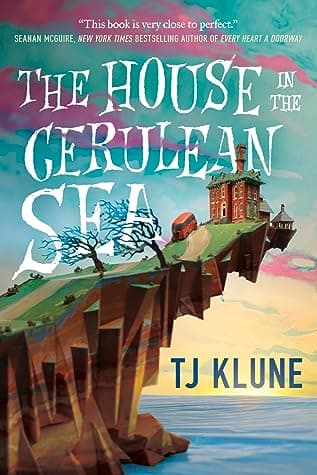
Linus Baker's Ordinary Life and Extraordinary Assignment
Linus Baker, a forty-year-old caseworker for the Department in Charge Of Magical Youth (DICOMY), lives a monotonous, rule-bound existence in a small house with a judgmental cat named Calliope and a collection of old records. His job involves visiting orphanages for magical children, ensuring compliance with government regulations, and filing reports. One day, he is summoned by Extremely Upper Management for a classified assignment. He is to travel to Marsyas Island Orphanage, a remote facility, to determine if the six magical children residing there pose a threat and if the orphanage should remain open. This assignment shakes Linus out of his predictable routine, filling him with dread and curiosity.
Arrival at Marsyas Island and First Impressions
After a long journey, Linus arrives at Marsyas Island. He is greeted by Arthur Parnassus, the master of the orphanage, and meets the six children: Talia, a gnome; Phee, a forest sprite; Sal, a shy were-Pomeranian; Theodore, a wyvern; Chauncey, an unidentifiable green blob who dreams of being a bellhop; and Lucy, short for Lucifer, the Antichrist. Linus, initially overwhelmed by their strangeness and the island's relaxed atmosphere, begins his evaluation, documenting every detail. He struggles to reconcile the official files, which label the children as dangerous, with their actual behavior, which seems innocent, if eccentric.
Unraveling Preconceptions and Forming Bonds
As days turn into weeks, Linus's rigid adherence to rules and his ideas about magical children begin to crumble. He sees the love and care Arthur provides, and the children, initially wary of him, slowly open up. He discovers Sal's shyness and fear of his were-Pomeranian form, Theodore's protective nature, Talia's gardening, Phee's connection to nature, Chauncey's sweet ambition, and Lucy's thoughtful insights despite his ominous heritage. Linus finds himself laughing, engaging, and even protecting the children, something his old life never allowed. He realizes the children are not monsters, but misunderstood individuals wanting acceptance.
Arthur's Secret and the Island's History
During his stay, Linus learns about Arthur Parnassus's past. Arthur reveals that he is a powerful magical being, a phoenix, and that his purpose is to protect these unique children from a world that fears them. He explains that Marsyas Island is enchanted, making it difficult for outsiders to find or leave without his permission, a measure to ensure the children's safety. Linus also discovers that Arthur has been defying DICOMY's regulations by providing a loving and accepting home, rather than just a supervised facility. This revelation deepens Linus's admiration for Arthur and solidifies his conviction that the orphanage is a haven, not a danger.
The Threat from the Mainland
The peaceful existence on Marsyas Island is disturbed by the prejudice of the nearby mainland town of Moontown. The townspeople, fueled by fear, view the orphanage with suspicion and hostility, often protesting its existence and spreading rumors about the children. This external pressure shows why Arthur created the secluded haven. Linus sees firsthand the bigotry the children face and becomes protective of them, further strengthening his bond with the orphanage family. He realizes that the real danger comes from the ignorance and intolerance of society.
Lucy's Powers and Linus's Growing Affection
Linus continues to observe Lucy, the Antichrist, whose powers are undeniable but whose intentions appear benign. Lucy controls fire, can cause minor chaos, and has a sophisticated understanding of human nature and morality. Linus struggles with the implications of Lucy's identity, but ultimately sees him as a child. Concurrently, Linus's feelings for Arthur Parnassus deepen into romantic affection. He is drawn to Arthur's kindness, wisdom, and dedication to the children, a contrast to his own lonely life. Their shared moments become increasingly tender and meaningful.
The Inspection and the Mayor's Visit
The day of the official DICOMY inspection arrives, bringing a team led by Miss Chance and Mr. Dinsmore, along with the Mayor of Moontown, Helen Lim. Linus is torn between his duty to DICOMY and his loyalty to Arthur and the children. During the inspection, the children, coached by Arthur, try their best to be 'normal,' but their unique natures inevitably show. The Mayor's hostility and the inspectors' rigid adherence to rules create a tense atmosphere. Linus finds himself subtly defending the children and Arthur, trying to guide the inspection towards a positive outcome, despite the odds.
Linus's Decision and the Council Meeting
Following the inspection, Linus returns to DICOMY headquarters for the final council meeting where his report will determine the orphanage's fate. Despite the pressure from Extremely Upper Management and the expected negative outcome, Linus delivers an honest report, detailing the children's innocence, Arthur's care, and the orphanage's role. He argues that the children are not dangerous, but simply different, and that closing the orphanage would be an injustice. This act of defiance is a turning point for Linus, as he chooses compassion and truth over his lifelong adherence to rules and fear of authority.
The Outcome and Linus's Return
Against all expectations, the council, swayed by Linus's testimony and the evidence of the children's well-being, votes to keep Marsyas Island Orphanage open. Linus is offered a promotion and a chance to return to his old life, but he realizes he can no longer go back to the sterile existence he once knew. He decides to leave DICOMY, choosing instead to return to Marsyas Island. His decision is driven by his love for Arthur and the children, and his understanding of what truly makes a family and a home. He embraces the uncertainty of his future for the sake of genuine happiness and belonging.
A New Beginning on Marsyas Island
Linus returns to Marsyas Island, welcomed by Arthur and the children. He sheds his rigid suits for more comfortable clothes and embraces his new role as a member of their unconventional family. He and Arthur deepen their romantic relationship, finding solace and joy in each other's company. Linus helps with the children and contributes to the loving home they have created. The book concludes with Linus finding true happiness, purpose, and a sense of belonging, realizing that family is defined by love, acceptance, and shared humanity.