“The past is a stubborn thing. It can be buried, but it always finds a way to the surface.”
— Grace's reflection on the enduring nature of secrets and memories.

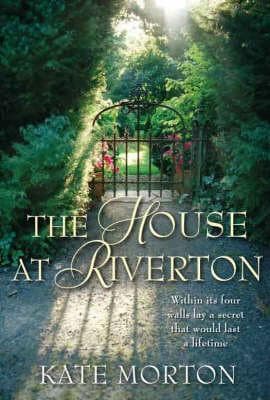
Kate Morton (2005)
Genre
Historical Fiction / Mystery / Romance
Reading Time
12-15 hours
Key Themes
See below
Sign in to track this book
A dying housemaid, haunted by the glittering secrets and tragic demise of the aristocratic Hartford family, finally unveils the truth behind a poet's mysterious death at their grand estate, Riverton, seventy years prior.
In 1999, Grace Bradley, a ninety-year-old former maid, lives in a nursing home. She receives a letter from Ursula Ryan, a film director, making a documentary about the poet Robbie Hunter's suicide at Riverton Manor in 1924. Ursula believes Grace, as a witness, has important information. Initially hesitant, Grace agrees to meet Ursula, a decision that makes her confront old memories of her youth at Riverton, the grand estate where she served the Hartford family. This meeting starts Grace's journey back into the past, reliving the glamour and tragedy of the Jazz Age.
In 1914, fourteen-year-old Grace is sent by her mother to work as a housemaid at Riverton Manor, the Hartford family's ancestral home. Overwhelmed by the house's size and luxury, Grace quickly learns the strict rules of domestic service. She assists Mrs. O'Malley, the housekeeper, and Mrs. Harding, the ladies' maid. Grace is fascinated by the Hartford children: the beautiful Hannah, the spirited Emmeline, and the kind David. She watches their privileged lives, a contrast to her own, and begins to feel a connection to the family.
As World War I begins, Riverton Manor is deeply affected. David Hartford, the eldest son, enlists, causing his family constant worry. The war changes society, with women taking on new roles and class distinctions starting to fade. Grace sees the anxiety and grief in the house, especially from Lady Hartford and Hannah. The war's impact is felt deeply when news arrives of David's death in battle, shattering the family and leaving a permanent mark on Riverton. This tragedy signals the end of an era of innocence and stability.
After the war, Riverton struggles to regain its former life. Hannah Hartford, now a young woman, becomes engaged to Lord Ashworth, a suitable match. However, the arrival of the charming poet Robbie Hunter, a friend of Lord Ashworth, disrupts the fragile peace. Robbie, a war survivor, brings a bohemian and intellectual intensity to Riverton. Grace, now Hannah's ladies' maid, notices the growing fascination between Robbie and Emmeline, who shares his artistic and rebellious spirit. Their connection is immediate and powerful, sparking a dangerous romance.
Emmeline Hartford, feeling stifled by aristocratic expectations and her sister's upcoming marriage, finds comfort and excitement with Robbie Hunter. Their secret affair grows, fueled by shared passions and a disregard for social rules. Grace, always observant, becomes an unwilling witness to their secret meetings. Hannah eventually discovers the affair, leading to a furious confrontation and a deep rift between the sisters. Lord Ashworth, shocked by the betrayal, breaks off his engagement to Hannah, causing more scandal and heartbreak for the Hartford family.
In the summer of 1924, a lavish party is held at Riverton Manor, meant to distract from the family's troubles and restore some normalcy. However, tensions remain. Robbie Hunter is present, despite the family's disapproval of his relationship with Emmeline. The atmosphere is charged with unspoken desires and resentments. Grace, busy with her duties, observes Hannah, Emmeline, and Robbie, sensing impending disaster. The party ends in a dramatic argument between the sisters and Robbie, setting the stage for the tragic events that follow.
During the summer party, a heated argument happens between Robbie Hunter, Hannah, and Emmeline by the lake. Grace witnesses parts of this. Later that night, Robbie Hunter is found dead in the lake, a presumed suicide. The police investigate, but no foul play is officially determined. The Hartford family is engulfed in scandal and grief. The incident changes the lives of everyone at Riverton, especially Hannah and Emmeline, who are both devastated. Grace, present during the aftermath, holds a secret about the events leading to Robbie's death, a secret she has kept for decades.
After Robbie's death, Emmeline Hartford's mental state quickly worsens. Overwhelmed by grief, guilt, and social condemnation of her affair, she withdraws. Her family tries to help, but Emmeline's condition worsens, with periods of catatonia and delusions. She is eventually institutionalized, a decision that deeply affects Hannah and marks the final end of the Hartford family's happiness. Grace watches Emmeline's tragic decline, feeling helpless as the spirited young woman she knew slips into madness.
Hannah Hartford, despite her own heartbreak, takes on the responsibility of caring for her ailing mother and managing Riverton's difficult affairs. She dedicates her life to her family, sacrificing her own happiness. Riverton Manor, once vibrant, slowly declines as the family's fortunes dwindle and memories haunt its halls. Grace, after years of loyal service, eventually leaves Riverton, carrying the weight of the secrets she witnessed. She marries and lives a quiet life, never fully escaping the manor's shadow.
In 1999, urged by Ursula Ryan's questions and her own desire for closure, Grace Bradley finally reveals the full truth about Robbie Hunter's death. She confesses that it was Hannah, not Emmeline, who was in love with Robbie. Hannah pushed Robbie into the lake during their argument, not intending to kill him, but in a moment of desperate jealousy and anger over his affair with Emmeline. Robbie, unable to swim, drowned. Emmeline, seeing it happen, collapsed and later claimed responsibility in her confused state to protect her sister. Grace's confession explains the tragic web of love, betrayal, and sacrifice that defined the Hartford family.
Ursula Ryan is shocked by Grace's confession, realizing the true depth of the tragedy and the complexity of relationships at Riverton. The revelation changes her documentary's entire narrative. Grace, having finally unburdened herself of the seventy-year-old secret, feels a sense of relief, though also sadness for the lives changed. The novel ends with Grace reflecting on the fleeting nature of life, love, and memory, and the lasting power of secrets. The truth, though painful, brings justice and understanding to Riverton Manor's long-unresolved mystery.
The Protagonist
Grace evolves from a silent observer to a keeper of secrets, finally finding peace by revealing the truth in her old age.
The Supporting/Antagonist (revealed)
From a dutiful daughter, she becomes a woman haunted by a desperate act, sacrificing her own happiness to protect her family's name and her sister.
The Supporting
Emmeline's journey is one from vibrant rebellion to profound mental decline, becoming a victim of circumstances and a scapegoat for a deeper truth.
The Supporting
His arrival disrupts Riverton's traditions, leading to his tragic death and becoming the central mystery that unravels the family's secrets.
The Supporting
She begins as an investigator and evolves into the recipient of a profound historical truth, changing her understanding of the past.
The Supporting/Mentioned
His early death in the war serves as a foundational tragedy for the Hartford family, shaping the lives of his sisters.
The Supporting
His engagement to Hannah is broken, highlighting the societal impact of the scandal at Riverton.
The Supporting
She remains a steadfast figure of order amidst the chaos and decline of the Hartford family.
The novel explores how memory is shaped by time, emotion, and personal bias, and how one event can be seen and remembered differently by various witnesses. Grace's retelling of the past is filtered through her experiences, loyalties, and the weight of a seventy-five-year-old secret. Ursula's investigation constantly questions the 'official' narrative, showing how easily truth can be distorted. The novel's structure, moving between 1999 and the early 20th century, highlights memory's fragmented nature, showing how past events are reinterpreted in the present.
““Memory is a curious thing, a many-faceted gem. It can be polished and presented in one light, then turned and shown in another.””
The story clearly shows the contrast between the aristocratic 'upstairs' world of the Hartford family and the working-class 'downstairs' world of the servants, like Grace. It details early 20th-century England's rigid social hierarchy and how World War I and the Jazz Age began to break down these traditional structures. The Hartford family's decline, financially and socially, mirrors broader changes in British society. Grace's perspective offers a unique way to observe the upper class's privileges and responsibilities, as well as the quiet dignity of those who served them.
““We were like two different species, the Hartfords and us. We spoke the same language, but we lived in different worlds.””
At the core of the mystery is a complex web of love, jealousy, and betrayal. Emmeline and Robbie Hunter's passionate affair causes scandal and heartbreak. However, the revelation uncovers Hannah's secret, unrequited love for Robbie and the desperate jealousy that led to his death. This theme explores the destructive power of unexpressed desires and how far people will go to protect loved ones or their own emotional wounds. The sisters' bond is tested and ultimately broken by their conflicting affections and tragic consequences.
““Love, I have learned, is a far more dangerous and complicated emotion than I ever imagined.””
Riverton Manor itself symbolizes the fading aristocratic way of life in post-World War I England. The war claimed the heir, David, and left the family emotionally and financially scarred. The Jazz Age, with its looser morals and artistic freedoms, conflicts with the Hartford family's traditional values, further speeding their decline. The house, once lively and grand, slowly falls into disrepair, mirroring the family's diminishing fortunes and irreversible societal changes. The novel captures the melancholic beauty of a vanishing world.
““Riverton, once so grand and full of life, was slowly exhaling its last breath.””
The novel is filled with themes of guilt and secrecy. Grace carries the secret of Robbie Hunter's death for over seventy years, a burden that shapes her life and memories. Emmeline's confused confessions and institutionalization are driven by misplaced guilt and a desire to protect her sister. Hannah lives with the silent, crushing guilt of her impulsive act, sacrificing her own happiness to maintain appearances and protect her family. The story shows how secrets can poison relationships and lives, and how their eventual revelation, though painful, can bring a kind of catharsis.
““A secret, once locked away, can gnaw at the soul for a lifetime.””
The story is told in two distinct timeframes, enveloping the main mystery.
The novel employs a frame narrative, with the present-day (1999) investigation by Ursula Ryan serving as the outer frame, prompting ninety-year-old Grace Bradley to recount her memories. The bulk of the story unfolds in a flashback to Grace's youth at Riverton Manor in the early 20th century. This structure allows for a slow reveal of the central mystery, building suspense as Grace gradually unearths her long-buried memories and the reader pieces together the truth alongside Ursula. It also emphasizes the theme of memory and its reconstruction.
Grace Bradley's perspective is subjective and colored by her past experiences and secrets.
Grace Bradley serves as the primary narrator, but her account is inherently unreliable due to her advanced age, the passage of time, and the significant secret she has been guarding for decades. Her initial reluctance to share the full truth, her emotional connection to the Hartford family, and her own biases shape what she chooses to reveal and how she interprets events. This unreliability creates suspense and encourages the reader to question her narrative, enhancing the mystery until the final, shocking confession.
The house itself acts as a character, embodying the family's history and social changes.
Riverton Manor is more than just a setting; it functions as a character in its own right. It embodies the grandeur, traditions, and eventual decline of the aristocratic era. The house witnesses the family's joys, tragedies, and secrets, slowly decaying as the family's fortunes and influence wane. Its physical spaces – the grand halls, the lake, the servants' quarters – are integral to the plot, providing the backdrop for key events and symbolizing the rigid class structure and the ghosts of the past that haunt its inhabitants. It is a repository of memory and history.
A letter written by Emmeline provides a crucial piece of misinterpreted evidence.
An unsent letter written by Emmeline to Robbie Hunter is discovered after his death. This letter, full of despair and references to a secret, is initially interpreted as a suicide note or evidence of Emmeline's direct involvement in Robbie's death. It contributes to the public perception of Emmeline's guilt and her subsequent mental breakdown. However, the letter's true meaning is only revealed at the novel's climax, when Grace explains that Emmeline was confessing to witnessing Hannah's act, not committing the deed herself, thus highlighting the dangers of misinterpretation.
“The past is a stubborn thing. It can be buried, but it always finds a way to the surface.”
— Grace's reflection on the enduring nature of secrets and memories.
“Sometimes, the hardest thing to forgive is yourself.”
— A character grappling with personal guilt and remorse.
“There are some things that, once broken, can never be truly mended, only carefully pieced back together.”
— Considering the aftermath of a significant loss or betrayal.
“We all have our secrets, the stories we tell only to ourselves.”
— Grace musing on the private lives and hidden aspects of people.
“Love, true love, is not always about grand gestures. Sometimes it's the quiet understanding, the shared silence.”
— A reflection on the different forms and expressions of love.
“The war changed everything, didn't it? Even the things that seemed immutable.”
— Observing the profound societal and personal shifts brought by World War I.
“Memory is a tricky thing. It shows you what it wants to show you, not always the truth.”
— Grace's struggle to recall events accurately, realizing the subjective nature of memory.
“Some houses hold more than just people; they hold echoes of lives lived, of joys and sorrows.”
— Describing the atmospheric and historical weight of Riverton Manor.
“It's funny how the things you think you'll never forget are often the first to fade.”
— Reflecting on the fallibility of human memory over a long lifespan.
“The hardest part of growing old isn't the aches and pains, it's the ghosts that follow you.”
— Grace contemplating the burden of past events and relationships in her old age.
“There's a fine line between loyalty and self-deception, and sometimes it's hard to tell which side you're on.”
— A character's internal conflict regarding their allegiances and beliefs.
“Every family has its tragedies, its unspoken rules, its own particular way of breaking hearts.”
— A general observation about the complexities and dysfunctions within families.
“Life has a way of leading you down paths you never expected, and sometimes those are the best ones.”
— Considering the unexpected turns and developments in a character's life journey.
“The truth is rarely simple, and often it's far more painful than the lies we tell to protect ourselves.”
— Uncovering a difficult truth that challenges previous assumptions and comforts.
Ready to see how well you understood this book? Take our interactive quiz with 10 questions.

Biography coming soon.







