“Someone has to die in order that the rest of us should value life more. It's ordinarily the case.”
— Clarissa ponders the death of Richard, her friend.

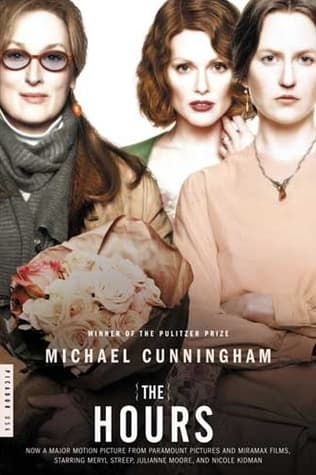
Michael Cunningham (1998)
Genre
Literary Fiction / Historical Fiction
Reading Time
240 min
Key Themes
See below
Sign in to track this book
Three women across different eras and continents find their lives linked by Virginia Woolf's 'Mrs. Dalloway' as they face their own desires, societal expectations, and the passage of time.
The novel opens in Richmond, England, in 1923, with Virginia Woolf waking and preparing to write. She lives in the suburbs for her health, a decision by her husband, Leonard Woolf, which she resents. Virginia is immediately taken by the idea for her new novel, which she names 'Mrs. Dalloway.' She pictures Clarissa Dalloway buying flowers herself, a key detail for her story. Despite her creative energy, Virginia battles depression and intrusive thoughts, fearing a return to the asylum. Leonard, always watchful, tries to shield her from stress, but his protectiveness often stifles her spirit and creativity, leading to an ongoing internal fight for freedom.
In 1949 Los Angeles, Laura Brown, a pregnant housewife, wakes on her husband Dan's birthday. She bakes a cake but feels a strong sense of dread and unhappiness, despite her seemingly perfect suburban life with her young son, Richie. Laura tries to bake a cake from scratch, but it fails, symbolizing her difficulty with conventional domestic roles. She dreams of escaping her life, finding comfort and understanding in Virginia Woolf's 'Mrs. Dalloway,' which she recently started reading. Laura's wish for a different life is clear; she sees herself as failing in traditional ways, wanting something more than her current reality.
In 1999 New York City, Clarissa Vaughan, in her early fifties, wakes and buys flowers for a party she is hosting for her lifelong friend, Richard Brown. Richard, a celebrated poet, is dying from AIDS-related complications. Clarissa, often called 'Mrs. Dalloway' by Richard, feels a strong connection to the character and experiences a similar lively engagement with the city, along with a deep sadness. She thinks about her past, especially her youthful romance with Richard and her current life with her partner, Sally. Clarissa's day is full of preparations and thoughts about life, love, and death, all through her relationship with Richard.
Ignoring Leonard's strict orders to stay in Richmond, Virginia Woolf takes a train to London. She needs the city's energy and inspiration for her novel. In London, she observes the busy life, which feeds her imagination. She considers the character of Septimus Warren Smith, a shell-shocked veteran who will parallel Clarissa Dalloway in her novel, representing life's darker, more despairing aspects. Virginia grapples with the idea of Septimus's suicide, seeing it as a choice of death over a corrupted life. This trip is important for her creative process, even as it worries Leonard, who fears for her mental stability.
Laura Brown, overwhelmed by domestic duties and feelings of inadequacy, goes to her bedroom to read 'Mrs. Dalloway.' She leaves Richie, her young son, to play alone, and he sees her deep sadness and the ruined birthday cake. Richie, a perceptive child, feels neglected and senses his mother's unhappiness. The ruined cake symbolizes Laura's fractured home life and inner turmoil. Her escape into the book is a desperate act of self-preservation, but it also shows her struggle to connect with her family and responsibilities, leaving Richie confused and alone.
Clarissa Vaughan continues preparing for Richard's party. She visits Richard in his apartment, where he is frail and disoriented but still sharp-witted, often calling her 'Mrs. Dalloway.' Their conversation shows the depth of their long friendship, the unfulfilled romantic potential of their youth, and their lasting impact on each other. Richard's physical decline and impending death cast a shadow over Clarissa's day. She grapples with her helplessness and the bittersweet nature of their bond, understanding that this party might be their last big gathering.
Laura Brown, still deeply unhappy, takes Richie to a hotel, supposedly for a change of scenery. However, her true intention is to consider suicide, a thought that has been haunting her. She checks into a room and lies down, overcome by despair. Later, her neighbor, Kitty, who is ill with a tumor, visits her. Kitty shares her fears and loneliness, and in a moment of shared vulnerability, they share a tender, unexpected kiss. This brief intimate moment reveals Laura's suppressed desires and her longing for connection beyond her conventional life, pulling her back from the edge of her suicidal thoughts.
Virginia Woolf returns to Richmond, creatively energized by her London trip. She has decided the ending of 'Mrs. Dalloway,' that Septimus Warren Smith will commit suicide, an act that will echo Clarissa Dalloway's own choices. She discusses her breakthrough with Leonard, who is relieved by her productivity but remains deeply worried about her fragile mental state. He continues to monitor her closely, fearing another breakdown. Virginia, while appreciating his care, feels increasingly stifled by his protectiveness, longing for the freedom her creative spirit demands, even if it comes at a personal cost.
As Clarissa Vaughan prepares for the party and talks to Richard, he suddenly says something profound about living for someone else. In a shocking and tragic turn, Richard, overwhelmed by illness and despair, climbs onto his apartment window ledge and jumps to his death. Clarissa witnesses this horrific act, a moment that shatters her world. His suicide is a deliberate choice, an act of reclaiming control in the face of his debilitating illness, and it leaves Clarissa devastated, forcing her to confront the ultimate meaning of life and death, and the impact of love and loss.
After Richard's suicide, Clarissa Vaughan processes the tragedy. The party guests arrive, unaware of what happened, and Clarissa struggles to keep composure. Later, Richard's mother, Laura Brown, arrives at the party. It is revealed that Laura, the woman who considered suicide in 1949, is Richard's mother, and Richie, the boy who saw her despair, is the now-deceased poet. Laura, having lived a long life, explains her decision to leave her family, a choice that still haunts her. The three women's stories come together, highlighting themes of sacrifice, mental health, and the impact of individual choices across generations.
At the party, the elderly Laura Brown explains to Clarissa Vaughan why she abandoned her family decades ago: her deep unhappiness and inability to live a lie. She describes her suffocating life and desperate need for self-preservation, even if it meant leaving her children. Clarissa, though initially judgmental, comes to understand Laura's pain and complex reasons. This encounter deepens Clarissa's understanding of human suffering and difficult choices. She reflects on Richard's suicide and Laura's life, finding a renewed appreciation for the fragility and resilience of the human spirit.
The novel ends with Virginia Woolf, years after 1923 (leading up to her actual suicide in 1941). She walks towards the river, thinking about her life, her work, and her ongoing struggle with mental illness. She acknowledges the persistent voices and overwhelming darkness. Virginia finds a strange peace in the decision to end her life, seeing it as a final act of agency. Her thoughts capture themes of artistic creation, the struggle for sanity, and the ultimate surrender to forces beyond her control. Her legacy, her novels, will continue to resonate, connecting with readers like Laura Brown and Clarissa Vaughan across time.
The Protagonist
Virginia grapples with her mental health while striving to create art, ultimately choosing to end her life on her own terms, leaving behind a profound literary legacy.
The Protagonist
Laura struggles with her identity and desire for freedom, abandoning her family to pursue her own path, a choice that profoundly impacts her son.
The Protagonist
Clarissa confronts mortality through Richard's death, leading her to a deeper understanding of love, loss, and the meaning of her own life.
The Supporting
Leonard remains a constant, concerned presence in Virginia's life, his love and worry never wavering.
The Supporting
Richard's physical decline and mental anguish lead him to a final, tragic act of self-determination, profoundly impacting Clarissa.
The Supporting
As a child, Richie experiences his mother's profound unhappiness, which shapes his later life as the poet Richard Brown.
The Supporting
Dan remains a loving but ultimately uncomprehending figure in Laura's life, representing the conventional expectations she cannot fulfill.
The Supporting
Kitty's illness and vulnerability create a moment of intimate connection with Laura, revealing deeper emotional currents.
The Supporting
Sally provides a steady, loving presence in Clarissa's life.
The novel deeply explores the devastating impact of mental illness, especially depression and suicidal thoughts, through Virginia Woolf and Richard Brown. Virginia's constant battle with 'the voices' and her eventual suicide show the relentless struggle for sanity and the deep despair that can lead one to choose death. Richard's decision to jump from his window, an act of reclaiming control in the face of illness, mirrors Septimus Warren Smith's suicide in 'Mrs. Dalloway.' Laura Brown's contemplation of suicide also highlights how despair can affect different lives and eras. The theme emphasizes the internal battles individuals face and the profound choices they make when confronted with unbearable suffering.
“''A great part of my life has been spent in total darkness, and the darkness is my husband, it is my son, it is myself.''”
Each protagonist grapples with finding meaning in their lives. Virginia seeks meaning through her art, believing her writing is her truest existence, even as it exhausts her. Laura Brown feels unfulfilled by her conventional domestic life, searching for an authentic self beyond her roles as wife and mother. Her escape into 'Mrs. Dalloway' is a quest for understanding and an alternative life. Clarissa Vaughan, despite her active social life, constantly questions her choices, especially regarding her past with Richard, and seeks meaning in her connections and her role as a caregiver. The novel suggests that fulfillment is often elusive and deeply personal, sometimes requiring significant changes from societal expectations.
“''What a thing to be a writer. To have a voice. To be heard.''”
The novel connects the lives of three women from different eras, showing how human experiences, emotions, and literary works can bridge time. 'Mrs. Dalloway' acts as a central link, connecting Laura Brown's yearning in 1949 to Virginia Woolf's creative process in 1923, and to Clarissa Vaughan's life in 1999. The revelation of Laura as Richard's mother explicitly links the narratives, showing how individual choices and struggles echo through generations. This theme highlights the universality of human emotions—love, loss, despair, joy—and how art can connect different lives, creating a shared human consciousness.
“''She will not say, 'I love you Richard,' because to say it will be to acknowledge that she has not said it before.''”
Love in various forms—romantic, platonic, familial, and self-love—is a central theme, often mixed with loss and unfulfilled desires. Clarissa's deep, complex love for Richard, marked by a youthful passion that never became a conventional relationship, is a poignant example. Laura's inability to love her husband and her desire for a different connection, hinted at in her kiss with Kitty, speaks to unfulfilled romantic and personal desires. Virginia's love for her art and her struggle with a love for life that is constantly threatened by her illness also fit here. The novel explores the bittersweet nature of love, the pain of losing loved ones (both through death and emotional distance), and the lingering shadow of 'what ifs' in life.
“''She has had, she thinks, a perfectly wonderful life. She has had a good party. And this, she thinks, is all there is.''”
Art, especially literature, serves as both a source of creation and comfort. Virginia Woolf's act of writing 'Mrs. Dalloway' drives her narrative, a way to bring order to chaos and express her insights into the human condition. For Laura Brown, reading 'Mrs. Dalloway' is an escape from her suffocating reality, a mirror that reflects her unspoken feelings, and a source of inspiration for a different life. For Clarissa Vaughan, Richard's poetry and the symbolic importance of 'Mrs. Dalloway' provide a framework for understanding her own life and the lives of those she loves. The novel emphasizes art's power to connect, interpret, and shape human experience across generations.
“''She is making a world, a city, in her mind. She is making Clarissa Dalloway.''”
Connecting three women across different centuries through parallel experiences.
The novel employs a tripartite narrative structure, following Virginia Woolf in 1923, Laura Brown in 1949, and Clarissa Vaughan in 1999. These narratives are not merely sequential but interweave thematically and emotionally, creating a sense of timelessness. The parallel experiences—waking, buying flowers, preparing for a party/day, contemplating death—highlight the universality of human concerns. This device builds suspense and ultimately reveals profound connections between the characters, particularly the familial link between Laura and Richard, and the literary link through 'Mrs. Dalloway.' The shifts between stories enhance the emotional impact and thematic resonance.
Extensive referencing of Virginia Woolf's 'Mrs. Dalloway' as a central textual and thematic anchor.
The entire novel is an homage to and a reimagining of Virginia Woolf's 'Mrs. Dalloway.' The title itself, 'The Hours,' was Woolf's working title. Characters are explicitly linked to Woolf's work (Clarissa Vaughan is called 'Mrs. Dalloway,' Richard is the Septimus figure). Key plot points and thematic concerns directly parallel those in 'Mrs. Dalloway,' such as preparing for a party, the contemplation of suicide, and the exploration of a single day in a woman's life. This device enriches the narrative by adding layers of meaning, inviting readers familiar with Woolf's work to draw connections and appreciate Cunningham's reinterpretation.
Mimicking the internal thought processes of characters to reveal their inner worlds.
While not as pervasive or experimental as Woolf's own use of the technique, Cunningham employs stream of consciousness to delve into the minds of his protagonists. The reader experiences Virginia's 'voices,' Laura's spiraling despair and fantasies, and Clarissa's nostalgic reflections and anxieties directly. This device allows for a deep exploration of the characters' psychological states, their memories, fears, and desires, often blurring the lines between past and present, and external reality and internal perception. It provides intimate access to their subjective experiences, making their struggles and motivations deeply personal.
Flowers representing beauty, life, impermanence, and the simple joys of existence.
Flowers appear repeatedly throughout the novel, most notably with Clarissa Vaughan buying them for her party, echoing Clarissa Dalloway's famous opening line. For Clarissa, the act of buying and arranging flowers symbolizes her embrace of life, beauty, and the effort to create moments of joy and connection, even in the shadow of death. They represent ephemeral beauty and the fleeting nature of life, a stark contrast to the permanence of death. For Virginia, the idea of Clarissa buying flowers is the spark for her novel, representing the mundane yet profound details that make up a life. They tie the narratives together thematically, underscoring themes of life, death, and beauty.
“Someone has to die in order that the rest of us should value life more. It's ordinarily the case.”
— Clarissa ponders the death of Richard, her friend.
“She will not say, 'I am happy.' She will say, 'I am not unhappy,' and that is the closest she will ever come to it.”
— Describing Laura Brown's suppressed emotions.
“To look life in the face, always, to look life in the face, and to know it for what it is… at last to love it for what it is, and then, to put it away.”
— Virginia Woolf's final thoughts in her suicide letter.
“Still, there are the hours, of course, the hours, the years, and one knows them, they are one's life.”
— Clarissa reflects on the passage of time and her existence.
“It is a thing that has not been said, that for women, for a certain kind of woman, the world of the home is a prison.”
— Laura Brown's internal struggle with her role as a housewife.
“She has become a woman who is loved, but who does not love back; a woman who is admired, but who does not admire herself.”
— Clarissa's internal assessment of her life and relationships.
“What does it mean, this. This living? This being in the world?”
— Virginia Woolf grapples with profound existential questions.
“She feels, again, that familiar wave of longing, a longing for something she can't quite name, something that is just beyond her grasp.”
— Laura Brown's recurring sense of unfulfilled desire.
“It is not enough to be happy. One must be happy, and one must be loved.”
— Clarissa's reflection on the components of a fulfilling life.
“A woman's whole life in a single day. Just one day. And it's enough, if it's the right day.”
— Clarissa's thoughts on the significance of a single day, echoing 'Mrs. Dalloway'.
“He is dying, and he is still beautiful. He is still Richard.”
— Clarissa observing Richard, her friend, in his final days.
“The past, the present, and the future are not discrete, but flow into one another, like water.”
— A thematic reflection on the interconnectedness of time and lives.
“She does not want to be saved. She wants to be understood.”
— Laura Brown's deeper need for recognition and empathy.
“There are still great things to be done. It’s not over yet.”
— Clarissa's defiant thought as she faces the challenges of her day.
Ready to see how well you understood this book? Take our interactive quiz with 10 questions.

Biography coming soon.







