“She was one of those who immediately perceive the odor of their own death.”
— Describing Macabéa's inherent understanding of her own mortality.

Genre
Literary Fiction
Reading Time
90 min
Key Themes
See below
Sign in to track this book
A metropolitan writer confronts the unsettling freedom of a starving, unloved typist from Rio's slums, forcing a re-evaluation of misery, identity, and storytelling itself.
The novel opens with the narrator, Rodrigo S.M., establishing his presence and the act of writing. He struggles to capture the truth of his subject, Macabéa, a poor, uneducated typist from the Northeast of Brazil now living in Rio de Janeiro. Rodrigo admits his initial reluctance and even disdain for Macabéa's life, yet he feels a strong need to narrate her story, which he sees as completely lacking glamour or importance. He describes her as an 'unfortunate' and a 'virgin' who barely notices her own existence, a creature of pure instinct and minimal self-awareness. He prepares the reader for a story not about grand events, but about the 'hour of the star' – a brief moment of deep revelation for an otherwise unremarkable life.
Macabéa's routine is extremely simple and poor. She works as a typist in a small office, making many errors but keeping her job because she seems harmless and lacks ambition. Her diet is mainly hot dogs, Coca-Cola, and coffee, which she considers luxuries. She shares a small room with four other women, enduring their judgments and occasional kindness. Her greatest pleasure is listening to Radio Relógio, a station that broadcasts the time, news, and advertisements, which she absorbs without critical thought. She vaguely dreams of being like Marilyn Monroe, an aspiration completely separate from her reality, showing her innocent, undeveloped understanding of the world.
Macabéa meets Olímpico de Jesus, a metalworker, also from the Northeast, who is ambitious and self-centered. Their relationship involves Olímpico's constant criticism and Macabéa's passive acceptance. He often tells her she is ugly, stupid, and smells bad, but Macabéa is so eager for affection that she tolerates his abuse, seeing his attention, however negative, as a form of connection. Olímpico, in turn, is bored by Macabéa's lack of conversation and curiosity, finding her unstimulating. Their dates are simple, often walks or cheap meals, and their interactions lack genuine warmth or understanding, highlighting Macabéa's loneliness and Olímpico's superficiality.
Olímpico eventually leaves Macabéa for Gloria, one of Macabéa's co-workers, who is prettier and more robust. Gloria feels guilty about taking Olímpico from Macabéa, even though Macabéa shows little strong emotional reaction to the breakup. To ease her conscience, Gloria suggests Macabéa visit a fortune-teller, Madame Carlota, promising that her life will improve. This act of 'kindness' from Gloria, born more from guilt than true compassion, starts the final events of Macabéa's story. Macabéa, always passive and hopeful, agrees, seeing it as a possible turning point.
Macabéa visits Madame Carlota, a robust and flamboyant fortune-teller. Madame Carlota, perhaps sensing Macabéa's deep need for hope, or simply putting on a show, delivers a series of dazzling predictions. She tells Macabéa that she is meant for a life of luxury, that she will soon meet a rich, handsome foreigner who will fall deeply in love with her, and that she will experience true happiness and prosperity. Macabéa, for the first time, feels a surge of genuine joy and anticipation. The fortune-teller's words fill her with a new sense of self-worth and a belief in a glorious future, changing her view of her own existence.
Leaving Madame Carlota's house, Macabéa is completely changed. The predictions have awakened something in her. She feels beautiful, desired, and full of life. The world around her, once dull and oppressive, now seems bright and full of promise. She experiences an intense, almost spiritual joy, a moment of pure, unadulterated happiness she has never known. This is her 'hour of the star,' a brief but powerful realization of her own potential for existence and joy, a quick look at what it means to be truly alive and hopeful, free from her past misery and ignorance.
Still in her euphoric state, dreaming of the promised future, Macabéa steps into the street without looking. She is immediately hit by a large, luxurious yellow Mercedes. The impact is sudden and violent, shattering her moment of bliss and her new hope. The accident is a brutal, ironic twist of fate, happening exactly at the peak of her emotional awakening. The yellow car, a symbol of the wealth and luxury Madame Carlota had promised, becomes the cause of her death, ending her life just as it had finally begun to glimmer with possibility. The narrator stresses the abruptness and cruelty of this end.
Macabéa lies dying on the pavement, surrounded by a small crowd. Despite her severe injuries, a faint smile plays on her lips, a lingering trace of the joy she had just experienced. The narrator describes her final moments, emphasizing her continued innocence and lack of fear, almost as if she is still dreaming of her promised future. Rodrigo S.M. thinks about her death, grappling with the irony of her 'star' moment ending so tragically. He reflects on the short nature of life, the hidden dignity of the poor, and the paradox of finding freedom in complete destitution. Her death makes him confront his own preconceptions and the act of storytelling.
As Macabéa dies, Rodrigo S.M. experiences a deep shift in perspective. He realizes that his narration is not just an objective recounting but an active creation, tied to his own life and fears. He confesses his own existential anxieties, his fear of death, and his struggle to find meaning. He acknowledges that Macabéa, despite her perceived insignificance, has forced him to confront the raw essence of existence. He questions the purpose of writing and the ethics of turning another's life into a story. He concludes that Macabéa's story, in its stark simplicity, reveals a universal truth about suffering, hope, and the human condition, making her a mirror for his own soul.
In the novel's final moments, Rodrigo S.M. states that Macabéa, despite her poverty and lack of worldly success, achieved a deep kind of freedom and truth in her death. He suggests that her life, in its very insignificance, holds a powerful message about the human spirit's ability for simple joy and resilience. He struggles with language's inability to fully capture her essence, concluding that some truths remain beyond words. Macabéa's story, he implies, is not just about a poor typist, but about the unspoken lives of millions, and the quiet, often overlooked 'hour of the star' that everyone, regardless of circumstance, might experience.
The Protagonist
Macabéa begins in a state of oblivious misery, experiences a brief, intense moment of hope and joy through a fortune-teller's prophecy, and dies tragically at the peak of this awakening.
The Narrator
Rodrigo begins as a detached, almost condescending narrator, but through the act of writing Macabéa's story, he undergoes a profound transformation, achieving a deeper understanding of empathy, suffering, and the meaning of life.
The Supporting
Olímpico remains largely static, serving as a catalyst for Macabéa's brief experiences of 'love' and rejection.
The Supporting
Gloria's actions, driven by guilt, inadvertently propel Macabéa towards her fate.
The Supporting
Madame Carlota's role is to provide the critical turning point in Macabéa's emotional state, leading to her brief euphoria.
The novel explores the raw, unadorned experience of existence, especially for those on society's margins. Macabéa's life is about suffering, not dramatically, but in its quiet, persistent, and almost unconscious form. Her poverty, lack of education, and social isolation highlight the struggle for mere survival. The narrator, Rodrigo, grapples with the philosophical meanings of such a life, questioning its purpose and value. Macabéa's death, at the peak of her only moment of joy, shows the random and often cruel nature of existence, forcing both the narrator and the reader to confront uncomfortable truths about human suffering and dignity. For instance, Rodrigo often thinks about the 'truth' of Macabéa's being, which he finds both unpleasant and deeply real.
“She was an anachronism. A thing from another time. And yet she was right here, in this time, eating hot dogs and drinking Coca-Cola.”
A central theme is the narrator's struggle to capture Macabéa's essence through language. Rodrigo S.M. constantly questions his ability to tell her story 'truthfully,' acknowledging the inherent subjectivity and limits of words. He grapples with the act of creation, admitting that he is not just reporting but shaping Macabéa's reality. This meta-narrative approach highlights that fiction is constructed and that the storyteller has ethical responsibilities. The narrator's frequent digressions and philosophical thoughts emphasize that the story is as much about writing as it is about Macabéa herself, such as when Rodrigo explicitly states his own fear of death while writing about Macabéa's.
“This story is not Macabéa's, it is mine. It is the story of my struggle to tell her story.”
The novel examines what it means to have an identity, especially when one lacks self-awareness. Macabéa lives almost entirely without introspection, embodying a 'being' rather than a 'self.' She has no strong sense of who she is, absorbing influences from the radio and her surroundings without critical thought. Her desire to be like Marilyn Monroe, despite her stark reality, points to a developing wish for self-definition, however naive. The contrast between Macabéa's lack of self-awareness and Rodrigo's hyper-awareness shows the different ways humans inhabit their identities. Her 'hour of the star' is her only brief moment of true, joyful self-realization, immediately before her death.
“She was, but she didn't know she was.”
Hope, often mixed with illusion, is a poignant theme. Macabéa lives a life without much hope, finding small, fleeting joys in everyday things. Her visit to the fortune-teller is her first real encounter with grand hope, a vision of a future with love and prosperity. This hope, however, is based on an illusion, a fabricated prophecy. The tragic irony is that this illusion of hope brings her the only true moment of happiness and self-worth she experiences, only to be immediately extinguished by a fatal accident. This suggests that sometimes, illusion can be more powerful and life-affirming than a harsh reality, even if brief, as seen in Macabéa's blissful smile even as she lies dying.
“She had the right to her illusions, for illusions are often the only thing left to the poor.”
The narrator frequently breaks the fourth wall, discussing the act of writing and his own struggles.
Rodrigo S.M. constantly reminds the reader that he is writing the story, interjecting his own thoughts, doubts, and philosophical musings about the process. He questions his ability to portray Macabéa accurately, admits to inventing details, and discusses the challenges of language. This device blurs the line between author and narrator, making the creation of the story as central as the story itself. It forces the reader to consider the subjective nature of truth and the power dynamics inherent in storytelling, as seen in his frequent addresses to the reader and his internal debates about Macabéa's 'truth'.
Characters like Olímpico and Gloria serve to highlight Macabéa's unique traits through contrast.
Olímpico de Jesus, with his ambition and verbal cruelty, serves as a foil to Macabéa's passivity and innocence. Gloria, with her conventional attractiveness and slightly better social standing, also highlights Macabéa's 'otherness' and lack of worldly savvy. These characters' interactions with Macabéa underscore her extreme vulnerability and her unselfconscious nature, making her unique qualities more pronounced. For example, Olímpico's constant criticism of Macabéa's smell or appearance contrasts sharply with her own apparent indifference to such matters, emphasizing her lack of vanity.
A metaphorical moment of intense, fleeting revelation or significance for an otherwise unremarkable life.
The 'Hour of the Star' is the central symbolic device of the novel. It refers to that brief, intense moment when Macabéa experiences profound joy and self-realization, triggered by the fortune-teller's prophecies. This 'hour' is her only taste of true happiness and significance, immediately preceding her death. It symbolizes the idea that even the most obscure and impoverished lives can have a moment of incandescent meaning, however brief and tragically cut short. It also represents a universal human yearning for recognition and transcendence, even if it comes in the form of an illusion.
The narrative often delves into the narrator's unedited thoughts and philosophical digressions.
While not exclusively a stream of consciousness, the narrator's voice frequently shifts into long, uninterrupted trains of thought, philosophical inquiries, and existential reflections. These passages often meander, exploring tangential ideas related to life, death, poverty, and the human condition. This device allows the reader direct access to Rodrigo S.M.'s complex inner world, revealing his anxieties, biases, and profound insights without the filter of conventional plot progression. It contributes to the novel's philosophical depth and its distinctive, meditative tone.
“She was one of those who immediately perceive the odor of their own death.”
— Describing Macabéa's inherent understanding of her own mortality.
“Life is a hit in the face.”
— The narrator's stark reflection on the harshness of existence.
“But she was happy. And I am sad. Because for her, happiness was pure joy, while for me, it is the awareness of what I am losing.”
— The narrator contrasting Macabéa's simple happiness with his own complex sadness.
“To be alone is a question of fate.”
— A reflection on Macabéa's profound solitude.
“For she was a girl who did not know how to be, she only was.”
— Highlighting Macabéa's unselfconscious existence.
“I am writing about a girl who does not know that she exists to exist, and that she has a soul.”
— The narrator's direct statement about Macabéa's lack of self-awareness.
“My life is a continuous death.”
— The narrator expressing a profound sense of ongoing suffering.
“For a moment, she had known what it was like to be a star.”
— Referring to Macabéa's brief, transcendent moment of beauty and recognition before her death.
“And it is in moments of sudden joy that one understands the value of pain.”
— A paradoxical insight into the relationship between joy and suffering.
“The world is not for sissies.”
— A blunt observation by the narrator on the harshness of life.
“What I write is a cold stone.”
— The narrator's self-deprecating description of his own writing process and its effect.
“She was a secret to herself.”
— Describing Macabéa's lack of self-knowledge and introspection.
“And the world is beautiful and terrible, and I am afraid to live.”
— The narrator's candid admission of fear in the face of life's complexities.
“Only those who are truly lost find their way.”
— A philosophical statement about the nature of discovery and self-discovery.
Ready to see how well you understood this book? Take our interactive quiz with 10 questions.
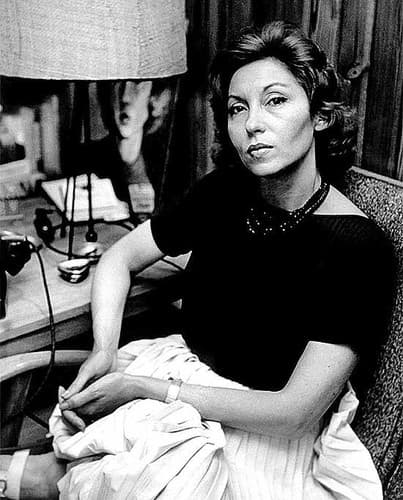
Clarice Lispector was a Ukrainian-born Brazilian novelist and short story writer. Her innovative, idiosyncratic works explore a variety of narrative styles with themes of intimacy and introspection, and have subsequently been internationally acclaimed. Born to a Jewish family in Podolia in Western Ukraine, as an infant she moved to Brazil with her family, amidst the disasters engulfing her native land following the First World War.







