“The wind was a living thing, full of whispers and promises, and sometimes, threats.”
— Describing the atmosphere of the desolate land the characters travel through.

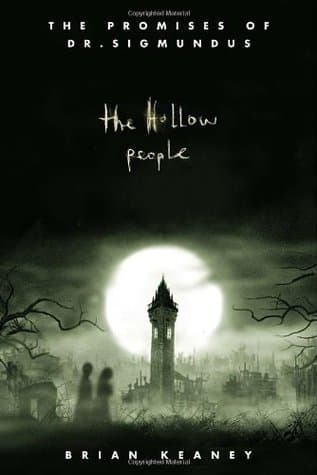
Brian Keaney (2007)
Genre
Fantasy / Science Fiction / Young Adult
Reading Time
240 min
Key Themes
See below
Sign in to track this book
In a world where dreams are a crime, a kitchen worker and a doctor's daughter uncover a conspiracy that threatens their island nation.
Dante, a sixteen-year-old orphan, works in the kitchen of the Tarnagar Asylum, a place where those who dream are locked up and 'cured.' He lives a dull life, always reminded of the island's oppressive government led by Dr. Sigmundus, who has banned dreaming, calling it a disease. Dante's days are full of chores, avoiding guards, and trying to stay unnoticed. He sometimes sees Bea, the daughter of Dr. and Mrs. Beauman, two important doctors at the asylum, who lives a privileged life on the asylum grounds. The island feels constantly watched and fearful, with posters reminding everyone that 'Dreams Are Dangerous.' Dante often feels uneasy and longs for something more, though he cannot say what it is.
One night, while on kitchen duty, Dante accidentally sees a 'treatment' session. He sees an inmate, a woman, being put through a strange machine that makes a high-pitched sound. The woman screams in pain, and Dante is horrified. This event deeply troubles him, making him question the kind appearance of the asylum and the 'cures' given by Dr. Sigmundus and his staff. The experience plants doubt in Dante's mind, challenging the belief that dreaming is a disease and the asylum is a place of healing. He starts to notice the fear in the eyes of the inmates, a fear that seems more than just dread of being confined.
Bea, a smart and observant girl, has always been somewhat protected but also curious. She notices Dante during her walks around the asylum. One day, she finds a hidden message inside a book in her father's study – a cryptic note speaking of 'the truth behind the dreams.' This discovery sparks her curiosity and makes her question the official story about dreaming. She feels a growing unease about her parents' work and Dr. Sigmundus's power. Bea begins to suspect that there is more to the asylum than meets the eye and that her parents might be involved in something much worse than she imagined.
Dante and Bea finally meet when Bea, driven by curiosity, seeks him out. Despite their different social positions, they find common ground in their shared unease about the asylum. Bea, with her access to information, and Dante, with his knowledge of the asylum's inner workings, realize they can help each other. Their first meetings are careful, marked by the social difference and the dangers of questioning the government. However, the urgency of their shared suspicions and the desire to find the truth slowly build a tentative alliance between them, setting them on a dangerous path of discovery.
Dante and Bea, through their investigations, find a hidden network of inmates secretly resisting Dr. Sigmundus. These 'dreamers' communicate through coded messages and subtle acts of defiance, keeping their individuality despite the constant threat of 're-education.' An elderly woman named Elara leads them. She understands the true nature of dreams and the island's history. Elara reveals that Tarnagar was once a place where dreaming was celebrated, and that Sigmundus's rule is a recent, oppressive change. This gives Dante and Bea hope and a clear direction for their fight.
Following clues from Elara and their own observations, Dante and Bea manage to get into a restricted area of the asylum. There, they discover the truth about the 'cure' machines. These devices do not just suppress dreams; they extract and consume human creativity and imagination, turning dreamers into empty, obedient shells. The energy from these dreams then goes to Dr. Sigmundus, giving him immense power and control over the island. The realization of this monstrous process fills them with dread and strengthens their resolve to expose Sigmundus.
Bea confronts her parents, Dr. and Mrs. Beauman, with the evidence she and Dante have gathered. To her horror, she learns they are not just unknowing participants but active partners in Dr. Sigmundus's plan. They believe Sigmundus brings order and stability, and that sacrificing individual dreams is a necessary price. Bea is devastated by their betrayal, feeling a deep sense of disappointment and loneliness. Her parents' cold, logical reasons for their actions only strengthen her resolve to fight against the system they support, even if it means opposing her own family.
With the truth fully revealed, Dante, Bea, Elara, and the other dreamers know they must act quickly. They plan a daring move: disable the dream-extraction machines, expose Dr. Sigmundus's crimes, and try to escape Tarnagar. The plan is dangerous, requiring precise timing and teamwork. Dante's knowledge of the asylum's layout and Bea's access to certain areas are very helpful. Elara provides important insights into the machines' weaknesses. They understand that failure means not only their capture but the permanent suppression of all dreams on Tarnagar.
The escape plan begins. Dante and Bea work to disable the machines while Elara gathers the other dreamers. Chaos erupts as alarms blare and guards rush to their location. Dante finds himself directly confronting Dr. Sigmundus, who shows his full, terrifying power, fueled by the stolen dreams. Sigmundus tries to use his abilities to control Dante's mind, but Dante's strength and new understanding of dreams allow him to resist. Bea, meanwhile, struggles to finish her task amid the growing chaos, knowing that Tarnagar's fate depends on their success.
In a climactic struggle, Dante and Bea manage to overload and disable the central dream-extraction machine. The sudden surge of raw, unchanneled dream energy overwhelms Dr. Sigmundus, causing him to lose control of his powers and ultimately leading to his death. The asylum's control systems fail, and the guards are thrown into confusion. However, the victory comes at a cost. Elara sacrifices herself to ensure the machines are fully destroyed, and the island is left in an uncertain state. Dante and Bea, though victorious, must deal with the aftermath of their actions and Tarnagar's uncertain future.
With Dr. Sigmundus defeated and the dream-extraction machines destroyed, the people of Tarnagar slowly begin to recover. The oppressive atmosphere of his rule lifts, and for the first time in years, the inhabitants are free to dream again. Many are disoriented by the return of their subconscious minds, but there is also a clear sense of relief and growing hope. Dante and Bea, now seen as heroes, work to help the island rebuild. They guide the newly freed dreamers and establish a society where imagination and individuality are celebrated, not feared. Tarnagar's future, while uncertain, is now full of the promise of true freedom.
The Protagonist
Dante transforms from a timid kitchen boy into a courageous leader who embraces his own dreaming abilities to fight oppression.
The Protagonist
Bea sheds her privileged naiveté, confronts her parents' complicity, and becomes a vital force in the fight for freedom and truth.
The Antagonist
Sigmundus's power grows through dream-extraction, but ultimately collapses when his source of power is destroyed.
The Supporting
Elara guides the protagonists and sacrifices herself to ensure the destruction of the dream-extraction machines.
The Supporting
Dr. Beauman remains steadfast in his belief in Sigmundus's methods, alienating his daughter and ultimately facing the consequences of his complicity.
The Supporting
Mrs. Beauman maintains her allegiance to Sigmundus's ideology, unable to break free from her complicity.
The Mentioned
The guards act as an oppressive force, ultimately falling into disarray with the defeat of their leader.
The Supporting
Initially suppressed, the inmates find their voices and freedom with the fall of Sigmundus.
The main theme is the importance of human imagination and dreams for identity and freedom. Dr. Sigmundus's government tries to get rid of dreaming, not because it is a disease, but because it represents individuality, creativity, and the chance for resistance. The 'cure' actually strips people of their essence. Dante and Bea's journey is about taking back this basic human right, understanding that dreams are not just subconscious activity but a source of power and selfhood. The dreamers' secret resistance, communicating through subtle imaginative acts, highlights this theme. The final victory comes from re-embracing the very thing Sigmundus tried to destroy.
“Dreams are not just pictures in your head, Dante. They are the seeds of who you are, what you can be.”
The novel clearly contrasts Tarnagar's oppressive, controlled society under Dr. Sigmundus with the human desire for freedom. Sigmundus's rule thrives on fear, surveillance, and suppressing individual thought, shown by the asylum. The protagonists' struggle is a fight against this totalitarian control, not just for physical freedom but for freedom of thought, expression, and identity. The choice to resist, even with great personal risk, shows the value of freedom. Tarnagar's final liberation represents the win of individual liberty over authoritarian rule, suggesting that true freedom is the ability to think and dream for oneself.
“On Tarnagar, freedom wasn't a right; it was a memory, slowly being erased.”
The story explores how truth can be twisted and hidden for power, and the struggle to uncover it. Dr. Sigmundus keeps control through a widespread lie: that dreaming is a dangerous disease. The asylum itself is a deception, presenting itself as a place of healing while carrying out a monstrous process of dehumanization. Dante and Bea's journey involves peeling back layers of lies – from the propaganda posters to the doctors' 'benevolent' appearance. The painful truth of Bea's parents' involvement further shows how deeply deception can affect society. Uncovering the truth, however uncomfortable, becomes the spark for resistance and freedom.
“The hardest truths are the ones that unravel everything you thought you knew.”
Both Dante and Bea grow personally and discover themselves throughout the story. Dante, initially a timid kitchen boy, finds his hidden abilities and courage, becoming a leader. Bea, protected and privileged, awakens to the harsh realities of her world and challenges her family's involvement, forging her own moral path. Their journey is not only about fighting an external enemy but also about understanding themselves, their values, and their place in the world. They learn to trust their instincts, use their unique strengths, and face difficult truths about themselves and their loved ones, eventually stepping into their roles as agents of change.
“He had always been told what he was, but now, he was deciding who he would be.”
A physical and symbolic prison for imagination and individuality.
The Tarnagar Asylum serves as the central setting and a potent symbol of oppression. Physically, it's where dreamers are incarcerated and 'cured.' Symbolically, it represents the suppression of imagination, individuality, and freedom of thought by Dr. Sigmundus's regime. Its sterile, controlled environment contrasts sharply with the vibrant inner world of dreams. The asylum's true purpose, the extraction of dreams, makes it a literal engine of oppression, draining the life and essence from its inmates. It functions as a constant, tangible threat that drives the protagonists' quest for liberation.
Technological instruments for stealing human creativity and power.
These machines are the primary tools of Dr. Sigmundus's control. Initially presented as devices for 'curing' the disease of dreaming, their true function is to physically extract and consume the creative energy and imagination from the inmates. This stolen energy is then channeled to Sigmundus, granting him immense power. The machines are a sci-fi element that grounds the fantastical concept of dream-stealing in a tangible, horrifying mechanism. Their destruction is key to dismantling Sigmundus's regime and restoring freedom to Tarnagar.
Tools used by Sigmundus to control information and public perception.
Dr. Sigmundus's regime heavily relies on propaganda ('Dreams Are Dangerous') and censorship to maintain control. This device shapes public opinion, demonizes dreaming, and justifies the asylum's existence. It creates a climate of fear and ensures that the populace accepts the official narrative without question. Dante and Bea must navigate this carefully constructed web of lies, and their efforts to expose the truth involve countering this propaganda with verifiable evidence and personal testimonies. It highlights how information control is crucial for maintaining authoritarian power.
Hidden networks of individuals resisting the oppressive regime.
The presence of a secret society of 'dreamers' within the asylum, led by Elara, is a classic plot device for resistance narratives. It provides the protagonists with crucial information, support, and a sense of hope that they are not alone. This underground network allows for coded communication and subtle acts of defiance, demonstrating that even in the face of overwhelming oppression, the human spirit of resistance can persist. It also serves as a source of wisdom and guidance for Dante and Bea, connecting them to the past and the true nature of their world.
“The wind was a living thing, full of whispers and promises, and sometimes, threats.”
— Describing the atmosphere of the desolate land the characters travel through.
“Fear can make you do things you never thought yourself capable of, both good and bad.”
— A character reflecting on their actions under duress.
“Even in the darkest places, a flicker of hope can ignite the greatest fires.”
— An encouraging statement during a moment of despair for the protagonists.
“The past is a heavy cloak, but it's one we choose whether to wear or to cast off.”
— A discussion about moving on from past mistakes and trauma.
“Sometimes, the monsters aren't in the shadows, but in the reflections.”
— A character realizing the true nature of an antagonist or their own flaws.
“Knowledge is a weapon, but only if you know how to wield it.”
— A mentor figure advising a young protagonist on the importance of understanding and applying information.
“The world isn't always fair, but that doesn't mean we stop fighting for what's right.”
— A rallying cry in the face of injustice.
“Silence can be louder than any scream, especially when it holds unspoken truths.”
— Describing the tension in a scene where characters are withholding information.
“Every journey begins with a single step, but it's the steps you take after that define the path.”
— A reflection on the beginning of the adventure and the choices made along the way.
“The greatest prison is the one we build for ourselves, brick by brick, with our own doubts.”
— A character overcoming internal struggles and self-doubt.
“Even the smallest acts of kindness can echo through time, changing the future in ways we can't imagine.”
— Highlighting the impact of compassion in a bleak world.
“What is real? Is it what we see, or what we believe?”
— A philosophical question posed regarding the nature of reality in a fantastical setting.
“Sometimes, to find your true self, you have to lose everything else first.”
— A character undergoing a profound transformation after experiencing significant loss.
“The whispers of the past are never truly gone; they simply wait for someone to listen.”
— Referring to ancient secrets and forgotten histories that influence the present.
Ready to see how well you understood this book? Take our interactive quiz with 10 questions.







