“For the mind cannot be forced to believe what it does not believe.”
— Merlin reflecting on the nature of faith and belief.

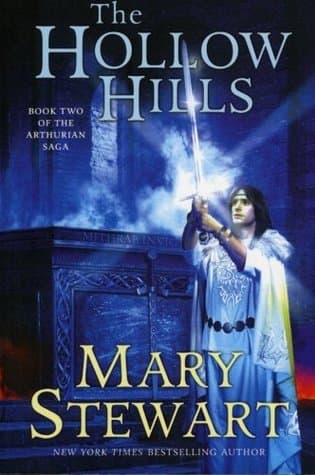
Mary Stewart (1973)
Genre
Fantasy / Historical Fiction
Reading Time
10-12 hours
Key Themes
See below
Sign in to track this book
As Britain faces collapse, the aging Merlin, seeing visions of a hidden magical sword, must guide a young Arthur to claim his destiny and the legendary Caliburn, making him king amid the chaos of war.
The story begins with Merlin, a seasoned prophet and counselor, living with his foster-mother, Elen, in the Welsh hills. He is concerned about Britain's future, which is fragmented and vulnerable after Ambrosius Aurelianus's death. Merlin focuses on young Arthur, whom he placed with Sir Ector's family years ago. Arthur, growing into a strong and intelligent boy, believes he is Ector's son. Merlin frequently visits him in disguise, subtly influencing his education and character. Merlin has recurring, vivid dreams of a hidden sword, a symbol of kingship, and a mysterious stone, both important to Arthur's destiny. He understands that Arthur will soon claim his true heritage, but the exact path is unclear.
King Uther, Arthur's biological father, is increasingly ill and troubled by internal strife and Saxon attacks. Merlin, despite his duty to Uther, focuses on Arthur's future. He witnesses Uther's final, desperate attempts to unify Britain, which fail. Uther dies, not in battle, but in his bed, leaving a power vacuum and no clear heir. This causes widespread chaos and land grabs by warlords and minor kings. The country is near collapse, making Merlin's mission to establish Arthur as the rightful High King even more urgent and dangerous. Uther's death also removes the last obstacle for Arthur's true identity to be revealed, though the timing and method are still critical.
Merlin's dreams become clearer, providing clues about the sword and its location. He understands this is Caliburn, Ambrosius's sword, hidden after his death. Guided by these visions and his knowledge of ancient lore, Merlin travels alone across Britain. His quest leads him to ancient, sacred sites, including a hidden cave in the Mendip Hills, where he believes the sword is hidden. The journey is difficult and dangerous, reflecting the spiritual and physical challenges he faces. He uses his prophetic abilities and a deep connection to the land to decipher signs, eventually leading him closer to the sword's resting place, a place of strong magical energy.
Following clues from his dreams and his intuition, Merlin finally finds the hidden cave. Deep inside, he finds Caliburn and the stone in which it is magically embedded. Caliburn is more than a weapon; it has powerful magic and represents the ancient power of Britain's rightful kings. Merlin recognizes its importance and understands that only the true king, Arthur, will be able to pull it out. He prepares the site, ensuring the sword and stone are both protected and accessible when the time is right. This discovery is a turning point, as the physical sign of Arthur's destiny is now secured, waiting for its rightful wielder.
With Caliburn secured, Merlin returns to London, now a city in chaos. He uses his influence and reputation as a prophet to summon Britain's warring kings and chieftains to a great council. His goal is to offer a solution to the succession crisis and create a unified kingdom under a new High King. The kings arrive, each with their own ambitions and distrust, making the assembly tense. Merlin understands that a simple declaration will not be enough; a powerful sign is needed to convince these proud rulers to accept an unknown boy as their leader. He prepares the stage for the sword's revelation and the true heir.
At the grand assembly, Merlin reveals Caliburn, now magically embedded in a massive stone, in the churchyard of St. Paul's. He declares that only Britain's true High King will be able to pull the sword from the stone. One by one, the powerful kings and knights try to pull Caliburn free, but none succeed, regardless of their strength or lineage. Their failures show the spiritual and magical nature of kingship, proving that physical might or inherited title alone is not enough. The spectacle creates awe and frustration among the assembled rulers, setting the stage for the true heir's unexpected revelation.
During the tournament after the failed attempts to draw the sword, Sir Kay, Arthur's foster-brother, realizes he has forgotten his sword. He sends Arthur to get it. Unable to find Kay's sword, Arthur, seeing the unattended sword in the stone, innocently pulls it free, intending to use it for Kay. When he returns with Caliburn, Kay recognizes the sword and tries to claim the feat himself, but Ector, his father, questions Arthur. Arthur honestly describes how he drew the sword. Ector, recognizing the prophecy, makes Arthur re-insert and re-draw the sword for all to see. The awe-struck crowd, including many kings, witnesses Arthur's easy act, confirming him as the rightful heir and chosen High King of Britain.
Despite the clear sign, many proud kings and warlords initially refuse to accept Arthur, a mere boy of unknown parentage, as their High King. They question his lineage and demand more proof. Merlin steps forward and publicly reveals Arthur's true identity as the son of Uther and Igraine, explaining his birth and Merlin's role in protecting him. This revelation, combined with the miraculous drawing of the sword, begins to sway public opinion. After tense days and further political maneuvering by Merlin, Arthur is eventually accepted and crowned High King of Britain. This marks the beginning of his reign and the next chapter in Merlin's plan for a unified kingdom.
With Arthur now High King, Merlin becomes his most trusted and visible counselor. He advises Arthur on statecraft, military strategy, and diplomacy, helping the young king navigate Britain's political landscape. Merlin uses his wisdom, foresight, and knowledge of ancient traditions to guide Arthur in establishing his authority and uniting the kingdoms. He is Arthur's mentor, friend, and spiritual guide, constantly reminding him of his destiny and the responsibilities of kingship. Their deep bond, formed by years of shared purpose, is the foundation of Arthur's early reign as they work to build a new, stronger Britain.
While Arthur's coronation is a triumph, the story subtly hints at ongoing challenges he will face. The resistance from some kings, though currently quelled, suggests future rebellions and internal strife. The Saxon threat remains, requiring Arthur to prove his military skill. Merlin understands that lasting peace will be a continuous struggle, and his role as Arthur's guide is far from over. The book concludes with Arthur beginning to establish his court and assert his authority, but the reader understands that this is only the beginning of his legendary reign, with many trials ahead, and Merlin's watchful eye continuing.
The Protagonist
Merlin transitions from a hidden guardian to a public counselor, accepting his role as the architect of Arthur's destiny and the builder of a new Britain.
The Protagonist
Arthur transforms from an innocent, unknown boy into the acknowledged High King, accepting his destiny and the weight of his royal blood.
The Supporting
Uther's arc is one of decline and ultimate failure to secure his legacy, paving the way for Arthur's rise.
The Supporting
Ector's arc is one of accepting a profound truth and sacrificing his own claim to Arthur for the greater good of Britain.
The Supporting
Kay learns to accept Arthur's destiny and his own supporting role, maturing from a somewhat self-centered youth to a loyal knight.
The Supporting
Elen's arc is largely static, serving as a constant, wise presence and a source of stability for Merlin.
The Mentioned
Igraine's arc is completed before the novel's main events; she serves as a foundational element of Arthur's origin story.
The Mentioned
Ambrosius's arc is completed before the novel's main events; his legacy inspires Merlin and Arthur.
The theme of destiny, guided by Merlin's prophecies, underlies the entire story. Merlin is not just a prophet but actively shapes the future he foresees. His dreams of Caliburn and the stone are precise instructions for his actions. Arthur's entire life, from his hidden birth to his fostering and education, fulfills a grand design. Drawing the sword from the stone is the ultimate sign of this destiny, proving Arthur is the chosen one, regardless of his awareness. This theme suggests that some paths are predetermined but need human action (Merlin's) to happen.
“"The future is not a road, Arthur, but a river. It flows, and we must learn to swim with it, or drown."”
The novel explores the nature of true kingship, contrasting it with mere power or inherited title. Uther's reign, though legitimate, fails due to his weaknesses. The squabbling kings after his death show self-serving leadership. Arthur, by contrast, is the ideal king: humble, just, compassionate, and connected to the land and its people, symbolized by his easy drawing of Caliburn. Merlin's guidance emphasizes that a true king must unite, protect, and inspire, not just rule. The sword itself symbolizes this spiritual authority, not just a weapon.
“"It is not the strongest arm that draws the sword, but the truest heart that is chosen."”
The story examines the shift from ancient pagan beliefs, shown by Merlin's connection to the land and its magic, to the rising Christian influence. While Christianity is present, Merlin's power comes from older, primal forces. He uses his 'magic' for a greater, unifying purpose, bridging these two worlds. Placing the sword in a churchyard, for instance, symbolizes combining ancient power with new spiritual authority. Arthur's reign is presented as a blend, drawing strength from both the mystical past and the promise of a more ordered, unified future for Britain.
“"The land remembers, Arthur, even when men forget. And the land will choose its king."”
Merlin's relationship with Arthur shows the impact a wise guide can have on a leader. Merlin dedicates his life to Arthur's upbringing and rise, making personal sacrifices. He works in the background, subtly shaping Arthur's character and experiences, always with Britain's greater good in mind. His willingness to reveal Arthur's true parentage and step into a counselor role shows selfless commitment to his protégé's destiny, prioritizing the kingdom's future over personal glory. This theme highlights the importance of guidance in shaping great leaders.
“"My life is bound to yours now, Arthur. For good or ill, we walk this path together."”
Merlin's primary source of information and guidance for Arthur's destiny.
Merlin's prophetic dreams and visions serve as the driving force behind the plot. They are not merely symbolic but often contain precise details and instructions, guiding Merlin to the location of Caliburn and informing his strategic decisions regarding Arthur's upbringing and eventual revelation. These visions lend a mystical and fated quality to the narrative, establishing that Arthur's rise is part of a larger, divinely or magically ordained plan. They also highlight Merlin's unique connection to the unseen forces that shape Britain's destiny, making him an indispensable figure.
A magical artifact and a symbolic test of rightful kingship.
Caliburn, embedded in the stone, is the central plot device for Arthur's revelation. It functions as a magical test, demonstrating that true kingship is not about physical strength or noble birth alone, but about a deeper, inherent worthiness. Its magical nature ensures that only the destined king can draw it, making Arthur's act undeniable proof of his claim. The sword is also a symbol of continuity, representing the legacy of Ambrosius and the ancient power of Britain, which Arthur, as High King, is meant to wield and restore.
The trope of a royal child raised in obscurity, unaware of their true lineage.
The device of the hidden heir is crucial to the narrative's tension and eventual triumph. Arthur's upbringing as a commoner, unaware of his royal blood, allows him to develop a grounded and compassionate character, free from the corrupting influences of court politics. It also creates dramatic irony, as the audience knows his destiny while he remains oblivious. This device allows for a powerful reveal, where his inherent goodness and destiny, rather than his lineage, are initially highlighted as the reasons for his ascension, making his claim all the more compelling and miraculous.
Merlin's archetypal role as Arthur's guide and teacher.
Merlin embodies the 'wise old man' archetype, a common plot device in heroic narratives. He provides the hero (Arthur) with knowledge, guidance, and the means to fulfill his destiny. Merlin's wisdom, magical abilities, and foresight are essential for navigating the political landscape and overcoming obstacles. This device allows for exposition of the backstory and prophecies, while also shaping the hero's character and moral compass. Merlin's selfless dedication to Arthur's cause makes him more than just a plot enabler; he is the driving force behind the hero's journey.
“For the mind cannot be forced to believe what it does not believe.”
— Merlin reflecting on the nature of faith and belief.
“There are no accidents. There is only the inevitable.”
— Merlin contemplating the unfolding of destiny and fate.
“The past is never dead. It is not even past.”
— Merlin musing on the enduring influence of history and memory.
“A man must be what he is, and not what he would wish to be.”
— Merlin's internal reflection on self-acceptance and identity.
“Power is a thing that must be taken, not given.”
— Merlin observing the dynamics of political and personal power.
“The world is full of signs, if only you know how to read them.”
— Merlin teaching Arthur about interpreting omens and natural phenomena.
“Sometimes a lie is a kindness, and the truth a cruelty.”
— Merlin considering the ethical dilemmas of honesty and compassion.
“Fear is a poor counsellor.”
— Merlin advising Arthur to overcome his apprehension.
“To rule, one must first learn to serve.”
— Merlin's lesson to Arthur on the true nature of leadership.
“The greatest battles are fought within the heart.”
— Merlin contemplating the internal struggles of individuals.
“Even the wise make mistakes. The difference is that they learn from them.”
— Merlin acknowledging his own fallibility and the importance of growth.
“There are always choices. Even when it seems there are none.”
— Merlin encouraging resilience and agency in difficult situations.
“The land remembers. It remembers everything.”
— Merlin sensing the ancient history and spiritual presence within the landscape.
“Magic is not a trick. It is a way of seeing.”
— Merlin explaining the true essence of his craft to Arthur.
Ready to see how well you understood this book? Take our interactive quiz with 10 questions.
Biography coming soon.







