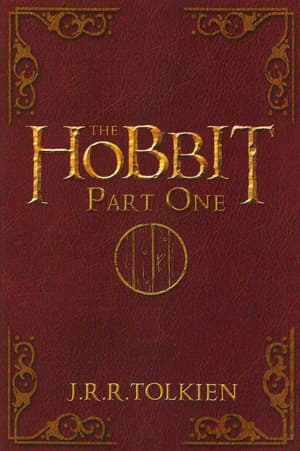
“In a hole in the ground there lived a hobbit.”
— The very first sentence of the book, introducing the protagonist and his home.

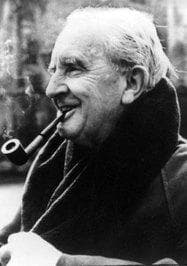
J.R.R. Tolkien (1937)
Genre
Fantasy / Young Adult
Reading Time
300 min
Key Themes
See below
Sign in to track this book
A comfort-loving hobbit, Bilbo Baggins, is swept into an unexpected quest with a company of dwarves and a wizard to reclaim a mountain of treasure from the fiery hoard of the cunning dragon, Smaug.
Bilbo Baggins, a respectable hobbit from Bag End, values comfort and routine. His peaceful life changes one afternoon when Gandalf the Grey, a wizard he vaguely remembers, marks his door. Soon after, thirteen dwarves—Dwalin, Balin, Kili, Fili, Dori, Nori, Ori, Oin, Gloin, Bifur, Bofur, Bombur, and their leader, Thorin Oakenshield—arrive at Bilbo's hobbit-hole for an uninvited supper. Bilbo, flustered, tries to stay calm as the dwarves sing and talk about their lost treasures. Gandalf reveals their purpose: a quest to reclaim their ancestral home, the Lonely Mountain, and its gold from the dragon Smaug. Bilbo is chosen as their 'burglar'.
The company sets out. Bilbo, still confused, struggles with travel. One stormy night, seeing a light, Thorin sends Bilbo to investigate. Bilbo finds three large, crude trolls—William, Bert, and Tom—trying to cook a sheep. He tries to pickpocket William but is caught, leading to the capture of several dwarves who rush to help. Gandalf, who had been away, returns just in time. He mimics the trolls' voices, tricking them into arguing until dawn, when they turn to stone. The company then loots the trolls' cave, finding swords, including Glamdring and Orcrist, and a small dagger for Bilbo.
After the trolls, the company travels through the Misty Mountains to the hidden valley of Rivendell, the Last Homely House. Elrond, the wise elven leader, welcomes them. He provides shelter, food, and hospitality, letting the tired travelers rest. During their stay, Elrond examines the swords from the trolls' hoard, identifying Glamdring as the Foe-hammer and Orcrist as the Goblin-cleaver, both old elvish blades. More importantly, he deciphers the moon-letters on Thorin's map. This reveals a secret message about the side-door entrance to the Lonely Mountain and the exact time to open it on Durin's Day.
Leaving Rivendell, the company climbs the Misty Mountains. Caught in a storm, they shelter in a cave. During the night, the cave entrance opens, and goblins ambush them, dragging them deep underground. Bilbo, bumped and confused, falls and hits his head, losing consciousness. When he wakes, he is alone in the dark, separated from Gandalf and the dwarves. This is a turning point for Bilbo, as he must now rely on himself for the first time.
Lost in the tunnels, Bilbo finds a cold, slimy lake where he meets Gollum, an old, miserable creature. Gollum, interested in Bilbo, suggests a riddle game. If Bilbo wins, Gollum will show him the way out; if Bilbo loses, Gollum will eat him. Bilbo, surprisingly clever, stumps Gollum with the riddle, 'What have I got in my pocket?' Gollum, angry, goes to get his 'precious' magic ring, which makes the wearer invisible, to help him find and kill Bilbo. However, the ring, which Gollum had dropped, is already in Bilbo's pocket. Bilbo realizes its power, slips it on, and follows Gollum out, unseen.
Bilbo, now invisible, avoids the goblins and reunites with Gandalf and the dwarves, who also escaped the goblin caves. Their rest is short. A pack of Wargs, intelligent and cruel wolves allied with the goblins, corners them. The company climbs trees for safety, but the Wargs try to burn them out. Just when hope seems lost, Gandalf calls the Great Eagles of the Misty Mountains. The Eagles rescue the company, carrying them away from the burning forest and the goblins and Wargs, to a safer, wild region.
The Eagles drop the company near Beorn's home. Beorn is a strong skin-changer who can turn into a great black bear. Gandalf, knowing Beorn distrusts strangers, approaches him carefully, introducing the dwarves two at a time to avoid overwhelming him. Beorn, though suspicious at first, is convinced of their trouble and offers them shelter, food, and important advice for their journey through Mirkwood. He warns them strongly not to leave the path in the dark forest and provides ponies and supplies, though he insists on taking back his animals before they enter Mirkwood. Beorn's help is vital for their continued travel.
The company enters Mirkwood, a vast, dark, old forest. Gandalf leaves them at the edge, reminding them not to stray from the path. They struggle through the oppressive gloom, running low on supplies and morale. Thirsty, the dwarves repeatedly ignore Beorn's and Gandalf's warnings, stepping off the path towards an enchanted stream and distant lights. Giant spiders capture them, cocooning them and hanging them from trees. Bilbo, who had fallen behind and escaped capture, uses his magic ring's invisibility and new courage to distract and fight the spiders, freeing his friends.
Soon after being freed from the spiders, the Wood-elves, led by the Elvenking, capture the dwarves and take them to their underground palace. Thorin, defiant, refuses to reveal his quest, and the dwarves are imprisoned. Bilbo, still invisible with his ring, follows them into the Elvenking's halls, spending days observing and planning. He finds that the elves trade wine with the Men of Lake-town, sending barrels down a river that flows beneath the palace. During an elvish feast, Bilbo seizes an opportunity, steals the keys, frees the dwarves, and stuffs them into empty wine barrels. He then rolls them through a trapdoor into the river. He jumps on the last barrel, and they float downriver towards Lake-town.
The barrels, with the disheveled dwarves inside, eventually reach Lake-town (Esgaroth), a settlement on stilts in the Long Lake. Bilbo, who rode on the last barrel, frees his companions. Though suspicious at first, the Master of Lake-town and the townspeople are thrilled to see Thorin Oakenshield. They recognize him as the descendant of the King Under the Mountain, a figure of prophecy believed to restore the town's wealth. The dwarves are hailed as heroes, feasted, and given supplies, boats, and guides for the final part of their journey to the Lonely Mountain. Bilbo, despite his discomfort with the attention, enjoys the brief break.
Leaving Lake-town, the company travels to the base of the Lonely Mountain. They spend weeks searching for the secret side-door mentioned in Thorin's map. Their supplies run low, and morale drops. Just as despair sets in, Bilbo remembers Elrond's deciphering of the moon-letters: 'Stand by the grey stone when the thrush knocks, and the setting sun with the last light of Durin's Day will shine upon the key-hole.' On the appointed day, a thrush knocks a snail against a stone. As the sun sets, a single ray of light illuminates a keyhole, which Thorin opens with his special key. The mountain's secret entrance is revealed.
With the secret door open, the company faces entering Smaug's lair. Bilbo, the designated 'burglar,' must go first. Gathering his courage, he goes down the dark, dangerous tunnel. Deep inside the mountain, he finds Smaug, a magnificent and terrifying dragon, asleep on a huge pile of treasure. Bilbo, trembling but determined, secretly steals a large, two-handled cup. He returns to the dwarves, excited by his success. However, the theft wakes Smaug, who immediately notices the missing cup and erupts in furious rage, realizing he has been robbed. His roar shakes the mountain, and the dwarves realize their true danger.
Smaug, enraged by the theft, bursts from the main gate of the Lonely Mountain, looking for the thief. He attacks the mountainside, trapping the dwarves and Bilbo within the secret passage. Bilbo, showing great bravery, decides he must go back down the tunnel to get more information. He meets Smaug again. Smaug pretends to be asleep but is watching the tunnel. Bilbo, invisible with the Ring, talks to Smaug, subtly flattering him while also learning important details about the dragon's defenses, including a vulnerable spot on his underbelly where a scale is missing. Smaug, though clever, is tricked by Bilbo's riddles and flattery.
The Protagonist
Transforms from a reluctant, timid hobbit into a brave and resourceful hero, discovering hidden strengths and a love for adventure.
The Supporting
Acts as a consistent guide and orchestrator, his wisdom and foresight driving the narrative and Bilbo's development.
The Supporting
Begins as a proud, skeptical leader, gradually comes to respect Bilbo, but remains susceptible to the allure of his lost treasure.
The Antagonist
A static antagonist whose actions drive much of the plot, ultimately leading to his demise (in Part Two).
The Mentioned
His brief encounter with Bilbo is a static moment that profoundly impacts Bilbo's journey and future events.
The Supporting
Provides crucial aid and wisdom, serving as a beacon of ancient knowledge and hospitality.
The Supporting
Offers pivotal aid and warnings to the company, representing a powerful, neutral force of nature.
The Supporting
Acts as an obstacle, forcing Bilbo to demonstrate ingenuity and leadership.
This theme is central to Bilbo's journey. He starts as a typical 'stay-at-home' hobbit, valuing comfort and routine. His change is slow but significant, driven by necessity and the challenges he faces. From his initial unwillingness to his brave stand against the spiders in Mirkwood and his clever talk with Smaug, Bilbo consistently exceeds his own expectations. He finds courage, resourcefulness, and a capacity for leadership he did not know he had. This shows that heroism is not just for the grand or powerful, but can come from unexpected places.
“"Go back? No good at all! Go sideways? Impossible! Go forwards? Only way! So up he got, and trotted along with his little sword held in front of him and his other hand feeling the wall, till his fingers met something that felt like a ring of cold metal.”
Greed is a theme throughout the story, seen most clearly in Smaug's obsessive hoarding of treasure, which led him to destroy the dwarves' kingdom. However, it also subtly affects Thorin and the dwarves, whose focus on their ancestral gold often blinds them to dangers and alienates potential allies, like the Wood-elves. The lure of gold is a strong motivator, but also a dangerous one, threatening to consume those who give in to it. This theme shows the destructive nature of unchecked desire for material wealth.
“"He was a most excellent dragon, and he had a most excellent hoard.”
The story begins with a clear tension between Bilbo's deep love for his comfortable hobbit-hole and Gandalf's call to adventure. Bilbo's initial reluctance and frequent longing for home during the journey highlight this theme. However, as he overcomes challenges and discovers his abilities, the 'call to adventure' starts to appeal to him. This theme explores how people (or hobbits) resist change and danger, but also the potential for growth and fulfillment found by leaving one's comfort zone. It ultimately shows the value of experience over staying still.
“"Adventures are nasty, disturbing, uncomfortable things! Make you late for dinner! I can't think what anybody sees in them.”
Throughout the quest, Bilbo's seemingly small or 'hobbitish' qualities—his quiet cleverness, his ability to blend in, his good manners, and his common sense—often save the day, rather than the dwarves' strength or Gandalf's magic. His riddle game with Gollum, his stealth in Smaug's lair, and his ingenuity in freeing the dwarves from the spiders and the Elvenking are good examples. This theme shows that true power and wisdom can come from unexpected sources, and that even the smallest individual can make a big difference through wit and courage, challenging common ideas of heroism.
“"There is more in you than you know, my little hobbit, and a good deal more than you guess.”
Artifacts guiding the company to the Lonely Mountain and its secret entrance.
Thorin's map, inherited from his grandfather Thrór, is crucial to the quest. It not only points the way to the Lonely Mountain but also contains the hidden moon-letters, deciphered by Elrond, which reveal the precise location and timing for opening the secret side-door. The accompanying key is the physical means to unlock this entrance. These items serve as tangible goals and sources of mystery, driving the plot forward and providing moments of revelation and challenge as the company strives to understand and utilize them.
A magic ring that grants invisibility, found by Bilbo.
Bilbo's accidental discovery of the One Ring in Gollum's cave is a pivotal plot device. It grants him invisibility, which is instrumental in numerous escapes and acts of 'burgling,' such as evading goblins, rescuing the dwarves from spiders, escaping the Wood-elves, and confronting Smaug. More subtly, it begins to influence Bilbo, though his hobbit nature provides some resistance. While its true power and malevolent nature are not fully revealed in 'The Hobbit', its immediate utility profoundly shapes Bilbo's actions and survival, allowing him to fulfill his role as the company's burglar.
Runes that only appear under specific lunar conditions, revealing vital information.
Moon-letters are a magical form of writing that can only be read when the moon shines upon them, specifically on a certain phase or time of year. Elrond's ability to read them on Thorin's map reveals the crucial instructions for finding and opening the secret door to the Lonely Mountain on Durin's Day. This device adds an element of ancient magic and mystery to the quest, highlighting the importance of lore and timing. It also serves as a 'deus ex machina' of sorts, providing a solution to a seemingly insurmountable obstacle at a critical moment in the narrative.
Hints and warnings about future events or character fates.
The narrative uses subtle prophecies and foreboding to build tension and foreshadow future events. The legend of the King Under the Mountain returning to Lake-town, for instance, creates anticipation and influences the townspeople's reception of Thorin. Gandalf's mysterious disappearances hint at larger, unseen conflicts, while the warnings from Beorn and Elrond about Mirkwood and the dangers of greed subtly prepare the reader for challenges and moral dilemmas to come. These elements add depth to the world and a sense of destiny to the quest, even as the characters navigate their immediate challenges.
“In a hole in the ground there lived a hobbit.”
— The very first sentence of the book, introducing the protagonist and his home.
“Not a nasty, dirty, wet hole, filled with the ends of worms and an oozy smell, nor yet a dry, bare, sandy hole with nothing in it to sit down on or to eat: it was a hobbit-hole, and that means comfort.”
— Describing the ideal hobbit-hole, emphasizing comfort and coziness.
“Go back? No good at all! Go sideways? Impossible! Go forwards? Only way!”
— Bilbo's internal monologue as he faces a difficult choice in the Misty Mountains.
“May the wind under your wings bear you where the sun sails and the moon walks.”
— Gandalf's farewell to Bilbo and the dwarves as they leave the Shire.
“If ever you want to know anything about the Mirkwood, ask me. I know it all. I've been there and back, and I'm not going there again.”
— Beorn's warning about Mirkwood to Bilbo and the dwarves.
“There is more in you of good than you know, child of the kindly West. Some courage and some wisdom, blended in measure. If more of us valued food and cheer and song above hoarded gold, it would be a merrier world.”
— Thorin's words to Bilbo at the end of the adventure, recognizing his true worth.
“Never laugh at live dragons, Bilbo you fool!”
— Bilbo's internal thought after a tense encounter with Smaug, realizing the danger.
“Farewell, good thief. I go now to the halls of waiting to sit beside my fathers, until the world is renewed. I have bought it with my life, but I have avenged my people.”
— Thorin's dying words to Bilbo after the Battle of Five Armies.
“It was a turning point in his career, though he did not know it.”
— Narrator's comment when Bilbo first finds the One Ring in Gollum's cave.
“There is nothing like looking, if you want to find something. You certainly usually find something, if you look, but not always quite what you were after.”
— Bilbo's reflection on searching for things, highlighting unexpected discoveries.
“Roads go ever ever on, Under cloud and under star, Yet feet that wander have not gone, Past the mountain-shadows far.”
— A song sung by Bilbo, reflecting the theme of journey and the pull of adventure.
“Where there's a will there's a way, as the hobbit used to say, and he was a wise little chap.”
— Gandalf's encouraging words to the dwarves, referencing Bilbo's resourcefulness.
“I am looking for someone to share in an adventure that I am arranging, and it's very difficult to find anyone.”
— Gandalf's initial proposition to Bilbo, setting the stage for the entire journey.
“Home is behind, the world ahead, And there are many paths to tread.”
— A song sung by Bilbo as he leaves the Shire, contemplating the journey ahead.
Ready to see how well you understood this book? Take our interactive quiz with 10 questions.
Biography coming soon.







