“The ocean was a giant with a million arms, and I was just a little boy trying to untangle one of its fingers.”
— Miles reflects on the vastness and mystery of the ocean and his small place within it.

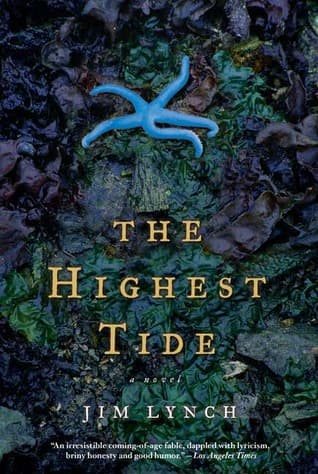
Jim Lynch (2005)
Genre
Literary Fiction / Young Adult
Reading Time
360 min
Key Themes
See below
Sign in to track this book
Thirteen-year-old Miles O'Malley, a quiet observer of the Puget Sound's hidden life, finds his world turned upside down when a giant squid washes ashore, forcing him to navigate newfound fame, the complexities of adolescence, and the shifting tides of his own family and identity.
Thirteen-year-old Miles O'Malley, who reads marine biology books and admires Rachel Carson, sneaks out one night to explore the tidal flats near his home in Puget Sound. During an unusually low tide, he finds a huge, recently dead giant squid, an animal rarely seen, especially in shallow water. This discovery puts Miles in the local spotlight. It draws media attention and many curious people, including scientists and spiritual seekers, all wanting to understand the squid and the boy who found it. Miles, at first overwhelmed, deals with sudden fame and the various ways people interpret his discovery.
After finding the giant squid, Miles gets a lot of local media attention. Reporters come to his home, and TV crews go to the beach, all wanting to interview the quiet, smart boy who seems to have a special connection to the sea. Dr. Vigodsky, a marine biologist, shows interest in Miles, seeing his real passion and knowledge. But the attention also brings less welcome people, like the eccentric prophetess Florence, who sees Miles as a channel for divine messages, and Pastor Jerry, who tries to explain the events religiously. Miles, uncomfortable with the attention, struggles to balance his personal wonder with the public's often sensationalized view of his finds.
Soon after the giant squid, Miles discovers a rare, deep-sea opah, or 'moonfish,' washed ashore. This second unusual find makes the public believe something extraordinary is happening in Puget Sound, and that Miles is central to it. Florence, the self-proclaimed prophetess, speaks out more, calling these events signs of coming change and linking them to Miles's 'gift.' Miles is excited by the opah's scientific rarity, but he feels burdened by the spiritual and mystical interpretations people attach to his discoveries. He wants a more rational explanation, even as the inexplicable continues around him, further complicating his already difficult adolescent life.
While Miles focuses on the tides and public reactions, his home life is tense. His parents, Joanne and Robert, argue constantly, their marriage seemingly about to end. Miles often overhears their arguments, which adds anxiety to his already complex emotions. Also, Miles likes his next-door neighbor, Angie, who is a few years older. He watches her, thinks about her, and tries to impress her, all while feeling the awkwardness of first love. These personal struggles contrast with the big, public drama of his marine discoveries.
In his most surprising discovery yet, Miles finds a coelacanth, a fish thought extinct for millions of years, alive in a tidal pool. This 'living fossil' shocks the scientific community and confirms Miles's reputation as a truly exceptional, almost prophetic, figure. Dr. Vigodsky is amazed and tries to study the creature before it is returned to the deep. The media frenzy increases, and more people come to the Sound, convinced Miles is either a genius or a spiritual messenger. Miles, thrilled by the coelacanth's scientific importance, feels the weight of public expectation grow, struggling to keep his own identity amid the noise.
As summer goes on, Miles's crush on Angie deepens, but he also notices her relationships with older boys. He watches her from afar, feeling longing and jealousy as she experiences her own adolescence. Angie is friendly with Miles, but sees him as a younger boy, a friend, not a romantic interest. This unrequited love adds another layer of emotion to Miles's life, increasing his feelings of being on the edge of something, but not quite there. He wants a connection with Angie that feels always out of reach, mirroring his worries about the changing world around him.
A large whale beaches itself near Miles's home, attracting an even bigger crowd and more media coverage than his earlier discoveries. The sight of the dying whale, with Miles's growing reputation, creates a chaotic scene. Florence and Pastor Jerry speak out more, each trying to explain the event through their own beliefs. Miles feels sadness for the whale and growing frustration with how his discoveries are being sensationalized. He struggles to process nature's reality amid the human spectacle, feeling more isolated despite being the center of attention.
Miles's next discovery is a preserved Great Auk, a bird extinct since the mid-19th century, found perfectly intact in a block of ice along the shore. This unlikely find pushes public belief and authorities' patience to their limits. While scientists are interested, some officials begin to suspect Miles is faking these discoveries. The pressure on Miles grows, as he faces skepticism and accusations amid continued awe. He becomes more withdrawn, his wonder for the sea now mixed with the burden of expectation and the threat of disbelief, making him question his own mind and the truth of his experiences.
Overwhelmed by constant scrutiny and accusations, Miles tells Dr. Vigodsky about his unique connection to the sea and his inexplicable finds. Dr. Vigodsky, at first skeptical but always respectful of Miles's intelligence, listens closely. While he cannot offer a supernatural explanation, he validates Miles's observations and encourages his scientific curiosity, providing a needed anchor of reason and support. This talk helps Miles process his experiences, letting him see his discoveries more scientifically, even if the cause remains a mystery. It strengthens their bond and Miles's trust in the marine biologist.
As the season progresses, the 'highest tide' predicted by Florence and others, which seems to link with Miles's discoveries, finally arrives. It does not bring the apocalyptic event some predicted, but it marks a peak of the unusual marine events. The intense public interest slowly fades, and the strange creatures stop appearing. Miles observes the changes in the Sound, understanding that the period of intense discovery is ending. This natural ebb and flow mirrors the shifts in his own life, as he starts to accept the changes within his family and his own growth. He learns to appreciate the temporary nature of both the sea's wonders and his childhood.
Miles's parents, Joanne and Robert, decide to separate. This personal change, though expected, deeply affects Miles. He deals with the pain of his family breaking apart, a loss that feels as significant as the receding wonders of the Sound. However, through this difficult experience, Miles begins to show a new level of maturity. He accepts the changes, understanding that life, like the tides, always shifts. He starts to find his own way, moving past the 'miracle boy' identity and embracing the difficulties of growing up, while holding onto his deep love for the ocean.
By the end of summer, the unusual marine discoveries have stopped, media attention has gone, and Miles's parents have separated. Miles is no longer the center of public fascination, but he has changed a lot personally. He has come to terms with his family's changes, his unrequited first love for Angie, and the passing magic of the highest tide. He understands that while the spectacular events are over, his deep connection to nature remains. Miles looks to the future with a new sense of self, carrying the wisdom from his unique experiences and a quiet, lasting passion for the sea's mysteries.
The Protagonist
Miles evolves from a quiet, observant boy into a more mature, accepting young man who learns to navigate public scrutiny, personal heartbreak, and the mysteries of both nature and growing up.
The Supporting
Angie remains largely static in her role, serving as a catalyst for Miles's emotional development as he learns about the pain of unrequited love and the realities of growing up.
The Supporting
Joanne navigates the dissolution of her marriage, ultimately separating from Robert, reflecting the broader theme of change and loss.
The Supporting
Robert's character arc culminates in the separation from Joanne, symbolizing the end of an era for Miles's family.
The Supporting
Dr. Vigodsky provides a consistent source of scientific validation and mentorship for Miles, helping him process his extraordinary experiences.
The Supporting
Florence's character remains consistent, serving as a foil to Miles's scientific perspective and representing the more irrational interpretations of his discoveries.
The Supporting
Pastor Jerry's role is to provide a specific religious interpretation of the events, remaining consistent in his theological framing.
The novel shows the amazing and often unexplainable wonders of the ocean. Miles's discoveries of the giant squid, opah, coelacanth, and Great Auk highlight how vast the natural world is and how much we don't know. These events create a sense of deep mystery, contrasting Miles's scientific interest with the public's often mystical views. The sea itself is a character, a source of both new information and old secrets, always reminding readers of nature's power and unpredictability.
“The sea, once it casts its spell, holds one in its net of wonder forever.”
Miles's story is a coming-of-age journey, set during extraordinary events. His experiences with first love (Angie), the pain of his parents' divorce, and the burden of public attention make him face the complexities of the adult world. The 'highest tide' and its recession parallel his emotional growth, as he moves from a naive, wondering boy to a more mature and accepting young man. He learns that not all mysteries have easy answers, and that loss and change are parts of life.
“He was just a kid, but he was also a prophet, a scientist, a freak, a genius. He was just Miles, and he was becoming something else.”
A main theme is the difference between Miles's personal experience of his discoveries and the varied, often sensationalized, public perception. Miles is driven by scientific curiosity and real wonder, but the media, religious figures, and mystics project their own interpretations onto him, turning him into a reluctant prophet or 'miracle boy.' This theme explores how people are often defined by outside stories rather than their true selves, and the pressure that comes with being an unexpected public figure. Miles constantly struggles to balance his quiet, inner world with the chaotic, outer one.
“They didn't see the squid, or the fish, or the coelacanth. They saw what they wanted to see, and Miles was just the boy who held the mirror.”
Miles's extraordinary public life is balanced by the fragility of his personal world, specifically his family. His parents' constant arguments and eventual separation are a painful emotional undercurrent throughout the story. The stability of his home breaks down at the same time the natural world seems to shift. This theme shows the common experience of family conflict and its effect on a child, highlighting how personal struggles often happen alongside bigger, more public events, and how both contribute to growing up.
“The house groaned around them, a ship taking on water, and Miles felt the slow, inevitable sinking.”
A rare, extreme low tide that facilitates Miles's extraordinary discoveries.
The 'highest tide' is a recurring motif and a pivotal plot device. It refers to an exceptionally low tide, which paradoxically reveals the deepest secrets of the Puget Sound. This natural phenomenon acts as the catalyst for all of Miles's discoveries, bringing previously unseen or thought-extinct creatures to the shore. It symbolizes a period of revelation and unusual occurrences, a temporary suspension of the ordinary. Its eventual return to normal signifies the end of the extraordinary events and a return to equilibrium, both in the Sound and in Miles's life.
The series of increasingly rare and improbable marine finds made by Miles.
The continuous stream of rare marine discoveries – the giant squid, opah, coelacanth, Great Auk, and beached whale – is the primary engine of the plot. Each discovery escalates the public's fascination, intensifies media scrutiny, and deepens the mystery surrounding Miles. These finds serve not only as external plot points but also as metaphors for Miles's own unfolding consciousness and his connection to the profound mysteries of life and death. They drive the narrative forward and provide the framework for exploring the novel's central themes.
Miles's obsession with the marine biologist Rachel Carson and her writings.
Miles's deep admiration for Rachel Carson, particularly her book 'The Sea Around Us,' serves as a significant characterization tool and thematic anchor. Carson's scientific yet poetic approach to the ocean provides Miles with a framework for understanding his world and his discoveries. Her writings represent the rational, scientific perspective that Miles strives to maintain amidst the mystical interpretations of others. Her influence highlights Miles's intellectual depth and his genuine passion for marine biology, reinforcing the theme of scientific wonder.
An eccentric local figure who interprets Miles's discoveries as spiritual prophecies.
Florence acts as a foil to Miles's scientific perspective and a catalyst for the public's more mystical interpretations of his discoveries. Her pronouncements and beliefs create a contrasting narrative to the scientific explanations, highlighting the human tendency to seek spiritual or supernatural meaning in the inexplicable. She embodies the 'prophet' label that is unfairly thrust upon Miles, intensifying the public pressure and confusion surrounding him, and underscoring the theme of public perception versus personal reality.
“The ocean was a giant with a million arms, and I was just a little boy trying to untangle one of its fingers.”
— Miles reflects on the vastness and mystery of the ocean and his small place within it.
“Sometimes the most amazing things are right in front of you, but you're too busy looking for something else.”
— A realization Miles has about discovery and perception.
“Every tide brings in something new, and takes something old away. That's just the way it works.”
— Miles's father offers a philosophical observation about change.
“Being a kid is like being a spy. You see and hear everything, but nobody ever believes you.”
— Miles muses on the unique perspective and often ignored observations of children.
“The world was full of things that didn't make sense, and maybe that was okay.”
— Miles grappling with the inexplicable events and discoveries around him.
“Some people collect stamps, some people collect coins. I collect the ocean's secrets.”
— Miles describing his unique hobby and passion for marine life.
“You can't really know a place until you've seen it at its lowest tide.”
— An observation about understanding the true nature of something by seeing its hidden depths.
“Grief is like a wave. It comes and goes, but it always leaves something behind.”
— Miles's mother reflecting on loss and its lasting impact.
“The best way to find something is to not be looking for it.”
— Miles's accidental discovery of the giant squid.
“People always want to put things in boxes, even if they don't fit.”
— Miles's frustration with how adults try to categorize and explain the unexplainable.
“Every day was a discovery, if you just paid attention.”
— Miles's general outlook on life and his surroundings.
“The ocean doesn't care about your plans. It has its own.”
— Miles realizing the uncontrollable power and autonomy of nature.
“Sometimes the biggest adventures happen in your own backyard, or on your own beach.”
— Miles's experience of finding extraordinary things in his ordinary life.
“Silence can be louder than any noise, especially when you're waiting for something.”
— Miles experiencing the tense quiet before a significant event or discovery.
Ready to see how well you understood this book? Take our interactive quiz with 10 questions.

Biography coming soon.







