BookBrief
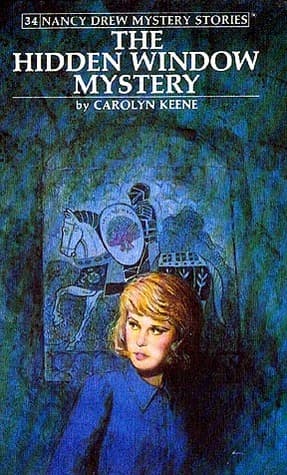
The Hidden Window Mystery cover
Archivist's Choice

The Hidden Window Mystery

Carolyn Keene (1956)

Genre

Children's / Mystery / Young Adult

Reading Time

12 Minutes

Key Themes

See below

Track Your Reading

Sign in to track this book

Nancy, Bess, and George go to a spooky Southern mansion to find a lost medieval stained-glass window, uncovering a ghostly mystery tied to strange sounds and a superstitious actress.

Synopsis

Nancy Drew, along with her friends Bess and George, travels to Charlottesville, Virginia, after reading a magazine article about a missing medieval stained-glass window with a substantial reward. Their investigation leads them to Ivy Hall, an old, dilapidated mansion rented by a superstitious actress, where they encounter a hostile ghost and other eerie phenomena. Simultaneously, mysterious noises emanate from a beautiful, walled estate next door. Nancy must determine if the spectral occurrences at Ivy Hall and the strange sounds from the neighboring property are connected to the elusive hidden window and solve the overarching mystery.
Difficulty
Easy
Pacing
Moderate
Mood
Intriguing, adventurous, slightly spooky, wholesome

Plot Summary

The Reward and the Invitation

Nancy Drew reads a magazine article about a reward for finding a lost medieval stained-glass window. The window is historically and artistically valuable and has been missing for years. Interested in the challenge, Nancy decides to investigate. She asks her friends, Bess Marvin and George Fayne, to join her. The article suggests clues might lead them to Charlottesville, Virginia, a place that sparks Nancy's detective instincts and promises a new mystery.

Arrival in Charlottesville and Ivy Hall

Nancy, Bess, and George arrive in Charlottesville, Virginia, ready to start their investigation. They find Ivy Hall, a once-grand but now rundown Southern mansion. A superstitious actress, Miss Carter, rents the estate and believes the house is haunted. The girls notice the mansion's poor condition, its faded elegance, and the neglect. Miss Carter's nervousness and ghost stories make Nancy think Ivy Hall holds more than just physical decay.

Encounters with the 'Ghost'

Soon after arriving, the girls experience Ivy Hall's 'haunting.' Strange sounds, unexplained movements, and shadowy figures appear, especially at night. These events scare Miss Carter, making her believe in a ghost. Nancy, however, is skeptical and thinks there is a rational explanation. She begins to search the mansion for hidden passages, loose floorboards, or other clues. Bess and George, though initially scared, support Nancy's logical approach.

The Mysterious Neighboring Estate

Next to Ivy Hall is a beautiful, well-kept estate, enclosed by a high brick wall. The girls hear strange, often disturbing, noises from this property, especially after dark. These sounds seem different from the 'ghostly' disturbances at Ivy Hall but are just as mysterious. Nancy suspects the two properties are connected. She tries to get inside or learn more about the people and activities there, thinking it might relate to the missing window or the 'haunting.'

Clues in the Mansion

Nancy's search of Ivy Hall starts to show results. She uncovers hidden compartments, secret passages, and old documents in forgotten parts of the mansion. These discoveries suggest the house has a complex history. Among the documents, she finds notes and sketches that hint at past owners and possibly the missing stained-glass window. These findings strengthen her belief that the 'ghost' is a distraction, meant to keep people away from something valuable hidden in the house.

Unmasking the 'Ghost'

Convinced the 'ghost' is a trick, Nancy plans to unmask the person or people responsible. She sets up traps and observation points to catch the culprit. With Bess and George's help, they create a situation to draw out the 'ghost.' Their watchfulness pays off when they corner and expose a person who had been secretly entering Ivy Hall through a hidden passage. This individual eventually reveals why they created the illusion of a haunting.

The Connection to the Neighboring Estate

The person unmasked as the 'ghost' at Ivy Hall confesses. They explain they were hired or forced by people living in the neighboring walled estate. The 'haunting' was meant to keep Miss Carter and others away from Ivy Hall, letting the real criminals work undisturbed. This confirms Nancy's suspicion that the two properties are linked and that the strange noises from the neighboring estate connect to the larger mystery. The reason for the elaborate trick starts to become clear.

Infiltrating the Walled Estate

With new information, Nancy, Bess, and George focus on the mysterious walled estate. They find a hidden entrance or a way to get past the high brick wall. Inside, they find signs of illegal activities, like counterfeiting or smuggling, which explain the strange noises. The estate is not just a home but a secret operation base. The girls carefully explore, gathering clues and watching the people involved, realizing they are dealing with a more serious crime than they first thought.

The Stained-Glass Window Clue

During their secret investigation inside the walled estate, Nancy finds a crucial piece of evidence: a fragment or drawing of the missing medieval stained-glass window. This confirms that the criminals are directly involved in the theft or hiding of the valuable artifact. It becomes clear the window was intentionally hidden, likely for illegal sale or to avoid being found. The artwork is either stored there or plans are being made for its disposal, bringing Nancy closer to solving the mystery.

Confrontation and Capture

With enough evidence, Nancy, Bess, and George plan their next move. They confront the criminals, using their intelligence and bravery to expose the illegal operation. The criminals, surprised, try to escape or resist, but Nancy's quick thinking and the girls' combined efforts lead to their capture. Local police, alerted by Nancy, arrive to arrest the perpetrators. The group involved in the 'haunting' and hiding the window is stopped, and justice is served.

The Hidden Window Revealed

After the criminals are caught, Nancy leads the police to where the medieval stained-glass window was hidden. It was concealed in a cleverly disguised compartment or secret room in one of the properties. The window, though a bit dusty, is intact and its beauty is seen again. Its recovery shows Nancy's persistence and detective skills, ending a long-standing mystery and fulfilling the magazine article's promise.

Resolution and Reward

With the criminals captured and the medieval stained-glass window recovered, the mystery is closed. The window is prepared to return to its rightful place or a museum. The reward from the magazine article is claimed, likely for a good cause or charity, showing Nancy's selfless character. The adventure ends with Nancy, Bess, and George celebrating another successful case, their friendship strengthened by the challenges they overcame.

Principal Figures

Nancy Drew

The Protagonist

Nancy develops her already sharp deductive skills by unraveling a complex plot involving both a 'ghost' and a criminal enterprise.

Bess Marvin

The Supporting

Bess overcomes some of her initial fears to actively participate in the investigation, showing growing courage.

George Fayne

The Supporting

George's practical and courageous nature is highlighted as she actively assists Nancy in dangerous situations.

Miss Carter

The Supporting

Miss Carter transitions from a terrified victim to a relieved bystander as Nancy uncovers the truth behind the haunting.

The Criminals (Unnamed)

The Antagonist

The criminals are initially successful in their deception but are ultimately exposed and apprehended by Nancy Drew.

Themes & Insights

Rationality vs. Superstition

This theme is central to the mystery. Nancy Drew always looks for logical reasons for things others call supernatural. Miss Carter's belief in ghosts contrasts with Nancy's scientific way of investigating. The story shows how fear and a lack of critical thought can lead to wrong ideas, while rational inquiry finds the truth behind strange events. It reinforces that what seems supernatural often has a human, logical explanation.

Nancy, however, remained skeptical, convinced that there's a rational explanation behind the supernatural phenomena.

Narrator

The Value of Art and History

The entire mystery is about finding a missing medieval stained-glass window, a valuable historical and artistic item. The story highlights the importance of preserving cultural heritage and how far people will go to protect or exploit such treasures. The reward for its recovery shows its significance, and Nancy's dedication to finding it points to art's value beyond money.

The window, believed to be of immense historical and artistic value, has been missing for years.

Narrator

Deception and Hidden Agendas

Deception is a key part of the plot, seen in the fake haunting at Ivy Hall and the secret activities at the neighboring estate. The criminals use tricks and misdirection to hide their true intentions and illegal operations. Nancy's role is to uncover these deceptions, revealing the hidden plans and real reasons behind the mysterious events. The theme explores how appearances can mislead and the importance of looking beyond the obvious.

The 'haunting' was specifically designed to keep Miss Carter, and anyone else, away from Ivy Hall, allowing the true perpetrators to operate undisturbed.

Narrator

Courage and Resourcefulness

Nancy Drew, Bess, and George consistently show courage when facing danger and uncertainty. They go into old mansions, confront suspicious people, and infiltrate a criminal hideout. Their resourcefulness is clear in Nancy's clever plans to expose the 'ghost' and find clues, and in the girls' ability to handle difficult situations. The story celebrates the bravery and ingenuity needed to solve complex mysteries.

Nancy's quick thinking and the girls' combined efforts lead to their apprehension.

Narrator

Plot Devices & Literary Techniques

Red Herring

The 'ghost' at Ivy Hall serves as a deliberate misdirection.

The 'ghost' haunting Ivy Hall is a classic red herring. It initially directs Nancy's attention towards a supernatural explanation, playing on Miss Carter's superstitions and the eerie atmosphere of the old mansion. However, Nancy's analytical mind quickly dismisses the supernatural, realizing the 'ghost' is an elaborate ruse. This device is used to mislead both the characters and the reader, creating suspense and allowing the true criminals to operate undetected for a period, until Nancy uncovers the human agency behind the 'haunting'.

Hidden Passages and Secret Compartments

Concealed architectural features reveal secrets and facilitate clandestine activities.

Ivy Hall is riddled with hidden passages and secret compartments, which serve multiple functions in the plot. These architectural features allow the 'ghost' to move about undetected, contributing to the illusion of a haunting. They also provide Nancy with crucial clues about the mansion's history and the activities of its past and present inhabitants. Ultimately, a secret compartment is where the valuable stained-glass window is hidden, making these hidden spaces instrumental to both the mystery and its resolution.

The Clue in the Article

A magazine article initiates the entire mystery.

The magazine article offering a reward for the missing medieval stained-glass window acts as the inciting incident for the entire plot. It provides Nancy with the initial motivation and direction for her adventure. Without this specific clue, Nancy would not have known about the missing window or the potential location to begin her search. It effectively sets the stage, establishes the central objective, and creates the framework for Nancy's journey to Charlottesville and the subsequent unraveling of the mystery.

Critical analysis

Notable Quotes

Quiz

Test Your Knowledge

Ready to see how well you understood this book? Take our interactive quiz with 10 questions.

10
Questions
~5
Minutes
?
Best Score

Key Questions (FAQ)

Nancy Drew is drawn into a mystery involving a large reward for finding a missing medieval stained-glass window. The investigation leads her to Charlottesville, Virginia, and an old mansion.

About the author

Carolyn Keene

Carolyn Keene is the pseudonym for the authors of the Nancy Drew Mystery Stories series. Under this pen name, numerous authors have penned over 170 books since 1930, captivating young readers with thrilling mysteries and adventures. The series, including notable titles like "The Secret of Red Gate Farm" and "Mystery of Crocodile Island," has become a cultural phenomenon, selling millions of copies worldwide and inspiring adaptations across various media.