“You is kind. You is smart. You is important.”
— Aibileen often tells this to Mae Mobley, her young charge, to build her self-esteem.

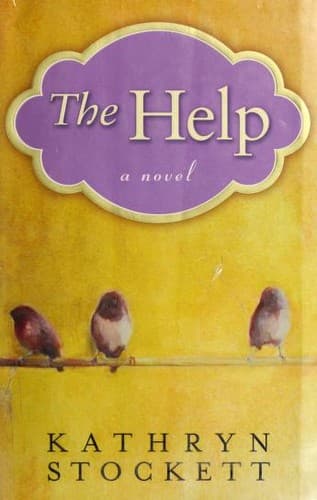
Kathryn Stockett (2009)
Genre
Historical Fiction
Reading Time
900 min
Key Themes
See below
Sign in to track this book
In 1960s Mississippi, an aspiring writer and two Black maids risk everything to expose the harsh realities of their lives, defying societal norms with stories that start a quiet revolution.
Eugenia 'Skeeter' Phelan, a recent college graduate, returns to her family's cotton plantation, Longleaf, in Jackson, Mississippi, in 1962. Unlike her friends, Skeeter wants a writing career more than marriage, which upsets her mother, Charlotte Phelan. Her return is marked by the absence of Constantine Bates, the African American maid who raised her. Skeeter's mother claims Constantine quit to live with relatives in Chicago, but Skeeter finds this unlikely and suspects a cover-up. She starts a job at the local newspaper, the Jackson Journal, writing a cleaning advice column, and asks Aibileen Clark, a long-time maid in her social circle, for help with research.
Aibileen Clark is an African American maid working for the wealthy white Leefolt family, caring for their neglected daughter, Mae Mobley. Aibileen still grieves the loss of her own son, Treelore, who died in an accident after being run over by a white truck, an event she believes was racially motivated. Her best friend, Minny Jackson, is known for her excellent cooking but also for her sharp tongue, which often leads to her being fired. After being dismissed by Hilly Holbrook, the town's social leader, Minny finds a new job with Celia Foote, a kind but socially isolated woman new to Jackson who is married to Hilly's former boyfriend, Johnny Foote.
Skeeter is deeply bothered by the racial segregation and injustice she sees, especially after realizing the extent of 'separate but equal' facilities, like the segregated bathroom her friend Hilly insists on for her maid Yule May. Inspired by an editor's suggestion to write about what 'haunts' her, Skeeter decides to write a book from the perspective of the Black maids in Jackson, detailing their experiences working for white families. She approaches Aibileen with the idea, who is initially hesitant due to the extreme danger involved; such a project could risk their lives in the racially tense Mississippi of the 1960s.
Despite her fear, Aibileen agrees to contribute to Skeeter's book, finding a voice she did not know she had. She begins by describing her daily life caring for Mae Mobley, teaching the young girl about self-worth despite her mother Elizabeth Leefolt's neglect and Hilly's racist influence. Aibileen shares stories of the subtle and open racism she endures, the unspoken rules, and the emotional toll of raising white children who will grow up to continue the system that oppresses her. Her stories are moving, filled with both sorrow and quiet strength.
Skeeter and Aibileen realize they need more maids to make the book believable and engaging. Aibileen convinces Minny to join, despite Minny's deep distrust of white people and her fear of retaliation. Minny's contributions are marked by her sharp wit, her honest observations, and her famous cooking skills. She recounts her experiences working for various families, including her current employer, Celia Foote, and reveals the well-known 'terrible awful' pie incident involving Hilly Holbrook, which she believes will ensure her anonymity if included in the book.
As news of Medgar Evers' assassination spreads, the urgency and danger of the project grow, but it also encourages more maids to come forward. After Skeeter leaves copies of a civil rights pamphlet at a church, and Aibileen and Minny spread the word, other maids, including Gretchen and Yule May, share their stories. Yule May, Hilly's former maid, contributes after being unfairly fired and imprisoned for pawning a ring she 'borrowed' from Hilly to pay for her sons' college tuition, an act fueled by Hilly's refusal to loan her the money. These accounts paint a clear picture of exploitation, abuse, and the systemic dehumanization Black domestic workers faced.
While working for Celia Foote, Minny discovers Celia's deep loneliness and her struggles with multiple miscarriages, which she keeps secret from her husband, Johnny. Celia, an outcast from Jackson society, treats Minny with unusual kindness and respect, blurring the traditional employer-maid dynamic. Minny, despite her initial skepticism, begins to form a real bond with Celia, teaching her to cook and helping her cope with her emotional pain. This relationship shows the possibility of genuine human connection across racial and social divides, a sharp contrast to the common prejudices.
Skeeter, working under the name 'Anonymous,' finishes gathering the stories. The book, titled 'The Help,' is published and quickly becomes a local sensation in Jackson. The inclusion of Minny's 'terrible awful' pie story, a thinly veiled anecdote about Hilly Holbrook accidentally eating a pie containing Minny's feces, creates a scandal. Hilly, recognizing herself, is furious but cannot publicly admit it without revealing her own humiliation. The book's impact is immediate, forcing many white women to confront the realities of their maids' lives, while also creating heightened tension and fear among the maids and Skeeter.
The book's publication has severe consequences. Mae Mobley's teacher reports Elizabeth Leefolt for using 'The Help' to discipline her daughter, leading to Elizabeth's social isolation. Hilly, in a rage, frames Minny for theft, forcing her to flee. Skeeter's mother, Charlotte, finally admits the truth about Constantine's departure: Charlotte had forced Constantine to leave after her biracial daughter, Lulabelle, tried to pass as white at a social event, fearing scandal. This revelation deeply hurts Skeeter, shattering her idealized image of her mother and confirming her suspicions about Constantine's fate.
With the book's success, Skeeter receives a job offer from a publishing house in New York City. She decides to leave Jackson, pursuing her career goals and leaving behind the restrictive expectations of her hometown. Before she leaves, Skeeter arranges for a white woman, Miss Myrna, to take over her cleaning advice column, giving Aibileen a continued source of income by writing the answers. Aibileen, empowered by her role in the book and the discovery of her own storytelling talent, decides to continue writing, finding strength and purpose in her voice, even as she faces an uncertain future in Jackson.
The Protagonist
Skeeter transforms from a naive, somewhat insecure young woman into a courageous journalist who risks everything to give a voice to the voiceless, ultimately finding her calling outside the confines of Southern society.
The Protagonist
Aibileen evolves from a silently suffering maid into a powerful storyteller and activist, finding her voice and inspiring others to speak out against injustice.
The Protagonist
Minny learns to trust and form genuine connections with certain white individuals, particularly Celia, while her outspoken nature becomes a powerful tool for truth-telling and resistance.
The Antagonist
Hilly remains largely unchanged, her prejudice deepening into vindictiveness as her authority is challenged and her reputation threatened by 'The Help'.
The Supporting
Celia gains confidence and finds a sense of belonging through her friendship with Minny, learning to cope with her social isolation and personal struggles.
The Supporting/Mentioned
Constantine's story is primarily revealed in flashback, showing her quiet dignity and the tragic circumstances of her forced departure, which profoundly impacts Skeeter.
The Supporting
Mae Mobley begins as a neglected child but is nurtured by Aibileen into a loving and empathetic girl, embodying hope for a less prejudiced future.
The Supporting
Charlotte's character remains largely static in her adherence to social norms, but her confession about Constantine reveals a deeper complexity and regret beneath her rigid exterior.
The Supporting
Elizabeth's character remains largely static, unable to escape Hilly's influence or genuinely connect with her daughter, highlighting the pervasive nature of social conformity.
The Supporting
Yule May's tragic experience serves as a catalyst for other maids to join the book project, transforming her personal suffering into a collective act of resistance.
The novel clearly shows the systemic racial injustice and segregation in 1960s Mississippi. African American maids are treated inhumanely, forced to use separate bathrooms, paid low wages, and live in constant fear of violence or false accusations. Hilly Holbrook's 'Home Help Sanitation Initiative' shows the absurd and cruel extent of segregation, while Yule May's unfair imprisonment for a minor offense after Hilly's refusal to help her highlights the lack of legal options for Black individuals. The constant threat of violence, emphasized by Medgar Evers' assassination, points to the dangerous atmosphere.
“''We can't just up and change the way things are.' 'Sure we can. All we gotta do is try.'”
At its heart, the novel is about finding and giving a voice to those who are silenced. Skeeter's project empowers the maids, especially Aibileen, to share their experiences, turning their personal pain into a collective story of strength and truth. Aibileen's journey from a quiet maid to a confident storyteller who teaches Mae Mobley about worth, and later decides to write more, shows this theme. Writing and publishing 'The Help' becomes an act of rebellion, challenging the common narrative and forcing a confrontation with uncomfortable truths, demonstrating how stories can inspire change.
“'Truth. It's like a fire that can't be put out.'”
Despite the racial divide, the novel explores the complex and often strong bonds between women. The friendship between Aibileen and Minny is central, providing mutual support, humor, and strength in a hostile world. More importantly, the secret collaboration between Skeeter, Aibileen, and Minny, and later other maids, crosses racial barriers, forming a sisterhood based on a shared goal of truth and justice. Even the unlikely friendship between Minny and Celia Foote highlights how genuine connection can overcome societal prejudice and isolation, offering comfort and empowerment.
“'We was two people, but we was one person that day.'”
The theme of motherhood is central, contrasting biological mothers with surrogate caregivers. Aibileen, having lost her own son, pours her love and wisdom into Mae Mobley, becoming a more nurturing figure than Elizabeth Leefolt. She teaches Mae Mobley important lessons about kindness and self-worth, which her own mother does not provide. The maids, in general, act as surrogate mothers, raising white children with love while often neglecting their own. This shows the emotional labor and deep bonds formed, but also the tragic irony of their situation—raising children who will grow up in a society that devalues them.
“'You is kind. You is smart. You is important.'”
The pressure to conform is a constant force in Jackson, Mississippi. Skeeter's struggle against her mother's expectations for marriage and her desire for a writing career, as well as her refusal to adopt racist attitudes, shows her individuality. Hilly Holbrook embodies the extreme end of conformity, dictating social norms and punishing those who differ, like Celia Foote. The maids, by agreeing to tell their stories, risk everything to assert their individual truths against a society that demands their silence and invisibility. Their act of rebellion is a powerful assertion of self against the oppressive forces of conformity.
“'Ugly kind of way, but you know, it ain't ugly all the time. Sometimes it's a good kind of way. What you is, is you. And that ain't ugly.'”
The story is told through the alternating perspectives of Skeeter, Aibileen, and Minny.
This device allows the reader to experience the story from different sides of the racial and social divide in 1960s Mississippi. Skeeter's perspective offers insight into the white Southern society and her internal conflict with its norms. Aibileen's narration provides a quiet, dignified, and emotionally resonant look into the daily life and profound resilience of a black maid. Minny's voice injects humor, sass, and a pragmatic, often cynical, view of her employers. This triangulation of perspectives builds empathy, reveals hidden truths, and paints a comprehensive picture of the era's complex social dynamics.
A humorous but scandalous incident involving Minny and Hilly Holbrook.
The 'terrible awful' pie is a pivotal plot device. It's a chocolate pie Minny bakes for Hilly, containing Minny's feces, served as an act of revenge. Its inclusion in 'The Help' book is critical because it acts as a 'signature' that guarantees anonymity for the maids. Hilly, upon realizing the story is about her, cannot publicly deny it or accuse Minny without confessing to eating the pie herself, which would ruin her reputation. This incident provides both comic relief and a powerful, albeit crude, form of retribution and protection for the book's contributors.
Skeeter's initial job, which provides a cover for her book research.
Skeeter's job writing a cleaning advice column for the Jackson Journal serves as a clever cover for her real project. It allows her to legitimately seek out and interview maids like Aibileen and Minny under the guise of gathering household tips. This device facilitates the initial contact and trust-building necessary for the dangerous book project to begin. It also highlights the mundane, domestic sphere where the profound social and racial inequalities are often hidden in plain sight, making it an ironic backdrop for a revolutionary act.
Hilly Holbrook's insistence on segregated bathrooms for black maids.
Hilly's 'Home Help Sanitation Initiative,' which demands separate outdoor bathrooms for black maids, serves as a powerful symbol of racial segregation and dehumanization. It is a seemingly small, domestic detail that encapsulates the larger systemic racism and the white community's efforts to maintain strict boundaries and assert superiority. Skeeter's disgust with this initiative is a key motivator for her book, and its prominence in the narrative underscores the absurdity and cruelty of Jim Crow laws, making a tangible point about the indignity faced by the maids in their daily lives.
“You is kind. You is smart. You is important.”
— Aibileen often tells this to Mae Mobley, her young charge, to build her self-esteem.
“Ugly live up on the inside. Ugly a ain't got no business with happiness.”
— Skeeter's mother tells her this about looks and inner beauty, reflecting societal pressures.
“All my life I'd been told what to believe about white people. Now I was seeing for myself.”
— Aibileen reflects on her changing perceptions of white people, particularly Skeeter.
“Mister Johnny, you just a man. You ain't God.”
— Minny stands up to Hilly's husband, Mr. Holbrook, after being fired.
“Constantine said, 'Love don't care what color your skin is.'”
— Skeeter recalls her childhood maid, Constantine, and her wisdom about love.
“Truth don't make no sense when it's coming from a colored person.”
— Aibileen's internal thought about the futility of speaking truth in a segregated society.
“Every morning, until you dead, you have to make a choice about how you gonna live.”
— Aibileen's reflection on the daily struggle and choices people face.
“That's the way I see it, the world is a carousel of pigs, and they're all in a race to get to the slop.”
— Minny's cynical view of society and human nature.
“It ain't natural for a white lady to be doing her own cooking.”
— Aibileen's observation about the social norms and expectations for white women.
“Kindness don't have no color.”
— Aibileen teaches Mae Mobley about kindness, transcending racial boundaries.
“I can make a cake that can make a man forget his own name.”
— Minny's confident boast about her exceptional cooking skills.
“Maybe we are all just beggars in a different way.”
— Skeeter's introspective thought about the universal human condition.
“I'd never really noticed the color of her skin before. Not to really notice it.”
— Skeeter's realization about her own privilege and lack of awareness.
“There's a reason for everything. Even if we don't know it.”
— Aibileen's comforting words, suggesting a deeper meaning to life's events.
Ready to see how well you understood this book? Take our interactive quiz with 10 questions.

Biography coming soon.







