BookBrief
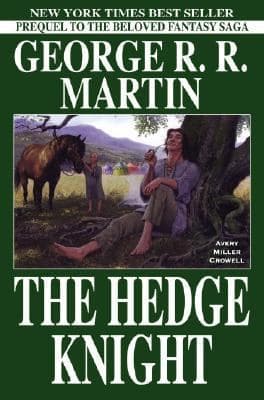
The Hedge Knight cover
Archivist's Choice

The Hedge Knight

George R.R. Martin

Genre

Fantasy

Reading Time

90 min

Key Themes

See below

Track Your Reading

Sign in to track this book

An unknighted hedge knight and his secret Targaryen squire travel the Seven Kingdoms, navigating jousts, intrigues, and the realities of chivalry long before the dragons danced their final, fiery waltz.

Synopsis

Ser Duncan the Tall, or 'Dunk,' a newly knighted hedge knight, goes to the Ashford Tourney after his master, Ser Arlan of Pennytree, dies. To honor his master and earn money, Dunk decides to compete, though he lacks experience and equipment. At Ashford, he meets a mysterious, bald boy named Egg who wants to be his squire. Egg turns out to be a Targaryen prince in disguise. Dunk's honorable nature is tested when he protects a puppeteer from Prince Aerion Targaryen, which leads to a charge of assault against a royal. To prove his innocence, Dunk demands a trial by combat, a Trial of Seven, where he must find six other champions to fight alongside him against Prince Aerion and his six allies. With the odds against him, Dunk struggles to find allies until unexpected figures, including Prince Maekar Targaryen (Egg's father), help him. The Trial of Seven is a brutal clash where Dunk defeats Prince Aerion, upholding his honor and protecting the innocent. Afterward, Prince Maekar offers Dunk a position in his service, but Dunk values his freedom and chooses to continue as a hedge knight, with Egg by his side. This starts a new path for both of them.
Reading time
90 min
Difficulty
Easy
Pacing
Moderate
Mood
Adventurous, Chivalrous, Hopeful, Historical
✓ Read this if...
You enjoy classic knightly tales of honor and adventure within a richly detailed fantasy world, or are a fan of George R.R. Martin's 'A Song of Ice and Fire' and want to explore its history.
✗ Skip this if...
You prefer complex political intrigue over straightforward heroic quests, or dislike stories with a strong focus on medieval combat and chivalry.

Plot Summary

The Death of Arlan and the Path to Ashford

The story begins with Dunk burying his master, Ser Arlan of Pennytree, an impoverished hedge knight. Ser Arlan dies from a burst gut, leaving Dunk alone to think about his future. Though never formally knighted, Dunk decides to take Ser Arlan's armor, horse, sword, and three pennies, and ride to the Ashford Meadow for a grand tourney. He hopes to win renown and gold there, believing he might truly become a knight. On his journey, he meets a small, bald boy named Egg, who insists on being his squire. Dunk first tries to refuse him but eventually agrees, taking Egg with him.

Arrival at Ashford and the Mystery of Egg

Dunk and Egg arrive at Ashford Meadow, a busy place with lords, knights, and common folk. Dunk tries to sign up for the tourney, but the heralds doubt his claim to knighthood because he has no sigil or witness to his knighting. He creates a sigil — an elm tree with a falling star, representing his humble beginnings and Ser Arlan. While looking for a sponsor, Dunk realizes Egg is not an ordinary street boy. Egg knows unusual things about noble houses and customs and is afraid of being recognized. Dunk becomes more suspicious of the boy's true identity, sensing he is more important than he lets on.

Encounter with Prince Aerion and the Trial by Combat

At Ashford, Dunk sees Prince Aerion Targaryen, known for his cruelty, attack a puppeteer named Tanselle and destroy her puppets, claiming they mocked his house. Angry at the injustice, Dunk steps in, hitting Aerion and knocking out two of his teeth. This act leads to Dunk's immediate arrest and a charge of assault against a royal family member. Because the crime is serious, Prince Aerion demands a trial by combat. Dunk faces a powerful enemy and the Targaryens' anger. He must find champions to fight with him or face death alone.

Egg's Revelation and the Search for Champions

Facing a trial by combat with Prince Aerion, Dunk is brought before Prince Maekar Targaryen, Aerion's father. Here, Egg finally reveals his true identity: he is Aegon Targaryen, Prince Maekar's fourth son and Aerion's younger brother. Egg's revelation makes Dunk's claim for a trial of seven valid. This is an old Andal custom where both accuser and accused gather seven champions to fight for them. Prince Maekar, though strict, recognizes the custom and allows it. Dunk now must find six other knights willing to risk their lives against royal princes and their powerful allies.

The Pressure to Yield and Unlikely Allies

As the trial of seven nears, Dunk feels great pressure. Lord Ashford and other high-ranking nobles try to convince him to yield and apologize to Prince Aerion, warning him of the consequences of challenging the royal family. Dunk, however, refuses to back down, upholding his honor and the rights of common folk. His search for champions is hard, as many knights fear opposing the Targaryens. He gets the support of Ser Steffon Fossoway, a young and honorable knight, and later Ser Raymun Fossoway, Steffon's cousin, though Raymun is reluctant.

The Trial of Seven: The Initial Skirmish

The trial of seven starts in the tourney grounds, with thousands watching. Prince Aerion's side includes his brother Prince Daeron 'the Drunken', Ser Lucas Longinch, Ser Robyn Rhysling, and three other strong knights. Dunk's side has himself, Ser Steffon Fossoway, Ser Raymun Fossoway, and two hedge knights, Ser Humfrey Hardyng and Ser Kyle 'the Cat' of the Misty Wood. They still need two champions. The fight begins with a fierce clash. Dunk, despite his size and strength, fights multiple opponents and quickly sees the serious odds against them.

The Arrival of Prince Maekar and the Turning Tide

Just as Dunk's champions struggle and he is wounded, something dramatic happens. Prince Maekar, watching from the side, rides onto the field and declares himself a champion for Dunk's side, completing the seven. His involvement balances the numbers and changes the mood of the fight. Prince Maekar is a skilled warrior, and his presence encourages Dunk's remaining champions while making some of Aerion's allies hesitate. The battle gets more intense, with both sides getting hurt.

The Climax of the Battle and Aerion's Defeat

Dunk, despite his wounds and exhaustion, directly confronts Prince Aerion. Aerion fights with cruel and arrogant fierceness, but Dunk's size and determination are too much. Dunk disarms Aerion and then, with a strong blow, knocks him to the ground. He holds his sword at Aerion's throat, forcing him to yield. Aerion, humiliated, admits defeat. The trial ends with Dunk's victory, though he is badly injured, having taken several blows and a severe head wound from Prince Maekar's mace, which was an accident in the fight.

The Aftermath and Maekar's Offer

After the trial, Dunk gets medical attention for his severe injuries, especially the head wound from Prince Maekar. While recovering, Prince Maekar visits him. Maekar, changed by his sons' behavior and impressed by Dunk's honor, apologizes for his accidental blow and offers Dunk a place in his household as a knight, suggesting he could squire for Egg. He sees Dunk's integrity and thinks he would be a good influence on his son, Aegon, who still wants to be Dunk's squire. This offer gives Dunk a stable future, different from the uncertain life of a hedge knight.

Dunk's Choice and a New Beginning

Dunk, after thinking it over, accepts Prince Maekar's offer. He agrees to serve in Maekar's household and, more importantly, to continue as Ser Aegon Targaryen's knight and mentor. This decision is a big change in Dunk's life. He has found a stable position, a true calling, and a loyal friend in Egg. The story ends with Dunk, now Ser Duncan the Tall, and Egg riding off together, leaving Ashford Meadow behind, ready for new adventures and strengthening their unique master-squire relationship, which will shape Westeros's future.

Principal Figures

Ser Duncan the Tall (Dunk)

The Protagonist

From an insecure, unproven hedge knight, Dunk grows into a respected figure who earns his knighthood through honor and courage, accepting a position of influence.

Egg (Aegon Targaryen)

The Supporting

Initially a disguised prince seeking adventure, Egg finds a true mentor and friend in Dunk, committing to a future by his side.

Prince Aerion Targaryen 'Brightflame'

The Antagonist

Remains consistently cruel and arrogant, serving as a foil to Dunk's honorable nature, and is ultimately humiliated in combat.

Prince Maekar Targaryen

The Supporting

From a seemingly distant and stern father, Maekar comes to appreciate Dunk's honor and offers him a place in his household, seeking a better path for his son, Egg.

Ser Arlan of Pennytree

The Mentioned

Deceased at the story's start, his legacy and teachings guide Dunk's actions and moral compass throughout his journey.

Tanselle

The Supporting

A catalyst for the main conflict, her suffering highlights the injustice Dunk seeks to rectify.

Lord Ashford

The Supporting

A figure of authority who tries to maintain order, he ultimately respects the outcome of the trial by combat.

Ser Steffon Fossoway

The Supporting

A brave and honorable knight who aligns with Dunk, showcasing his own strong moral compass.

Ser Raymun Fossoway

The Supporting

Moves from initial reluctance due to political caution to joining Dunk out of family loyalty and a sense of duty.

Themes & Insights

Identity and Self-Discovery

Dunk's journey is about defining his identity as a knight. He starts as an unproven squire, taking on his deceased master, Ser Arlan's, role. Throughout the story, he considers what it means to be a knight, seeing the difference between a title and honorable action. His improvised sigil (the elm tree and falling star) shows his humble beginnings and hopes. By standing up for Tanselle and facing the royal family, he earns his knighthood not from a lord, but from his own courageous and just actions. He becomes 'Ser Duncan the Tall'.

'A true knight protects the innocent,' Dunk heard Ser Arlan say. 'He defends the weak, and he always tells the truth.'

Dunk's internal thoughts, recalling Ser Arlan's words

Justice vs. Power

A main conflict in 'The Hedge Knight' is the clash between the power of the nobility, especially the Targaryen princes, and the idea of justice, particularly for common folk. Prince Aerion's attack on Tanselle and his expectation of not being punished show the abuse of power. Dunk, a low-ranking hedge knight, is the only one willing to challenge this injustice. His decision to demand a trial by combat, even against great odds, shows that justice, though costly, must be pursued, no matter the opponent's status. Prince Maekar's eventual support of Dunk, and his offer, suggests that even high lords must sometimes follow a higher moral code.

'He struck a prince of the blood,' Lord Ashford reminded him. 'A grave matter, ser.' 'The prince struck a girl,' Dunk retorted. 'A graver matter, to my mind.'

Lord Ashford and Ser Duncan the Tall

Honor and Chivalry

The novella explores honor and chivalry in a realistic way. Dunk shows the traditional values of a knight: protecting the weak, keeping oaths, and being brave. His actions, from defending Tanselle to refusing to yield to Prince Aerion, come from a strong sense of honor, even when it risks his life. The difference between Dunk's genuine honor and the superficial 'chivalry' of some high-born knights (like Aerion) is clear. Even Prince Maekar, despite being strict, respects Dunk's honorable behavior, showing that true chivalry is not about social standing.

'I am a knight. I swore an oath. I will not break it for any prince.'

Ser Duncan the Tall

Social Class and Hierarchy

Westeros's strict social hierarchy is always in the background of Dunk's struggles. As a hedge knight, he lacks land, wealth, and a known name, placing him low in the knightly order. His attempts to enter the tourney are met with doubt, and his challenge to a prince is seen as a huge insult. The story shows the big power difference between nobility and commoners, and how family line often decides justice. Egg's disguise as a common boy lets him experience this difference directly. Dunk's success, and Prince Maekar's offer, suggest a slight softening of these class lines, showing that merit and character can sometimes win over birthright.

'A hedge knight is no true knight at all,' Lord Ashford had said. 'He has no lands, no lord, no right to call himself ser.'

Lord Ashford (recounted by Dunk)

Plot Devices & Literary Techniques

Disguised Royalty

Egg's hidden identity as Prince Aegon Targaryen.

The most significant plot device is the revelation that Dunk's squire, Egg, is actually Prince Aegon Targaryen. This device serves multiple functions: it raises the stakes of Dunk's actions, as he inadvertently strikes a royal prince; it provides him with an influential, albeit reluctant, ally; and it ultimately secures his right to a trial of seven. Egg's disguise also allows for commentary on social class and privilege, as he experiences life from a commoner's perspective. His true identity transforms Dunk's seemingly insignificant journey into one with profound political implications, setting the stage for future tales.

Trial by Combat (Trial of Seven)

An ancient legal custom used to resolve disputes through armed combat.

The trial by combat, specifically the 'trial of seven,' is the central conflict resolution mechanism of the novella. It is an ancient Andal tradition where both accuser and accused gather seven champions to fight on their behalf, with the gods supposedly granting victory to the righteous side. This device provides a dramatic, action-packed climax and is deeply embedded in the lore of Westeros. It highlights the brutal nature of justice in this world and allows Dunk to prove his honor and fighting prowess against powerful foes, creating a powerful spectacle and high stakes for the narrative.

The Hedge Knight Archetype

A narrative focus on a knight without lands or a lord.

The 'Hedge Knight' archetype itself is a key plot device, defining Dunk's status and struggles. It immediately establishes his vulnerability and the challenges he faces in a world dominated by powerful noble houses. His lack of resources, the skepticism he encounters, and his reliance on his own strength and honor are all direct consequences of being a hedge knight. This archetype allows the story to explore themes of social mobility, justice for the common man, and the true meaning of knighthood, contrasting Dunk's humble integrity with the often corrupt or entitled nobility.

Improvised Sigil

Dunk's self-created coat of arms, symbolizing his origins and aspirations.

Dunk's improvised sigil – an elm tree with a falling star – is a symbolic plot device. It represents his humble origins (the elm tree under which he often slept) and his aspirations to rise above them (the falling star, perhaps a symbol of hope or destiny). Because he lacks a hereditary sigil, he must create one, an act that underscores his self-made status. This sigil becomes his visual identity throughout the tourney, allowing him to participate and signaling his unique, un-noble background. It's a small detail that speaks volumes about his character and journey.

Critical analysis

Notable Quotes

As a boy, Dunk had found it easy to believe in giants. The men of his acquaintance were mostly small, but the hedge knight he'd squired for had been a giant of a man, and Old Nan's stories were full of them.

Dunk's internal thoughts as he reflects on his past and the legends he grew up with.

The boy was no bigger than a stick, but he had eyes like a hawk, and a spirit like a warhorse.

Dunk's initial impression of Egg, before realizing his true identity.

Most men would rather deny a hard truth than face it.

Dunk's cynical observation about human nature.

A true knight protects the innocent, defends the weak, and champions the just.

Dunk's internal definition of what it means to be a knight, a creed he strives to live by.

Never had he seen so many knights in one place, nor so many shields. A rainbow of sigils.

Dunk's awe upon first arriving at Ashford Meadow for the tourney.

A man who fights for coin is loyal only to the coin.

Dunk's reflection on the motivations of sellswords and mercenaries.

He was a knight, and a knight must do what is right, no matter the cost.

Dunk's resolve to stand up for justice, even when it puts him in great danger.

The greatest joy a knight could know was to win glory in a tourney, to have his name shouted by the crowd.

Dunk's perspective on the aspirations of knights participating in the tourney.

A good name is worth more than gold.

Dunk's belief in the importance of reputation and honor.

He knew what it was to be alone, to be an orphan, to have nothing but the clothes on his back and the hopes in his heart.

Dunk's empathy for those less fortunate, stemming from his own background.

The world was full of wonders, but it was also full of dangers.

Dunk's understanding of the dual nature of the world he inhabits.

Some battles are fought with swords and lances, others with words and wits.

Dunk's realization that not all conflicts are purely physical.

He was a hedge knight, a wandering warrior, and his only master was the road.

Dunk's self-identification and the freedom of his chosen path.

A boy who would be king should learn how to act like one.

Dunk's blunt advice to Egg, highlighting the responsibilities of royalty.

Quiz

Test Your Knowledge

Ready to see how well you understood this book? Take our interactive quiz with 10 questions.

10
Questions
~5
Minutes
?
Best Score

Key Questions (FAQ)

'The Hedge Knight' follows the journey of Dunk, a tall, orphaned commoner who takes on the mantle of a hedge knight after his mentor, Ser Arlan of Pennytree, dies. He travels to Ashford Meadow to compete in a tourney, where he unexpectedly takes on a young, bald boy named Egg as his squire, unaware of the boy's true, royal identity.

About the author