“I am ninety-two years old. I am a Sagittarian. I am not at all like my family.”
— Marian Leatherby's opening statement, introducing herself and her independent spirit.

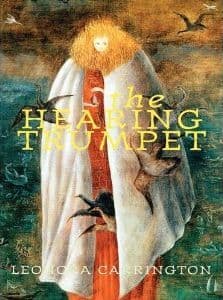
Leonora Carrington (1976)
Genre
Fantasy / Creativity
Reading Time
180 min
Key Themes
See below
Sign in to track this book
Armed with a magical hearing trumpet, 92-year-old Marian Leatherby uncovers a surreal murder mystery and a gateway to the underworld within the bizarre, birthday-cake-shaped walls of her new asylum.
Marian Leatherby, a ninety-two-year-old woman with a passion for the occult and a detached view of her family, receives a hearing trumpet from her friend Carmella. This gift lets her hear conversations she was previously excluded from. To her dismay, she overhears her son, Galahad, and his wife, Muriel, discussing their plans to commit her to an institution. They believe she is too eccentric and difficult to care for, citing her peculiar habits and her wolf-dog, Igor, as reasons. Marian is shocked and hurt but quickly resolves to make the best of her impending fate, viewing it as a new adventure. She packs a few essential items, including a book on the Holy Grail, and prepares for the unknown.
Marian is transported to a remote, snow-covered institution with buildings shaped like a birthday cake, an igloo, and a shoe. This retirement home is run by a peculiar, unseen figure known as the 'Winking Abbess,' a former colleague of Marian's son, Galahad, in some obscure, mystical order. The residents are mostly elderly women, each with their own eccentricities, and the staff is equally odd. Marian is assigned a room and quickly observes her surroundings and fellow inhabitants, sensing an underlying strangeness and a cult-like atmosphere. She finds a kindred spirit in her new roommate, an older woman named Madame Van Utrecht, who shares her interest in the esoteric.
Through conversations with other residents, particularly Madame Van Utrecht, Marian learns about the institution's founder, Rosalind Album, also known as the Winking Abbess. Rosalind was a medievalist and an occultist who believed the Holy Grail was not a chalice but a magical, regenerative substance. She established the institution for women to achieve spiritual awakening and to continue her quest. Rosalind's biography, a manuscript hidden within the institution, details her life, travels, studies of alchemy and Gnosticism, and eventual disappearance. It leaves behind a legacy of mystery and an unfinished search for cosmic truth. Marian finds Rosalind's story fascinating and feels a deep connection to her esoteric pursuits.
The strange routine of the institution is shattered by the mysterious death of a resident, Miss Lamb. The official explanation is a heart attack, but Marian and Madame Van Utrecht suspect foul play. They believe the murder is connected to the institution's hidden secrets and Rosalind Album's unfinished quest for the Holy Grail. Marian finds a cryptic note left by Miss Lamb, hinting at a hidden treasure or secret within the building. This event transforms Marian from a passive observer into an active investigator. She searches for clues, convinced that the institution holds more than just elderly women, but also a spiritual mystery and potential danger.
Marian, guided by intuition and subtle hints, uncovers Rosalind Album's secret autobiography, hidden within the institution. The manuscript details Rosalind's life from her unconventional childhood to her deep dive into esoteric studies, alchemy, and the Gnostic tradition. It reveals her belief in a matriarchal deity, the Queen Bee, and her rejection of patriarchal religious structures. Rosalind's writings show her radical spiritual vision and her relentless pursuit of a different kind of truth. Marian reads the manuscript, feeling a deep connection with Rosalind's rebellious spirit and her quest for a deeper understanding of existence. The book becomes a guide and an inspiration for Marian's own awakening.
Following the mysterious death and growing unease, male nurses are brought into the institution, supposedly for security and order. However, their presence quickly disrupts the eccentric, matriarchal harmony. The male nurses, with their rigid routines and condescending attitudes, clash with the elderly women, who resent their intrusion and attempts to control them. This influx of male authority figures increases the tension within the institution, fueling a sense of rebellion among the residents. Marian observes this shift, recognizing it as a direct challenge to the women's autonomy and the unique, if chaotic, spiritual environment Rosalind Album had created.
Inspired by Rosalind Album's radical spirit and fueled by their resentment towards the male nurses and the oppressive atmosphere, Marian, Madame Van Utrecht, and several other elderly residents orchestrate an escape. They decide to abandon the institution and pursue the true meaning of Rosalind's quest. Armed with unconventional tools and a collective sense of purpose, they venture out into the snowy, desolate landscape surrounding the institution. This escape is a moment that transforms the story from a confined mystery into an expansive, symbolic journey. The women are not just fleeing, but actively seeking a spiritual truth and a new way of existing, following the mystical path laid out by Rosalind.
As Marian and the other escapees travel the frozen wilderness, they encounter surreal and fantastical beings, including a talking wolf (possibly Igor, Marian's dog, transformed) and other mythical creatures. These encounters blur the lines between reality and fantasy, reinforcing the book's surrealist themes. Through these experiences and their interpretation of Rosalind's manuscript, they understand that the Holy Grail is not a physical object but a symbol of spiritual awakening, matriarchal power, and the regenerative forces of nature. It means a shift in consciousness and a rejection of conventional, patriarchal narratives. The journey itself becomes the Grail.
The women's journey ends in a mystical event. They arrive at a hidden, ancient place where the veil between worlds seems thin. Here, they witness a cosmic rebirth, a grand transformation of reality. The Winking Abbess, Rosalind Album, appears in a new, powerful form, embodying the ancient matriarchal deity, the Queen Bee. This entity represents the source of creation, regeneration, and feminine power. The women, including Marian, experience a collective spiritual awakening, shedding their societal constraints and embracing their true, wild, and ancient selves. The boundaries of their physical bodies and conventional reality dissolve, leading to a sense of unity and liberation.
After the cosmic event, Marian and the other women are transformed. They shed their old identities and societal roles, embracing a liberated existence in harmony with nature and ancient spiritual forces. The ending is open-ended and surreal, suggesting a complete transcendence of conventional reality. They are no longer confined by age, gender, or institutional walls, but are part of a larger, mystical whole. Marian, once an eccentric old woman, has become a participant in a grand, cosmic drama, achieving self-discovery and spiritual fulfillment beyond anything she could have imagined. The hearing trumpet, initially a tool for eavesdropping, ultimately led her to hear the deepest truths of existence.
The Protagonist
Marian evolves from a detached, eccentric elderly woman into a liberated, spiritually awakened participant in a cosmic matriarchal quest.
The Supporting/Posthumous Influence
Though deceased, her influence guides Marian's transformation, culminating in her symbolic reappearance as the Queen Bee.
The Supporting
She joins Marian in her rebellion and spiritual journey, shedding her institutional confines.
The Antagonist/Supporting
He remains largely static, representing the societal norms Marian escapes from.
The Supporting
She remains a static symbol of the conventional world Marian leaves behind.
The Supporting
Her act of giving the hearing trumpet initiates Marian's entire transformation.
The Supporting/Symbolic
He represents Marian's untamed spirit, possibly joining her in a symbolic form during her liberation.
The Mentioned/Catalyst
Her death catalyzes Marian's investigative journey into the institution's secrets.
The novel explores how old age, often seen as a period of decline, can be a time of self-discovery and liberation. Marian Leatherby, at 92, rejects societal expectations for the elderly and embarks on a journey that reveals her true, wild, and spiritual self. Her institutionalization, initially a confinement, becomes a catalyst for shedding societal masks and embracing her inner rebel and mystic. The book suggests that true identity is not defined by age or societal roles but by an inner spiritual awakening.
“I was very much surprised to find that at the age of ninety-two I was still capable of such a thing as astonishment.”
A central theme is the subversion of patriarchal structures and the celebration of feminine power. The institution, despite being founded by the 'Winking Abbess,' is initially run by male figures (Galahad's connection, the later male nurses) who represent control and conventionality. Rosalind Album's biography, however, reveals a deep commitment to Gnostic and matriarchal spiritual traditions, culminating in the worship of the Queen Bee. Marian and the other women's rebellion and escape symbolize a collective rejection of male dominance and an embrace of a powerful, ancient feminine spirituality, asserting a world where women hold ultimate creative and regenerative power.
“The Holy Grail is not a cup, but a living, regenerating substance, the blood of the Earth Mother herself.”
Carrington, a Surrealist artist, blurs the lines between reality, dream, and myth. The institution's fantastical architecture, the talking animals, the cosmic events, and the transformation of the characters challenge conventional perceptions of reality. The narrative suggests that 'reality' is more fluid and permeable than generally accepted, and that deeper truths can be found in the irrational and the imaginative. Marian's journey is not just a physical one, but a descent into a surreal landscape that mirrors her evolving consciousness, leading to a mystical understanding of existence.
“The world is an enigma, and if one cannot solve it, one can at least enjoy the ride.”
The book explores themes of spiritual awakening through esoteric knowledge, Gnosticism, and alchemy. Rosalind Album's life and writings are central to this, providing a framework of ancient, often suppressed, spiritual traditions. Marian's discovery and absorption of Rosalind's manuscript guide her towards a deeper understanding of the universe and her place within it. The Holy Grail is reinterpreted not as a Christian relic but as a symbol of cosmic regeneration and the divine feminine. The narrative champions a path to enlightenment that lies outside conventional religious and scientific paradigms, emphasizing intuition, mysticism, and the wisdom of forgotten traditions.
“The Grail is not something that can be found in a church, but within the very essence of life.”
The core conflict of the novel is the struggle between freedom and confinement, both physical and metaphorical. Marian is literally confined to an institution by her family, but her spirit refuses to be caged. The institution itself, with its strange rules and architecture, represents societal attempts to control and categorize individuals, especially the elderly or eccentric. Marian's escape, and the subsequent journey of the women, symbolizes a liberation from these constraints, not just physically but mentally and spiritually. They break free from the confines of conventional thought, age, and gender roles to achieve radical freedom.
“I often wondered if the institution was really an asylum, or if it was merely a waiting room for the next adventure.”
A literal and symbolic tool for uncovering hidden truths.
The hearing trumpet is both a literal plot device and a powerful symbol. Initially, it's a practical aid that allows Marian to overhear her family's plot, setting the entire narrative in motion. Symbolically, it represents Marian's awakening perception and her ability to 'hear' truths that are hidden or ignored by others. It signifies her receptiveness to the esoteric, the unspoken, and the surreal aspects of reality, acting as a conduit for her spiritual journey beyond the mundane.
A found manuscript that serves as a guide and philosophical anchor.
Rosalind Album's autobiography, discovered by Marian, functions as a crucial plot device, providing exposition, philosophical depth, and a narrative guide. It unveils the institution's true purpose, introduces the concept of the Queen Bee and matriarchal spirituality, and inspires Marian's own quest. The manuscript acts as a 'book within a book,' enriching the primary narrative with a rich tapestry of esoteric knowledge, historical context, and a blueprint for spiritual liberation, transforming Marian's understanding of her situation.
Bizarre and symbolic locations that reflect the characters' inner states.
The institution's buildings, shaped like a birthday cake, an igloo, and a shoe, are prime examples of surrealist architecture. These bizarre settings are not merely decorative but reflect the dreamlike, illogical nature of the world Marian inhabits and her own internal landscape. They symbolize the whimsical yet unsettling quality of confinement and the absurdity of conventional reality. The snowy wilderness and the final mystical location further enhance this surreal atmosphere, blurring the lines between the mundane and the fantastical, suggesting a deeper, non-rational order to existence.
Elements of magical realism that challenge conventional reality.
The presence of talking animals, particularly Igor the wolf-dog and other creatures encountered in the wilderness, injects elements of magical realism and folklore into the narrative. These figures often act as guides or symbolic representations, blurring the boundaries between human and animal consciousness. They challenge the rational world, reinforcing the surrealist aesthetic and suggesting a deeper, animistic connection to nature and a world where ancient myths hold sway, further facilitating Marian's spiritual transformation and her rejection of purely human-centric perspectives.
A well-known symbol recontextualized for feminist and Gnostic themes.
The Holy Grail, a potent symbol from Western mythology, is radically reinterpreted in the novel. Instead of a Christian relic, Rosalind Album posits it as a symbolic representation of a living, regenerating substance – the blood of the Earth Mother, embodying matriarchal power and cosmic renewal. This recontextualization serves as a powerful plot device to subvert patriarchal narratives and to anchor the novel's themes of feminine spirituality, Gnosticism, and the search for a deeper, more ancient truth beyond conventional religious dogma. It gives Marian's quest a profound, anti-establishment spiritual dimension.
“I am ninety-two years old. I am a Sagittarian. I am not at all like my family.”
— Marian Leatherby's opening statement, introducing herself and her independent spirit.
“Old age is a great refuge. It's a sanctuary from the demands of the world.”
— Marian reflecting on the perceived freedoms and isolation of being elderly.
“The cat, I knew, was a witch. She always had been. I just hadn't realized it till now.”
— Marian's growing awareness of the supernatural elements around her, particularly concerning her cat, Galahad.
“People who are too sane are not to be trusted.”
— A thought Marian has, questioning conventional sanity and valuing eccentricity.
“All my life I had been looking for something I had lost. I had no idea what it was.”
— Marian's underlying sense of longing and a quest for an unknown truth or purpose.
“The world is a looking-glass, and gives back to every man the reflection of his own face.”
— A philosophical observation within the narrative, highlighting subjective reality.
“I was beginning to understand that the world was not as solid as I had been led to believe.”
— Marian's increasing awareness of the fluid and surreal nature of her surroundings.
“The best way to get rid of a temptation is to yield to it.”
— A paradoxical piece of advice or thought that Marian encounters, challenging conventional morality.
“Dreams are not to be trusted, but they are often true.”
— Marian's contemplation on the nature of dreams and their connection to reality.
“There are some things which cannot be explained, and which are therefore true.”
— A statement reflecting the acceptance of the inexplicable and mystical.
“I like people who are a bit mad. It's so much less boring.”
— Marian's preference for unconventional individuals, echoing her own nature.
“We are all in a cage, but some of us have the key.”
— A metaphorical observation about freedom and confinement, suggesting agency for some.
“The only way to be free is to be utterly yourself.”
— A core theme of the book, emphasizing authenticity as the path to liberation.
“The more I learned, the less I understood.”
— Marian's paradoxical journey of discovery, where new knowledge only deepens the mystery.
Ready to see how well you understood this book? Take our interactive quiz with 10 questions.
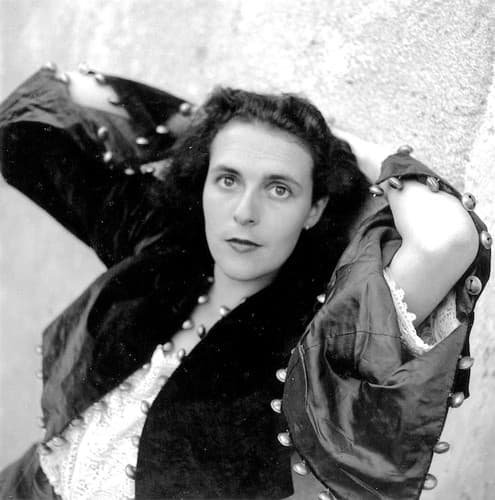
Biography coming soon.







