“Freedom ain't just a word, child. It's a hunger, a fire in your belly that won't let you rest till you got it.”
— Granny May talking to the young characters about the meaning of freedom.

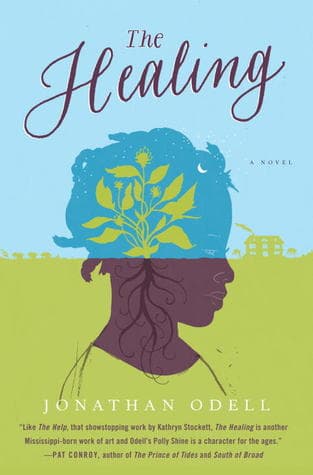
Jonathan Odell (2012)
Genre
Historical Fiction
Reading Time
7-8 hours
Key Themes
See below
Sign in to track this book
In the pre-Civil War South, a grieving plantation mistress adopts a slave infant, leading to a clash of wills and the rise of a powerful healer whose legacy of storytelling and magic spans generations.
In 1850s Mississippi, plantation mistress Amanda Satterfield loses her young daughter, Sarah, to cholera. Her husband, Master Satterfield, had refused to allow a doctor to treat Sarah, calling cholera a 'slave disease.' Overwhelmed by grief and near madness, Amanda takes a newborn slave girl from her mother, claiming the child as her own and naming her Granada. This act shocks her husband and the other white residents, while the slave community watches with fear and quiet understanding. Amanda's attachment to Granada becomes an unusual and often unsettling part of plantation life, further isolating her from her husband and white society.
Concerned by the increasing illnesses among his enslaved people and his wife's unstable behavior, Master Satterfield buys Polly Shine, a slave woman said to have strong healing abilities. Polly arrives at the Satterfield plantation, a figure of quiet authority and sharp mind. Her presence immediately changes the existing order. She is not easily scared and speaks her mind, often making unsettling predictions that challenge both the white masters and the enslaved community. Her arrival sets the stage for a conflict of wills and beliefs, especially as she observes the strange relationship between Amanda and Granada.
Polly Shine, with her spiritual sight, soon recognizes a healing 'gift' within young Granada, the child Amanda has claimed. This discovery creates a complex situation. Polly is meant to train Granada, but the mistress's possessive love for Granada makes this difficult. Amanda sees Granada as only hers, a replacement for her lost daughter, and resists any influence that might draw Granada away. Polly, however, understands the importance of nurturing Granada's abilities, leading to subtle and direct conflicts between the two women over Granada's upbringing and future. Polly begins to teach Granada in secret.
Granada's childhood is shaped by the opposing influences of Amanda and Polly. Amanda treats Granada like a pet, dressing her in fine clothes, teaching her to read (a forbidden act for slaves), and demanding her constant presence. Yet, Amanda's love is often smothering and self-serving. At the same time, Polly Shine secretly teaches Granada about herbs, remedies, and the spiritual side of healing, instilling in her the traditions of their ancestors. Granada learns to navigate these two worlds, absorbing knowledge from both, but always feeling like an 'outsider' and not truly belonging to either the white or black community on the plantation.
Polly Shine's unsettling prophecies about the Satterfield plantation and its people create an atmosphere of fear and suspicion. She foresees major changes, including the coming war and the eventual freedom of the enslaved people. These predictions often conflict with the masters' wishes and the enslaved community's immediate hopes and fears. Secrets within the Satterfield family, particularly about Master Satterfield's past and his relationships with some enslaved women, also begin to come out, adding to the tension. Granada, growing older, becomes more aware of the injustices around her.
The American Civil War begins, bringing chaos and great change to the Satterfield plantation. The war disrupts the established order, leading to scarcity, fear, and eventual freedom for the enslaved people. Master Satterfield's power crumbles, and Amanda's mental state worsens. The plantation, once a symbol of their wealth, falls apart. During this time, the relationships between the characters are forever changed. Polly Shine's predictions of freedom come true, and the enslaved community faces the challenges of their new liberty, while the Satterfields face ruin.
After the war, Polly Shine, having completed her purpose on the plantation and seeing Granada grow into her own, decides to leave. Before she goes, she gives her final teachings to Granada, stressing the importance of remembering the past, carrying the stories, and continuing the healing tradition. Polly leaves Granada with the responsibility of being the keeper of knowledge and the healer for their community. This moment marks Granada's shift from student to practitioner, fully embracing her 'gift' and Polly's legacy, even as she continues to navigate her complex upbringing.
Seventy-five years later, Granada, now known as Gran Gran, is an elderly woman still living on the land that was once the Satterfield plantation. She has become a respected elder and a powerful healer in her community, continuing Polly Shine's traditions. Her life has been one of quiet strength and dedication to her people. Despite the years, the memories of her complex childhood—her bond with Amanda, her training with Polly, and the trauma of slavery—remain deep within her. She is a living record of the past, a link between generations and traditions.
An abandoned and traumatized young girl is brought into Gran Gran's care. The girl is withdrawn, silent, and suffering from an unknown problem. Gran Gran recognizes the echoes of past pain and the need for deep spiritual healing. To help the girl, Gran Gran realizes she must look into her own buried memories, confronting the complex and often painful history of her childhood, her relationship with Amanda, and the lessons from Polly Shine. This young girl's arrival forces Gran Gran to unlock the stories she has carried for decades.
Gran Gran begins to share her life story with the young girl, telling of her experiences on the Satterfield plantation, the influence of Amanda and Polly, the horrors of slavery, and the journey to freedom. Through these stories, Gran Gran not only provides a historical context for the girl's own suffering but also shows the power of resilience, memory, and spiritual connection. Storytelling becomes a healing ritual, allowing the young girl to process her trauma and Gran Gran to finally make peace with her own past, finding closure by sharing her truth.
The Supporting
Amanda descends into grief-induced madness, finding a temporary, unsettling solace in Granada, but ultimately remains trapped by her sorrow and inability to reconcile with her actions.
The Supporting
Polly arrives as a healer and mentor, successfully imparting her wisdom and purpose to Granada before departing, having completed her task.
The Protagonist
Granada transforms from a child caught between identities to a powerful, wise elder who embraces her heritage and uses her healing gift to mend both individual and collective wounds.
The Antagonist/Supporting
Master Satterfield's power and control diminish with the onset of the Civil War, leading to the collapse of his plantation and his way of life.
The Supporting
The abandoned girl slowly begins to heal and reconnect with the world through Gran Gran's stories and care.
The Mentioned
N/A (dies at the beginning of the story)
The Mentioned
N/A (her child is taken early in the story)
The Supporting
N/A (serves as a consistent symbol of oppression)
The novel shows that stories are not just entertainment but important tools for healing, understanding the past, and shaping the future. Gran Gran telling her life story to the traumatized young girl is how healing happens in the present. Her memories, both painful and deep, connect generations and help process individual and group trauma. The stories passed from Polly Shine to Granada, and then to the young girl, preserve culture and resilience. For example, Gran Gran's detailed stories about her childhood on the plantation make the past a living force for reconciliation and growth.
“''Memory is a healing thing. It can be a deep wound, too, but it's the only way we learn to live.''”
Healing in 'The Healing' goes beyond physical problems. Polly Shine and later Gran Gran practice a complete form of healing that addresses the body, mind, and spirit. This includes traditional herbal remedies but also spiritual guidance, emotional support, and restoring dignity. The book explores how deep grief (Amanda's), historical trauma (slavery), and personal suffering (the abandoned girl's) all need a deep, many-sided approach to healing. Polly's 'gift' and Granada's inherited abilities are not just about fixing bodies but mending broken spirits and communities, seen in how Gran Gran's stories mend the young girl's fractured mind.
“''The body holds the story. The spirit tells it. The healer listens to both.''”
Granada's unique upbringing, caught between the white mistress's possessive love and the enslaved community's traditions, makes her struggle with her identity. She is neither fully white nor fully integrated into the black community at first, leading to a feeling of being an 'outsider.' Her journey is about bringing these conflicting influences together and accepting her true self as a healer and a keeper of her people's heritage. This theme is clear in her childhood confusion about her place and her eventual acceptance of her role as Gran Gran, a figure rooted in her ancestral legacy.
“''I was a child of two mothers, and neither one could claim all of me.''”
The novel looks at different forms of motherhood, from Amanda's grief-stricken, possessive, and destructive love for Granada, to Polly Shine's spiritual and mentoring 'motherhood' that guides Granada to her true calling. It also touches on the brutal separation of Granada from her birth mother, highlighting slavery's cruelties. The different aspects of motherhood show how love can be both nurturing and suffocating, and how a mother figure can be found outside of biological ties. Amanda's desperate need to replace Sarah with Granada, for example, shows a distorted but strong maternal instinct.
“''A mother's love can be a cage, or it can be a pair of wings.''”
The enslaved characters, especially Polly Shine and Granada, show great strength in the face of brutal oppression, dehumanization, and constant threats of violence. They find ways to preserve their culture, dignity, and spiritual practices despite the weight of slavery. Their ability to heal, tell stories, and maintain hope speaks to the enduring human spirit. Polly's defiance and Gran Gran's long life as a respected healer show the power of survival and the refusal to be broken by an unjust system, even after freedom.
“''We survived because we carried our past in our hearts and our future in our hands.''”
The primary story is told through Gran Gran's memories of her past.
The novel employs a framing device where the present-day narrative of Gran Gran healing the abandoned girl serves as a catalyst for Gran Gran to recount her life story. The bulk of the plot unfolds as a series of extended flashbacks, detailing her childhood on the Satterfield plantation, her relationship with Amanda, and her training with Polly Shine. This allows the author to explore the historical context of slavery and its aftermath through a deeply personal lens, emphasizing the theme of memory as a healing tool.
An innate spiritual ability to heal and perceive truths.
The 'gift' is a supernatural ability to heal, both physically and spiritually, and to possess a deeper insight into people and events, bordering on prophecy. It is first embodied by Polly Shine and later recognized and nurtured in Granada. This device elevates the healing process beyond mere physical remedies, imbuing it with a spiritual and ancestral significance. It serves to establish Polly and Granada as figures of profound wisdom and power, challenging the conventional, often racist, views of the time and highlighting indigenous forms of knowledge.
The Satterfield plantation represents the oppressive system of slavery and its lasting legacy.
The Satterfield plantation functions as a microcosm of the pre-Civil War South. It symbolizes the brutal economic system of slavery, the power dynamics between master and slave, and the moral decay inherent in such a system. Its eventual decline and transformation after the war reflect the broader societal changes. Even in Gran Gran's later life, the land itself holds the memories and echoes of the past, representing the enduring legacy of slavery on both individuals and the landscape.
The traumatized, non-speaking girl in the present-day narrative.
The abandoned, silent girl serves as a powerful narrative device in the present-day timeline. Her silence symbolizes profound trauma and the inability to articulate past pain, which resonates with the unspoken histories of slavery. Her presence compels Gran Gran to break her own silence and share her stories, thus creating a conduit for healing. The girl's gradual response to Gran Gran's narratives signifies the transformative power of storytelling and empathy, illustrating the idea that some wounds can only be mended through shared experience and memory.
“Freedom ain't just a word, child. It's a hunger, a fire in your belly that won't let you rest till you got it.”
— Granny May talking to the young characters about the meaning of freedom.
“Some wounds heal on the outside, but the ones deep down, they take a whole different kind of medicine.”
— Elias reflecting on the lasting impact of slavery and personal trauma.
“A story ain't just words; it's a breath you give to the past, so it can live in the future.”
— Granny May emphasizing the importance of oral tradition and storytelling.
“Hate is a heavy load, child. Don't carry it if you don't have to.”
— A character offering advice on forgiveness and moving forward.
“The past ain't never really past. It's always walkin' right alongside you, sometimes a step ahead, sometimes a step behind.”
— Elias contemplating how historical events continue to influence the present.
“Hope is a tricky thing. It can lift you up so high, and then drop you so low.”
— A character expressing the fragile nature of hope in difficult times.
“You can't choose where you start, but you can choose where you're going.”
— A mentor figure encouraging a younger character to take control of their destiny.
“Silence can be a powerful thing, sometimes more powerful than any shout.”
— A character observing the strength found in quiet endurance or protest.
“Love ain't always soft. Sometimes it's hard, like a rock you hold onto when the current's strong.”
— A character describing the enduring and often difficult nature of true love.
“The truth got a way of comin' out, no matter how deep you try to bury it.”
— A character reflecting on the inevitability of hidden secrets being revealed.
“Every scar tells a story, child. Don't be ashamed of yours.”
— Granny May offering comfort and acceptance regarding physical and emotional scars.
“Sometimes you gotta make your own light when the world around you is dark.”
— A character emphasizing the importance of inner strength and self-reliance during adversity.
“A broken spirit is harder to mend than a broken bone.”
— Elias contemplating the deep psychological damage inflicted by oppression.
“The good Lord gives us burdens, but He also gives us shoulders strong enough to carry 'em.”
— A character expressing faith and endurance in the face of hardship.
Ready to see how well you understood this book? Take our interactive quiz with 10 questions.

Biography coming soon.







