“There are things in this house that are not of this world.”
— Amanda claims a ghost lives in the house.

Zilpha Keatley Snyder (1971)
Genre
Fantasy / Children's / Mystery / Young Adult
Reading Time
220 min
Key Themes
See below
Sign in to track this book
Four skeptical siblings are pulled into a world of strange events and ghost stories after their new stepsister, a self-proclaimed witch, moves into their old home, forcing them to wonder if the magic is hers, or if an old headless ghost has truly woken up.
The four Stanley children—David, Janie, Blair, and Esther—and their father, Mr. Stanley, move into a large, old Victorian house in California. The house, full of strange corners and a troubling history, immediately captures and unsettles them. Their new stepmother, Molly, and her daughter, Amanda, soon join them. Amanda, a year older than David, is introduced as a serious student of the occult, which first amuses and later worries the Stanleys. She arrives with an air of mystery, carrying a black bag of odd items, and quickly makes it clear she believes in the supernatural, setting a unique tone for their new blended family life.
Amanda quickly shows her knowledge of the occult. She says she is a practicing witch, or a serious student of witchcraft, focusing on old symbols, rituals, and summoning spirits. She impresses and slightly frightens the younger children, Janie, Blair, and Esther, with her detailed explanations and seemingly real artifacts. David, the most skeptical Stanley, tries to stay rational but feels increasingly drawn into Amanda's world. Amanda's arrival changes the old house from just a new home into a possible place of supernatural activity, challenging the children's ideas about reality.
Amanda decides to hold a séance in the house to test its spiritual energy. She sets up a ritual in the attic, with candles, strange symbols, and an attempt to contact spirits. During the séance, the children experience small but unexplained things: a sudden draft, flickering lights, and unsettling noises. While David blames these on natural causes or Amanda's tricks, the younger children are truly scared. These events, though minor, start to create doubt and fear, making the children wonder if Amanda's claims about the supernatural might be true, and if the old house itself is really haunted.
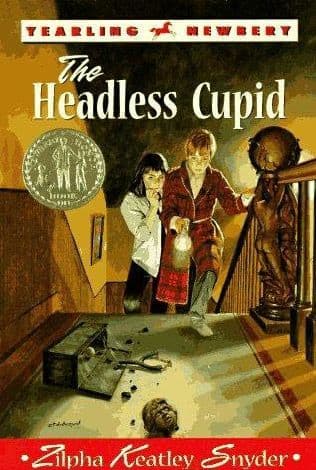
While looking around the house, the children find a wooden cupid statue on the main stairway, its head cut off. This leads to the retelling of an old family story: the house was once haunted by a mischievous poltergeist named 'Ignatius' who was responsible for the cupid's decapitation years ago. This story, first dismissed as a quaint tale, becomes more significant with Amanda's arrival and the recent strange events. The headless cupid becomes a clear sign of the house's alleged haunting, and the children start to wonder if Ignatius has returned, or if Amanda is somehow connected to the strange events.
After the séance and the headless cupid story, a series of increasingly strange and unsettling events happen in the house. Objects move on their own, strange noises come from empty rooms, and small, unexplained 'pranks' occur. A favorite toy disappears, a picture is turned upside down, and other minor disturbances disrupt the family's peace. The Stanley children, especially David, suspect Amanda, believing she is causing these events to show her powers or just to amuse herself. They try to catch her, but Amanda always seems to have an alibi, or the 'prank' is too subtle to clearly link to her.
To further investigate the house's spiritual activity, Amanda decides to use a Ouija board. She gathers the children, and during the session, the planchette moves, spelling out cryptic messages that seem to confirm a spirit is present. The messages are vague but unsettling, hinting at danger and a bad presence. David tries to prove the session is fake, suspecting Amanda is moving the board, but even he is briefly unnerved by the precise, if unclear, responses. The Ouija board session greatly increases the tension and fear among the children, making a real haunting seem more likely.
Amanda has a special protective charm, a small, carved wooden figure she says wards off evil spirits. She is very attached to it and believes it protects her. One day, the charm mysteriously disappears from her room. Its loss deeply upsets Amanda, as she feels unprotected without it. The disappearance of this important item further increases the children's worries. It suggests that if a spirit is active in the house, it is powerful enough to get past Amanda's defenses, or that the 'prankster' is becoming more daring and personal in their attacks.
A potentially dangerous incident happens when a heavy object nearly falls on one of the younger children, seemingly without reason. This event is more serious than previous 'pranks' and makes David rethink his firm belief that Amanda is just playing tricks. He starts to wonder if something genuinely supernatural is happening, or if someone else is involved. The near-accident changes the children's view from mere annoyance and suspicion of Amanda to real fear for their safety, making them more urgently need to understand the source of the disturbances.
Determined to find the truth, David sets a trap. He carefully arranges objects to show if someone was moving them. His plan works, and he catches Janie, his younger sister, in the act of faking one of the 'hauntings.' Janie confesses that she has been causing all the strange events, imitating the ghost stories and Amanda's witchcraft, partly out of mischief and partly to impress Amanda and make the old house more exciting. This revelation explains many of the 'supernatural' events that had puzzled the family.
With Janie's confession, the mystery of the 'haunting' seems solved. However, Amanda still believes that some of the earlier, more subtle events were real. Further investigation by the children, now working together, leads to the discovery of a hidden room or passageway inside the old house. Inside, they find proof of a very old, small, and harmless animal—perhaps a squirrel or a bird—that has been living within the walls, occasionally knocking objects or making noises. This natural explanation accounts for the truly unexplainable events, leaving Janie responsible for the more deliberate 'pranks' and confirming that the house's 'ghost' was just a natural phenomenon. The family finds a new understanding and peace in their old, quirky home.
The Protagonist
David evolves from a staunch skeptic who dismisses all supernatural claims to someone who acknowledges the possibility of the unknown, while still relying on his rational mind to solve mysteries.
The Supporting Character / Catalyst
Amanda remains largely consistent in her beliefs but learns the value of shared investigation and the nuances between genuine supernatural phenomena and human mischief.
The Supporting Character / Antagonist (initially)
Janie moves from being a secret instigator of 'supernatural' events to confessing her role and joining her siblings in solving the remaining mysteries, learning about the consequences of her actions.
The Supporting Character
Blair's arc is subtle, primarily involving learning to cope with fear and distinguishing between real and imagined threats.
The Supporting Character
Esther's primary arc is experiencing the events and learning about the world through the explanations of her older siblings.
The Supporting Character
Mr. Stanley learns to pay closer attention to his children's concerns, even when they seem fantastical, fostering better communication within the blended family.
The Supporting Character
Molly's arc involves integrating into the Stanley family and learning to navigate the unique dynamics, including Amanda's spiritual pursuits.
The novel explores the tension between rational thinking and belief in the supernatural. David, the main character, represents skepticism, always looking for logical explanations for strange events. In contrast, Amanda represents strong belief in the occult, seeing every event through a spiritual lens. The story challenges both views, first making David question his rationality as unexplained events increase, and finally showing that some 'supernatural' events have natural causes, while others are human tricks. This theme highlights the complexities of perception and the human need to understand the unknown, as seen in David's struggle during the Ouija board session and his eventual acceptance of some mysteries.
““There are more things in heaven and earth, Horatio, / Than are dreamt of in your philosophy.””
This theme is central to the mystery, showing how imagination, combined with suggestion, can create a strong illusion of the supernatural. Janie's confession reveals that many of the 'hauntings' were her own carefully planned pranks, inspired by Amanda's stories and the house's spooky atmosphere. The children's fear and belief in ghosts, fueled by Amanda's rituals and the story of Ignatius, make them vulnerable to these tricks. This shows how easily people can be convinced of supernatural events when their minds are ready for it, as shown by the collective fear during the séance and the Ouija board session, even when the events are ordinary.
““It was all just—just games. I just wanted to make things exciting.””
At its heart, the story is about a new blended family coming together. The Stanley children and Amanda, along with their parents, must learn to live together in a new, old house. The 'haunting' helps them overcome initial suspicions, misunderstandings, and personality clashes. Through the shared experience of fear and investigation, they learn to communicate, trust, and ultimately form bonds. The mystery's resolution brings them closer, changing them from separate individuals into a united family. This is especially clear in how David and Amanda, initially at odds, learn to cooperate and respect each other's views.
““It was a good thing, she thought, to have a mystery to solve. It kept them all together.””
The novel explores different kinds of fear: fear of the unknown, fear of bad forces, and fear of being tricked. The children experience real terror during the more intense 'hauntings,' even David, the skeptic. The story shows how fear can be manipulated (by Janie) and how it can be a strong, almost tangible force. Ultimately, solving the mystery allows them to face and understand the sources of their fear, telling the difference between real threats and harmless things. The headless cupid itself symbolizes this fear, a clear representation of the house's unsettling past.
““The house had a way of whispering things, of making you feel as if you weren’t quite alone.””
The old Victorian house serves as both setting and a character, fueling the mystery.
The old Victorian house is more than just a setting; it's a central element that immediately establishes an atmosphere of mystery and potential dread. Its nooks, crannies, and unsettling history, including the legend of 'Ignatius' and the headless cupid, provide fertile ground for both genuine and fabricated supernatural occurrences. The house's age and quirks allow for plausible explanations for some strange sounds and movements, while also providing a perfect backdrop for a supposed poltergeist. This device effectively creates an immersive, suspenseful environment.
Amanda's occult practices and intense belief misdirect the audience from the true culprit.
Amanda's character, with her deep interest in witchcraft and her dramatic rituals, acts as a significant red herring. Her presence and actions immediately make her the prime suspect for the 'haunting' in the eyes of David and the reader. Her knowledge of the occult provides a seemingly logical explanation for the strange events, diverting attention away from the real, more mundane source of the disturbances. This device effectively builds suspense and misdirection, making the eventual reveal of Janie as the prankster more surprising and impactful.
A physical object that represents the house's past and the central mystery.
The headless wooden cupid statue on the stairway is a powerful symbolic object. It immediately introduces the idea of a past haunting and a specific, inexplicable event within the house. The missing head symbolizes the incompleteness and unsettling nature of the house's history, and it serves as a tangible piece of evidence for the legendary poltergeist. It becomes a focal point for the children's fears and investigations, a constant reminder of the mystery they are trying to solve, and connects the present events to the house's storied past.
The events are filtered through David's skeptical but ultimately fallible perspective.
While not strictly an unreliable narrator in the sense of deliberate deception, the story is largely experienced through David's perspective, which is colored by his skepticism and his age. His attempts to rationalize everything initially blind him to the truth, both the mischief of Janie and the benign natural causes of some events. This device allows the author to play with the reader's perceptions, making them question what is real and what is imagined, much like David himself. It also emphasizes the challenges of understanding complex situations from a limited viewpoint.
“There are things in this house that are not of this world.”
— Amanda claims a ghost lives in the house.
“It was just a game. A game we played on ourselves.”
— David reflects on their belief in the supernatural.
“Witchcraft isn't something you learn from books. It's something you feel.”
— Amanda explains her understanding of magic.
“Sometimes the things you're most afraid of are the things that aren't real at all.”
— Mrs. Stanley offers advice to the children.
“This house has secrets. Old secrets. And they don't like to be disturbed.”
— David senses the history of the old house.
“You can't just pretend things into existence, even if you want to.”
— Janice challenges Amanda's magical thinking.
“Being brave isn't about not being scared. It's about doing what you have to do even when you are.”
— Mrs. Stanley encourages David.
“Every old house has a story, if you just listen for it.”
— Mrs. Stanley talks about the house's past.
“It was easier to believe in ghosts than to believe in themselves.”
— The children's internal struggles.
“The past isn't always gone. Sometimes it just waits.”
— The lingering presence of past events in the house.
“You can't solve every mystery with logic. Some things just are.”
— Amanda's perspective on the unexplained.
“Sometimes what you find isn't what you were looking for, but it's what you needed.”
— The unexpected outcomes of their investigations.
“The greatest magic is sometimes just understanding.”
— The resolution of the mystery.
“It was a strange feeling, to have something you believed in so strongly just... evaporate.”
— David's reaction to the truth about the 'ghost'.
Ready to see how well you understood this book? Take our interactive quiz with 10 questions.







