“Every story is a ghost.”
— Alice musing on the nature of stories and their lasting impact.

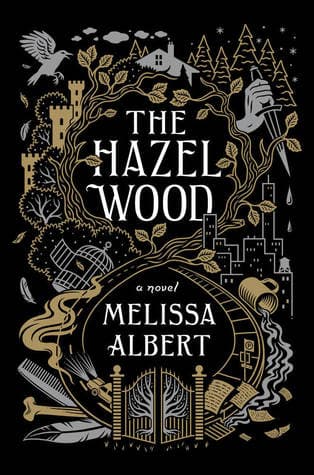
Melissa Albert (2018)
Genre
Fantasy / Mystery / Young Adult
Reading Time
7 hours 30 min
Key Themes
See below
Sign in to track this book
A nomadic teen, haunted by bad luck, must enter the sinister world of her reclusive grandmother's dark fairy tales to rescue her abducted mother, uncovering the truth behind her own cursed life.
Seventeen-year-old Alice Proserpine and her mother, Ella, have spent Alice's life moving from place to place, followed by unusual bad luck. After learning of the death of Alice's estranged grandmother, Althea Proserpine, a reclusive author of a dark fairy tale collection called 'Tales from the Hinterland,' their luck worsens. Ella is abducted from their New York apartment by a creature with a bird's head and human hands, who claims to be from the Hinterland. Before she is taken, Ella whispers a warning to Alice: 'Stay away from the Hazel Wood,' referring to Althea's mysterious estate. Alice is left alone, with only a note from Ella indicating her captor's origin and the urgent need for Alice to avoid her grandmother's former home.
Desperate and alone, Alice remembers meeting a classmate, Ellery Finch, a devoted fan of Althea Proserpine's 'Tales from the Hinterland.' Finch had previously tried to talk to Alice about the stories, sensing a connection. Now, with no other leads and recognizing Finch's unusual knowledge, Alice seeks him out. Finch, intrigued by Alice's situation and the clear link to the Hinterland, offers his help. He knows a lot about the tales and their lore, believing they hold clues to Ella's location and the nature of the supernatural world. Despite her initial distrust of Althea's fans, Alice realizes Finch might be her only hope.
Ignoring Ella's warning, Alice and Ellery Finch decide their best course of action is to go to the Hazel Wood, Althea Proserpine's isolated estate. They believe that the house, as the origin of the 'Tales from the Hinterland,' must hold answers about Ella's disappearance and the true nature of the Hinterland. Their journey is unsettling, as if the world around them is subtly changing. Upon arrival, they find the estate shrouded in an otherworldly atmosphere, its gates inviting yet foreboding. The house is a maze of rooms, filled with peculiar objects and a library containing Althea's personal effects and writings, hinting at a darker history than Alice ever imagined.
While exploring the Hazel Wood, Alice and Finch discover that the house is not just a residence but a gateway. As they investigate Althea's study, Finch becomes more focused on the stories, almost as if he's being pulled into them. One night, Alice wakes to find Finch gone. In his place, she finds a note, not in Finch's handwriting, but in a strange, elegant script. The note is from 'The Storyteller,' a mysterious entity, and it tells Alice that Finch has been taken into the Hinterland and that his story has 'come due.' This event strengthens Alice's resolve, confirming the reality of the Hinterland and the danger she is in.
After Finch's disappearance, Alice begins to meet the peculiar residents of the Hazel Wood. These are not ordinary people; they are characters from Althea's 'Tales from the Hinterland,' seemingly brought to life and bound to their stories. She meets characters like the sad woman from 'Ilsa's Story' and others whose lives are controlled by their narratives. These encounters are unsettling, as the characters speak in riddles and seem to view Alice as a new part of their predefined world. Through these interactions, Alice starts to grasp the terrifying reality that the Hinterland is not just a place, but a dimension where stories are literal, and identities are formed by narrative.
Guided by cryptic clues from the narrative characters and her own growing intuition, Alice discovers a hidden door within the Hazel Wood. This is a magical portal, shimmering with an otherworldly light, that leads directly to the Hinterland. The door's existence confirms the true nature of Althea's estate as a connection between worlds. Stepping through it, Alice leaves behind the familiar world, fully committing to the journey into the heart of the stories, determined to find Ella and Finch, and to uncover the truth about her own connection to this fantastical realm.
Once inside the Hinterland, Alice finds herself in a world both beautiful and terrifying, where the landscapes are shaped by the tales from Althea's book. She encounters various characters from the 'Tales from the Hinterland,' some helpful, others hostile, all bound by their pre-written narratives. The environment itself is alive with magic and danger, reflecting the dark tone of Althea's stories. Alice must use her intelligence and resilience to navigate this unpredictable realm, constantly deciphering clues and avoiding traps set by the stories themselves. Her main goal remains finding Ella, but the journey forces her to face the unsettling reality of her grandmother's creations.
Deep within the Hinterland, Alice finally uncovers the truth about her origins. She learns that she is not Althea Proserpine's biological granddaughter, but a character, a 'story' created by Althea herself. Althea, a powerful Storyteller, created Alice to escape the confines of the Hinterland, a world she had become trapped in. This revelation shatters Alice's sense of self and her understanding of her life, revealing her past as a constructed narrative rather than a genuine history. The 'bad luck' that followed her was a lingering effect of her story trying to pull her back to its origin.
Alice eventually comes face-to-face with the true Storyteller, the ancient and powerful entity who controls the Hinterland and orchestrates all its narratives. This Storyteller is not Althea, but a more fundamental force, the essence of the stories themselves. The confrontation is tense, as Alice demands answers and seeks to reclaim her mother and Finch. The Storyteller reveals the intricate web of creation and consequence, explaining how Althea's actions disrupted the natural order of the Hinterland by creating a story (Alice) that tried to live outside its bounds. Alice realizes the immense power of narrative and the danger of defying it.
Faced with the Storyteller and the full truth of her existence, Alice is given a choice: accept her identity as a story, return to the Hinterland and live out a predefined narrative, or forge her own path, even if it means cutting ties to the magical world. She chooses to create her own story, refusing to be bound by the narratives created for her. This act of self-determination allows her to free Ella and Finch, who were also caught in the Storyteller's web. The novel ends with Alice, Ella, and Finch emerging from the Hinterland, forever changed but ready to navigate a new, more authentic life, with Alice embracing her unique identity and the power of her own narrative.
The Protagonist
Alice transforms from a reluctant, defensive girl into a self-possessed individual who chooses to write her own story, embracing her unique origins.
The Supporting
Ella's arc involves being rescued by Alice and finally being freed from the shadow of the Hinterland, allowing her to live a life not dictated by fear.
The Supporting
Finch's arc sees him realize his own story within the Hinterland, moving from a fan to a participant, and ultimately choosing his own path.
The Supporting/Mentioned
Her arc is revealed posthumously, showing her transformation from a trapped story character to a powerful Storyteller who sought freedom.
The Antagonist
The Storyteller remains largely unchanged, representing the immutable force of narrative, but its authority is challenged by Alice's defiance.
The Supporting
Primarily a plot device, it serves to initiate Alice's journey into the Hinterland and does not undergo significant development.
The Supporting
Her story remains unchanged, emphasizing the fixed nature of narratives within the Hinterland, until Alice's actions offer a glimmer of hope for all story characters.
The novel explores how stories shape identity and reality. Alice's entire existence is a story written by her grandmother, challenging her understanding of self. The characters in the Hinterland are their stories, unable to stray from their narrative arcs. This theme questions how much we are defined by the narratives we are told or those we choose to tell ourselves. Alice's ultimate success is her decision to write her own story, rejecting a predetermined fate. The power of Althea's storytelling is so immense it creates a world and living beings.
““Every story is a journey, and every journey is a story. And stories are not just things we read, they are things we live.””
The book blurs the lines between fantasy and reality, exploring the dangers and appeal of escaping into fictional worlds. Ellery Finch initially romanticizes the Hinterland, wanting to live within Althea's tales, only to find the reality far more dangerous. Alice, conversely, must confront the fantastical elements that have always shadowed her 'normal' life. Alice and Ella's constant movement is an attempt to escape the encroaching reality of the Hinterland, a futile effort. Ultimately, the theme suggests that true freedom comes not from escaping reality, but from confronting and integrating all aspects of one's existence, even the fantastical.
““There’s a world in the pages of a book. But there’s also a world outside them.””
The story is driven by the dark secrets of the Proserpine family, especially Althea's hidden past and her connection to the Hinterland. Alice's journey is an unraveling of generations of hidden truths, from Ella's evasiveness to Althea's manipulative creations. The legacy of Althea's stories and her powerful, almost dangerous, gift as a Storyteller deeply impacts Alice's life. The theme explores how family secrets can shape an individual's destiny and the often-unforeseen consequences of ancestral actions, forcing Alice to deal with a family history far more complex than she ever imagined.
““Some stories are born, some are made, and some are stolen.””
Alice and Ella's nomadic life highlights a constant search for belonging and a stable 'home.' Alice resents their transient existence, wanting roots. The Hazel Wood, initially a place of mystery and danger, becomes a focal point for this theme, representing both a potential home and a trap. When Alice discovers she is a story, her sense of belonging is shattered, forcing her to redefine what home means—not a physical place, but a state of self-acceptance and agency. Her journey ultimately leads her to create a 'home' within herself.
““Home wasn’t a place, it was a feeling. A feeling of being safe, of being known.””
A collection of dark fairy tales that serves as a literal map and key to the magical world.
Althea Proserpine's cult-classic book of dark fairy tales is not merely a piece of fiction within the story; it is the literal foundation of the Hinterland. The tales within it describe the characters, settings, and rules of the supernatural world Alice must enter. It functions as a guidebook, a prophecy, and a source of clues, with characters and events from the book manifesting in Alice's reality. The book's existence blurs the line between fiction and reality, making the stories a tangible force.
Alice's grandmother's mysterious and isolated estate, acting as a gateway between worlds.
The Hazel Wood is more than just a house; it is a liminal space, a nexus point between the ordinary world and the magical Hinterland. Its reclusive nature and the strange occurrences within its grounds hint at its true purpose. It contains clues about Althea's past and the nature of the Hinterland, and eventually reveals a direct portal to the story world. The estate itself seems to possess a consciousness, guiding or hindering Alice's progress, and serves as a tangible link to the story's fantastical elements.
A persistent, uncanny streak of misfortune that follows Alice and Ella, hinting at their story-bound nature.
The 'bad luck' that constantly plagues Alice and Ella is a subtle but pervasive plot device. It's not just random misfortune; it's the Hinterland's subtle way of trying to reclaim Alice, pulling her back into her story. This constant state of unease and transience builds suspense and reinforces the idea that their lives are not entirely their own. It serves as an early indicator of the supernatural forces at play, foreshadowing Alice's true origins and the irresistible pull of the stories.
A mysterious note left after Finch's disappearance, directly from the Storyteller.
The note left in Finch's place after his disappearance is a crucial plot device. It directly introduces the concept of 'The Storyteller' and the idea that characters' 'stories' can 'come due.' This note confirms the active, sentient nature of the Hinterland's narrative forces and escalates the stakes significantly. It shifts the mystery from merely finding Ella to understanding and potentially confronting the very source of the stories, pushing Alice deeper into the fantastical world.
“Every story is a ghost.”
— Alice musing on the nature of stories and their lasting impact.
“The world was made of stories, and stories were made of people, and people were made of stories.”
— Alice's reflection on the cyclical relationship between reality and narrative.
“Some stories are too dangerous to tell.”
— A warning about the power and potential harm of certain narratives.
“There are two kinds of people in the world: those who chase stories, and those who are chased by them.”
— Alice contemplating her own role and the role of her family in their fantastical world.
“Once upon a time is a gate, not a destination.”
— A reinterpretation of the classic fairy tale opening, suggesting it's a beginning to a journey.
“The truth is a story, and stories can be changed.”
— A character reflecting on the subjective and malleable nature of truth.
“You don't just read a story. You enter it.”
— Alice describing the immersive and transformative experience of engaging with a powerful narrative.
“Every secret has a shelf life.”
— A character remarking on the inevitability of secrets being revealed.
“We are all just characters in someone else's story.”
— A poignant observation on the interconnectedness of lives and narratives.
“The greatest magic is the story you tell yourself.”
— Alice realizing the power of self-narrative and belief.
“Sometimes the only way out is through the story.”
— A realization that confronting and understanding a narrative is key to escaping its influence.
“Home is where the stories are.”
— Alice's evolving definition of home, tying it to the presence of narratives.
“The world outside the stories is just as strange, if you know how to look.”
— A character suggesting that the mundane world can be as fantastical as any fairy tale.
“To be real is to be remembered.”
— A reflection on the link between existence, memory, and narrative legacy.
Ready to see how well you understood this book? Take our interactive quiz with 10 questions.







