“No live organism can continue for long to exist sanely under conditions of absolute reality; even larks and katydids must dream.”
— Opening line of the novel, setting a surreal and psychological tone.

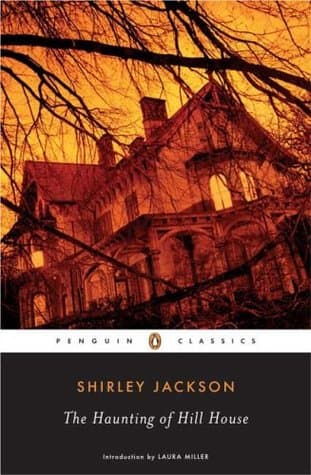
Shirley Jackson (1959)
Genre
Thriller / Mystery
Reading Time
240 min
Key Themes
See below
Sign in to track this book
Four strangers seeking proof of the paranormal find themselves ensnared by Hill House, a malevolent entity that hungers for the fragile mind of one lonely woman to claim as its own.
Eleanor Vance, a timid, isolated woman in her thirties, has spent her life caring for her recently deceased invalid mother. Her only significant supernatural experience was a poltergeist incident in her childhood, though she denies direct involvement. One day, she gets a letter from Dr. John Montague, an anthropologist and occult investigator, inviting her to spend the summer at Hill House, a haunted mansion. Dr. Montague has researched her case and believes her past experience makes her a good candidate for his study of supernatural phenomena. Eleanor, wanting escape and belonging, manipulates her sister and brother-in-law to borrow their car, a detail she feels immense guilt over, and accepts the invitation, seeing it as a chance for a new beginning.
Eleanor drives to Hill House, feeling a mix of dread and excitement. Along the way, she picks up Theodora, an artistic woman also invited by Dr. Montague for her telepathic abilities. Their first impressions of Hill House are unsettling. The house appears to watch them, its architecture distorted and unwelcoming. They are met by the peculiar caretakers, Mr. and Mrs. Dudley, who offer cryptic warnings about staying after dark and refuse to enter the house themselves after sundown. The house's unnerving silence and cold, damp air immediately affect Eleanor, making her feel small and vulnerable, yet also strangely drawn to its mysteries. Theodora, however, remains outwardly cheerful.
Dr. Montague, a jovial but earnest scholar, arrives, followed by Luke Sanderson, the young heir to Hill House, sent by his aunt to observe the investigation. The four investigators settle into their rooms. Dr. Montague explains his scientific approach to documenting the haunting. Almost immediately, the house begins to show its presence. They experience inexplicable cold spots, strange thumping noises, and a pervasive sense of unease. Eleanor and Theodora share a room, creating an immediate, if sometimes tense, bond. Theodora's initial skepticism begins to lessen as the phenomena intensify, especially during their first night, which has strange, distant sounds and a palpable sense of being watched.
The haunting increases with specific and personal attacks. A chilling message, 'HELP ELEANOR COME HOME ELEANOR,' is scrawled on the wall, seemingly in blood, though Dr. Montague dismisses it as a prank. Eleanor, however, feels a deep connection to the message. Laughter and weeping are heard outside their doors at night, and cold spots become more localized. Theodora's room is vandalized, her clothes and belongings strewn about, and a foul odor fills the air, yet Eleanor's room remains untouched by such direct aggression. This selective haunting, combined with Eleanor's growing alienation from the group and her own fragile mental state, makes her feel both singled out for torment and uniquely chosen by the house. She begins to sleepwalk and have disturbing dreams.
Dr. Montague's skeptical wife, Mrs. Montague, arrives with her companion, Arthur Parker, a school headmaster. Mrs. Montague believes she is a genuine medium and brings her own planchette and Ouija board, dismissing Dr. Montague's scientific methods. She tries to communicate with spirits through automatic writing, claiming to contact the house's original owner, Hugh Crain, and his wives. Her presence adds tension and absurdity, showing the different approaches to the supernatural. Eleanor feels more like an outsider, observing the interactions with fear and a strange proprietary feeling towards the house, which seems to resent the newcomers.
During a terrifying incident, Eleanor is inexplicably drawn to the winding, dark stairs of the house's unstable tower. She feels compelled to climb them, despite the danger, experiencing a powerful sense of the house calling to her. The others find her near the top, seemingly in a trance, and bring her down, shaken. This event shows a significant shift in Eleanor's connection to Hill House; she no longer feels merely haunted but feels chosen and absorbed by its presence. Her grip on reality loosens, and her thoughts become intertwined with the house's will. She begins to see the house as a living entity, an extension of her own desires and fears, blurring the lines between her identity and its own.
The haunting continues to escalate, with disembodied voices and cold spots becoming more frequent. One night, a chilling message, 'ELEANOR,' is scrawled on the wall of the nursery, disturbing the group. Later, during a game of billiards, the balls begin to roll on their own, and the room becomes intensely cold, terrifying Luke. Eleanor, while outwardly frightened, feels an internal pull towards the phenomena, a sense of recognition. Her relationships with Theodora and Luke become strained as they see her growing instability and erratic behavior. Theodora tries to reach out to Eleanor, but Eleanor pushes her away, feeling misunderstood and alienated, believing only the house truly understands her.
Concerned by Eleanor's deteriorating mental state and the house's focus on her, Dr. Montague decides she must leave Hill House for her own safety. He explains that her presence seems to accelerate the phenomena and that she is becoming dangerously involved with the house. Eleanor reacts with distress and defiance. She views the house as her home, the only place where she feels truly seen and belongs. The thought of returning to her mundane, lonely life with her sister is unbearable. She pleads to stay, becoming agitated and desperate, convinced that leaving would be a betrayal of the house and herself. The others try to reason with her, but her resolve hardens.
Despite her protests, Eleanor is persuaded to pack her bags and get into her car. As she drives away from Hill House, she feels a profound sense of loss and abandonment. However, a powerful, almost hypnotic compulsion takes over. She feels the house calling her back, urging her not to leave. With a strange sense of peace, Eleanor deliberately steers her car into a large tree just outside the estate gates, precisely where the original owner, Hugh Crain's first wife, was said to have died. Her death is instant, and the story concludes with the chilling statement that Hill House waits, indifferent, having claimed Eleanor as its own, her spirit now part of its eternal haunting.
The Protagonist
Eleanor journeys from timid desperation to a terrifying embrace of the house, ultimately surrendering her identity and life to its haunting presence.
The Supporting
Theo moves from playful skepticism to genuine fear, attempting to connect with Eleanor but ultimately being rebuffed as Eleanor succumbs to the house.
The Supporting
Dr. Montague maintains his academic composure despite the escalating horror, eventually recognizing the danger to Eleanor and ordering her departure.
The Supporting
Luke begins as a skeptical observer, becoming genuinely terrified by the house, and ultimately trying to protect Eleanor, though unsuccessfully.
The Supporting
Her character remains static, serving as a constant, unsettling presence and a harbinger of the house's dark nature.
The Supporting
His character remains static, reinforcing the unsettling atmosphere and the house's reputation.
The Supporting
She arrives, attempts to control the haunting through her own methods, and then departs, largely unaffected by the house's true power.
The Supporting
He remains a static character, serving as Mrs. Montague's assistant throughout their brief stay.
Eleanor Vance's journey is about a search for identity. Having lived her life defined by her mother's needs, she arrives at Hill House desperate to find who she truly is. The house reflects her deepest insecurities and desires, blurring the lines between her fragile mind and the house's malevolent influence. Her internal monologues try to define herself, but ultimately, she finds her identity by becoming one with the house, sacrificing her individual self for a sense of belonging, however perverse.
“Journeys end in lovers meeting; every wise man's son doth know.”
A main theme is the isolation felt by Eleanor and her yearning for belonging. She is an outsider in her own family and in the world. Hill House, despite its terrifying nature, offers her a perverse sense of belonging, a place where she feels truly seen and chosen, even if it's for bad purposes. The camaraderie among the investigators is initially a source of hope for Eleanor, but her increasing alienation from them, coupled with the house's focus on her, pushes her further into the haunting, making Hill House her ultimate, destructive 'home.'
“Hill House, not sane, stood by itself against its hills, holding darkness within; it had stood so for eighty years and might stand for eighty more. Within, walls continued upright, bricks met neatly, floors were firm, and doors were sensibly shut; silence lay steadily against the wood and stone of Hill House, and whatever walked there, walked alone.”
The novel blurs the lines between genuine supernatural phenomena and psychological breakdown. The fear often comes from the characters' own vulnerabilities and perceptions. Is Hill House truly haunted, or does it merely amplify the existing fears of those who enter it? Eleanor's descent into madness raises questions about what is real and what is a product of her disturbed mind. The house's ambiguous nature allows it to be both a physical entity and a psychological setting, making the fear unsettling and personal.
“No living organism, it is generally agreed, can continue for long to exist sanely under conditions of absolute reality; even larks and peaseblossoms have to dream. Hill House was an exception, perhaps; it was a place of despair, which had not yet entered into the consciousness of the world.”
Hill House itself is a character, an entity that preys on its inhabitants. The architecture, the shifting angles, the cold spots, and the oppressive atmosphere all contribute to its powerful presence. The house is not just a setting; it is a force that shapes the story and the characters' destinies. Its history of tragedy and violence seems to have given it a sinister consciousness that seeks to absorb and destroy. The house's power is in its ability to isolate, confuse, and ultimately claim those most vulnerable to its influence.
“A house cannot be born bad, but this one was. It was a place of despair, of quiet, unutterable horror, and it had not yet entered into the consciousness of the world.”
The novel subtly explores the limits placed on women in the mid-20th century. Eleanor's life before Hill House is one of stifled ambition and servitude, common for many women of her time. Her yearning for freedom and self-determination is thwarted by societal expectations and her family's demands. Theodora, in contrast, represents a more liberated, unconventional woman, though even she faces challenges in defining her own space. The house, in a twisted way, offers Eleanor a form of 'liberation' from these limits, through destruction, showing the limited options available to women seeking autonomy.
“I am like a small creature in a birdcage, she thought, and then, with a little gasp of surprise, I am free.”
Eleanor Vance's perspective blurs the line between supernatural events and psychological breakdown.
Eleanor's perspective is the primary lens through which the reader experiences the events at Hill House. Her increasing mental instability, her vivid fantasies, and her distorted perceptions make it difficult to discern what is objectively happening and what is a product of her own deteriorating mind. This device heightens the suspense and psychological horror, forcing the reader to question the reality of the haunting itself and making Eleanor's descent all the more terrifying as her internal world becomes indistinguishable from the external horror.
The house itself is treated as a malevolent, living entity with a will of its own.
Shirley Jackson consistently describes Hill House as if it were a sentient being. It 'watches,' 'gathers its powers,' 'chooses' Eleanor, and seems to 'breathe.' Its architecture is described in terms of a 'face' or a 'body,' with 'eyes' and 'hands.' This personification elevates the house from a mere setting to an active antagonist, a central character whose malevolent presence drives the plot and ultimately consumes Eleanor. It creates a pervasive sense of dread and agency within the inanimate structure.
The horror stems more from the characters' minds and internal states than from overt supernatural events.
While there are certainly supernatural occurrences, the primary source of terror in 'The Haunting of Hill House' is psychological. The house preys on the characters' deepest fears, insecurities, and desires, particularly Eleanor's. The ambiguity of the haunting—whether it's truly external or an internal manifestation—creates a profound sense of unease. The horror is derived from the unraveling of Eleanor's mind, her growing isolation, and the insidious way the house infiltrates her thoughts, making the reader question sanity itself rather than just fearing ghosts.
The precise nature and origin of the haunting are never fully revealed, enhancing the terror.
Jackson deliberately leaves many aspects of the haunting ambiguous. The precise nature of the spirits, their motivations, and the full extent of Hill House's power are never explicitly explained. This lack of concrete answers forces the reader to confront the unknown, which is often more terrifying than a clearly defined threat. The unexplained phenomena contribute to the pervasive sense of dread and leave the reader with a lasting impression of the house's enigmatic and unconquerable evil, ensuring that the horror lingers long after the final page.
The narrative manipulates sensory details to disorient and terrify the characters and reader.
The house frequently manipulates sensory input. It is often described as unnaturally silent, then punctuated by sudden, inexplicable noises (thumps, laughter, weeping). Cold spots appear and disappear. Foul odors suddenly manifest. The house's architecture itself is disorienting, with odd angles and shifting perspectives. This manipulation of sensory experience disorients the characters, making it difficult for them to trust their own senses and further blurring the line between reality and hallucination, thereby enhancing the psychological impact of the haunting.
“No live organism can continue for long to exist sanely under conditions of absolute reality; even larks and katydids must dream.”
— Opening line of the novel, setting a surreal and psychological tone.
“Silence lay steadily against the wood and stone of Hill House, and whatever walked there, walked alone.”
— Part of the iconic opening paragraph, emphasizing the house's isolation and its spectral inhabitants.
“I am like a small creature captured, and I will not be free until I am dead.”
— Eleanor Vance's internal thoughts, reflecting her trapped feeling in life and her longing for escape.
“Journeys end in lovers meeting; every wise man's son doth know.”
— A phrase Eleanor often repeats, a seemingly innocent children's rhyme that takes on a sinister double meaning.
“Hill House, not sane, stood by itself against its hills, holding darkness within; it had stood so for eighty years and might stand for eighty more.”
— Another powerful description of the house, personifying its malevolent nature.
“We are all afraid of the dark.”
— Dr. Montague's observation about human fear, which resonates deeply with Eleanor's anxieties.
“It was a house without kindness, never meant to be a home, and all who entered it were lost.”
— A stark realization about the nature of Hill House and its effect on its occupants.
“Why can't I ever be happy? Why can't I ever be good?”
— Eleanor's desperate internal questions, revealing her deep-seated insecurities and self-loathing.
“The house was waiting, she thought, to see what she would do.”
— Eleanor's growing paranoia and feeling that the house has a conscious will and is observing her.
“It was the only place Eleanor had ever felt at home.”
— A chilling realization for Eleanor, highlighting her profound loneliness and the house's seductive power.
“I am here. I am here. If I scream, then I am here.”
— Eleanor's desperate attempt to assert her existence and reality amidst the house's dissolving influence.
“Hill House has a reputation for being, shall we say, difficult.”
— Dr. Montague's understated description of the house's notorious history, often repeated by others.
“We are here for the house, not for each other.”
— Theo's sardonic comment, pointing out the true focus of their stay and the lack of genuine connection between the investigators.
“She might have been a ghost herself, walking through the house, unable to touch or be touched.”
— A description of Eleanor's increasing detachment and feeling of unreality as she succumbs to the house's influence.
“It was the perfect house, and it was waiting for her.”
— Eleanor's final, delusional thought, believing the house is her true home and destiny.
Ready to see how well you understood this book? Take our interactive quiz with 10 questions.
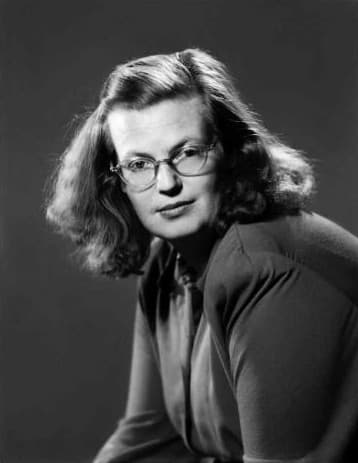
Shirley Hardie Jackson was an American writer known primarily for her works of horror and mystery. Over the duration of her writing career, which spanned over two decades, she composed six novels, two memoirs, and more than 200 short stories.







