“What's the point of having a voice if you're gonna be silent in those moments you shouldn't be?”
— Starr reflects on her responsibility to speak out against injustice after witnessing Khalil's death.

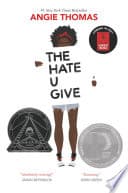
Angie Thomas (2017)
Genre
Young Adult
Reading Time
600 min
Key Themes
See below
Sign in to track this book
After seeing her unarmed best friend shot by a police officer, 16-year-old Starr Carter must find her voice and decide whether to speak out, risking her safety and the balance of her two worlds.
Sixteen-year-old Starr Carter lives a double life, attending a prep school, Williamson, while living in the poor, mostly Black neighborhood of Garden Heights. She goes to a party in Garden Heights with her childhood friend, Khalil Harris. A fight starts, and Starr and Khalil leave together. While driving home, a white police officer, One-Fifteen, pulls them over. Khalil is told to get out of the car, and while reaching for his hairbrush, which One-Fifteen thinks is a gun, he is shot three times and killed in front of Starr. Starr is traumatized, forced to watch Khalil die while the officer keeps his gun pointed at her.
The time right after Khalil's death is chaotic. Starr's parents, Maverick and Lisa, try to protect her, but the news spreads fast. The media portrays Khalil as a drug dealer and gang member after his death, which overshadows the unfairness of his death. Starr is the only witness and feels much pressure, not only from her family and the community but also from the District Attorney's office. She attends Khalil's funeral, where a local activist, April Ofrah, offers support and encourages her to testify. Starr hesitates, fearing for her safety and what might happen if she speaks out against a police officer.
Starr's inner struggle grows as she moves between her two worlds: Williamson, where her friends, Hailey and Maya, are mostly unaware or insensitive to racial tensions, and Garden Heights, where the community wants justice for Khalil. After much thought and encouragement from her family, especially her father, Maverick, Starr decides to testify before the grand jury. She works with April Ofrah to prepare her statement, reliving the traumatic event many times. This process makes Starr confront her own identity and the racial injustices in her society, slowly finding her voice.
The grand jury announces its decision: Officer One-Fifteen will not be charged with Khalil's murder. This news causes much anger and frustration in Garden Heights. Protests become riots, with residents clashing with police. Starr, along with her family and friends, takes part in these demonstrations. During one violent protest, a tear gas canister is thrown, and Starr's brother, Sekani, picks it up, causing a tense situation. Maverick protects Sekani, stopping the immediate danger, but the unfairness of the verdict makes Starr more determined to fight for change.
At Williamson, Starr feels more isolated and misunderstood. Her friends, Hailey and Maya, make racially insensitive comments about Khalil and the protests. This ends with Hailey unfollowing Starr's Tumblr and making a racist remark about fried chicken. Starr finally confronts Hailey, calling her out for her prejudice and lack of understanding, leading to a strong argument and the end of their friendship. Maya, though at first unsure, supports Starr. This confrontation shows Starr that her Williamson world cannot truly understand her experiences in Garden Heights.
King, the gang leader who had been dealing drugs with Khalil, sees Starr's testimony as a betrayal and a threat to his operations. He retaliates by burning down Maverick's grocery store, which is important to the community and the family's income. This violence directly endangers Starr and her family, making them temporarily stay at their Uncle Carlos's house. The incident shows the complex and dangerous web of gang violence, poverty, and police brutality in Garden Heights, further showing the risks Starr takes by speaking out.
Despite the danger, Starr will not be silent. She joins another large protest in Garden Heights, which turns violent as police arrive in riot gear. Starr, along with Chris, Seven, and DeVante, finds herself in the middle of the chaos. Inspired by her father and the memory of Khalil, Starr bravely climbs on top of a car and speaks to the crowd using a megaphone. She passionately tells about Khalil's death, exposes the systemic racism, and encourages the community to keep fighting for justice, saying that Khalil's life mattered.
During the protest, King's house is set on fire. Starr and her family, along with DeVante and other community members, confront King. DeVante, who had been working for King and saw his illegal activities, gives important information to the police. The community, tired of King's control, stands together, and King is arrested. This event is a turning point for Garden Heights, as the community takes back its power and begins to heal from the influence of gang violence, offering some hope for a safer future.
Afterward, Maverick begins rebuilding his store, and the family starts to deal with the trauma and look to the future. Starr realizes that while the immediate fight for Khalil's justice may be over, the larger fight against systemic racism and police brutality continues. She promises to keep using her voice and experiences to advocate for change, understanding that her journey has just begun. Starr accepts the pain and loss but embraces her role as an activist, ready to face future challenges and ensure that no other child in Garden Heights suffers Khalil's fate.
The Protagonist
Starr transforms from a quiet, code-switching teenager into a courageous, outspoken advocate for justice, embracing her full identity.
The Supporting
Maverick continues to be a pillar of strength and a symbol of hope for his family and community, reinforcing his commitment to justice.
The Supporting
Lisa navigates her desire for her children's safety with her belief in justice, ultimately supporting Starr's activism.
The Mentioned
Khalil's memory serves as the driving force for Starr's activism, inspiring her to fight for justice.
The Supporting
Carlos struggles with his identity as a police officer and his loyalty to his family, ultimately supporting Starr while maintaining his professional integrity.
The Supporting
Chris evolves from a somewhat naive outsider to a more understanding and actively supportive ally for Starr.
The Supporting
Seven continues to be a steadfast protector of his family, demonstrating his maturity and loyalty.
The Antagonist
King's reign of terror is ultimately challenged and broken by the united community, leading to his arrest.
The Supporting
Hailey's true racist nature is exposed, leading to the end of her friendship with Starr.
The Supporting
April empowers Starr to embrace her role as an activist and use her voice for change.
Starr's struggle with identity is central to the novel. She constantly code-switches between 'Starr Version 1' (the Garden Heights Starr) and 'Starr Version 2' (the Williamson Starr), changing her language, behavior, and even thoughts to fit different environments. This dual identity creates inner conflict and a feeling of not being true to herself. Khalil's death forces her to bring these two versions of herself together, finally embracing her full, authentic Black identity and refusing to make herself smaller for others. This is clear when she finally confronts Hailey, no longer code-switching.
“''Sometimes you can do everything right and things will still go wrong. The key is to never stop doing right.''”
The novel directly addresses systemic racism and police brutality through Khalil's unfair death and its aftermath. The media's immediate negative portrayal of Khalil, the grand jury's failure to charge Officer One-Fifteen, and the police's aggressive response to protests all show the biases within the justice system and society. The book argues that racism is not just individual prejudice but a deeply ingrained system that disadvantages Black communities, as seen in the lack of accountability for One-Fifteen and the immediate assumption that Khalil was a criminal.
“''The truth is, what I saw in that alley was a kid. A human being. He was scared. We were all scared. And he deserved to live.''”
Starr's journey from silence to finding her voice shows activism. At first, fear and trauma make her quiet, but with guidance from her family, April Ofrah, and her own growing belief, she learns the importance of speaking truth to power. Her testimony, her public speech during the riot, and her commitment to continuing the fight show how individual voices, especially from marginalized communities, can start change and challenge injustice. Her voice is a tool against the silence that allows oppression to continue.
“''What's the point of having a voice if you're gonna be silent in those moments you shouldn't be?''”
The strength of family and community in Garden Heights is an important theme. The Carter family, despite their problems, provides a strong, loving, and supportive unit for Starr. Maverick's dedication to his community, Lisa's protective instincts, and Seven's loyalty all show how important these bonds are. The community of Garden Heights, though facing internal struggles like gang violence, unites in grief and protest for Khalil. This shows collective resilience and a shared desire for justice, especially when they work together against King.
“''Sometimes you have to make noise to be heard.''”
The novel shows how poverty and lack of opportunity contribute to cycles of violence and crime in communities like Garden Heights. Khalil's decision to deal drugs to help his grandmother, King's strong influence over the neighborhood, and the general struggle for survival all show the social and economic factors that trap individuals in difficult situations. King burning Maverick's store, a symbol of community business, further shows how violence can hinder attempts at progress, continuing a destructive cycle.
“''The Hate U Give Little Infants F***s Everybody.''”
Provides intimate access to Starr's thoughts, emotions, and internal conflicts.
The entire story is narrated from Starr Carter's first-person point of view. This device is crucial for understanding her internal struggles with identity, trauma, and the pressure of being the sole witness. It allows readers to directly experience her code-switching, her fear, her grief, and her growing courage, making her journey deeply personal and empathetic. The reader sees the events unfold through her eyes, highlighting the subjective nature of truth and perception in the aftermath of a police shooting.
Highlights the duality of Starr's life and the challenges of navigating different social environments.
Code-switching is a recurring behavioral device used by Starr. She consciously alters her speech patterns, vocabulary, and mannerisms when moving between Garden Heights and Williamson Prep. This device effectively illustrates the racial and class divides she experiences and the emotional toll of constantly having to adjust her identity to fit in. It underscores the theme of identity and the pressure to conform, showcasing the 'two Starrs' and the difficulty of integrating her authentic self in both worlds.
Symbolizes the racial and socio-economic segregation in American society.
The stark contrast between Garden Heights (Starr's predominantly Black, low-income neighborhood) and Williamson Prep (her predominantly white, affluent private school) serves as a significant plot device. This geographical and social divide highlights systemic inequalities, differing perspectives on race and justice, and Starr's internal conflict. It creates external conflict as Starr's friends from each world clash, and it forces Starr to confront which 'version' of herself she truly is, ultimately leading her to bridge these worlds through her activism.
Provides a thematic framework for understanding systemic oppression and its impact.
The acronym 'THUG LIFE' (The Hate U Give Little Infants F***s Everybody), coined by Tupac Shakur, is a central thematic and symbolic device. Khalil explains it to Starr before his death, and Maverick later reinforces its meaning. It articulates the novel's core message: the negative societal conditions and systemic oppression inflicted upon marginalized children (the 'hate u give little infants') ultimately harm everyone ('f***s everybody'), perpetuating cycles of poverty, violence, and despair. This phrase provides a powerful lens through which to interpret the events and motivations in the story.
“What's the point of having a voice if you're gonna be silent in those moments you shouldn't be?”
— Starr reflects on her responsibility to speak out against injustice after witnessing Khalil's death.
“Brave doesn't mean you're not scared. It means you go on even though you're scared.”
— Starr's father Maverick explains what it means to be brave in the face of fear.
“Sometimes you can do everything right and things will still go wrong. The key is to never stop doing right.”
— Maverick offers advice to Starr about perseverance and morality.
“The hate u give little infants fucks everybody.”
— Khalil explains the meaning of Tupac's acronym THUG LIFE, which inspires the book's title.
“I can't change where I come from or what I've been through, so why should I be ashamed of what makes me, me?”
— Starr embraces her identity and background despite societal pressures.
“People like us in situations like this become hashtags, but they rarely get justice.”
— Starr comments on the media's treatment of Black victims of police violence.
“It's dope to be black until it's hard to be black.”
— Starr observes the duality of Black identity in America.
“Funny how it works with white kids though. It's dope to be black until it's hard to be black.”
— Starr contrasts the appropriation of Black culture with the realities of Black life.
“I've seen it happen over and over again: a black person gets killed just for being black, and all hell breaks loose.”
— Starr reflects on the pattern of violence and protest in her community.
“You don't have to be a thug to be a threat.”
— Starr realizes how Black people are often perceived as threats regardless of their actions.
“At an early age I learned that people make mistakes, and you have to decide if their mistakes are bigger than your love for them.”
— Starr considers forgiveness and relationships in her life.
“I want to do more than survive. I want to thrive.”
— Starr expresses her desire to move beyond mere survival in a oppressive society.
“That's the problem. We let people say stuff, and they say it so much that it becomes okay to them and normal for us.”
— Starr discusses how racism becomes normalized through silence and repetition.
“Once you've seen how broken someone is it's hard to stay mad at them.”
— Starr reflects on empathy and understanding in difficult situations.
Ready to see how well you understood this book? Take our interactive quiz with 10 questions.
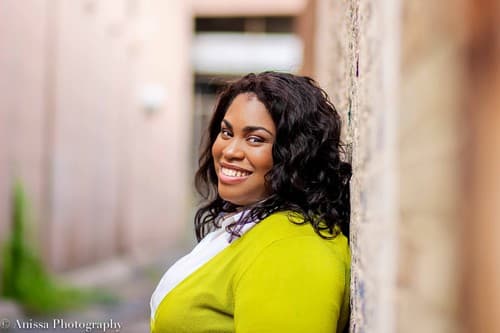
Angie Thomas is an American young adult author, best known for writing The Hate U Give (2017). Her second young adult novel, On the Come Up, was released on February 25, 2019.