“I am waited for in Egypt, and my friends are flying up and down the Nile, and talking to the large lotus-flowers. They will soon be going to sleep.”
— The Swallow explains to the Happy Prince why he must leave.

Oscar Wilde (1888)
Genre
Fantasy / Children's
Reading Time
15 min
Key Themes
See below
Sign in to track this book
A once-blind prince, now a statue, finds redemption and true beauty by sacrificing his riches through a loyal swallow to ease his city's suffering.
The story begins in a city where a grand statue of the Happy Prince stands on a tall column. It is covered in gold, with sapphire eyes and a ruby on its sword. Town leaders praise its beauty. But the Prince, who in life knew no sorrow in his palace, now sees all the misery of the city from his high spot. His lead heart weeps for the suffering. He regrets his gilded state, wishing he could ease the pain of the poor below, which he can now only watch through his tears.
A small Swallow, separated from his flock heading to Egypt for winter, decides to spend the night at the Happy Prince's feet. He is tired and looks forward to Egypt's warmth, where his friends already are. As he gets ready to sleep, a large drop of water falls on him. He is surprised, as the sky is clear, then another and another fall. He looks up and sees the drops come from the weeping eyes of the Happy Prince's statue.
The Swallow asks the weeping Prince why he cries. The Prince explains his sadness at seeing the city's hardship. He points out a poor seamstress, whose child is sick with fever and wants oranges, but she is too poor. The Prince asks the Swallow to take the ruby from his sword and give it to the seamstress. The Swallow is hesitant, wanting to join his friends in Egypt, but the Prince's sadness sways him, and he agrees to stay one night as his messenger.
The Swallow flies to the seamstress's house. He finds her asleep, exhausted, and places the ruby on the table next to her thimble. He then fans the sick child with his wings, giving a brief coolness. The child feels better and falls asleep. The Swallow returns to the Prince, feeling warm despite the cold, thinking it is from his good deed. The Prince is pleased, and the Swallow agrees to stay another night.
The next day, the Prince tells the Swallow about a young writer in a small room, trying to finish a play for the Theatre Director but too cold and hungry to write. He has no fire and is weak from hunger. The Prince asks the Swallow to take one of his sapphire eyes and give it to the writer so he can buy wood and food to finish his work. The Swallow is shocked at the idea of blinding the Prince but eventually agrees, moved by the Prince's sincere request.
The Swallow flies to the writer's room. He slips through a hole in the roof and finds the young man with his head in his hands, in despair. The Swallow places the sapphire on the withered flowers next to him. The writer finds the gem, thinking it is from an admirer, and feels hope and drive to finish his play. The Swallow returns to the Prince, who now has only one eye. The Swallow feels warmer again, understanding the joy of helping others.
On the third day, the Prince sees a little match-girl in the square. Her matches have fallen into the gutter, and she fears her father will hit her if she does not bring home money. She cries bitterly. The Prince, now half-blind, asks the Swallow to take his last sapphire eye and give it to the match-girl. The Swallow is upset, knowing this will make the Prince completely blind, and says he will never leave him. But the Prince insists, reminding the Swallow of her suffering.
The Swallow, with a heavy heart, takes the Prince's other sapphire eye and flies down to the match-girl. He quickly puts the jewel into her hand. The little girl is thrilled, thinking it is a piece of glass, and runs home happily. The Swallow returns to the now fully blind Happy Prince. True to his word, the Swallow declares he will stay with the Prince forever, as the Prince can no longer see the city's suffering alone. He perches on the Prince's shoulder, comforting him.
Now completely blind, the Prince asks the Swallow to fly over the city and tell him what he sees. The Swallow flies over the city, seeing the rich feasting in their homes while poor children starve in the dark streets, shivering from cold and hunger. He reports back to the Prince, describing the widespread misery. The Prince then tells the Swallow to strip off all the gold leaf from his body, piece by piece, and give it to the poor. He wants to give away everything he has left.
The Swallow carefully strips all the gold leaf from the Happy Prince, flying it to the hungry children. The children's faces brighten, and they play in the streets, saying, 'We have bread now!' As winter arrives, the cold grows intense. The little Swallow gets weaker, but he keeps working until the Prince is dull and grey. Finally, knowing he will die, the Swallow kisses the Prince's lips and falls dead at his feet. At that moment, a crack sounds inside the statue, as the Prince's lead heart breaks in two.
The next morning, the Mayor and Town Councillors pass the statue. They are shocked to see it looking shabby and dull, with no gold, no jewels, and a dead bird at its feet. The Mayor says it is no longer beautiful or useful. They decide to pull down the statue and melt it in a furnace. They also decide to throw the dead Swallow into the dust-heap, where it lands next to the Prince's broken lead heart, which could not melt.
God tells one of His Angels to bring Him the two most precious things in the city. The Angel flies down and brings back the broken lead heart of the Happy Prince and the dead Swallow. God praises the Angel's choice, saying that in His Paradise, the little bird will sing forever, and in His City of Gold, the Happy Prince will praise Him.
The Protagonist
Transforms from an ignorant prince who lived in a 'Palace of Sans-Souci' to a deeply empathetic and self-sacrificing figure, giving away all his precious adornments.
The Supporting
Evolves from a self-interested bird focused on migration to a loyal, self-sacrificing companion who chooses death over abandoning his friend.
The Antagonist
Remains static, demonstrating a consistent focus on superficiality and public perception.
The Supporting
Remain static, serving as a chorus for the Mayor's materialistic views.
The Mentioned
Receives temporary relief from her suffering, but her overall circumstances remain unchanged.
The Mentioned
Receives a sudden influx of hope and means to continue his work, temporarily lifting his spirits.
The Mentioned
Experiences brief joy and relief from immediate fear, but her life circumstances are not fundamentally altered.
The Mentioned
Remains static, representing an unchanging divine perspective and ultimate judgment.
This theme centers on the self-sacrifice of both the Happy Prince and the Swallow. The Prince, once covered in jewels and gold, willingly gives away all his beauty and wealth to help the poor, becoming blind and dull. The Swallow, loyal and loving, delays his trip to warm Egypt, eventually dying from cold to carry out the Prince's charitable tasks. Their actions show that true compassion means giving up one's own comfort and even life for others, as when the Prince gives his sapphire eyes to the writer and match-girl.
“''I am glad that you are going to Egypt,'' said the Prince, ''You have stayed too long here; but you must kiss me on the lips, for I love you.''”
This theme shows the difference between society's shallow judgments and true worth. The city's leaders only value the Prince's statue when it is covered in gold and jewels, calling it 'ugly' and 'useless' after it gives away its adornments. They do not see the charity it made possible or the suffering it eased. In contrast, the Prince, though physically blind, gains a deeper moral sight, seeing the city's true misery through the Swallow's reports. God, in the end, sees past looks, recognizing the broken lead heart and dead bird as the 'two most precious things,' showing that true value comes from selflessness, not material wealth.
“''As he is no longer beautiful he is no longer useful,'' said the Art Professor at the University.”
Wilde questions common ideas of beauty. At first, the Happy Prince's statue is admired for its outward splendor—gold, sapphire eyes, and a ruby. But as these decorations are given away, the statue becomes 'shabby' and 'ugly' to the city's officials. Yet, by disfiguring himself for others, the Prince achieves a higher beauty: the beauty of compassion and sacrifice. The Swallow also finds beauty in service, feeling 'quite warm now' after his good deeds despite the cold. The story suggests that true beauty is not in outward appearance but in a good heart and actions.
“''You are blind now,'' said the Swallow, ''so I will stay with you always.''”
Wilde clearly shows the harsh realities of social injustice and poverty in the city. The Prince's high position lets him see the stark contrast between the wealthy feasting and the poor, hungry children shivering in the streets. Examples include the overworked seamstress with her sick child, the starving writer, and the scared match-girl. The story criticizes a society that ignores or is unaware of its most vulnerable members' suffering, highlighting deep class divisions and systemic problems that cause such widespread misery. The Prince's actions are a direct response to this injustice.
“''My courtiers called me the Happy Prince, and happy indeed I was, if pleasure be happiness. So I lived, and so I died. And now that I am dead they have set me up here so high that I can see all the ugliness and all the misery of my city, and though my heart is made of lead yet I must weep.''”
The relationship between the Happy Prince and the Swallow explores love and friendship. What starts as a simple agreement (Swallow as messenger) quickly grows into a deep, selfless bond. The Swallow, initially wanting to leave for Egypt, chooses to stay with the Prince through the bitter cold, even sacrificing his life. His promise, 'I will stay with you always,' after the Prince becomes completely blind, shows deep loyalty and affection. Their shared sacrifice for humanity ultimately binds them, and they are rewarded by God, forever united in Paradise, symbolizing the lasting power of true love and friendship.
“''Dear little Swallow,'' said the Prince, ''you tell me of marvellous things, but more marvellous than anything is the suffering of men and of women.''”
Giving human qualities to inanimate objects and animals.
Oscar Wilde extensively uses personification to imbue the statue of the Happy Prince and the Swallow with human emotions, thoughts, and dialogue. The Prince weeps, expresses compassion, and makes moral decisions, despite being a statue. The Swallow talks, feels love, loyalty, and cold, allowing the reader to empathize deeply with their plight and choices. This device makes the abstract themes of sacrifice and empathy more accessible and moving, transforming them from mere symbols into relatable characters whose actions drive the narrative and convey its moral message.
Objects and characters representing deeper ideas.
The story is rich with symbolism. The Happy Prince's gold and jewels symbolize material wealth and superficial beauty, which he sheds for true spiritual worth. His lead heart, which breaks but cannot melt, symbolizes enduring compassion and love that transcends physical destruction. The Swallow symbolizes the sacrificial messenger and the spirit of selfless devotion. The city itself symbolizes a society riddled with social injustice and moral blindness. The cold winter symbolizes hardship and the ultimate sacrifice, while the warmth the Swallow feels after good deeds symbolizes spiritual comfort and reward.
Contrasting elements to highlight differences and themes.
Wilde frequently uses juxtaposition to emphasize the story's central themes. The grandeur and beauty of the gilded Happy Prince are starkly contrasted with the squalor and misery of the city's poor. The Mayor's superficial judgment of the 'ugly' statue is juxtaposed with God's recognition of its profound spiritual beauty and worth. The initial self-interest of the Swallow (wanting to go to Egypt) is contrasted with his ultimate self-sacrifice. This device effectively highlights the moral and social disparities within the narrative, making the reader reflect on what truly holds value.
Simple narrative, clear moral, and supernatural elements.
The story employs a classic fairy tale structure, featuring a clear, linear narrative, easily identifiable good and bad characters (though not strictly evil), and a distinct moral lesson. It includes elements of magic (a weeping statue, a talking bird) and a clear divine intervention at the end, where God rewards the virtuous. This structure makes the complex themes of social injustice and self-sacrifice accessible to a wide audience, particularly children, while still delivering a powerful and enduring message about compassion and love.
“I am waited for in Egypt, and my friends are flying up and down the Nile, and talking to the large lotus-flowers. They will soon be going to sleep.”
— The Swallow explains to the Happy Prince why he must leave.
“He is as beautiful as a statue, and as kind as an angel.”
— A little boy describes the Happy Prince to his master.
“I am glad that you are going to Egypt, little Swallow. You tell me of your travels, and I will sit here and think of the sorrows of my city.”
— The Happy Prince, still adorned, addresses the Swallow.
“For what is the use of a statue if it cannot keep the rain off?”
— A town councillor complains about the Happy Prince's statue.
“I will stay with you one night longer, but I cannot pluck out your eye. You would be quite blind then.”
— The Swallow hesitates to remove the Prince's sapphire eye.
“But I am so cold.”
— The little Match-girl cries after dropping her matches in the gutter.
“I am so glad that you are going to Egypt. You tell me of your travels, and I will sit here and think of the sorrows of my city.”
— The Happy Prince repeats his request to the Swallow.
“What is that you are saying? I thought that you were going to Egypt.”
— The Happy Prince is surprised by the Swallow's decision to stay.
“Bring me the two most precious things in the city, said God, to one of His Angels; and the Angel brought Him the leaden heart and the dead bird.”
— God instructs an Angel to find the most precious things.
“There is no mystery so great as misery.”
— The Happy Prince reflects on the suffering he witnesses.
“He looks just like a common beggar!”
— A Professor of Ornithology comments on the appearance of the Happy Prince's statue after it is stripped of its jewels.
“I will fly over the great city, and tell you what I see there.”
— The Swallow promises to report on the suffering of the city to the Prince.
“I am going to the House of Death, said the Swallow, softly.”
— The Swallow tells the Happy Prince of his impending death.
“My jewels have been plucked out, my gold has been stripped off, and I am quite ugly.”
— The Happy Prince describes his appearance after giving away his riches.
Ready to see how well you understood this book? Take our interactive quiz with 10 questions.
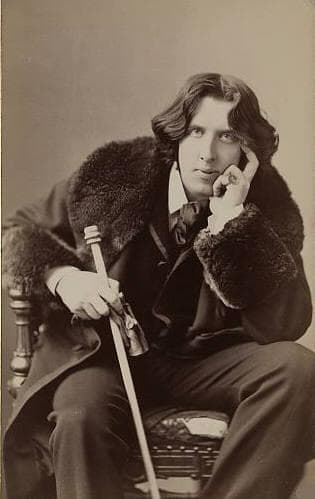
Oscar Fingal O'Fflahertie Wills Wilde was an Irish poet and playwright. After writing in different forms throughout the 1880s, he became one of the most popular playwrights in London in the early 1890s. He is best remembered for his epigrams and plays, his novel The Picture of Dorian Gray, and the circumstances of his criminal conviction for gross indecency for consensual homosexual acts in "one of the first celebrity trials", imprisonment, and early death from meningitis at the age of 46.







