“I am waited for in Egypt, and the swallows are flying up and down the Nile, and talking to the great green crocodiles. They lie on the sand and look out at the world.”
— The Swallow explains his urgency to leave before winter to the Happy Prince.

Oscar Wilde (1888)
Genre
Fantasy / Children's
Reading Time
90-120 min
Key Themes
See below
Sign in to track this book
Oscar Wilde's collection of fairy tales tells moving stories of self-sacrifice, love, and what beauty truly means, resonating with readers of all ages.
A magnificent statue of the Happy Prince, covered in gold leaf and jewels, stands above a city, seeing its suffering people. Once living in blissful ignorance, the Prince's spirit, now in the statue, cries upon seeing the widespread poverty and misery. A swallow, delayed on its trip to Egypt, seeks shelter at the statue's feet. Moved by the Prince's tears and his wish to help, the swallow agrees to stay and become his messenger. The Prince asks the swallow to take the ruby from his sword-hilt to a poor seamstress whose son is ill. The swallow does this, bringing a moment of joy to the struggling family.
The Happy Prince, seeing more suffering, asks the swallow to pluck out his sapphire eyes and give them to others in need. One sapphire goes to a struggling young playwright who is too cold and hungry to finish his work. The other goes to a match-girl whose matches have fallen into the gutter, fearing a beating from her father. Despite winter approaching and the danger to itself, the swallow, loyal to the Prince, carries out these tasks. With his eyes gone, the Prince is blind, but his compassion remains. He then asks the swallow to strip the gold leaf from his body and give it piece by piece to the starving children.
As winter gets worse, the swallow, having given away all the Prince's gold, grows weaker. It knows death is near but refuses to leave the now-plain, leaden statue of the Prince. With its last breath, the swallow kisses the Prince and falls dead at his feet. At that moment, a sound comes from inside the statue: the Prince's lead heart breaks in two. The next morning, the Mayor and Town Councillors, seeing the worn-down statue, declare it no longer beautiful and order it pulled down and melted. The broken lead heart, however, does not melt in the furnace and is thrown onto a dust-heap, where it lies beside the dead swallow. God then sends an Angel to bring Him the two most precious things in the city, and the Angel brings the dead swallow and the broken lead heart of the Happy Prince.
A young Student complains that he cannot dance with the Professor's daughter because he has no red rose to give her, a condition she set. A Nightingale, hearing his sadness, is moved by what she thinks is true love, even though the Student's reasons are more selfish. The Nightingale searches her garden for a red rose but finds none. The Rose-tree tells her that to produce a red rose in winter, she must sing to it all night with her chest against a thorn, letting her heart's blood stain the petals. The Nightingale, convinced of the Student's deep love, agrees to this sacrifice, believing love is more valuable than life.
Throughout the cold night, the Nightingale sings her most passionate song, pressing her chest against the Rose-tree's thorn. Her lifeblood slowly drains, staining the white rose crimson. By dawn, the rose is a perfect, red, and the Nightingale lies dead at its base, a thorn in her heart. The Student wakes, finds the beautiful red rose, and excitedly takes it to the Professor's daughter. However, she rejects it, saying her Chamberlain's nephew has sent her much finer jewels, and that 'jewels are more expensive than flowers.' Disgusted, the Student throws the rose into the gutter, where a cart-wheel crushes it. He returns to his books, deciding that love is useless and philosophy is more helpful.
A Giant returns home after seven years to find children playing in his beautiful garden. Angry, he builds a high wall around it and puts up a 'TRESPASSERS WILL BE PROSECUTED' sign, sending the children away. Because of this, Spring does not visit the Giant's garden. While the rest of the country enjoys flowers and birds, the Giant's garden remains in perpetual winter, with snow, frost, and the North Wind. The Giant, confused and lonely, watches from his window as seasons pass everywhere but in his isolated garden. He realizes his selfishness has cursed his once-lovely garden.
One morning, the Giant wakes to the sound of a linnet singing. He looks out and sees a wonderful sight: the children have found a small hole in the wall and have snuck back into his garden. As they enter, Spring magically returns with them, flowers bloom, and birds sing. In one corner, however, Winter remains, where a small boy is too tiny to reach the branches of a tree to climb. The tree, wanting to blossom, bends down its branches, but the boy is still too small. The Giant's heart melts as he sees this, realizing his mistake and the power of love and generosity.
Moved by kindness, the Giant goes out, knocks down the wall, and helps the little boy into the tree. Spring immediately comes to that part of the garden, and the children, no longer afraid, play with the Giant every day. However, the little boy the Giant helped is never seen again. Years pass, and the Giant grows old and weak. One winter morning, he sees the little boy, now with the marks of Christ, standing under the once-barren tree, which is now covered in beautiful white blossoms. The boy tells the Giant that because he let him play in his garden, he will now come to 'my Garden, which is Paradise.' The Giant dies peacefully under the tree, covered in white blossoms, and is found by the children.
Hugh the Miller tells the story of Hans, a kind gardener who helps others. Miller, a seemingly generous but deeply selfish man, claims to be Hans's 'devoted friend' but constantly takes advantage of him. Miller often visits Hans, asking for flowers, fruits, or help, always promising to repay him but never doing so. Hans, being too kind and naive, always agrees, even if it means neglecting his own garden and facing hardship. Miller justifies his demands by saying that true friendship means giving, and that he would not want Hans to be tempted by his wealth. Hans's neighbors warn him about Miller's exploitation, but Hans remains unaware, valuing Miller's 'friendship' above all else.
One stormy night, Miller's son falls ill. Miller, despite owning a horse, demands that Hans fetch the Doctor from a distant village, promising him his wheelbarrow in return. Hans, without a lantern and in terrible weather, sets off. After getting the Doctor, Hans gets lost in the storm and drowns in a ditch. At Hans's funeral, Miller leads the mourners, complaining loudly about the inconvenience and claiming to have lost his 'best friend,' implying Hans's death is a burden to him. He even grumbles that he had promised Hans his wheelbarrow, and now he has no one to give it to. The story ends with Miller's complete lack of remorse or understanding of his role in Hans's death, showing his hypocrisy and selfishness.
A Rocket, part of a grand fireworks display for a Prince's wedding, is absurdly vain and self-important. It believes itself to be of noble birth and destined for greatness, constantly interrupting conversations with big statements about its sensitivity, beauty, and future impact. It dismisses the other fireworks as common and lacking feeling, especially looking down on a humble Catherine Wheel. The Rocket is convinced that the entire celebration centers on its spectacular ascent and believes that the Prince and Princess are marrying simply to see its display. Its arrogance and self-delusion are endless, making it a comical and pathetic figure among the other fireworks.
During the fireworks display, the Remarkable Rocket is so overwhelmed by its own 'emotion' that it cries and becomes too damp to light. The other fireworks explode magnificently, much to its disdain. The next morning, it is found unlit and thrown onto a rubbish heap alongside a Squib and a Roman Candle. It continues to boast to a Frog, a Duck, and a Dragonfly about its 'magnificent' performance and the 'profound' effect it had, believing it was too grand for common people to appreciate. Eventually, it is picked up by a couple of boys who use it to light a fire. It finally goes off with a small fizzle, still convinced it has made a grand impression, before expiring.
The Protagonist
Transforms from a symbol of superficial beauty to a symbol of selfless love and compassion, ultimately sacrificing everything he has.
The Supporting
Evolves from a self-interested traveler to a selfless and devoted companion, dying for his friend and the cause of charity.
The Protagonist
Sacrifices her life for an idealized concept of love, only to find her sacrifice meaningless to the object of her affection.
The Antagonist/Supporting
Remains unchanged in his superficial understanding of love, demonstrating a lack of emotional depth and appreciation for sacrifice.
The Protagonist
Transforms from a selfish and isolated figure to a loving and generous one, finding redemption and peace through compassion.
The Protagonist
Remains steadfast in his kindness and generosity, but ultimately suffers and dies due to his naive trust and the exploitation of others.
The Antagonist
Remains unchanged in his selfishness and hypocrisy, demonstrating a complete lack of remorse or self-awareness.
The Protagonist/Comic relief
Remains utterly unchanged in its profound self-delusion, never acknowledging its own failure or insignificance.
This theme is key to several tales, especially 'The Happy Prince' and 'The Nightingale and the Rose.' The Happy Prince gives away all his valuable decorations, and the swallow gives its life, for the city's poor. The Nightingale gives her life's blood for a red rose, believing it is for true love. In 'The Selfish Giant,' the Giant's act of helping the small boy, and then letting the children into his garden, marks his change from selfishness. These acts of giving oneself for others, often to the point of death, are shown as the highest form of goodness, leading to spiritual reward or transformation.
“For always, night after night, the Swallow had told him of the things that he had seen in the city, and the Prince's heart grew sadder and sadder.”
Wilde often compares genuine, selfless love with shallow, materialistic, or self-serving affections. In 'The Nightingale and the Rose,' the Nightingale's pure, sacrificial love for the Student contrasts tragically with the Student's shallow desire for a rose to impress, and the Professor's daughter's preference for jewels over a flower. Similarly, in 'The Happy Prince,' the Prince's deep empathy for his suffering city contrasts with the Mayor and Councillors' superficial concern for looks and reputation. The stories often show that true love involves giving and suffering, while superficiality leads to disappointment and emptiness.
“'What a silly thing Love is,' said the Student. 'It is not half as useful as Logic, for it does not prove anything, and it is always telling one of things that are not going to happen.'”
Wilde's stories, especially 'The Happy Prince,' clearly show the harsh realities of social injustice and poverty. The Prince, from his high position, sees the suffering of the seamstress, the starving children, and the match-girl. This highlights the large gap between the rich and the poor. The story does not shy away from showing the cold, hunger, and despair faced by those on the margins. This theme criticizes Victorian society, urging readers to see and address the suffering often ignored by those in power and privilege.
“'I am standing on such a high pedestal,' answered the Prince, 'that I can see all the ugliness and all the misery of my city, and though my heart is made of lead yet I cannot choose but weep.'”
'The Devoted Friend' is a pointed satire on how selfishness and hypocrisy corrupt true friendship. The Miller, a master manipulator, uses the guise of 'devotion' to take advantage of the kind-hearted Hans. He constantly takes from Hans while giving nothing back. His self-serving logic and complete lack of remorse, even after Hans's death, expose the destructive nature of pure selfishness. This theme explores how real human connection can be twisted by those who prioritize their own gain, leading to tragic results for the innocent.
“'Real friends should have everything in common,' said the Miller. 'So I am quite sure that Hans would not like to be tempted by any of my things.'”
The theme of vanity and self-delusion is most clear in 'The Remarkable Rocket.' The Rocket's exaggerated self-importance, its constant boasting, and its complete inability to see its own failure or insignificance serve as a comical yet sharp critique of unchecked ego. Even after being discarded, the Rocket continues to believe in its own grandeur, unaware of its true situation. This theme shows the absurdity and isolation that extreme vanity can bring, preventing people from genuine connection or self-awareness.
“'I am quite content,' remarked the Rocket, 'I knew I should be a great success.'”
Giving human qualities to inanimate objects or animals.
Wilde frequently employs personification to imbue his non-human characters with emotions, thoughts, and dialogue, making them central to the narrative. The Happy Prince (a statue), the Swallow, the Nightingale, the Rose-tree, and even the Remarkable Rocket are all given distinct personalities and voices. This device allows Wilde to explore complex human themes like sacrifice, love, and vanity through non-human perspectives, often making the moral lessons more poignant and accessible, especially for a children's audience. It also adds to the fairy-tale quality of the stories.
A contrast between what is expected and what actually happens, often with a sad outcome.
Tragic irony is a powerful device in several tales, particularly 'The Nightingale and the Rose' and 'The Devoted Friend.' The Nightingale sacrifices her life for what she believes is true love, only for the Student to casually dismiss the rose and the Professor's daughter to prefer jewels. Hans, the 'devoted friend,' dies serving the Miller, who then complains about the inconvenience of Hans's death rather than showing remorse. This irony underscores the injustice, ingratitude, and superficiality present in the human world, making the sacrifices of the good characters all the more heartbreaking and highlighting moral failings.
The use of objects or ideas to represent deeper meanings.
Wilde utilizes rich symbolism to convey his moral and social messages. The Happy Prince's jewels and gold symbolize material wealth and superficial beauty, which are stripped away to reveal true compassion. The red rose in 'The Nightingale and the Rose' symbolizes passionate, sacrificial love. The perpetual winter in the Selfish Giant's garden symbolizes his cold, isolated heart, while the return of spring signifies his redemption. These symbols enhance the allegorical nature of the tales, allowing Wilde to explore complex themes in a concise and evocative manner.
A story, poem, or picture that can be interpreted to reveal a hidden meaning, typically a moral or political one.
Many of Wilde's tales function as allegories, where the characters and events represent broader moral, social, or spiritual concepts. 'The Happy Prince' is an allegory for Christian charity and self-sacrifice. 'The Selfish Giant' is an allegory for redemption through compassion and the transformative power of love. 'The Devoted Friend' allegorizes the dangers of exploitation and false friendship. This device allows Wilde to deliver profound ethical lessons within the accessible framework of a fairy tale, making his critiques of society and human nature resonate deeply with readers of all ages.
“I am waited for in Egypt, and the swallows are flying up and down the Nile, and talking to the great green crocodiles. They lie on the sand and look out at the world.”
— The Swallow explains his urgency to leave before winter to the Happy Prince.
“My courtiers called me the Happy Prince, and happy indeed I was, if pleasure be happiness. So I lived, and so I died. And now that I am dead they have set me up here so high that I can see all the ugliness and all the misery of my city, and though my heart is of lead yet I can not choose but weep.”
— The Happy Prince recounts his life and newfound sorrow to the Swallow.
“There is no mystery so great as misery.”
— The Happy Prince explains to the Swallow why he weeps.
“He has no gold, he has no jewels, and he is very hungry. He has to finish an opera for the Director of the Theatre, but he is too cold to write any more. There is no fire in the grate, and hunger has made him faint.”
— The Happy Prince describes the plight of the young Playwright to the Swallow.
“I am glad that I am going to Egypt at last. The weather is getting colder and colder.”
— The Swallow, initially reluctant, is persuaded to stay one more night to help.
“Bring me the two great sapphires from my eyes, and give them to the poor seamstress, and to the playwright.”
— The Happy Prince instructs the Swallow to take his precious jewels.
“Dear Prince, I am going to sleep at your feet. I will always stay with you.”
— The Swallow, weakened by cold, makes his final declaration to the Happy Prince.
“What a curious thing! This lead heart is broken in two. It must be a very hard frost.”
— The workmen discover the broken lead heart of the Happy Prince's statue.
“Bring me the two most precious things in the city, said God to one of His Angels; and the Angel brought Him the lead heart and the dead bird.”
— God's instruction to an Angel after the Happy Prince and Swallow's demise.
“For in my garden of Paradise this little bird shall sing for evermore, and in my city of gold the Happy Prince shall praise me.”
— God's reward for the Happy Prince and the Swallow.
“Children, the world is a wonderful place, and you should be happy in it, and healthy, and strong.”
— From 'The Star-Child', the Witch's initial words to the Star-Child.
“He was so beautiful that all who saw him wondered, and the villagers were proud of him, and the priest said that it was a sure sign that he was of noble birth.”
— Description of the Star-Child's beauty and the villagers' reaction.
“For what is a man profited, if he shall gain the whole world, and lose his own soul?”
— The Star-Child, after being cursed, reflects on his past cruelty.
“Love is better than a red rose, and sweeter than the song of the nightingale. But it is not so easy to find.”
— From 'The Nightingale and the Rose', the Nightingale's thoughts on love.
“She has no heart, and I am glad that I have none.”
— From 'The Devoted Friend', the Miller's wife commenting on the poor little boy.
Ready to see how well you understood this book? Take our interactive quiz with 10 questions.
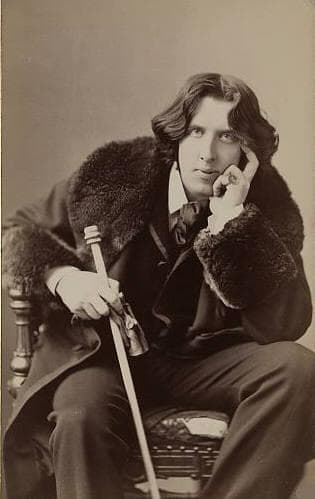
Oscar Fingal O'Fflahertie Wills Wilde was an Irish poet and playwright. After writing in different forms throughout the 1880s, he became one of the most popular playwrights in London in the early 1890s. He is best remembered for his epigrams and plays, his novel The Picture of Dorian Gray, and the circumstances of his criminal conviction for gross indecency for consensual homosexual acts in "one of the first celebrity trials", imprisonment, and early death from meningitis at the age of 46.







