“He was a liar by instinct, a gambler by profession, and it was probably a congenital moral obliquity.”
— Description of Flem Snopes, the central character who embodies ruthless ambition.

William Faulkner (1940)
Genre
Literary Fiction
Reading Time
600 min
Key Themes
See below
Sign in to track this book
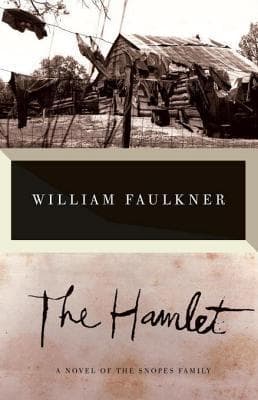
In post-Civil War Mississippi, Flem Snopes dismantles a Southern community, replacing its old ways with his own cunning and greed.
The novel begins in Frenchman's Bend, where Will Varner, the shrewd patriarch, owns much of the land and runs the local store and mill. Ab Snopes, a horse trader known for barn burning, arrives with his son, Flem Snopes. Flem is a quiet, mysterious man who immediately starts working in Varner's store. Flem's presence is unsettling. He quickly becomes a diligent, if cold, worker. His ambition shows as he quietly gains favor with Varner, watching the community with a detached manner. His arrival starts a major shift in power for the isolated, post-Civil War town.
Flem continues his quiet plans. He arranges to marry Eula Varner, Will Varner's beautiful, sensual, and promiscuous daughter. Eula becomes pregnant by an unknown father, and Flem uses this. He blackmails Jody Varner, Eula's brother, by threatening to reveal the scandal. To save the family's name, Jody agrees to let Flem marry Eula. As part of the deal, Flem gets the Varner store and a large sum of money. This shows Flem's ruthless practicality and his ability to use social disgrace for his own gain. The community knows about the scandal but cannot stop Flem's cleverness. He strengthens his hold on the economic center of Frenchman's Bend.
After Flem gets the store, many of his Snopes relatives start arriving in Frenchman's Bend. Each finds a place in the community, often with Flem's help. These include Mink Snopes, a violent and poor farmer; I.O. Snopes, a schoolteacher who steals money; and Ike Snopes, the 'idiot' who develops a tragic love for a cow. Flem's relatives are often odd, untrustworthy, and disruptive. They further upset the town's traditional social structure. Their arrival shows how Flem's influence spreads, as he replaces the old leaders with his own family, creating a new, chaotic social order centered on himself.
A moving and disturbing part of the story involves Ike Snopes, a mentally disabled man who deeply loves a cow. He builds a shelter for her, feeds her, and treats her with a gentleness he cannot show to people. The community reacts with amusement or disgust. Ratliff, the sewing machine salesman, feels great pity for Ike. Locals, especially Lump Snopes, take advantage of Ike's vulnerability, charging people to see his strange devotion. This part of the story, though seemingly a side plot, shows the moral decay and exploitation in Frenchman's Bend. Ike's pure, though misguided, love contrasts with the calculating nature of Flem and many other Snopeses.
Mink Snopes, an independent but poor farmer, has a bitter fight with his neighbor, Houston, over a stray cow. When Houston refuses to return the cow or pay Mink, Mink shoots Houston. The murder is brutal and planned, driven by Mink's strict sense of justice and his inability to accept being cheated. Mink is caught and imprisoned. This event shows the violent side of the Snopes family and the community. Flem, though Mink's cousin, does nothing to help him. This shows Flem's cold indifference to family ties when they do not serve his own interests. Mink's fate sets up his later return for revenge in future novels.
Flem Snopes arranges for a herd of wild, untamed Texas ponies to arrive. A cowboy brings them, and Flem releases them in the Varner pasture. The ponies are beautiful but dangerous, and Flem quickly sets up an auction. Ratliff and Bookwright warn about their wild nature, but the men of Frenchman's Bend, wanting a bargain and driven by pride, try to buy and tame them. The auction turns into chaos as the horses buck, kick, and injure the buyers. This causes much damage and financial ruin for many. Flem sits silently, watching the scene he created. He has skillfully avoided responsibility and profited from the villagers' foolishness.
During the chaotic spotted horse auction, Henry Armstid, a poor but proud farmer, wants to get one of the ponies. He bids on a very wild mare. While trying to break it, he is badly hurt, breaking his leg. Despite his wife's pleas and his injuries, Armstid refuses to give up the horse. This shows the destructive pride and stubbornness of the community members. He is left financially ruined and physically disabled, a direct victim of Flem's plan. Flem, seeing Armstid's situation, publicly offers him a dollar for the mare. This further shows Flem's manipulative nature and the villagers' inability to escape his influence.
Even V.K. Ratliff, the usually clever sewing machine salesman, falls for Flem's plans. Ratliff, with Bookwright and Armstid, tries to outsmart Flem in a land deal involving a supposedly valuable but worthless piece of property. Flem sells them the land, claiming it has buried gold. The three men spend much time and effort digging but find nothing. Flem, having already sold the land once, then sells it again to a naive newcomer. This proves his ability to profit repeatedly from the same trick. This event is a blow to Ratliff's pride and finances. It solidifies Flem's reputation as the ultimate con artist in Frenchman's Bend, seemingly unbeatable in his cleverness.
After years of gaining wealth and power, Flem Snopes decides to leave Frenchman's Bend. He has married Eula, taken control of the Varner store and much of the Varner property, and placed his Snopes relatives in various positions. He has effectively taken over the economic and social life of the community. His departure is a strategic move; he is going to Jefferson, the county seat, to continue his rise. He leaves behind a community permanently changed by his presence, drained of its resources and old values. His last act in Frenchman's Bend is to sell the worthless 'gold mine' land, completing his final trick before moving on to bigger conquests.
Flem's departure leaves Frenchman's Bend a hollow version of its former self. Its traditional values and social structures are gone. The many Snopes family members, now settled, continue their influence, though in a more scattered way without Flem's central control. Will Varner is lessened, his authority taken. The community has learned a hard lesson in new economic realities, where cleverness and exploitation win over tradition and honesty. The novel ends with the feeling that Flem's influence is a lasting mark on Frenchman's Bend, paving the way for his further rise in Jefferson and the ongoing story of the Snopes family.
The Antagonist/Protagonist
Flem begins as a poor, unknown man, silently working in Varner's store, and systematically rises to control the economic life of Frenchman's Bend before moving on to Jefferson.
The Supporting
Ratliff attempts to understand and resist Flem's influence, ultimately realizing the futility of fighting such amoral cunning, leading to a more resigned perspective.
The Supporting
Varner begins as the undisputed leader of Frenchman's Bend but is gradually outmaneuvered and diminished by Flem Snopes, losing much of his power and property.
The Supporting
Eula remains largely unchanged throughout the novel, a constant embodiment of raw, untamed female beauty and sexuality, used as a pawn by Flem.
The Supporting
Jody attempts to maintain his family's position but is consistently outmaneuvered and intimidated by Flem Snopes, leading to his increased anxiety and diminished influence.
The Supporting
Ike's arc is static in his innocence and devotion, but his story serves to reveal the community's capacity for both cruelty and fleeting sympathy.
The Supporting
Mink's arc involves his descent into murder and subsequent imprisonment, driven by his unyielding pride and sense of injustice.
The Supporting
Armstid goes from a struggling farmer to a physically crippled and financially ruined man due to his participation in Flem's horse auction.
The novel shows the breakdown of traditional Southern farming society, represented by figures like Will Varner. This is replaced by a new, dishonest, and predatory form of capitalism seen in Flem Snopes. Flem's rise through cleverness, exploitation, and ignoring community ties means the end of an era where land and family line determined power. His systematic gathering of property and influence, often at the expense of established families, shows the economic and social changes of the post-Reconstruction South. Here, smartness and ruthlessness became the new way to get ahead.
“A good name is better than riches. Not for Flem. He had no name and he had no riches. He was just Flem.”
Cunning is Flem Snopes's main tool. He expertly uses the weaknesses, desires, and moral flaws of the Frenchman's Bend community. From blackmailing Jody Varner about Eula's pregnancy to setting up the disastrous spotted horse auction, Flem always manipulates situations for his own financial gain. The villagers' greed, pride, and even their simple minds all help Flem. This theme looks at how easily people can be manipulated and the destructive power of uncontrolled, dishonest ambition in a community unable to fight it.
“He just watched them, his face expressionless, his chewing steady and constant. He was looking at something they could not see, did not even know was there.”
Faulkner explores good and evil in complex ways, often blurring their distinctions. Flem Snopes embodies a cold, calculating evil, driven by greed rather than ill will. Characters like Mink Snopes show a more basic, violent evil that comes from a twisted sense of fairness. In contrast, Ike Snopes's pure, innocent love for his cow is a stark, almost absurd, counterpoint to the widespread corruption. The community's involvement in Flem's schemes and their exploitation of Ike further complicate the moral picture. This suggests that evil is not just an outside force but also a flaw within the community itself.
“Man, man. If I had just thought. If I had just been smart enough to just not think.”
Sexuality, especially female sexuality, is a strong and disruptive force in the novel. Eula Varner, with her great beauty and sensuality, is a primal figure of fertility who helps Flem rise. Her pregnancy outside marriage is the scandal Flem uses to marry her and get property. This theme also includes Ike Snopes's strange and touching love for his cow, which, though innocent, is viewed through the lens of human sexuality by the villagers. Sexuality here is often separate from love or morals; it acts as a raw, amoral energy that changes lives and fortunes.
“She was not a woman. She was a landscape.”
Frenchman's Bend is shown as a close, isolated community, at first connected by shared traditions and family ties. But Flem Snopes's arrival and the subsequent influx of his various Snopes relatives break this harmony. The community's inability to stop Flem's plans, their individual greed at the horse auction, and their exploitation of people like Ike Snopes, all show a breakdown of real community in favor of self-interest. The village's isolation, once part of its unique character, ultimately makes it open to outside, predatory forces.
“There was no place in the whole country where a man could go and not find a Snopes.”
A recurring family of characters representing the erosion of traditional values and the rise of amoral opportunism.
The Snopes clan is more than just a family; it is a collective entity that embodies the disruptive forces invading Frenchman's Bend. Each Snopes relative, from the inscrutable Flem to the violent Mink and the innocent Ike, brings a unique form of corruption, eccentricity, or vulnerability. Their proliferation throughout the community, often under Flem's patronage, symbolizes the systematic overthrow of the old social order and the replacement of traditional values with a new, chaotic, and self-serving ethos. Their collective presence acts as a narrative engine for the novel's central conflict.
A symbol of wild, untamed nature and the destructive allure of false promises and greed.
The wild Texas ponies brought by Flem Snopes are a powerful symbol. They represent untamed, chaotic nature that cannot be easily domesticated or controlled, much like the forces Flem unleashes upon the community. Their beauty and the promise of a cheap bargain lure the men of Frenchman's Bend into a destructive frenzy, leading to injury, financial ruin, and social chaos. The horses embody the destructive consequences of the villagers' own greed and folly, skillfully exploited by Flem. They are a physical manifestation of the disruption and exploitation that Flem brings.
A symbol of deceptive promises and the gullibility of human desire for easy wealth.
The worthless piece of land that Flem Snopes sells to Ratliff, Bookwright, and Armstid, claiming it contains a buried gold mine, serves as a potent symbol of deceptive appearances and the human tendency to fall for get-rich-quick schemes. It highlights Flem's ultimate cunning, as he not only profits from the initial sale but also manages to resell the same worthless property. The 'gold mine' represents the illusory nature of wealth sought through shortcuts and the enduring gullibility that allows a manipulator like Flem to thrive, even among supposedly shrewd individuals.
A symbolic force of nature, representing primal fertility and the disruption of social order.
Eula Varner's extraordinary beauty and unbridled sexuality function as a powerful symbolic device. She is less a character with agency and more a force of nature, a 'landscape' of primal fertility that exists outside conventional morality and social constraints. Her pregnancy out of wedlock is the catalyst for Flem's marriage of convenience and his subsequent acquisition of the Varner store. Her presence disrupts the social fabric not through intentional action, but through her inherent, irresistible power, which men like Flem exploit for their own calculating ends, highlighting the contrast between raw, natural force and human manipulation.
“He was a liar by instinct, a gambler by profession, and it was probably a congenital moral obliquity.”
— Description of Flem Snopes, the central character who embodies ruthless ambition.
“The past is never dead. It's not even past.”
— A famous line reflecting Faulkner's exploration of history's enduring impact on the present.
“He was not a man to be hurried; he was a man who would take his time, who would wait.”
— Describing Flem Snopes's patient, calculating nature in his rise to power.
“There is no such thing as was—only is.”
— A philosophical reflection on the persistence of the past in the present.
“He was like a man who had been born old and had grown younger.”
— Description of a character's unusual aging process, symbolizing decay or inversion.
“The only thing worth writing about is the human heart in conflict with itself.”
— Faulkner's often-cited view on literature, though paraphrased from his Nobel speech.
“He was not interested in money for what it would buy; he was interested in money for what it would do.”
— Highlighting Flem Snopes's obsession with power and control rather than material wealth.
“The sound of the axe in the woods, the smell of woodsmoke, the taste of spring water.”
— Evocative imagery of rural life in Yoknapatawpha County, contrasting with Snopes's corruption.
“He was a man who would not be hurried, who would take his time, who would wait.”
— Repeated motif emphasizing Flem Snopes's deliberate, manipulative approach.
“There is a might-have-been which is more true than truth.”
— Reflecting on alternative realities and the weight of unfulfilled possibilities.
“He was like a man walking in his sleep, who wakes to find himself in a strange place.”
— Describing a character's disorientation or moral confusion in the changing South.
“The old order changeth, yielding place to new.”
— Allusion to Tennyson, capturing the theme of societal shift in the post-Civil War South.
“He was not a man to be trusted with anything that he could turn to his own advantage.”
— Warning about Flem Snopes's opportunistic and untrustworthy nature.
“The land was not dead; it was only sleeping.”
— Symbolic hope for renewal in the face of decay and exploitation.
Ready to see how well you understood this book? Take our interactive quiz with 10 questions.
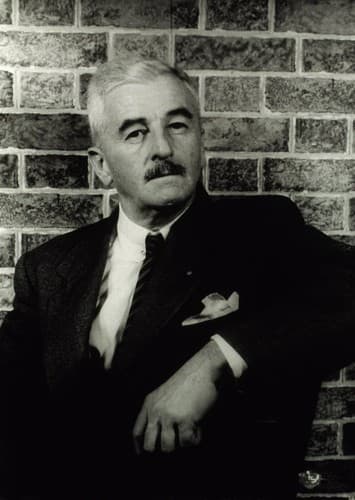
William Cuthbert Faulkner was an American writer known for his novels and short stories set in the fictional Yoknapatawpha County, based on Lafayette County, Mississippi, where Faulkner spent most of his life. A Nobel laureate, Faulkner is one of the most celebrated writers of American literature and often is considered the greatest writer of Southern literature.







