“The wind outside nested in each tree, prowled the sidewalks in invisible treads like unseen cats.”
— Opening line setting the eerie Halloween atmosphere.

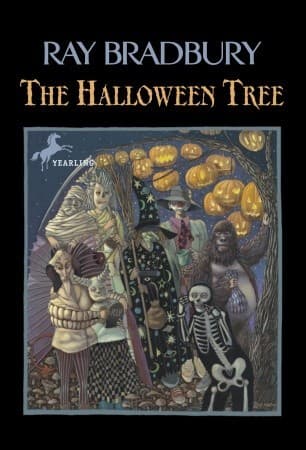
Ray Bradbury (1972)
Genre
Fantasy / Children's / Science Fiction / Young Adult
Reading Time
120 min
Key Themes
See below
Sign in to track this book
On a Halloween night, a mysterious figure guides eight boys on a fantastical, time-traveling quest across ancient civilizations to rescue their friend Pipkin and find out about the history of Halloween.
On Halloween night, a group of eight boys, including Tom Skelton, Ralph Bengstrum, and Wally Babb, put on their costumes and gather at a meeting spot. They are excited for trick-or-treating and the annual bonfire, but they are waiting for their friend, Pipkin, who is always late and often sick. They decide to meet him at the old, haunted house on the edge of town, a place known for being spooky. As they get close, they hear Pipkin's cough and see a shadowy figure, later Mr. Moundshroud, at the house. Suddenly, Pipkin disappears, seemingly swept away by an unseen force, leaving his friends confused and scared.
Inside the old haunted house, the boys meet the gaunt, mysterious Mr. Moundshroud, who seems to control the shadows. He says he is waiting for Pipkin, implying Pipkin is in trouble. Moundshroud leads them outside to a huge, old tree, the Halloween Tree, from which hang hundreds of carved pumpkins, each glowing. He explains that these pumpkins are like the boys' souls and that Pipkin's soul, a single pumpkin, is flickering and in danger of going out. To save Pipkin, they must understand Halloween itself.
Mr. Moundshroud, with a wave of his hand, makes a giant kite of leaves, which carries the boys through time and space. Their first stop is ancient Egypt, where they watch a pharaoh's funeral and the process of mummification. They learn about the Egyptian belief in the afterlife, preserving the body for the soul, and the fear of a soul being lost. Moundshroud explains that this practice, though different, shares a common idea with later Halloween traditions: remembering the dead. The boys start to understand the ancient roots of their holiday.
Next, the boys are taken to ancient Celtic lands, where they see the Druids celebrating Samhain, the start of Halloween. They see bonfires, sacrifices, and the belief that on this night, the barrier between the living and the dead thins, allowing spirits to cross over. Moundshroud explains how the Celts left food out for spirits, lit fires to guide them, and wore disguises to keep away evil entities. This part emphasizes the harvest, the fear of winter, and respect for ancestors, showing how these things became the traditions they now practice on Halloween.
The kite then carries the boys to ancient Rome, where they see harvest festivals, specifically the Feast of Pomona, the goddess of fruit and trees. They see masked people, games, and offerings to the gods for good harvests. Moundshroud says Roman traditions, especially those with apples and nuts, mixed with existing Celtic Samhain practices as the Roman Empire grew. This mix of cultures and beliefs added to the customs that would become modern Halloween, showing the boys how different civilizations contributed to their holiday.
Their journey becomes eerie as they land atop Notre Dame Cathedral in medieval France, surrounded by gargoyles. Moundshroud explains how the Christian church, to convert pagans, often used existing traditions and festivals, reinterpreting them. All Saints' Day and All Souls' Day became Christian versions of Samhain, a time to honor saints and pray for the souls of the dead. The gargoyles, he explains, protected against evil spirits and reminded people of the darker parts of the spiritual world, connecting pagan fears and Christian beliefs.
Finally, the kite lands in Mexico, where the boys see the joyful and colorful celebrations of Día de los Muertos (Day of the Dead). They see families picnicking at gravesides, sugar skulls, marigolds, and altars with offerings. Moundshroud says the Mexican belief is that death is a natural part of life and that the dead are honored and remembered with happiness rather than fear. This experience contrasts with some of the more fearful aspects of earlier traditions, showing the boys a different, celebratory way to remember the dead, and adding to their understanding of the human need to acknowledge death.
Throughout their journey, Pipkin's pumpkin on the Halloween Tree has been growing dimmer, showing his weakening life force. Moundshroud says Pipkin is barely alive in the house, his spirit connected to his body. The boys realize that their adventure was not just a lesson, but a race against time to gather enough 'life' or understanding to save their friend. Moundshroud explains that Pipkin's life is fading fast, and only a big act can bring him back. He hints that a sacrifice is needed.
Back at the Halloween Tree, with Pipkin's pumpkin barely glowing, Mr. Moundshroud gives the boys a choice: let Pipkin die, or each of them give a year of their own lives to save him. Without hesitation, because they love their friend, the boys agree. One by one, they touch Pipkin's pumpkin, and a year of their life force transfers to him. As they do, the pumpkin glows brighter, and Moundshroud confirms that Pipkin's life has been restored. The boys, though now a year 'older' in spirit, are relieved and happy.
Pipkin, now healthy, comes out of the house, unaware of his friends' sacrifice. He is simply happy to be alive and rejoin them. Mr. Moundshroud, his mission done, says goodbye to the boys, disappearing into the shadows. The boys, changed by their journey, now understand that Halloween is not just about costumes and candy, but is a mix of human history, a celebration of life, death, and remembrance across thousands of years. They walk home, no longer just trick-or-treaters, but people who know about ancient traditions, carrying the true spirit of Halloween within them.
The Protagonist
From a typical trick-or-treater, Tom evolves into a keeper of ancient knowledge, understanding the profound meaning behind Halloween.
The Supporting
Pipkin's arc is largely external, as his health declines and is then restored through the actions of others, symbolizing the cycle of life and death.
The Antagonist/Mentor
Moundshroud remains largely unchanged, serving as a constant, timeless entity who facilitates the boys' transformation.
The Supporting
Like the other boys, Ralph gains a profound understanding of Halloween's historical and cultural significance.
The Supporting
Wally, too, moves from a superficial understanding of Halloween to a deeper appreciation of its historical and emotional weight.
The Supporting
J.J.'s character arc mirrors the others, deepening his understanding of Halloween's ancient roots and the value of friendship.
The Supporting
Their collective arc involves growing from simple trick-or-treaters to individuals with a profound, shared understanding of death, life, and history.
The main idea of the book is about understanding death not as an end, but as a part of life and a concept humanity has dealt with throughout history. Moundshroud's journey shows different cultural ways of looking at death, from Egyptian mummification to Celtic Samhain and Mexican Día de los Muertos. The flickering pumpkin for Pipkin's life constantly reminds the boys that life is fragile and that humans universally want immortality, whether through remembrance, spiritual continuation, or physical preservation. The boys' sacrifice for Pipkin shows the value of life and the power of combined effort over death.
“"For once you knew what death was, you were no longer afraid of it. But for once you knew what life was, you were no longer afraid of living."”
The whole story is a lesson in how Halloween has changed through history and culture. Moundshroud guides the boys through different civilizations and their death-related festivals, showing how traditions (Egyptian mummification, Celtic Samhain, Roman harvest festivals, medieval Christian observances, Mexican Day of the Dead) all contributed to the holiday they know. This idea explains Halloween, showing it not as a simple night of candy and costumes, but as a rich mix of humanity's ancient fears, celebrations, and lasting need to connect with the past and remember the dead. The boys' journey is one of historical and cultural education.
“"Don't you see? All these things are the same thing! All Hallow's Eve, All Saints' Day, Halloween, the Day of the Dead, Samhain, the Feast of Pomona, the Mummification of the Ancient Egyptians..."”
The strong bond between the nine boys, especially their love for the frail Pipkin, drives the main conflict and how it is solved. Their journey through time is because they want to save their friend. This idea ends with the act of sacrifice, where each boy willingly gives a year of his own life to restore Pipkin's. This act shows how deep their friendship is, proving that true friendship means being selfless and willing to give everything for those you care about. It makes their bond more than just childhood companionship; it is a heroic, life-affirming act.
“"One year from each of you, for him. That's eight years of life. Enough to save a life, to be sure."”
Ray Bradbury, through Mr. Moundshroud, uses storytelling as the main way to teach and change. Moundshroud's descriptions and the journey itself are immersive stories that take the boys and the reader through time and culture. The book celebrates imagination, both in the boys' costumes and in how Moundshroud creates ancient worlds. It suggests that understanding history and complex ideas is more engaging and memorable through imaginative, narrative-driven experiences, reinforcing that stories connect us to our past and shape how we understand the present.
“"The wind. It is an old wind, boy. It has seen many things pass by. And it is a storyteller."”
A physical manifestation of life, death, and the collective human spirit
The Halloween Tree is a colossal, ancient tree outside the haunted house, from which hundreds of carved pumpkins hang, each representing a soul. It serves as a central symbol and plot device, physically linking Pipkin's fading life force to a specific pumpkin. As Pipkin's pumpkin flickers, it creates urgency and a visual representation of his predicament. The tree itself embodies the deep roots of Halloween, connecting all the various historical traditions into one organic whole. It's Moundshroud's domain and the place where the ultimate sacrifice is made, making it a sacred and powerful focal point.
A magical vehicle for time and space travel
The kite, fashioned from autumn leaves and controlled by Mr. Moundshroud, is the primary means of transportation for the boys through different historical periods and geographical locations. It is a fantastical element that allows for the episodic structure of the plot, enabling the boys to witness the origins of Halloween traditions firsthand. More than just transport, the kite symbolizes the journey of discovery and the ephemeral, wind-swept nature of time itself, carrying the boys through the 'winds of history' to uncover ancient truths.
Symbols of identity, transformation, and cultural connection
The boys' Halloween costumes (skeleton, mummy, witch, monster, gargoyle, ghost, beggar) are more than mere disguises; they are integral to the narrative. Each costume subtly links to one of the historical periods or themes explored during their journey (e.g., the mummy to Egypt, the gargoyle to medieval Europe, the skeleton to death itself). The costumes also represent the boys' initial, superficial understanding of Halloween, which is then deepened by their experiences. They serve as a constant reminder of the holiday's playful yet profound nature, and how dressing up connects individuals to a collective human experience of confronting and celebrating life and death.
A visual metaphor for Pipkin's fading life and the urgency of the quest
Pipkin's pumpkin, hanging on the Halloween Tree, is a powerful visual metaphor for his precarious health and fading life force. Its dimming light and occasional sputtering create a constant sense of urgency and tension throughout the story. It is a tangible representation of the abstract concept of a soul or life, making Pipkin's plight immediate and relatable for the boys. The pumpkin's state directly dictates the pace and stakes of their journey, culminating in its restoration after the boys' sacrifice, symbolizing the triumph of life and friendship.
“The wind outside nested in each tree, prowled the sidewalks in invisible treads like unseen cats.”
— Opening line setting the eerie Halloween atmosphere.
“The first thing you learn in life is you're a fool. The last thing you learn in life is you're the same fool.”
— Mr. Moundshroud reflecting on human nature.
“They were all in love with death. They were all in love with dying. They were all in love with being dead.”
— Describing the boys' fascination with Halloween and mortality.
“Everything that ever was, is; everything that ever will be, is; and everything that ever will be, was.”
— Mr. Moundshroud explaining the timeless nature of Halloween.
“The Halloween Tree stood in the black grass by the old dark house, and it was hung with a thousand pumpkins.”
— Introduction of the central, magical tree.
“They ran like a dark river, a black tide, down the hill, under the trees, toward the town.”
— The boys rushing out on Halloween night.
“Death is the mother of beauty; hence from her, alone, shall come fulfillment to our dreams and our desires.”
— Mr. Moundshroud philosophizing during their journey.
“The wind was a torrent of darkness among the gusty trees.”
— Descriptive passage enhancing the spooky mood.
“They were not afraid of the dark. They were afraid of what was in the dark.”
— Highlighting the boys' fears and curiosity.
“Halloween is a time of ghosts and goblins, but it is also a time of memories.”
— Mr. Moundshroud teaching about the holiday's deeper meaning.
“The past is a ghost, the future a dream, and all we ever have is now.”
— Reflection on time and existence during their travels.
“They flew like black leaves on a black wind, over the town, over the world.”
— The boys traveling through time and space.
“Every man's life is a ghost story.”
— Mr. Moundshroud's cryptic insight into human life.
“The pumpkins grinned with fiery eyes, and the wind sang in the wires.”
— Vivid description of Halloween decorations and sounds.
Ready to see how well you understood this book? Take our interactive quiz with 10 questions.
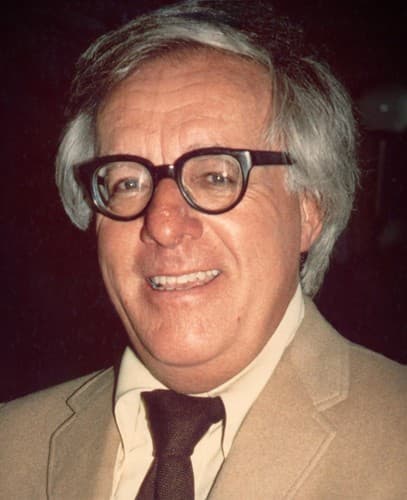
Ray Douglas Bradbury was an American author and screenwriter. One of the most celebrated 20th-century American writers, he worked in a variety of modes, including fantasy, science fiction, horror, mystery, and realistic fiction.







