“The man in black fled across the desert, and the gunslinger followed.”
— Opening line of the novel, setting the chase.

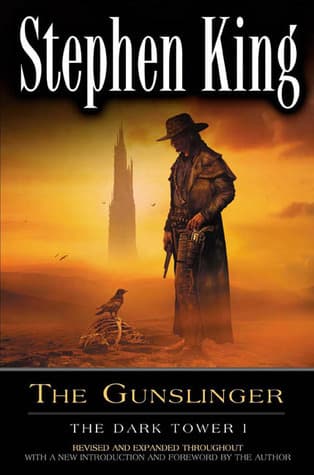
Stephen King (1982)
Genre
Thriller / Fantasy / Science Fiction
Reading Time
240 min
Key Themes
See below
Sign in to track this book
In a desolate world like our own, Roland, the last gunslinger, pursues the Man in Black. He forms an unexpected bond with a boy from another Earth while on a quest about good, evil, and fate.
Roland Deschain, the last gunslinger, chases the Man in Black across a huge, burned desert. He has one goal, the Tower, and believes the Man in Black has important answers. Roland's journey is hard, with extreme heat, thirst, and memories of his past. He finds an empty way station, a remnant of a forgotten world, where he meets an old man named Brown and his raven, Zoltan. Roland stays with Brown for a while, sharing stories and resting before continuing his chase. The desert stretches endlessly before him, showing his solitary quest.
Continuing his journey, Roland arrives at another way station, truly abandoned except for the skeletons of its former residents. Here, he finds a young boy named Jake Chambers. Jake, scared and confused, says he is from New York City in another world and died after being pushed into traffic. Roland, curious and sensing Jake's connection to his quest, takes the boy with him. Jake explains his memories are broken and that the Man in Black was involved in his arrival, making Roland believe more that Jake is a key part of his puzzle. Their bond starts to form in the empty land.
Roland and Jake travel to an old, desolate place called the Golgotha, where a mysterious 'oracle' is said to live. This oracle is a demonic being in a stone circle, speaking in riddles and showing glimpses of the future and past. Roland talks with the oracle, seeking information about the Man in Black and the Tower. The oracle's words are vague, hinting at Roland's fate and the sacrifices he will make. During this meeting, Roland also has clear memories of his youth in Gilead, his gunslinger training, and the tragic events that led to his world's collapse, adding to his past burdens.
Roland and Jake arrive at the strange, isolated town of Tull. The townspeople, led by the fanatical Preacher Sykes and influenced by the Man in Black, are hostile. Roland meets Alice, a bartender, who is under the Man in Black's control. The Man in Black has tricked the townspeople into thinking Roland is a demon. A violent fight begins when the townspeople, in a rage, attack Roland. He uses his gunslinger skills, leading to a brutal and tragic killing of almost everyone in town. This shows his deadly ability and the Man in Black's destructive power.
After the killing in Tull, Roland and Jake continue their journey, now facing the difficult mountains. The climb is slow and hard, testing their strength. Jake, still bothered by his past and the violence he saw, struggles to keep up, but Roland urges him on, knowing they must make progress. During this climb, Roland shares more about his world and his gunslinger past, making their bond stronger. The harsh environment reflects their inner struggles, with the vast, tall peaks showing the huge task ahead.
As they travel through an underground passage beneath the mountains, Roland tells Jake his full, sad story. He recounts his youth in Gilead, his early gunslinger test, the betrayal by Marten Broadcloak (the Man in Black's disguise), and Marten's affair with Roland's mother. He describes the plot that led to Gilead's fall and the end of his gunslinger order. This confession shows Roland's deep personal pain and what drives his quest for revenge and the Tower. Jake listens, horrified but understanding the weight of Roland's past.
Inside the dark, winding tunnels under the mountains, Roland and Jake meet the terrifying Slow Mutants. These grotesque, deformed creatures are remnants of an old time, made monstrous by radiation or some ancient disease. Roland, with his gunslinger reflexes, protects Jake, killing the creatures quickly. The encounter is a scary test of survival, showing the dangers of their world and the constant threat they face. It also makes Jake rely more on Roland and shows the gunslinger's strong commitment to their shared journey, even in the most horrifying situations.
Coming out of the tunnels, Roland and Jake find themselves at a dangerous gorge with a shaky, old railway handcar. The Man in Black has set a trap: Roland can save Jake, or he can keep chasing. The Man in Black speaks to Roland from across the gorge, giving him a cruel choice. As they cross the gorge, Jake starts to fall. Roland, driven by his single goal of the Tower and the Man in Black, makes a terrible choice, letting Jake fall to his death. This act, of sacrifice or abandonment, deeply affects Roland, but he believes it is necessary for his ultimate aim.
After Jake's death, Roland continues his chase, finally catching the Man in Black at a desolate, ancient circle of standing stones. The Man in Black, whose real name is Walter o'Dim, reveals himself as a powerful sorcerer and a servant of a greater evil. He is not just a target but a guide, controlling Roland's fate. The confrontation is not violent but a battle of wills and words, a psychological duel where the Man in Black reveals broken truths and prophecies, preparing Roland for the next part of his journey.
During their meeting, the Man in Black forces Roland into a deep trance, showing him a vision of the universe, the Beam, and the Dark Tower at its center. He reveals that Roland is stuck in an endless cycle, destined to chase the Tower repeatedly, always failing at the last step. He shows Roland a glimpse of his future companions and the challenges ahead, including doors to other worlds. The Man in Black then puts Roland into a deep, dreamless sleep that lasts ten years. When Roland wakes, the Man in Black is gone, leaving only the bones of a prophet and a single card—the Hanged Man—a mysterious clue for the gunslinger's continued quest.
Roland wakes from his ten-year sleep, confused but with stronger determination. The world has subtly changed around him, yet his goal remains the same. The prophet's bones and the Hanged Man card are the only physical proof of his encounter with the Man in Black. He understands that his journey is far from over and that the Man in Black has simply set him on a new path, with new challenges and allies waiting for him. Roland, the last gunslinger, restarts his quest, heading east towards the sea, driven by the distant promise of the Dark Tower and the answers it holds.
The Protagonist
Roland begins as a lone, vengeful figure and slowly starts to reconnect with humanity through Jake, only to make a devastating sacrifice for his quest, solidifying his solitary path.
The Supporting
Jake transforms from a confused, fearful boy into a brave companion, ultimately becoming a tragic sacrifice for Roland's quest.
The Antagonist
The Man in Black remains largely mysterious, revealing his manipulative nature and prophetic abilities, setting the stage for future encounters.
The Supporting
Brown provides a brief, static moment of humanity for Roland before disappearing from the narrative.
The Supporting
Alice is a victim of the Man in Black's manipulation, leading to her tragic demise.
The Supporting
Sykes' fanaticism leads to the destruction of his town and his own death.
The Mentioned
Zoltan remains a static, symbolic presence.
The Mentioned
Cuthbert is a character from Roland's past, whose memory informs Roland's character.
The Mentioned
Susan is a character from Roland's past, whose tragic fate continues to haunt him.
Roland's chase of the Dark Tower drives the whole story, almost to an obsession. He gives up everything and everyone, including Jake, for his quest. The Man in Black's predictions suggest Roland is in a cycle, fated to repeat his journey. This theme looks at the line between purpose and destructive fixation, and whether Roland truly has free will or is just a piece in a larger, predetermined game. The Tower is an ultimate, almost sacred, goal that controls Roland's every move.
“The man in black fled across the desert, and the gunslinger followed.”
The book is full of Roland's memories of a lost world—Gilead, his fellow gunslingers, and his love, Susan Delgado. These memories are often painful, coming back as Roland travels through the empty land, which itself shows loss and decay. Jake's death adds to Roland's burden of loss, showing the sacrifices he makes and the people he leaves behind. This theme explores how the past shapes the present, and how memory can both drive and haunt the main character.
“Go then, there are other worlds than these.”
Roland's world is harsh, and his survival often comes with a high moral cost. The killing in Tull and, more importantly, his choice to let Jake fall, show the brutal decisions he must make to reach his goal. This theme questions what heroism is and whether the 'end justifies the means.' Roland survives, but his methods are often ruthless, blurring the lines between good and evil. The book makes the reader face the moral impact of Roland's actions and the bleak truth of his dying world.
“The world had moved on.”
Jake's presence, a boy from 'New York City' in another world, introduces the idea of multiple realities and parallel universes. The Man in Black's predictions expand on this, hinting at the Beams and the Dark Tower as the center of all realities. This theme explores how fluid existence is and the idea that Roland's world is just one of many. It sets up the larger universe of the series, suggesting that the borders between worlds are thin and that events in one can greatly affect another.
“He knew he was from another world entirely; he could feel it in his bones.”
Roland starts his journey alone. His brief meetings with Brown show how isolated he is. However, Jake's unexpected arrival creates a hesitant companionship that challenges Roland's chosen solitude. While Roland eventually sacrifices Jake, the relationship temporarily gives him a human connection and a sense of responsibility he had long hidden. This theme explores the human need for connection even in the most desolate situations, and the pain of losing it.
“He thought of himself as a lone wolf, but the boy had become a part of his pack.”
The ultimate, enigmatic goal of Roland's quest.
The Dark Tower functions as the ultimate MacGuffin and the central driving force of the entire series. Its true nature is unknown at this stage, but it is implied to be the nexus of all realities. Roland's obsession with reaching it dictates all his actions, making him sacrifice everything else. It represents a promise of answers, redemption, or perhaps just an end to his quest. Its mystery fuels the narrative and motivates Roland's relentless pursuit across the dying world, giving his journey a profound, almost religious, significance.
Reveals Roland's tragic past and internal struggles.
The narrative frequently uses flashbacks to reveal Roland's traumatic past, particularly his youth in Gilead, his gunslinger training, and the loss of Susan Delgado and his world. These are often triggered by his environment or conversations. Coupled with his internal monologues, these devices provide crucial exposition, developing Roland's character by showing the origins of his hardened demeanor and his driving motivations. They immerse the reader in Roland's psyche and the history of his fallen world, explaining the weight of his quest.
Foreshadows future events and guides Roland's path.
The Man in Black serves as a master manipulator and a source of cryptic prophecies. His influence is felt even when he is absent, subtly guiding events (like in Tull) and setting traps. His direct confrontation with Roland at the end of the book involves visions and revelations about Roland's future, the nature of the Tower, and the cycle he is trapped in. This device not only provides exposition but also establishes the larger mythology of the series and foreshadows the challenges and companions Roland will encounter, linking him to a grander destiny.
A desolate, post-apocalyptic setting reflecting Roland's internal state.
Roland inhabits a desolate, post-apocalyptic world that is 'moving on'—decaying, depopulated, and filled with relics of a forgotten, more advanced civilization. This setting is not merely a backdrop but a character in itself, mirroring Roland's internal desolation and the loss he carries. The barren landscapes, abandoned towns, and mutated creatures emphasize the stakes of Roland's quest and the urgency of reaching the Tower. It creates an atmosphere of pervasive decay and melancholy, underscoring the themes of loss and survival.
“The man in black fled across the desert, and the gunslinger followed.”
— Opening line of the novel, setting the chase.
“Go then. There are other worlds than these.”
— Jake says this before falling to his death, referencing the multiverse.
“I do not aim with my hand; he who aims with his hand has forgotten the face of his father. I aim with my eye.”
— Roland's mantra about gunslinging and focus.
“The world has moved on.”
— A recurring phrase describing the post-apocalyptic setting.
“Death, but not for you, gunslinger. Never for you.”
— The man in black taunts Roland about his cursed immortality.
“You are the world's last adventurer. The last crusader.”
— The man in black describes Roland's role.
“Time is the thief of memory.”
— Reflection on Roland's long journey and fading past.
“The greatest mystery the universe offers is not life but size.”
— Narration pondering cosmic scales and reality.
“I kill with my heart, motherfucker.”
— Roland's fierce declaration during combat.
“There will be water if God wills it.”
— A saying in the desert, reflecting faith and survival.
“The desert was the apotheosis of all deserts, huge, standing to the sky for what looked like eternity in all directions.”
— Description of the harsh landscape Roland traverses.
“He was a romantic, he supposed; if so, it was the romanticism of the knife.”
— Roland's self-reflection on his brutal nature.
“The gunslinger had no idea what the word 'magic' meant, but he knew what the word 'death' meant, and he liked it better.”
— Roland's pragmatic view of supernatural elements.
“You see? Size defeats us.”
— The man in black discusses the insignificance of humanity.
Ready to see how well you understood this book? Take our interactive quiz with 10 questions.
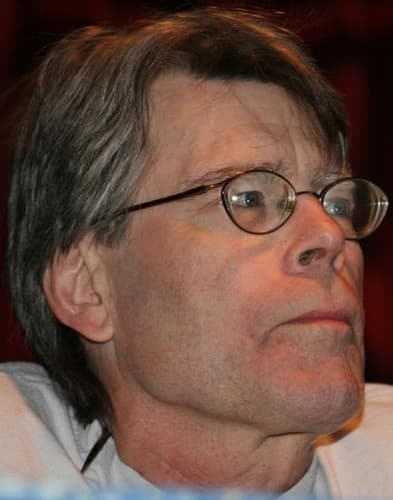
Stephen Edwin King is an American author of horror, supernatural fiction, suspense, crime, science-fiction, and fantasy novels. Described as the "King of Horror", his books have sold more than 350 million copies as of 2006, and many have been adapted into films, television series, miniseries, and comic books. King has published over 65 novels/novellas, including seven under the pen name Richard Bachman, and five non-fiction books. He has also written approximately 200 short stories, most of which have been published in book collections.







