BookBrief
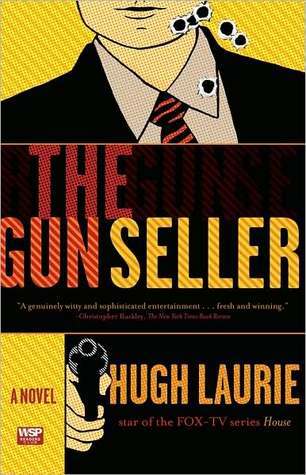
The Gun Seller cover
Archivist's Choice

The Gun Seller

Hugh Laurie (1996)

Genre

Thriller / Mystery

Reading Time

450 min

Key Themes

See below

Track Your Reading

Sign in to track this book

A jaded hitman botches a job to save his target, then falls into a darkly comedic global conspiracy, battling eccentric billionaires and alluring femme fatales to stop an international bloodbath.

Synopsis

Thomas Lang, a cynical but principled ex-Scots Guard mercenary, gets a contract to kill industrialist Woolf. Instead, Lang warns Woolf, which immediately pulls him into a confusing international conspiracy. He becomes involved with a mysterious woman, Sarah, a seemingly good organization called 'The Brotherhood,' and a ruthless arms dealer, Adrian White. Lang faces escalating attacks, double-crosses, and absurd encounters, from a violent fight with a Buddha statue to infiltrating a high-stakes arms deal. He uncovers a plot to sell advanced military helicopters to a rogue nation, planned by White, who is the real force behind the initial assassination attempt and the larger scheme. Lang must act quickly to stop the deal, rescue Sarah, and expose the conspirators, all while trying to trust people in a world where everyone has a hidden agenda. In a final showdown at an airport, Lang disrupts the arms transfer, but White escapes, leaving Lang to consider the conspiracy's true scale and Sarah's role.
Reading time
450 min
Difficulty
Medium
Pacing
Fast
Mood
Witty, Suspenseful, Humorous, Cynical
✓ Read this if...
You enjoy British dry wit, intricate spy thrillers with a comedic edge, and protagonists who are constantly in over their heads.
✗ Skip this if...
You prefer serious, gritty thrillers without humor, or find convoluted plots frustrating.

Plot Summary

The Contract and the Warning

Thomas Lang, an ex-Scots Guards officer now a freelance mercenary, is offered a large sum in a Swiss hotel to kill American industrialist Alexander Woolf. Lang, despite his job, has a moral code and dislikes the idea of killing Woolf. He decides to warn Woolf instead, approaching him at his hotel. Woolf, initially skeptical, is convinced by Lang's sincerity and specific details. This act of defiance starts a chain of events, immediately drawing Lang into a complex and dangerous situation beyond a simple contract killing. His good deed quickly makes him a target.

The First Attack and the Mysterious Woman

Soon after warning Alexander Woolf, Thomas Lang is ambushed in his hotel room. He barely escapes a brutal attack, showing his combat skills. Later, a beautiful and mysterious woman, Sarah Woolf, introduces herself as Alexander's daughter. Sarah is suspicious of Lang's motives but also curious. She warns him that his intervention has made him a person of interest to dangerous people, including her father's security and potentially the original contractors. Lang is drawn to Sarah, despite the clear danger she represents, and their first interactions are tense and full of veiled suspicions, hinting at deeper layers to the conspiracy.

Buddha and the Bungalow

Following a lead from Alexander Woolf, Thomas Lang investigates a bungalow said to hold clues. He finds it's a trap. A heavily armed and agile attacker confronts him, using a large Buddha statue as a weapon. Lang fights a desperate, comical, yet brutal battle, eventually stopping his attacker. This strange encounter highlights the unusual threats he faces. The bungalow offers little concrete information but confirms that powerful and eccentric people are involved, and Lang is now squarely in their sights, with the stakes rising beyond a simple assassination attempt.

The Arms Deal and the Conspiracy

As Thomas Lang investigates, he uncovers evidence of a massive, illegal arms deal involving advanced weapons. A shadowy organization runs this deal, and Alexander Woolf appears to be a key player, or at least a target connected to it. Lang realizes the initial assassination contract was just a diversion or part of a much larger, more dangerous puzzle. The conspiracy involves not only wealthy industrialists but potentially international intelligence agencies and terrorist groups. The stakes are no longer just about one man's life but about preventing a global disaster, with the arms deal threatening to destabilize entire regions.

Meeting the Mastermind: Adrian White

Thomas Lang eventually meets Adrian White, the ruthless and intelligent mind behind the illegal arms trade. White is charismatic but utterly cold-blooded, a rich villain who sees human lives as pawns in his schemes for power and profit. During their meeting, White explains his motives and the scope of his operation, mocking Lang's attempts to interfere. He tries to manipulate Lang, offering him a place in his organization, but Lang refuses. This confrontation establishes White as a formidable and dangerous enemy, whose resources and influence seem almost limitless, making Lang's mission very risky.

The Femme Fatale: Alexander Woolf's Secretary

In his search for information, Thomas Lang encounters Alexander Woolf's seemingly innocent secretary. However, she turns out to be another dangerous woman, working for Adrian White or another group within the conspiracy. She tries to mislead Lang, planting false clues and trying to get information from him. Lang, with his experience, sees through her deception, but not before she adds another layer of complexity to the already confusing plot. This encounter reinforces the idea that trust is a luxury Lang cannot afford, and that even seemingly harmless characters can be dangerous players in this high-stakes game of espionage and betrayal.

The Rescue and the Revelation

Sarah Woolf is captured by Adrian White's men, and Thomas Lang starts a daring rescue mission. He navigates through various traps and enemies, showing his resourcefulness and combat skills. During or soon after the rescue, Sarah reveals her true loyalties and involvement in the larger plan. It becomes clear she is not just an innocent bystander or suspicious daughter, but an active participant, possibly working undercover for an intelligence agency, or for her father's own agenda. This revelation deepens Lang's emotional connection to her, but also complicates his understanding of the situation, making her both an ally and a potential problem.

The Confrontation at the Airport

The story's climax happens at a busy international airport, where Adrian White plans to finalize the large arms deal. Thomas Lang, with Sarah Woolf and other unlikely allies, races against time to stop the transaction. The airport becomes a chaotic battleground, with Lang in gunfights, hand-to-hand combat, and daring escapes among the unsuspecting public. The tension is very high as Lang tries to identify the buyers and prevent the weapons from changing hands. This scene blends action and suspense, with multiple groups converging, each with their own goals, leading to a complex and dangerous showdown.

Stopping the Deal and White's Escape

Using quick thinking, force, and tactics, Thomas Lang manages to disrupt Adrian White's arms deal at the airport. He prevents the weapons from reaching their buyers, stopping the immediate threat of international conflict. However, despite Lang's efforts, Adrian White, with his vast resources and cunning, escapes capture. This leaves Lang with a partial victory, knowing he prevented a major disaster, but also with the lingering threat that White remains free, ready to plan his next move. The ending suggests the fight against such powerful figures is never truly over.

Aftermath and Lingering Questions

After the airport confrontation, Thomas Lang feels the intensity of the past few days. He thinks about the people he met, the dangers he faced, and the moral ambiguities of his job. His relationship with Sarah Woolf, now fully aware of her complex role, remains uncertain but important. While the immediate threat is gone, Lang is left with questions about the conspiracy's true extent and the shadowy organizations involved. He knows his actions have drawn him deeper into a world of espionage and danger, and that his life, and perhaps his heart, will never be the same.

Principal Figures

Thomas Lang

The Protagonist

Lang begins as a disaffected mercenary but becomes an unlikely hero, finding a cause greater than himself and grappling with his own moral code and feelings for Sarah Woolf.

Sarah Woolf

The Love Interest/Supporting

Sarah evolves from a mysterious figure to a clear, albeit complicated, ally, revealing her true motivations and deepening her connection with Lang.

Adrian White

The Antagonist

White remains a consistent force of evil, his character serving as the immovable object against Lang's moral force.

Alexander Woolf

The Supporting

Woolf shifts from an intended victim to a source of information, revealing his complex ties to the illegal arms trade.

The Buddha-wielding Assassin

The Mentioned

A minor character, he serves as an initial, memorable physical challenge for Lang.

The Secretary

The Supporting

Her character arc is brief but impactful, evolving from a background figure to a deceptive operative, highlighting the pervasive nature of the conspiracy.

Themes & Insights

Moral Ambiguity and the Nature of Good

The novel explores the blurred lines between right and wrong, especially through Thomas Lang. Despite being a mercenary, Lang has a strong moral code, leading him to warn his target instead of killing him. This 'good' act puts him in a far more dangerous situation, suggesting that good intentions can have complex, unforeseen results. The antagonists, like Adrian White, show a complete lack of morality, highlighting the contrast. Lang's internal struggle to keep his principles in a corrupt world is central, as seen when he refuses White's offer to join his group, choosing a risky path of integrity.

What do you do when the right thing to do is the wrong thing to do?

Thomas Lang (internal monologue)

Deception and Betrayal

Deception is a constant theme in the story, with almost every character hiding secrets or acting under false pretenses. From the initial assassination contract being a front for a larger arms deal, to Sarah Woolf's hidden agenda, and the secretary's trickery, Lang constantly questions appearances. This creates an atmosphere of paranoia and distrust, where alliances are weak and betrayal is always possible. The plot relies heavily on twists and reveals of characters' true motives, keeping both Lang and the reader on edge. Lang's constant need to tell truth from lies drives much of the plot's tension and mystery.

In this game, trust was a currency few could afford.

Narrator

The Absurdity of Violence and Espionage

Despite being a thriller, the book often adds dark humor and absurdity to its portrayal of violence and espionage. The fight with the Buddha-wielding assassin, the quirky dialogue, and Lang's sarcastic internal thoughts point out the ridiculousness of his situations. This comedic undertone keeps the violence from being excessive and instead emphasizes the chaotic, often illogical nature of the spy and criminal world. It suggests that even in life-or-death situations, there is an inherent absurdity to human behavior and conflict, making the story both thrilling and surprisingly funny.

It was just a Buddha statue, but it had a surprisingly good reach.

Thomas Lang (internal monologue)

Global Power and Corruption

The novel explores global power and corruption, mainly through Adrian White's illegal arms trade. It shows how powerful individuals and groups can operate outside national laws, manipulating international relations for personal gain. The arms deal itself poses a significant threat to global stability, showing the far-reaching consequences of unchecked greed and ambition. The story suggests that the world's power structures are often compromised by shadowy figures who prioritize profit over peace, and that even one person like Lang can make a difference against such overwhelming forces, though at great personal risk.

Money talks, but weapons scream. And in this world, everyone was listening.

Adrian White

Plot Devices & Literary Techniques

The MacGuffin (The Arms Deal)

A plot device that drives the narrative forward without being the main focus itself.

The illegal arms deal serves as the primary MacGuffin in 'The Gun Seller'. While it is the central object of conflict and the reason for many characters' actions, its specific details and technicalities are less important than the pursuit of it and the characters' reactions to it. The deal itself is a catalyst that propels Thomas Lang into a world of espionage, danger, and moral dilemmas. It provides the stakes for the international bloodbath Lang tries to prevent, but the focus remains on Lang's journey, his relationships, and his moral choices rather than the intricacies of the weaponry or the transaction itself.

Femme Fatale

A seductive and dangerous woman who ensnares the protagonist.

The novel utilizes the classic femme fatale trope through characters like Sarah Woolf and Alexander Woolf's secretary. These women are beautiful, mysterious, and initially appear to be either victims or allies, but reveal deeper, often deceptive, roles in the conspiracy. They challenge Thomas Lang's trust and judgment, drawing him into dangerous situations while simultaneously captivating him. Sarah Woolf, in particular, embodies this device, as Lang is attracted to her despite knowing she has a hidden agenda, adding a layer of romantic tension and emotional risk to his already perilous mission. Their presence adds to the theme of deception and betrayal.

Red Herring

A misleading clue or character designed to distract the protagonist and the audience.

The initial assassination contract itself acts as a significant red herring. Thomas Lang is led to believe his mission is a simple hit, but his decision to warn Alexander Woolf quickly reveals that the contract was merely a small piece of a much larger and more complex conspiracy. Various minor characters and seemingly important clues also serve as red herrings, diverting Lang's attention and adding layers of confusion to the plot. These diversions keep the reader guessing and mirror Lang's own struggle to discern the truth amidst a web of lies, making the eventual revelations more impactful.

The Unreliable Narrator (Internal Monologue)

The protagonist's subjective and often humorous inner thoughts color the narrative.

While Thomas Lang is the protagonist, his internal monologue often presents a subjective, sarcastic, and sometimes self-deprecating view of events. This makes him an 'unreliable' narrator in the sense that his perspective is filtered through his unique personality and cynical humor, rather than a purely objective account. This device allows the author to inject comedy and character insight directly into the narrative, giving the reader a deeper understanding of Lang's thoughts and feelings, even when he's downplaying the severity of a situation or making light of his own fear. It shapes the reader's perception of the events through Lang's distinctive voice.

Critical analysis

Notable Quotes

It is a truth universally acknowledged that a man in possession of a good fortune must be in want of a wife. A gun is a good fortune. I have a gun. I am in want of a wife. I think I’m going to be sick.

Thomas Lang's cynical internal monologue, subverting a classic opening line.

The problem with being a professional hitman is that you're always having to kill people.

Lang's dry observation on the practicalities of his 'profession'.

There are three kinds of lies: lies, damned lies, and statistics. And then there are things people say in job interviews.

Lang reflecting on the nature of truth and deception in various contexts.

The only thing worse than a man who talks too much is a man who talks too little and then says something really important.

Lang's thoughts on communication and the impact of words.

I’ve always found that the best way to get rid of a temptation is to yield to it.

Lang's philosophical, if morally ambiguous, approach to temptation.

The world is full of people who are trying to make a living, and then there are the people who are trying to make a killing.

Lang's distinction between different motivations in the criminal underworld.

It’s a funny old world, and it’s getting funnier all the time. Or maybe I’m just getting more cynical.

Lang's reflection on the state of the world and his own perspective.

Never trust a man who has more than one watch. He’s either got too much time on his hands or he’s trying to sell you something.

Lang's idiosyncratic 'rules' for judging character.

The past is a foreign country; they do things differently there. And sometimes they come back to haunt you.

Lang's thoughts on the enduring influence of past events.

The trick to surviving in this business is to know when to run, when to fight, and when to pretend you're dead.

Lang's pragmatic advice for navigating dangerous situations.

I often think that the only reason I'm still alive is that I'm too stupid to know when to give up.

Lang's self-deprecating humor about his own resilience.

There's nothing more dangerous than a man who thinks he's doing the right thing, especially when he's wrong.

Lang's observation on the dangers of misguided conviction.

Some people collect stamps, some people collect coins. I collect enemies.

Lang's ironic take on his precarious lifestyle.

The best way to keep a secret is to tell no one. The second best way is to tell everyone, but make sure they don't believe you.

Lang's insights into the art of discretion and misdirection.

Quiz

Test Your Knowledge

Ready to see how well you understood this book? Take our interactive quiz with 10 questions.

10
Questions
~5
Minutes
?
Best Score

Key Questions (FAQ)

Thomas Lang, a freelance mercenary, is hired to assassinate American industrialist Alexander Woolf. Instead of carrying out the hit, Lang warns Woolf, a decision that immediately embroils him in a complex web of international intrigue and danger, setting him against powerful, unseen forces.

About the author