“I will never understand why some people are so afraid of change. Change is the one constant in life.”
— Roger's internal musings about life and his job.

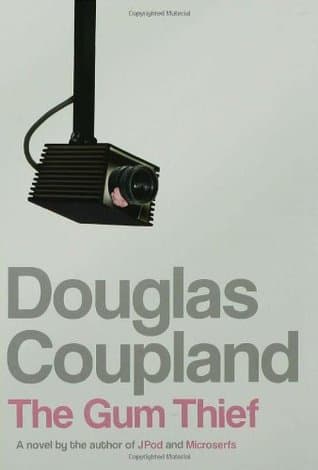
Douglas Coupland (2006)
Genre
Literary Fiction
Reading Time
275 min
Key Themes
See below
Sign in to track this book
In an office supply superstore, a jaded middle-aged man and a post-Goth millennial form an unlikely, transformative relationship through his secret, accurate diary entries written as her, all while navigating the mundane apocalypse of retail and the absurdity of modern life.
Bethany, a young Goth-leaning Staples employee, finds a notebook in the staff room. Inside, she finds diary entries written in the first person, from her own perspective. The author is her older, seemingly unremarkable coworker, Roger. Initially creeped out by this invasion of her inner world, she is also captivated by how accurately Roger has captured her thoughts and feelings, despite their limited interaction. This discovery is the beginning of their unconventional relationship, as Bethany decides to engage with Roger through his writing.
Along with the 'Bethany' diary entries, Roger's notebook contains fragments of a novella he's writing called 'Glove Pond'. This story, set in a suburban, vaguely 1970s world, follows a dysfunctional family and their neighbors, marked by infidelity, ennui, and bizarre, often violent, events. The novella is a mix of literary styles, at times melodramatic, at others darkly humorous. It contrasts with the mundane reality of Roger's life at Staples and offers a glimpse into his creative, troubled mind.
Intrigued and slightly disturbed, Bethany responds to Roger's 'Bethany' entries by writing directly into his notebook. She starts by correcting his perceptions and offering her own thoughts, effectively turning his private journal into a shared space for communication. This unconventional exchange allows them to bypass their awkward in-person interactions at Staples and have deeper conversations about their lives, fears, and observations about the world. It becomes their secret forum, hidden in plain sight within the staff room.
As their exchange continues, Roger reveals more about his past. He is divorced and carries the weight of a failed marriage and loneliness. His job at Staples is merely a way to make money, offering little fulfillment. His writing, particularly 'Glove Pond', is an outlet for his frustrations and a way to process his experiences. He often reflects on the absurdity of modern life and the feeling of being an invisible cog in a giant corporate machine, themes that Bethany understands.
Bethany, through her written responses, talks about her own anxieties. She discusses her strained relationship with her mother, her recent breakup, and her lingering Goth identity, which she feels she's outgrowing. She expresses a sense of aimlessness and fear about her future, particularly the prospect of a life confined to retail work. Her initial bravado gives way to vulnerability, showing a young woman dealing with the complexities of adulthood and searching for meaning beyond her current circumstances.
Despite their age difference and different life experiences, Roger and Bethany find common ground in their shared feelings of alienation and their desire for something more. Their written dialogue allows for honesty and intimacy that would be impossible in their everyday interactions. They become each other's confidantes, offering perspectives and insights that help them both navigate their personal struggles. Their relationship, though never explicitly romantic, becomes significant and supportive.
A sudden and tragic event occurs at the Staples store: a disgruntled former employee commits a violent act, resulting in fatalities and chaos. Afterward, the store closes, and life for Roger and Bethany is thrown into disarray. During the ensuing confusion and investigation, Roger's notebook, which had become the lifeline of their communication, goes missing. This loss leaves both characters feeling isolated and cut off, uncertain if their unique connection can ever be rekindled.
After the tragedy, Roger and Bethany struggle to cope. Roger, having lost his job and his creative outlet, feels even more adrift. Bethany, affected by the violence she witnessed, tries to make sense of the world and her place in it. They are separated by circumstance and the missing notebook, leaving them to process their trauma and confront their individual anxieties without the comfort of their shared dialogue. The incident forces them to re-evaluate their lives and priorities.
Miraculously, after a period of uncertainty, Roger's notebook is returned to him, somewhat damaged. This unexpected recovery reignites hope for both characters. Roger finds a way to get the notebook back to Bethany, and their written exchange resumes. This time, their conversations have the gravity of their recent experiences, leading to even deeper reflections on life, death, and resilience. The notebook becomes a symbol of their enduring connection and the possibility of healing.
As Roger continues to work on 'Glove Pond', it begins to subtly incorporate elements of his and Bethany's shared experiences and newfound wisdom. The novella, initially a chaotic reflection of Roger's inner turmoil, starts to evolve, hinting at themes of connection, understanding, and the search for meaning. While still retaining its quirky and dark humor, 'Glove Pond' becomes less about pure escapism and more about processing the complexities of the human condition, influenced by the unique bond Roger has formed with Bethany.
By the end of the narrative, Roger and Bethany, though still navigating their individual paths, have been changed by their unique relationship and the traumatic events they endured. They continue to communicate through the notebook, their bond solidified by shared understanding and mutual support. While their future remains open-ended, there's a sense of cautious optimism. They have found a way to connect and rebuild, suggesting that even in the most mundane or tragic circumstances, human connections can emerge and offer a path forward.
The Protagonist
Roger evolves from a lonely, disillusioned man to someone who finds unexpected connection and a renewed sense of purpose through his unique relationship with Bethany and his writing.
The Protagonist
Bethany transforms from an aimless and somewhat cynical young woman into someone more self-aware and hopeful, finding a unique connection that helps her navigate her anxieties and envision a more meaningful future.
The Supporting/Mentioned
The 'Glove Pond' narrative voice evolves from purely chaotic to subtly reflecting the growing empathy and understanding Roger gains through his interactions with Bethany.
The Mentioned
N/A (past character, not active in the present narrative)
The Mentioned
N/A (off-stage character, not active in the narrative)
The novel explores the human need for connection, even in isolating environments like a Staples store. Roger and Bethany, seemingly different people, form an intimate bond through a shared notebook. This relationship allows them to bypass superficial daily interactions and have deeper emotional conversations. The tragedy at the store further emphasizes the fragility of life and the importance of human connection in the face of chaos and isolation, showing how their unique bond helps them navigate trauma.
“What do you do when your life is meaningless? You write about it. You find someone else who understands.”
Storytelling, both fictional and autobiographical, is central to the novel. Roger uses writing as an escape, a coping mechanism, and a way to process his inner world. His 'Bethany' entries allow him to empathize and understand, while 'Glove Pond' provides an outlet for his more chaotic impulses. Bethany, in turn, finds her voice and a platform for self-reflection by responding to Roger's entries. Writing and sharing stories becomes a tool that helps both characters confront their realities, find meaning, and rebuild themselves after tragedy.
“A story is just a way of putting the pieces back together, even if they don't fit perfectly.”
Coupland portrays the monotony of retail work and the broader absurdity of contemporary existence. The Staples store, with its endless aisles of office supplies, is a metaphor for the repetitive and unfulfilling aspects of modern life. Roger and Bethany's shared observations often highlight the strange rituals and meaningless tasks that define their days. The contrast between their rich inner lives and the drabness of their external circumstances highlights the novel's commentary on consumer culture and the search for meaning in a world that often feels empty. Even the tragic event at Staples can be seen as an absurd, senseless act in a seemingly senseless world.
“Sometimes I think the whole world is just one big Staples, and we're all just restocking shelves.”
Both Roger and Bethany are on journeys of self-discovery. Roger, in his middle age, deals with a lost sense of self after divorce and a career he doesn't value. His writing, particularly the 'Bethany' entries, allows him to explore different perspectives and re-evaluate his own identity. Bethany, in her twenties, is shedding her Goth phase and trying to figure out who she truly is and what she wants from life. Her interactions with Roger challenge her perceptions and help her articulate her aspirations and fears, guiding her towards a more authentic self. The notebook becomes a space for them to define themselves.
“Who are you, really, when nobody's watching? And who do you become when someone finally does?”
A physical notebook that serves as the central medium for communication between Roger and Bethany.
The notebook is the primary plot device, acting as the catalyst and ongoing forum for Roger and Bethany's unique relationship. It physically contains Roger's 'Bethany' diary entries and 'Glove Pond' novella, which Bethany then reads and responds to by writing directly into the book. This device allows for an intimate, unfiltered, and asynchronous dialogue that bypasses their awkward in-person interactions. Its disappearance after the tragedy and subsequent return symbolize the fragility and resilience of their connection.
The story is largely told through written correspondence, journal entries, and a fictional novella.
The novel employs an epistolary structure, primarily through Roger's journal entries (both the 'Bethany' ones and 'Glove Pond' fragments) and Bethany's written responses within the notebook. This technique offers direct access to the characters' inner thoughts, feelings, and perspectives, creating a sense of intimacy and authenticity. It allows for a layered narrative, where the characters' personal stories intertwine with Roger's fictional creations, blurring the lines between reality and imagination and offering multiple viewpoints on the central themes.
A chaotic, unfinished story written by Roger within the main narrative.
Roger's fictional novella, 'Glove Pond', is a story-within-a-story plot device. It serves multiple functions: it's an outlet for Roger's creative frustrations, a darkly humorous commentary on suburban life, and a psychological mirror reflecting Roger's own anxieties and desires. Its often absurd and violent content contrasts sharply with the mundane Staples setting, providing a glimpse into Roger's imaginative and troubled mind. As the main narrative progresses, 'Glove Pond' also subtly evolves, reflecting Roger's personal growth and his deepening connection with Bethany.
The retail environment as a symbolic backdrop for alienation and connection.
The Staples office supply superstore functions as more than just a setting; it's a symbolic plot device. Its sterile, repetitive, and impersonal environment highlights the themes of modern alienation, consumerism, and the search for meaning in a mundane world. The aisles of office supplies serve as a stark contrast to the rich inner lives of Roger and Bethany, emphasizing their feelings of being overlooked. The store also becomes the site of a significant tragedy, further cementing its role as a backdrop for both the ordinary and the extraordinary aspects of their lives.
“I will never understand why some people are so afraid of change. Change is the one constant in life.”
— Roger's internal musings about life and his job.
“The past is a foreign country; they do things differently there.”
— Roger reflecting on his past and how it feels distant.
“Sometimes I think the whole world is just a giant cosmic joke.”
— Roger's cynical view of his surroundings and existence.
“It's funny how you can spend your whole life trying to be someone, and then one day you realize you already are.”
— Roger's realization about identity and self-acceptance.
“We are all just trying to make sense of a world that doesn't always make sense.”
— Roger's observation about human struggle and understanding.
“The greatest tragedy in life is not death, but life without a purpose.”
— Roger contemplating the meaning of his own life and work.
“You can't go through life wishing things were different. You have to make them different.”
— Roger's thought about taking agency in one's life.
“Every day is a fresh start, a chance to rewrite your story.”
— Roger's optimistic perspective despite his circumstances.
“Love is not about finding someone to live with, it's about finding someone you can't live without.”
— Roger's reflections on the nature of love.
“Books are just proof that humans are capable of working magic.”
— Roger, an avid reader, expressing his appreciation for literature.
“Sometimes the most important conversations are the ones you have with yourself.”
— Roger's internal dialogue and self-reflection.
“The world is full of beautiful things, if you just take the time to notice them.”
— Roger finding beauty in mundane aspects of his life.
“Fear is just a feeling. It doesn't have to control you.”
— Roger grappling with his anxieties and trying to overcome them.
“We're all just trying to find our place in the universe, even if that place is in a gum store.”
— Roger's acceptance of his current situation and search for belonging.
“Life is a series of moments. It's up to us to make them count.”
— Roger's contemplation on the value of individual moments.
Ready to see how well you understood this book? Take our interactive quiz with 10 questions.
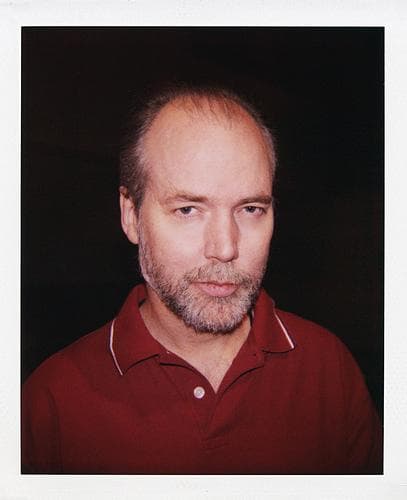
Douglas Coupland is a Canadian novelist and visual artist. He gained international recognition for his 1991 debut novel, "Generation X: Tales for an Accelerated Culture," and has since published numerous critically acclaimed works including "Microserfs," "JPod," and "The Gum Thief." Coupland is celebrated for his sharp, satirical observations on contemporary culture, technology, and consumerism.







