BookBrief
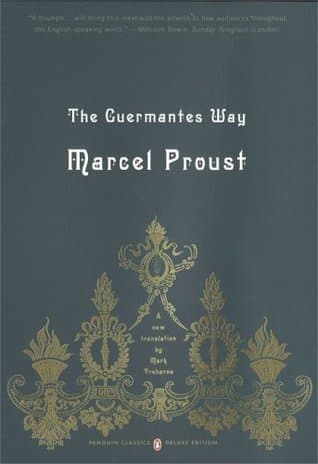
The Guermantes Way cover
Archivist's Choice

The Guermantes Way

Marcel Proust

Genre

Literary Fiction / Philosophy

Reading Time

1200 min

Key Themes

See below

Track Your Reading

Sign in to track this book

In fin-de-siècle Paris, a young man's entry into the aristocratic world becomes a journey through social ambition, desire, and disappointment.

Synopsis

In "The Guermantes Way," the third volume of "In Search of Lost Time," the Narrator, Marcel, leaves his childhood world and moves into Parisian high society. He obsesses over the Guermantes family, especially the elegant Duchess de Guermantes. Through his friendship with Robert de Saint-Loup, the Duchess's nephew, and his grandmother's connections, Marcel enters exclusive salons. He observes social rituals, snobbery, and the hidden lives of this elite class, including Baron de Charlus and Saint-Loup's love life. Marcel's initial awe turns to disappointment as he sees the emptiness and moral compromises under the polished surface. The Dreyfus Affair shows the social and political divisions among the aristocracy. Through his social experiences, Marcel deals with his illness and starts to understand his artistic calling. He realizes that true fulfillment may not be in social climbing but in pursuing art and exploring memory.
Reading time
1200 min
Difficulty
Hard
Pacing
Slow
Mood
Introspective, Observational, Satirical, Melancholy, Philosophical
✓ Read this if...
You enjoy deep psychological introspection, intricate social commentary, and meticulously detailed prose exploring memory, class, and the nature of art. Ideal for those who appreciate the slow burn of literary fiction.
✗ Skip this if...
You prefer fast-paced plots, clear-cut narratives, or direct dialogue over extensive interior monologue and philosophical digressions.

Plot Summary

The Narrator's Obsession with the Guermantes

Marcel and his family move into an apartment in the Guermantes family's Parisian hôtel. This closeness increases Marcel's childhood fascination with the Duchess de Guermantes. He had only seen her briefly in Combray. Now, he often sees her leaving or returning home, watching her with awe and disappointment, as her real appearance often does not match his idealized image. He spends hours studying her movements, clothes, and expressions, trying to understand her aristocratic world. This section shows Marcel's strong desire to enter the exclusive Guermantes society, a desire that will drive much of the story.

Social Aspirations and the Swanns

Marcel's social ambitions lead him to visit Mme Swann's salon, hoping to meet people in higher society. He watches the social climbing and snobbery among her guests, noticing how people are judged by their connections to more prestigious circles. Marcel is drawn to Odette's daughter, Gilberte, with whom he has a complicated past. He feels torn between wanting to impress the Swanns and his deeper longing for the seemingly unreachable world of the Guermantes. His interactions with this social layer show the subtle hierarchies and unspoken rules of Parisian society at the turn of the century.

The Narrator's Grandparents and the Duchess de Guermantes

While walking with his grandmother in the Champs-Élysées, Marcel's grandmother has a severe stroke. In distress, Marcel meets the Duchess de Guermantes. He wants a sign of sympathy from her, someone he sees as the height of grace and nobility. However, the Duchess's reaction is detached, offering only polite condolences before moving to her social engagements. This experience shatters Marcel's idealized image of her, showing the cold, self-absorbed nature of aristocratic society and the gap between his emotional reality and their social facade. This incident marks a significant disappointment for Marcel.

Entry into the Guermantes Salon

Marcel enters the Guermantes' social world through his friendship with Robert de Saint-Loup, the Duchess's nephew, and through his acquaintance with Albertine Simonet and her group. Saint-Loup, a kind aristocrat, introduces Marcel to members of the Guermantes set. Marcel receives his first invitations to the Guermantes' evening parties and dinners, a long-held dream. He feels both thrilled and overwhelmed, observing the guests, their conversations, and their manners. These early visits to the salon show Marcel's intense desire to understand and belong to this exclusive world, even as he notices its superficiality.

The Duke de Guermantes's Salon

Marcel attends a dinner party at the Duke de Guermantes's home, where he meets more aristocratic figures. He observes the Duke, noticing his loud personality, his love of storytelling, and his often coarse humor, which contrasts with the Duchess's refined manner. Marcel is struck by the Duke's casual dismissal of some individuals and his clear snobbery. The dinner shows aristocratic conversation, gossip, and the subtle power plays within the salon. Marcel feels excited by his closeness to this world but also critical of its triviality and the moral failings of its inhabitants, especially their casual cruelty.

The Narrator's Growing Disillusionment

As Marcel enters the Guermantes' world, his initial idealization disappears. He notices their lack of intellectual depth, their focus on social standing, and their often cruel indifference to others' suffering. He observes their casual antisemitism, political conservatism, and resistance to new ideas. The Duchess, once a goddess-like figure, reveals herself to be charming but also vain, superficial, and self-absorbed. This growing disappointment is a central theme, as Marcel begins to see the Guermantes not as paragons of an ancient lineage but as ordinary, flawed individuals behind a facade of aristocratic grandeur. His observations become more critical.

The Role of Charlus

Marcel's relationship with Baron de Charlus, the Duke's brother, becomes important. Charlus, a figure of social power and intellectual pretense, is initially enigmatic. Marcel starts to notice Charlus's peculiar behaviors and veiled flirtations, particularly with young men. He slowly uncovers the Baron's hidden homosexuality, a secret Charlus guards within the rigid social conventions of the time. Charlus's character shows the hypocrisy and suppressed desires under the polished surface of aristocratic society, giving Marcel a deeper insight into the Guermantes' lives and unspoken rules.

Saint-Loup's Love and Departure

Marcel observes his friend Robert de Saint-Loup's intense love affair with an actress named Rachel, a woman from a lower social class. Despite his aristocratic background, Saint-Loup is devoted to Rachel, defying societal expectations and his family's disapproval. Marcel sees the complexities and pain of their relationship, which ends due to social pressures and Rachel's ambitions. Saint-Loup eventually leaves for military service, a decision that shows the constraints and expectations on individuals within this rigid social structure. His departure leaves Marcel with a sense of loss and a deeper understanding of sacrifices for love and duty.

The Dreyfus Affair and Social Divisions

The Dreyfus Affair, a real-life political scandal about a Jewish army captain falsely accused of treason, affects the social landscape. Marcel observes how the affair divides the Guermantes salon and Parisian society. Many aristocrats, including the Duke de Guermantes, are staunch anti-Dreyfusards, showing antisemitism and adherence to traditional authority. Others, like Saint-Loup, are more sympathetic to Dreyfus. This upheaval exposes the prejudices and moral failings of the aristocratic class, forcing Marcel to confront the darker aspects of the world he had idealized. The affair helps examine the Guermantes' moral compass.

The Narrator's Growing Illness and Retreat

Throughout his social activities, Marcel suffers from recurring illness, especially asthma, which often makes him withdraw from society. These periods of illness become chances for introspection and reflection. Isolated from the salons, Marcel processes his experiences and observations, deepening his understanding of the characters he has met and the society he has tried to enter. His physical frailty contrasts with the social world he inhabits, pushing him towards a more internal life and setting the stage for his future artistic work.

The Narrator's Artistic Vocation

As Marcel's disappointment with the Guermantes' world grows and his health forces him into solitude, he looks inward. He realizes that his true calling is not in social climbing but in observing, analyzing, and transforming his experiences into art. His observations of human behavior, social interaction, and moments of beauty and ugliness are material for his future literary work. This realization is a turning point, as Marcel shifts his focus from living life to reconstructing it through memory and artistic expression, showing his future as a writer.

Principal Figures

The Narrator (Marcel)

The Protagonist

From an idealized fascination with the aristocracy, he moves to a profound disillusionment, ultimately realizing his true calling as an artist and writer.

Oriane, Duchess de Guermantes

The Supporting

Initially idealized by Marcel, she is gradually revealed as a complex figure, charming yet superficial and morally indifferent.

Basin, Duke de Guermantes

The Supporting

Remains largely consistent as a representation of traditional, often prejudiced, aristocratic power.

Robert de Saint-Loup

The Supporting

His character develops from a charming, devoted friend to a man struggling with love and societal expectations, eventually succumbing to military duty and personal complexities.

Baron de Charlus

The Supporting

His hidden desires and complex personality are gradually revealed, showing the hypocrisy and suppressed aspects of aristocratic life.

Odette Swann

The Supporting

Her role remains consistent as a socialite, representing a specific tier of Parisian society and a gateway for Marcel's aspirations.

Grandmother

The Supporting

Her character remains a steadfast source of love and moral grounding for Marcel, her illness and death serving as a catalyst for his disillusionment.

Albertine Simonet

The Supporting

Her character is introduced as an object of Marcel's nascent romantic interest, setting the stage for future developments.

Rachel

The Supporting

Her character remains consistent as Saint-Loup's beloved mistress, symbolizing his rebellion against social norms.

Themes & Insights

Social Climbing and Snobbery

The novel details the hierarchies and unspoken rules of Parisian society. Marcel's initial desire to enter the Guermantes' world comes from a belief in its superiority, but he finds widespread snobbery, prejudice, and social artifice. Characters are judged by their connections, lineage, and ability to navigate complex social codes. The various salons, from Mme Swann's to the Duchess de Guermantes's, are places where social status is performed and reinforced, showing the often cruel nature of social exclusion. The Dreyfus Affair further exposes the prejudices within these circles.

For the Guermantes were not only a family of the highest nobility, but also a sort of fairy-tale castle, a place whose very name, when I was a child, had seemed to me to contain the essence of all that was most ancient and most romantic in the history of France.

The Narrator

Disillusionment and Idealization

A main theme is Marcel's journey from an idealized view of the Guermantes aristocracy to deep disappointment. He first sees figures like the Duchess de Guermantes as almost mythical, giving them a beauty and moral perfection that reality cannot sustain. His close observations, however, show their vanity, superficiality, moral indifference, and often crass behavior. This process of idealization followed by the shattering of illusions helps Marcel's development, forcing him to see the gap between his imagination and the mundane truth. This theme also extends to his perceptions of love and friendship.

The name Guermantes, like a magic lantern slide, had bathed my childhood in its colours; but the reality of the Guermantes, when I found myself in its presence, was something quite different from what I had supposed.

The Narrator

Memory and Time

While less direct than in earlier volumes, 'The Guermantes Way' continues to explore memory, especially involuntary memory, and the passage of time. Marcel's reflections on his childhood fascination with the Guermantes, compared to his current experiences, show how past perceptions shape present understanding. The narrative style, which often moves through layers of recollection, emphasizes memory's subjective nature. The detailed unfolding of events and thoughts mirrors how time is experienced, showing how the past continually informs and redefines the present.

I had carried within me for so long the image of the Guermantes, that I had almost forgotten that it was an image, and had come to think of it as a reality.

The Narrator

The Nature of Art and Vocation

As Marcel's disappointment with society grows, he starts to focus on his artistic calling. His observations, introspection, and ability to analyze human behavior are elements of his future as a writer. The novel suggests that true meaning is found not in social triumphs but in creating art, which can capture and transform life's experiences. His illness and solitude push him towards this realization, making writing a way to understand his experiences.

Perhaps I should have to choose between society and solitude, between the world and art.

The Narrator

Sexuality and Hidden Desires

The theme of sexuality, particularly hidden desires, is explored through Baron de Charlus. Marcel's gradual uncovering of Charlus's homosexuality, a carefully guarded secret within the rigid social conventions of the time, shows the hypocrisy and suppressed truths under the polished surface of aristocratic life. Charlus's complex behavior, his veiled flirtations, and his sometimes aggressive demeanor are all signs of his hidden identity. This theme highlights the societal pressures that force individuals to conceal their true selves and the impact of these secrets on their personalities.

I would then understand that a great passion, if it had not been revealed, remains a secret from the world, and often from the person who feels it.

The Narrator

Plot Devices & Literary Techniques

First-Person Subjective Narration

The entire story is filtered through the narrator's highly introspective and analytical consciousness.

The novel is told entirely from the first-person perspective of Marcel, whose thoughts, perceptions, and memories are paramount. This subjective narration means that events are not presented objectively but are filtered through Marcel's highly sensitive, often unreliable, and constantly analyzing mind. His observations are detailed and often self-reflexive, leading to long, complex sentences that mirror the meandering nature of thought and memory. This device allows for deep psychological exploration and the detailed unpacking of social dynamics, but also means that the reader only ever sees the world as Marcel perceives it, colored by his desires, prejudices, and artistic sensibility.

Detailed Social Observation

Meticulous descriptions of aristocratic salons, conversations, and mannerisms.

Proust employs incredibly detailed social observation as a primary plot device. Marcel meticulously records the nuances of aristocratic behavior: their speech patterns, their gestures, their fashion, their gossip, and their subtle power dynamics. These observations are not merely descriptive; they serve to reveal character, expose social hypocrisy, and illustrate the intricate rules of a closed society. The lengthy descriptions of dinner parties, salon gatherings, and chance encounters are crucial for building the world of the Guermantes and for Marcel's process of understanding and ultimately critiquing this world. It is through these observations that the themes of snobbery, class, and disillusionment are developed.

The Guermantes Name/Myth

A symbolic representation of an idealized, unattainable aristocratic world.

The 'Guermantes' name itself functions as a powerful plot device and symbol. For Marcel, it initially represents an almost mythical, ancient, and beautiful world of aristocracy, far removed from his own bourgeois existence. This idealized perception drives his desire to penetrate their society. The gradual demystification of the Guermantes, as Marcel comes to know the actual people behind the name, is a central arc of the novel. The name thus embodies the power of imagination and the inevitable disillusionment that comes with confronting reality, serving as a constant point of reference for Marcel's changing perceptions of society and his own place within it.

Illness and Retreat

Marcel's recurring physical ailments force him into periods of introspection and artistic contemplation.

Marcel's recurring bouts of asthma and other illnesses serve as a significant plot device. These physical maladies often force him to withdraw from the social world, creating periods of enforced solitude. Far from being mere inconveniences, these retreats become crucial for his introspection, allowing him to process his experiences, analyze his observations, and reflect on his own desires and disappointments. It is during these times of isolation that his artistic vocation begins to solidify, as he turns inward to find meaning. His physical frailty thus becomes a catalyst for intellectual and artistic development, contrasting with the superficial vitality of the social world.

Critical analysis

Notable Quotes

The only true voyage of discovery, the only really rejuvenating experience, would be not to visit strange lands but to possess other eyes, to see the universe through the eyes of another, of a hundred others, to see the hundred universes that each of them sees, that each of them is.

A reflection on perception and the limitations of individual experience.

For the things we have to learn before we can do them, we learn by doing them.

A general observation on learning through practice.

Happiness is beneficial for the body, but it is grief that develops the powers of the mind.

Contemplation on the effects of emotion on intellect and personal growth.

But the future, though it may be hidden from us, is being made in the present.

A thought about the continuous creation of the future through present actions.

The bonds between one human being and another exist only in the mind.

A realization about the subjective nature of relationships and connections.

We are not provided with wisdom, we must discover it for ourselves, after a journey through the wilderness which no one else can take for us, which no one else can spare us, for our wisdom is the point of view from which we come at last to regard the world.

A profound statement on the personal and solitary journey to acquire wisdom.

Love is space and time made perceptible to the heart.

A poetic definition of love's essence.

A change in the weather is sufficient to transform my whole life.

An observation on the profound impact of seemingly minor external factors on one's internal state.

We don't receive wisdom; we must discover it for ourselves after a journey that no one can take for us.

Emphasizing the personal and unique path to wisdom, a slight variation of a previous quote.

It is not because of a desire to communicate with the dead that we perform the spiritualist's rites, but because of a desire to believe that the dead can communicate with us.

A reflection on the human need for belief and connection, even with the deceased.

The past is not dead, it is not even past.

A statement on the enduring influence and presence of the past in the present.

Our social personality is a creation of the thoughts of other people.

Exploring how one's identity in society is shaped by external perceptions.

The memory of a particular image is but regret for a particular moment.

Reflecting on the nature of memory as a longing for past experiences.

We are never so much ourselves as when we are in love.

A thought on how love can reveal and amplify one's true self.

Quiz

Test Your Knowledge

Ready to see how well you understood this book? Take our interactive quiz with 10 questions.

10
Questions
~5
Minutes
?
Best Score

Key Questions (FAQ)

'The Guermantes Way' is the third volume of Proust's 'In Search of Lost Time', focusing on the Narrator's immersion into the aristocratic and fashionable Parisian salons of the late 19th century. He observes and analyzes the social rituals, snobbery, and intellectual posturing of figures like the Duchesse de Guermantes and her circle, while also continuing his personal development and the pursuit of his artistic vocation.

About the author

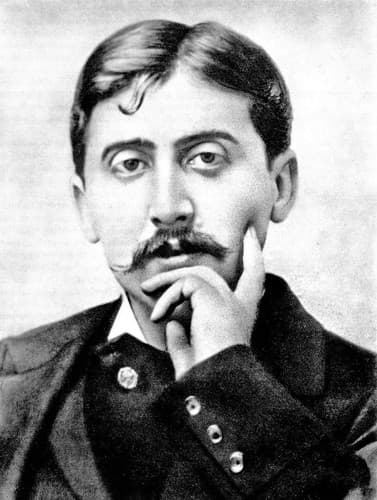
Marcel Proust

Valentin Louis Georges Eugène Marcel Proust was a French novelist, literary critic, and essayist who wrote the monumental novel In Search of Lost Time, originally in French and published in seven volumes between 1913 and 1927. He is considered by critics and writers to be one of the most influential authors of the 20th century.