“The iron was not a thing to be played with. It was a thing of the System, and of the Guardians.”
— Stephen reflects on the omnipresent and symbolic iron collars.

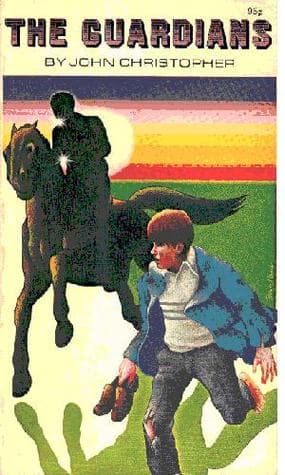
Genre
Fantasy / Children's / Science Fiction / Young Adult
Reading Time
214 min
Key Themes
See below
Sign in to track this book
In 2052 England, a young man from the urban 'Conurbs' uncovers truths about his society and the aristocratic 'County,' forcing him to choose where his loyalty lies.
Robert Westall, a twelve-year-old, lives in the London Conurb in 2052. His world is one of constant surveillance, automated efficiency, and a managed, if uninspiring, life. His days include school, regulated entertainment, and the 'Voice' from the wall-screen. His best friend, Mike Gifford, is preparing to move to the County, a rare placement Rob views with envy and confusion. Rob's father is content with the Conurban system, while his mother quietly wonders about the world beyond their city. Mike's departure leaves a void in Rob's life, and he feels a growing restlessness and dissatisfaction with his regimented existence, even if he cannot name these feelings.
Months after Mike leaves, Rob receives a physical letter, rare in the Conurbs, inviting him to visit Mike in the County. The invitation, approved by authorities, is a unique chance, but it also shows the rigid control of Conurban society. Rob's parents are hesitant, but official approval makes refusal difficult. Rob sees it as an escape from his uniform life. He plans his journey, using the efficient but impersonal transport system. The anticipation of seeing Mike and experiencing the mysterious County fuels his resolve, an early sign of rebellion against his predetermined path.
Rob's journey takes him through automated checkpoints and sterile environments until he reaches the County's edge. The change is stark: the Conurb's concrete and chrome give way to rolling green hills, forests, and open space he has never known. A horse-drawn carriage, an old-fashioned sight, meets him and drives him to Mike's family estate, a grand, old house from a different era. He meets Mike's family, who show the refined, almost aristocratic manners of the County. Rob is overwhelmed by the quiet, the greenery, and the freedom from electronic surveillance. The novelty is intoxicating, a welcome contrast to his old life.
Life in the County is very different from the Conurb. Rob learns to ride horses, plays traditional games, and experiences a social structure built on hierarchy and tradition. He sees the class divisions, with the 'Guardians' (the ruling elite) and their families living a life of leisure, while 'Workers' maintain the estates. Mike, now fully integrated, helps Rob understand the unwritten rules. Rob enjoys the freedom from technology and the focus on personal interaction, but he also notices the underlying rigidity and subtle control by the County's ruling class, which, though different from the Conurb's, is still widespread.
As Rob spends more time in the County, his initial charm fades. He witnesses the casual disdain the Guardians show the Workers and the snobbery that runs through their society. He sees how Mike, once his equal, has adopted these attitudes, creating a rift between them. Rob also observes the deliberate suppression of technology and modern knowledge, which he finds stifling. He misses some Conurban conveniences and questions the County's self-imposed isolation. The County's superficial charm gives way to an awareness of its own control and class system, making him feel like an outsider again.
Through listening and careful observation, Rob uncovers the truth about the County. The Guardians are not just preserving a traditional way of life; they control the Conurbs. The County is a place where the elite are raised in a 'natural' environment, free from technology's 'weakening' influences, to become future leaders of both societies. The Conurbs are kept technologically dependent and socially conforming to prevent rebellion. Rob realizes the entire system is a facade designed to maintain the Guardians' power and privilege, and that both societies are, in their own ways, prisons.
Horrified by his discovery, Rob decides he cannot stay silent. He tries to tell Mike, hoping his friend will see the injustice, but Mike, fully committed to the County's ideology, dismisses Rob's concerns as 'Conurban paranoia' and accuses him of being disruptive. Mike's loyalty to the County and his future there outweighs his friendship with Rob. Feeling isolated and betrayed, Rob decides to escape the County and expose the Guardians' secret to the Conurban people. He plans his escape carefully, knowing the risks and the Guardians' power.
Rob executes his escape plan, using his knowledge of the County's terrain and his Conurban resourcefulness. He evades the initial pursuit by the County's guards, who are used to more traditional tracking methods. The chase is tense and dangerous, with Rob constantly looking back. He pushes himself physically, driven by the urgency to expose the truth. The Guardians, realizing the threat he poses, intensify their search, using their network to prevent him from reaching the Conurbs and revealing their secret.
Rob successfully re-enters the Conurb, a place that now feels both familiar and strange. He is safe from immediate capture but faces a new challenge: how to tell a populace conditioned to accept the status quo and distrust any deviation. The Conurban system is designed to absorb dissent, to make individual voices seem insignificant. Rob realizes the difficulty of breaking through the ingrained complacency and pervasive information control. He understands that simply speaking the truth is not enough; he needs a strategy, a way to awaken the people without being dismissed or neutralized by the system he seeks to challenge.
Instead of a direct confrontation, Rob tries a subtle approach. He reconnects with former schoolmates and begins sharing his experiences and observations of the County, carefully framing them to sow doubt about the official narrative. He highlights the lack of true freedom in both societies and the Guardians' manipulation. His efforts are slow and painstaking, but he finds some receptive ears among those who, like him, feel an unarticulated dissatisfaction with their lives. He realizes that true change will come not from a single dramatic revelation, but from a gradual awakening of individual consciousness, fostering a quiet, growing resistance from within the Conurb itself.
The Protagonist
Rob transforms from a compliant Conurban boy into a perceptive and rebellious individual, committed to exposing the systemic control of the Guardians.
The Supporting/Antagonist
Mike evolves from Rob's close friend to a symbol of the County's successful indoctrination, choosing privilege over friendship and truth.
The Supporting
Her character remains largely static, serving as a subtle reflection of the Conurban populace's potential for latent dissatisfaction.
The Supporting
His character remains static, embodying the complacent Conurban mindset that Rob ultimately seeks to challenge.
The Antagonist
Their collective character remains consistently manipulative, serving as the hidden architects of the dystopian society.
The Supporting
He quickly integrates into the County's elite, reinforcing its values and becoming a part of the system Rob opposes.
The Supporting
She adapts to the County's social expectations, becoming a typical member of its elite.
The novel contrasts two forms of control: the Conurbs' overt technological surveillance and conditioning versus the County's subtle, traditional, and class-based manipulation. Rob first sees the Conurb as lacking freedom, but later realizes the County, despite its open appearance, imposes its own rigid social and intellectual limits. Both societies control their inhabitants, though by different means, denying true individual freedom. Rob's journey is about seeking genuine freedom from both types of oppression, as seen when he escapes the County and then subtly challenges the Conurban narrative.
“Freedom, he realised, was not just about doing what you wanted, but about being able to think what you wanted.”
John Christopher presents a dual dystopia where neither the technologically advanced, sterile Conurbs nor the seemingly idyllic, traditional County offers a desirable existence. The Conurbs are a dystopia of comfort and conformity, where individuals are pacified and monitored. The County, conversely, is a dystopia of enforced ignorance and social hierarchy, where a privileged few keep power by suppressing knowledge. The novel asks readers to consider that dystopia is not always overt oppression; it can be a comfortable cage or a beautiful prison, as Rob discovers when the County's facade crumbles.
“Two societies, two different kinds of chains, but chains nonetheless.”
Rob's struggle for identity is central as he moves between two different worlds. In the Conurb, his identity is defined by the collective, with little room for individuality. In the County, he is first an outsider, then tries to fit in, only to find that true belonging requires conforming to a prejudiced system. His realization that he does not truly belong in either society, as both are flawed, forces him to create his own identity based on his values rather than external definitions. This is clear in his decision to return to the Conurb to plant seeds of change, choosing a path of independent thought and action.
“He was not one of them, not truly. He was not one of the Conurbans anymore, either. He was simply Rob, and that was a new kind of freedom.”
The novel shows the dangers of both deliberate ignorance and unchecked elitism. The Conurbans are kept ignorant of the County's true purpose and their manipulated lives. The County's Guardians, believing they are superior and must control society, suppress knowledge and progress to maintain power. This elitism leads to a rigid class structure and disdain for the 'lesser' Conurbans. Rob's awakening shows how ignorance, whether imposed or chosen, allows manipulation to thrive, and how elitism justifies exploiting others, as seen in the Guardians' entire system.
“Knowledge, he understood, was the most dangerous weapon against their kind of power.”
The fundamental division of England into Conurbs and the County.
This device is the core of the novel's world-building, creating a stark contrast that allows for exploration of different dystopian controls. The Conurbs represent a technologically advanced, highly regulated urban environment, while the County embodies a traditional, aristocratic, and seemingly idyllic rural setting. This division serves to highlight that control can manifest in various forms, and both societies are ultimately facets of the same overarching system. It provides the perfect backdrop for Rob's comparative journey and his eventual disillusionment with both extremes.
The omnipresent electronic monitoring in the Conurbs.
The 'Voice' emanating from wall-screens, along with ubiquitous surveillance, represents the explicit form of control in the Conurbs. It provides constant guidance, information, and subtle psychological conditioning, making individuals feel perpetually observed and guided. This device establishes the initial sense of oppression that Rob feels, making his escape to the County's apparent freedom all the more appealing. It also contrasts sharply with the County's more traditional, less visible forms of control, emphasizing the different methods of maintaining social order.
The physical letter inviting Rob to the County.
The physical letter serves as a crucial turning point and a symbol of the County's distinctness. In a world dominated by electronic communication, a tangible letter is an anomaly, immediately signaling the County's deliberate rejection of Conurban technology. It acts as the catalyst for Rob's journey, providing the official permission needed for his initial transition. More importantly, it represents the seductive allure of the unknown and the initial promise of a different, potentially better, life for Rob, driving the narrative forward.
The change in Rob's best friend after moving to the County.
Mike's complete assimilation into the County's ideology and his subsequent betrayal of Rob is a powerful plot device. It demonstrates the profound influence of environment and social conditioning, showing how even close friendships can be broken by ideological divides. Mike's transformation serves as a personal tragedy for Rob, deepening his understanding of the County's insidious control and reinforcing his resolve to fight against the system. It also highlights the personal cost of the Guardians' manipulative practices.
“The iron was not a thing to be played with. It was a thing of the System, and of the Guardians.”
— Stephen reflects on the omnipresent and symbolic iron collars.
“Freedom was a word, a concept, that had been lost. Or rather, it had been redefined.”
— Stephen muses on the lack of true freedom in his society.
“The Conurbs were for efficiency, for work, for the common good. The County was for the few, for leisure, for the past.”
— Stephen contrasts the two distinct societal zones.
“Sometimes, the hardest thing to do was to question what everyone else accepted.”
— Stephen grapples with his growing doubts about the System.
“Ignorance was not bliss; it was simply ignorance, and it was dangerous.”
— Stephen's realization about the controlled information he receives.
“The past was a weapon, and the Guardians wielded it with deadly precision.”
— Stephen understands how history is manipulated by the ruling class.
“There was a hollow ring to the laughter, a forced gaiety that didn't quite reach the eyes.”
— Stephen observes the superficial happiness of those in the Conurbs.
“He felt like a puppet, with strings he couldn't see, controlled by hands he didn't know.”
— Stephen's growing sense of powerlessness within the System.
“To be different was to be a threat. To think differently was the first step towards destruction.”
— Stephen understands the severe consequences of non-conformity.
“The silence was not peaceful; it was heavy, pregnant with unspoken fears.”
— Stephen's perception of the oppressive atmosphere in his society.
“They built walls, not of brick, but of custom, of habit, of fear.”
— Stephen reflects on the invisible barriers that maintain the social order.
“The truth was a dangerous thing, a disruptive force that could shatter the most carefully constructed lies.”
— Stephen's growing appreciation for the power of truth.
“Even in the most rigid of systems, there were cracks. And sometimes, those cracks were enough.”
— Stephen finds hope in the possibility of resistance.
“The past was not just a story; it was a living thing, capable of shaping the present and the future.”
— Stephen's realization about the enduring influence of history.
Ready to see how well you understood this book? Take our interactive quiz with 10 questions.
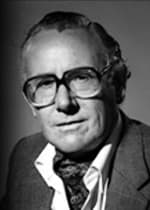
Biography coming soon.







