“I didn't think I'd done anything wrong, not really. I'd just taken what was offered.”
— The narrator's general justification for her con artistry and opportunistic behavior.

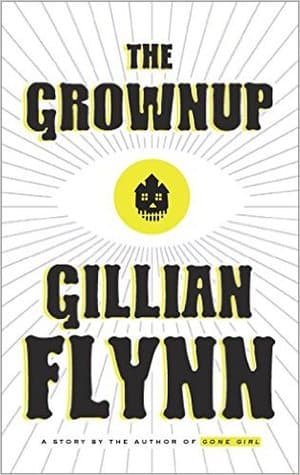
Gillian Flynn (2014)
Genre
Thriller / Mystery
Reading Time
60 min
Key Themes
See below
Sign in to track this book
A cynical con artist faking psychic abilities finds herself genuinely entangled in a web of dark secrets and unsettling truths within a haunted Victorian home, where the line between supernatural terror and human evil blurs.
Our unnamed narrator, a cynical young woman skilled in small-time cons and 'aura readings' at Spiritual Palms, meets Susan Burke. Susan is a beautiful, wealthy woman who appears deeply distressed and speaks of a malevolent presence in her Victorian home, claiming it is possessed by the spirit of her deceased stepson, Robert. The narrator, initially skeptical and viewing Susan as an easy mark for a lucrative 'house cleansing,' observes Susan's unhappiness and readiness for drama. Despite her internal disbelief in the supernatural, the narrator agrees to visit Susan's home, expecting a substantial fee for her services. This meeting sets the stage for her deep involvement in the Burke family's dark secrets.
The narrator arrives at Susan's imposing Victorian mansion, a dilapidated but once grand house on a sprawling, isolated property. The atmosphere is immediately unsettling, with a sense of decay and unspoken history. Susan introduces her to her teenage stepson, Miles, a boy with an unnervingly calm demeanor and a disturbing fascination with death and violence. Miles speaks matter-of-factly about the house's 'ghosts' and his deceased stepbrother, Robert, in a way that chills the narrator. She initially dismisses Miles's behavior as a bid for attention, but the house's oppressive ambiance and Miles's unsettling presence begin to erode her professional skepticism, hinting at a reality far more sinister than she anticipated.
During her initial 'investigation,' the narrator finds disturbing elements in the house: a child's drawing depicting a violent scene, a hidden room, and an overall sense of disarray that Susan attributes to the haunting. Miles continues to be a central, disturbing figure, subtly manipulating situations and making veiled threats. He shows the narrator a collection of unsettling drawings and speaks of his dead brother Robert in a way that suggests a deep, unhealthy obsession. The narrator starts to suspect that Miles is not just a troubled teenager, but a calculating and potentially dangerous individual, possibly orchestrating the 'haunting' to terrorize Susan. Her initial plan to exploit the situation for money begins to shift into genuine concern and fear.
As the narrator spends more time in the house, she becomes increasingly convinced that the 'ghost' is not supernatural but Miles. She observes his manipulative behavior, his disturbing insights, and his ability to subtly control the environment. During a visit to the nearby town, she encounters Susan's ex-husband, Miles's father, who gives her a cryptic warning about Miles's past and his capacity for darkness, without explicitly detailing the incidents. This interaction further solidifies the narrator's suspicions about Miles and the true nature of the evil within the house. She realizes she is not just dealing with a wealthy, gullible woman, but with a deeply disturbed family dynamic that could put her own life at risk.
The narrator, now genuinely fearful for Susan's safety and her own, decides she must expose Miles. She begins to actively search for evidence, observing his movements, and trying to understand his motives. She believes Miles is either faking the haunting to torment Susan or is genuinely unstable and dangerous. She plans to set a trap, hoping to catch him creating a 'supernatural' event or to find tangible proof of his deceit. Her objective shifts from merely earning money to protecting Susan and herself from what she perceives as a very real and present danger. This marks a significant turning point in her involvement, moving from detached observer to active participant.
Through her observations and a critical discovery, the narrator uncovers the horrifying truth. She learns that Robert, the deceased stepson, was not a ghost but a real child who died under suspicious circumstances. She realizes that Miles is not only faking the haunting but is also deeply disturbed and potentially responsible for Robert's death. The narrator also begins to piece together Susan's role in all of this, understanding that Susan is not merely a victim but has her own dark secrets and possibly a complicity in the family's tragic history. The lines between victim and perpetrator blur, and the narrator finds herself in an increasingly perilous position, realizing the true extent of the psychological warfare at play.
Armed with her horrifying discoveries, the narrator confronts Miles. The confrontation is charged with psychological tension, as Miles displays a chilling lack of remorse and a sophisticated understanding of manipulation. He reveals his true nature, confirming the narrator's worst fears about his capacity for cruelty. The narrator realizes that Miles is far more dangerous and cunning than she initially imagined, and that escaping his influence, or even the house, will be incredibly difficult. This confrontation is a critical moment, escalating the conflict and forcing the narrator to make desperate decisions for her survival, as she understands the full extent of the danger she has stumbled into.
In the aftermath of the confrontation, the narrator finds herself in a precarious position, caught in a web of deceit between Miles and Susan. Both characters exhibit manipulative tendencies, making it difficult for the narrator to discern the full truth or to trust either of them. Susan, too, reveals layers of her own cunning and desperation, suggesting her involvement in the family's dark past is more extensive than initially perceived. The narrator realizes that she is not just an observer but has become a pawn in their twisted games. She must navigate their conflicting narratives and protect herself, understanding that her own life is now on the line.
Feeling increasingly trapped and endangered, the narrator makes a desperate bid to escape the mansion and the manipulative machinations of Miles and Susan. She realizes that staying in the house means risking her life, as the psychological warfare has escalated to physical threats. Her escape attempt is full of tension, as she must outwit both Miles and Susan, who seem intent on keeping her within their orbit, whether for their own twisted amusement or to maintain their secrets. This scene highlights the narrator's resilience and her determination to break free from the terrifying situation she has found herself in, solidifying her role as a survivor.
In the story's chilling conclusion, the narrator, having seemingly escaped the immediate danger, reflects on the events. A final, shocking twist is revealed, exposing the true nature of the 'grownup' in the story, or rather, the most cunning and manipulative individual. It becomes clear that the narrator herself has been subtly playing a deeper, more intricate game all along, revealing her own capacity for deception and manipulation. The narrative cleverly subverts expectations, showing that the most dangerous 'ghost' or 'grownup' was not a supernatural entity or even Miles, but the narrator's own calculated self-preservation and ability to turn any situation to her advantage, leaving the reader to question who the real victim truly was.
The Protagonist
She evolves from a detached con artist to a participant in a dangerous family drama, ultimately revealing her own capacity for manipulation and survival.
The Supporting/Antagonist
Initially appearing as a victim, she is revealed to be a complex character with her own secrets and manipulative tendencies.
The Antagonist
Initially presented as a troubled child, he is revealed to be a highly intelligent and dangerous manipulator.
The Mentioned
His status shifts from a supernatural presence to a tragic victim, revealing the true nature of the family's past.
This theme is central to 'The Grownup,' appearing in nearly every character and interaction. The narrator, a professional con artist, initially intends to deceive Susan for money. Susan herself manipulates the narrator, presenting herself as a fragile victim while harboring her own secrets. Miles is a master of psychological manipulation, using the idea of a haunting to terrorize Susan. The entire narrative is a complex web of characters trying to outwit and deceive each other, blurring the lines between who is truly in control and who is being played. This is evident from the narrator's initial 'aura reading' of Susan to the final revelation of the narrator's own deeper game.
“I was an expert at reading people, at finding their soft spots and their hard ones, and Susan Burke was an open book, a beautiful, rich, unhappy woman eager to give her lovely life a drama injection.”
The story explores whether evil is supernatural, psychological, or a product of human relationships. Initially, the 'haunting' suggests a supernatural evil. However, as the narrator investigates, the evil becomes increasingly human, embodied by Miles's chilling sadism and manipulative intelligence. The story ultimately suggests that the most terrifying evil is not ghostly but resides within disturbed individuals and the toxic dynamics of a family. The ambiguity surrounding Susan's true nature further complicates this theme, suggesting that evil can manifest subtly and spread through complicity and silence, rather than just overt acts.
“The evil wasn't a ghost. It was just a grownup, and it was much worse.”
This theme is woven throughout the narrative, challenging the reader to question what is truly happening. The narrator herself is skilled at creating false appearances, posing as a psychic. Susan presents an image of wealth and distress that masks deeper secrets. The Victorian house, initially appearing grand, is revealed to be decaying and filled with unsettling secrets. Miles, a seemingly troubled teenager, hides a calculating and dangerous mind. The 'ghost' is an illusion, a facade created to conceal human malevolence. The story constantly plays with perceptions, forcing the narrator and the reader to peel back layers of deception to uncover the grim reality.
“I was paid to pretend to believe in ghosts, but it turned out I might not have to pretend anymore.”
For the narrator, survival is a constant driving force. She uses her wits and deceptive skills to navigate a world that offers her few legitimate opportunities. When she becomes entangled with the Burke family, her motivation shifts from financial gain to literal self-preservation. She must use all her cunning to escape the dangerous psychological and potentially physical threats posed by Miles and Susan. Her ability to adapt, strategize, and ultimately turn the situation to her advantage highlights her resilience and her will to survive, even if it means resorting to her own forms of manipulation.
“I'd never been in a haunted house before, but I'd been in plenty of houses haunted by people, and those were always the worst kind.”
The story is told from the perspective of a con artist, making her account inherently questionable.
The unnamed narrator is a professional deceiver, making her perspective inherently unreliable. She openly admits to manipulating people for personal gain and fabricating stories. This device forces the reader to constantly question her motives, her interpretations of events, and the veracity of her observations. It creates suspense and ambiguity, as the reader can never be entirely sure if what the narrator is describing is the objective truth or a filtered, biased, or even fabricated version of events, especially given her final revelation.
The initial focus on a supernatural haunting distracts from the true human evil.
The central red herring is the 'ghost' of Robert Burke and the idea that the house is supernaturally haunted. This serves to misdirect both the narrator and the reader. While the narrator initially dismisses the supernatural, the unsettling atmosphere and Miles's actions make her, and the reader, consider the possibility. This misdirection allows the true nature of the evil – Miles's psychological manipulation and the family's dark secrets – to slowly emerge, creating a more shocking and grounded horror when the supernatural explanation is debunked.
Subtle clues and unsettling details hint at future revelations and dangers.
Foreshadowing is used throughout the story to build suspense and hint at the dark truths. Miles's disturbing drawings, his casual remarks about death, the cryptic warning from Susan's ex-husband, and the dilapidated state of the Victorian mansion all serve as subtle clues. These elements create a growing sense of unease and suggest that there is more to the story than initially meets the eye, preparing the reader for the eventual revelations about Miles's true nature and the dark history of the Burke family, making the twists more impactful.
The eerie Victorian mansion creates a pervasive sense of dread and isolation.
The dilapidated Victorian mansion serves as a crucial plot device, establishing a pervasive atmosphere of dread, decay, and isolation. Its sprawling, isolated nature and unsettling interior, with its hidden rooms and general disarray, amplify the psychological tension. The house itself becomes a character, mirroring the decaying relationships and hidden secrets within the Burke family. This gothic setting enhances the feeling of entrapment and contributes significantly to the story's suspense and the characters' psychological states, making the 'haunting' feel more plausible and the human evil more sinister.
“I didn't think I'd done anything wrong, not really. I'd just taken what was offered.”
— The narrator's general justification for her con artistry and opportunistic behavior.
“The house had that particular scent of money mixed with old wood and something vaguely floral, a smell that always made me think of secrets.”
— Describing the atmosphere of the wealthy house where she works.
“Everyone wants to believe in something magical, something beyond the mundane. Especially when their lives are mundane.”
— Reflecting on why people are susceptible to psychic scams.
“It's always the quiet ones, isn't it? The ones who seem to just float through life, barely there, who turn out to be anchored to something truly dark.”
— Musing on the deceptive appearances of people.
“A good scam isn't about lying; it's about giving people what they want to hear.”
— The narrator's philosophy on successful cons.
“The past is never really past. It just waits for you to stumble back into it.”
— A general reflection on how past actions and events resurface.
“Sometimes the best way to hide something is in plain sight.”
— A thought about concealment and misdirection.
“There are different kinds of hunger, and not all of them can be satisfied by food.”
— A reflection on deeper, psychological desires and needs.
“You never really know what's going on behind closed doors, even in the nicest houses.”
— A common theme of the story, highlighting hidden domestic troubles.
“Fear is a powerful motivator. And a powerful currency.”
— Considering how fear can be used and exploited.
“I was good at pretending. It was practically my only skill.”
— The narrator's self-assessment of her capabilities.
“Some people just want to be told what to do, even if it's the wrong thing.”
— Observing human susceptibility to influence and authority.
“The things we do for love, or what we tell ourselves is love.”
— A cynical take on actions motivated by complex relationships.
“It's not a ghost if it's still alive, is it?”
— A pivotal line that blurs the line between the supernatural and human malevolence.
Ready to see how well you understood this book? Take our interactive quiz with 10 questions.

Biography coming soon.







