“I am a intellectual, but I have not been asked to join Mensa yet.”
— Adrian's self-perception at the start of his diary.

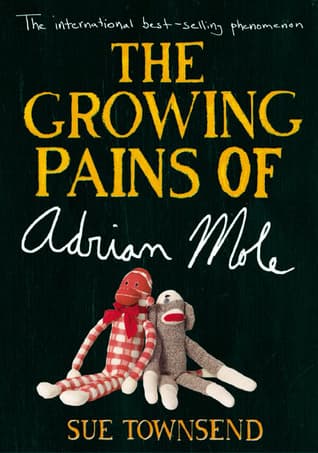
Sue Townsend (1984)
Genre
Children's / Young Adult
Reading Time
360 min
Key Themes
See below
Sign in to track this book
Now sixteen, Adrian Mole's diary continues, hilariously detailing his struggles with first love, unrecognized talent, and the constant absurdities of British life, all while he remains comically unaware of his own teenage drama.
The diary starts on January 1st, 1982, with Adrian Mole, now sixteen and a half, thinking about the past year. His parents, Pauline and George, have gotten back together, which Adrian is initially relieved about, though their arguments quickly resume. Adrian is still very much in love with Pandora Braithwaite, calling her his 'true love,' despite their frequent fights and her sometimes dismissive attitude. He continues to struggle with his academic goals, especially his hopes of becoming a published intellectual, and his general feeling of being misunderstood. He also worries about Britain under Margaret Thatcher and rising unemployment, which he takes personally.
Adrian's father, George, takes a new job managing a mushroom farm, which Adrian views with both scorn and interest. Meanwhile, Adrian's grandmother, May, takes in Bert Baxter, an elderly, grumpy man with strong socialist beliefs. Bert quickly becomes part of Adrian's life, demanding his attention and care, much to Adrian's annoyance. Bert's political views often conflict with Adrian's more romantic, though naive, world view. Adrian also gets involved with the local Labour Party, mainly because of Pandora, finding himself handing out leaflets and attending meetings, though he grows increasingly disillusioned.
Pandora becomes more involved in political activism, especially the peace movement and nuclear disarmament. She joins a protest camp and spends more time with other activists, including a handsome, charming young man named Julian. Adrian, feeling ignored and insecure, becomes very jealous of Julian and Pandora's growing friendship. He struggles to accept Pandora's political passion alongside his desire for her exclusive attention. Their relationship becomes tense, marked by arguments and Adrian's persistent, often clumsy and self-pitying, attempts to win back her full affection.
The Falklands War begins, becoming a main topic in Adrian's diary and in the daily lives of his family and friends. Adrian, at first confused by the conflict, finds himself caught between patriotic feelings and his growing anti-war views, influenced by Pandora and Bert. His father, George, becomes very nationalistic, while his mother, Pauline, worries about the war's impact on their lives. Adrian grapples with the morality of war, how the media presents events, and the personal consequences, especially how it affects his relationship with Pandora, who strongly opposes the conflict.
Adrian continues to struggle with his schoolwork, especially his 'O' levels, despite his self-proclaimed intelligence. He dreams of going to university, specifically Oxford or Cambridge, but his grades and lack of focus often hinder him. His attempts to get his poetry published or recognized by the BBC are repeatedly rejected, feeding his belief that he is an unappreciated genius. He often complains about the lack of cultural understanding in Britain and his belief that his talents are overlooked. His creative work, mostly poetry, often shows his current emotional state, typically one of angst and unrequited love.
Bert Baxter's health starts to worsen, and Adrian finds himself increasingly responsible for his care, despite his initial reluctance. He takes Bert to the doctor, helps him with daily tasks, and listens to his often-cynical pronouncements. Through this forced closeness, Adrian develops a reluctant affection for Bert, though he still finds him incredibly irritating. Bert's illness and eventual hospitalization force Adrian to face the realities of old age, sickness, and death, adding a serious note to his otherwise self-absorbed thoughts. He also learns more about Bert's past and socialist ideas, which subtly influence Adrian's own developing worldview.
The stress on Adrian and Pandora's relationship, made worse by Pandora's political activism, Julian's presence, and Adrian's jealousy, finally leads to a breakup. Pandora, feeling smothered by Adrian's possessiveness and his inability to understand her deeper commitments, decides to end their romance. Adrian is heartbroken, falling into deep self-pity and despair. He tries to win her back through various desperate methods, including writing her passionate letters and poetry, but his efforts are largely unsuccessful. The breakup marks a significant change for Adrian, forcing him to confront loneliness and the loss of his perceived soulmate.
After his breakup with Pandora, Adrian tries to move on. He briefly dates Sharon, but the relationship lacks the intensity and intellectual connection he had with Pandora. He also feels drawn to Bianca, but these attempts at new romance are often overshadowed by his lingering feelings for Pandora. He continues to watch Pandora from a distance, noting her activities and her ongoing involvement with Julian, which only fuels his jealousy. Adrian swings between moments of hope for reconciliation and periods of deep sadness, constantly rethinking his past actions and Pandora's reasons.
Adrian's parents, George and Pauline, continue their unstable, often argumentative relationship. Their reconciliation is fragile, marked by frequent arguments, threats of separation, and financial worries. Adrian often finds himself caught in the middle of their disputes, acting as a reluctant confidant for both. His mother, Pauline, sometimes seeks comfort elsewhere, leading to Adrian's suspicions and worries. These home problems add to Adrian's general sense of instability and his desire for a more peaceful family life, even as he criticizes his parents' perceived flaws.
As the year goes on, Adrian takes his 'O' level examinations, experiencing the usual mix of confidence and panic. He continues to write his diary, recording his thoughts on politics, love, literature, and his own perceived talent. The book ends as Adrian prepares to start his 'A' levels, still longing for Pandora, still convinced of his intellectual superiority despite his academic struggles, and still observing the world with his unique blend of self-pity and sharp, if often misguided, commentary. He remains hopeful about his future as a writer, despite many rejection slips, and always hopes for a reconciliation with Pandora, even as he tries to move on.
The Protagonist
Adrian matures slightly through facing rejection and loss, beginning to understand the complexities of the adult world beyond his own desires, though his core self-absorption remains.
The Love Interest/Supporting
Pandora develops into a more independent and politically aware young woman, moving beyond Adrian's possessive affection.
The Supporting
Pauline continues to navigate her complex marriage and personal dissatisfaction, showing a consistent pattern of seeking external validation.
The Supporting
George continues to struggle with career stability and his marital relationship, maintaining his good-hearted but often ineffectual demeanor.
The Supporting
Bert's health declines, forcing Adrian to confront the realities of aging and mortality, while Bert's influence leaves a lasting impression on Adrian's political awareness.
The Supporting
Nigel remains a consistent and supportive friend to Adrian, showing little personal dramatic arc but serving as an anchor for Adrian's narrative.
The Supporting
Grandma consistently acts as a grounding force, her character remaining largely stable as she navigates her own domestic arrangements.
The Mentioned/Minor Antagonist
Julian serves primarily as a catalyst for Adrian's emotional turmoil and Pandora's increasing independence, not undergoing significant personal development.
This theme is central to Adrian's diary. His intense, often obsessive, love for Pandora Braithwaite drives much of his emotional story. He constantly deals with her perceived indifference, her political commitments, and eventually, her rejection. Adrian's self-pity and poetic writings are almost always tied to his romantic problems. The pain of their breakup and his lingering hope for reconciliation form the emotional core of the book, showing the common agony of adolescent love and loss. This is clear in many entries where he laments Pandora's distance or his own perceived shortcomings as a lover.
“Oh, Pandora, why do you torment me so? My heart is a broken thing, shattered into a million pieces by your indifference.”
Adrian sees himself as a deep intellectual and poet, but this constantly clashes with his ordinary life, his academic struggles, and the lack of recognition he gets. He believes he is a genius, meant for literary fame, yet he struggles with 'O' levels and receives many rejection slips for his poetry. This theme highlights the humor and sadness of teenage ambition, where big dreams often conflict with limited talent or chances. His criticisms of British society and culture often sound naive or self-serving, showing the gap between his perceived intelligence and his actual understanding.
“I am an intellectual. It's just that nobody else seems to have noticed yet.”
The political situation of 1982, especially the Falklands War and the peace movement, greatly affects Adrian and those around him. Adrian's initial disinterest turns into a complex mix of patriotism, anti-war feelings (influenced by Pandora and Bert), and a growing, though often naive, political awareness. He takes part in protests, debates with his father, and observes the societal divisions. This theme explores how major global events shape individual views, especially during the formative years of adolescence, and the disillusionment that can come with engaging with the complexities of real-world politics.
“The Falklands War. Is it right to kill people for a few sheep and some penguins?”
Adrian's home life is a constant source of worry and material for his diary. His parents' on-again, off-again, and often argumentative relationship creates an unstable environment. Adrian often finds himself caught between their disputes, acting as a reluctant confidant or mediator. The parents' financial problems, infidelities, and general unhappiness add to Adrian's own anxieties and his desire for a more peaceful family life, even as he criticizes his parents' perceived faults.
“My parents are having another row. I wish they'd just get divorced and be done with it.”
The entire novel is presented as Adrian's personal diary entries.
The diary format is the primary narrative device, offering an intimate, first-person perspective into Adrian's thoughts, feelings, and observations. This allows for a direct and unfiltered portrayal of Adrian's self-absorption, his intellectual pretensions, his romantic woes, and his often-humorous misinterpretations of the world. The dated entries create a chronological progression, tracking Adrian's emotional and intellectual development (or lack thereof) over the course of a year. It also allows the reader to witness the gap between Adrian's self-perception and the reality of his situations, generating much of the novel's comedic effect.
The reader understands Adrian's situations and character better than he does.
Dramatic irony is heavily employed throughout the novel. Adrian often presents himself as a profound intellectual, a sensitive poet, or a victim of circumstance, but his diary entries frequently reveal his immaturity, naiveté, and self-absorption to the reader. The humor largely stems from this discrepancy between Adrian's self-image and the reality of his actions and thoughts. For example, he might write a terrible poem believing it to be a masterpiece, or lament his bad luck while clearly being the cause of his own misfortune. This allows the reader to laugh at Adrian while also sympathizing with his adolescent struggles.
Adrian's observations provide a satirical look at 1980s British society.
Through Adrian's often-misguided lens, the novel offers sharp social commentary on various aspects of 1980s Britain. This includes the political climate (Thatcherism, the Falklands War, unemployment), class distinctions, the education system, and cultural trends. Adrian's interactions with characters like Bert Baxter (a staunch socialist) and Pandora (a political activist) provide different viewpoints, even if Adrian himself doesn't fully grasp their complexities. The commentary is usually delivered with a satirical edge, highlighting the absurdities and contradictions of the era through the eyes of an earnest but often clueless teenager.
Adrian includes letters he writes or receives within his diary entries.
While primarily a diary, Adrian frequently includes copies of letters he has written (to Pandora, to the BBC, to various dignitaries) or received. This device serves multiple functions: it further reveals Adrian's attempts at communication and self-expression, often highlighting his formal or overly dramatic style; it provides external perspectives or reactions to his actions; and it adds to the comedic effect when the content of the letters clashes with Adrian's diary reflections. These letters are often crucial for understanding the progression of his relationships and his attempts to gain recognition.
“I am a intellectual, but I have not been asked to join Mensa yet.”
— Adrian's self-perception at the start of his diary.
“My father is a complete idiot.”
— A recurring sentiment Adrian expresses about his father, George.
“I have been going out with Pandora for three weeks, two days and seven hours.”
— Adrian's precise tracking of his relationship with Pandora.
“My mother is having an affair with Mr. Lucas, next door.”
— A shocking discovery Adrian makes about his mother, Pauline.
“It is a well known fact that adults are only children who have got bigger.”
— Adrian's philosophical observation about adults.
“I think I am an unappreciated literary genius.”
— Adrian's belief in his own poetic talent, despite rejections.
“I will never get over Pandora. She is the love of my life.”
— Adrian's declaration of undying love for Pandora.
“My spots are getting worse. I look like a pizza.”
— Adrian's constant struggle with adolescent acne.
“Nobody understands me. Not even my dog, who is supposed to be man's best friend.”
— Adrian's feeling of alienation and misunderstanding.
“I have decided to become an atheist. There is no point in believing in God if he is going to let me have spots.”
— Adrian's dramatic decision based on his personal woes.
“Being thirteen and three-quarters is not easy.”
— A summary of Adrian's general state of being throughout the book.
“Why do adults have to complicate everything?”
— Adrian's frustration with the complexities of adult life and relationships.
“I am reading 'War and Peace' by Tolstoy. It's a bit long.”
— Adrian's attempt to read classic literature, reflecting his intellectual aspirations.
“My father has left home. He says he needs space. He's got a lot of space in the shed.”
— Adrian's dry observation on his father's departure.
Ready to see how well you understood this book? Take our interactive quiz with 10 questions.

Susan Lillian Townsend, was an English writer and humorist whose work encompasses novels, plays and works of journalism. She was best known for creating the character Adrian Mole.

Dan Gemeinhart
4.5
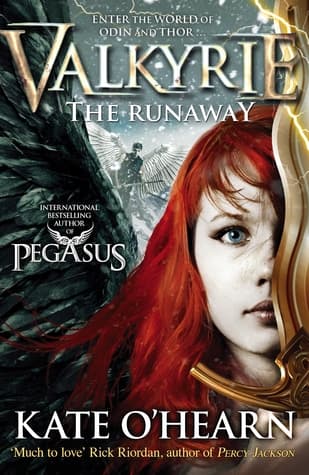
Kate O'Hearn
4.4

Jeanne Birdsall
4.4

Jen Wang
4.4
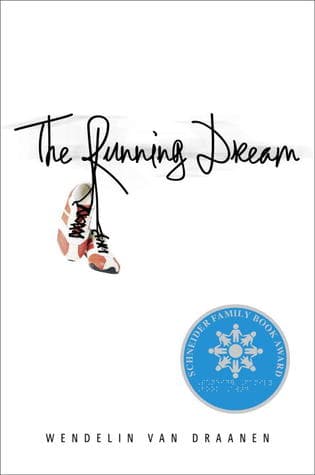
Wendelin Van Draanen
4.3

John Marsden
4.3

Chris Van Allsburg
4.3
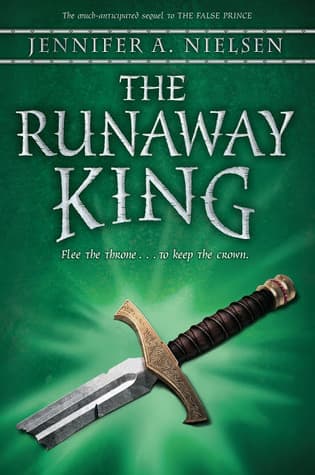
Jennifer A. Nielsen
4.2