“Not all stories have happy endings. And not all stories are about good versus evil. Sometimes, stories are just about people, trying to do the best they can.”
— The narrator's reflection on the nature of fairy tales and life.

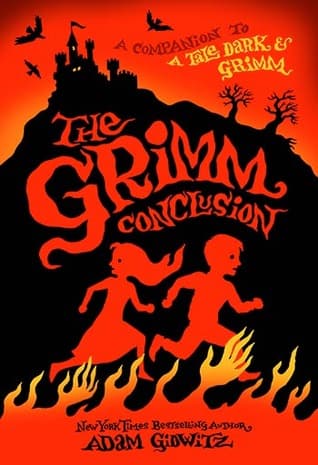
Adam Gidwitz (2013)
Genre
Fantasy / Children's / Young Adult
Reading Time
360 min
Key Themes
See below
Sign in to track this book
In the conclusion to the Grimm series, two children navigate a world of dark fairy tales, from 'The Juniper Tree' to the true Cinderella story, while outsmarting a witty narrator.
After their adventures, Hansel and Gretel arrive at the School for Orphans and Lost Children in the Black Forest, a seemingly safe place run by Sister Maria. They quickly become friends with a boy named Johannes and get used to a routine of learning and chores. But their peace does not last. The narrator, Adam, reveals that the Shadow Man, their enemy, has been quietly influencing the school. Strange things begin to happen, such as Sister Maria showing unusual favor to Gretel and an unsettling feeling in the usually happy atmosphere. The children soon realize that even in this sanctuary, they are not safe from the dark forces after them.
The children's attention turns to Johannes, who tells them about a sad past with a wicked stepmother. As Hansel and Gretel investigate, they find out that Johannes's stepmother, a woman named Ilsa who sometimes visits the school, is a witch. Because of jealousy and a wish for Johannes's inheritance, she kills Johannes and bakes him into a stew, which she then serves to her unsuspecting husband. This act is like the tale of 'The Juniper Tree,' and the children are horrified to see such a dark fairy tale unfold. Johannes's spirit, now a bird, begins to sing a sad song that reveals the stepmother's crime.
Johannes, now a bird, sits on the juniper tree outside the school and sings his sad story to his father. The father, upset, understands the truth about his wife. The bird then drops a millstone on Ilsa's head, killing her and turning her into a pillar of flame, like the end of the stepmother in 'The Juniper Tree.' Johannes is then brought back to life from the ashes, a living boy again, free from his stepmother's cruelty. This event affects Hansel and Gretel, showing them the harsh justice often found in fairy tales and the Shadow Man's direct dark magic on their world.
After the events with Johannes, Gretel is adopted by a rich, but cold, merchant named Herr Humperdinck. She is taken to his large house, where she meets his two vain and cruel daughters, Brunhilde and Hildegard, and their equally unpleasant mother. Gretel is immediately made a servant, forced to do hard chores and endure constant teasing and abuse. This new life is like the Cinderella tale, with Gretel finding herself in a familiar, but scary, situation of oppression and wanting freedom. Hansel, sad about their separation, promises to find her and rescue her.
Upset by Gretel's sudden adoption and the unfairness of her situation, Hansel, with the now living Johannes, sets out to find her. They walk through the Black Forest, meeting different magical creatures and facing many challenges. Their journey is dangerous, and they rely on their quick thinking and the kindness of strangers, as well as Johannes's unique view from his time as a bird. Hansel is determined to reunite with his sister, driven by their bond and the many dangers they have overcome together. The narrator notes how hard their quest is, showing the size and dangers of the world outside the school.
A royal ball is announced, and Herr Humperdinck's daughters are excited, hoping to win the Prince's love. Gretel, despite her wish to go, is forbidden. However, with help from a magical bird (Johannes's spirit or a similar magical being), she gets a beautiful gown and goes to the ball. She dances with the Prince, charming him, but must leave before midnight, leaving behind a golden slipper. The Prince, in love, searches for the maiden who fits the shoe. This allows Gretel to escape her cruel family, though her freedom is still uncertain and depends on the Prince finding her.
The Prince arrives at Herr Humperdinck's house, determined to find the owner of the golden slipper. Brunhilde and Hildegard, at their mother's urging, cut off parts of their feet to fit into the slipper. The trick almost works, but a flock of magical birds, guided by Johannes's spirit and perhaps the Shadow Man's control, tells the Prince the truth. They sing a song showing the blood in the shoe, leading the Prince to Gretel, who is hiding. This moment of truth shows the stepsisters' cruelty and brings Gretel closer to her rightful place, though danger still exists.
Gretel is brought to the palace and is about to marry the Prince, to her delight and her former stepfamily's dismay. However, Hansel, having found his way to the palace with Johannes, feels that something is wrong. He finds out that the Prince is not truly in love with Gretel; the whole marriage is a trick planned by the Shadow Man. The Shadow Man means to use the royal wedding, a significant magical event, to get great power and bring his darkness to the world, turning the happy event into a ritual for his victory. Hansel realizes they have walked into a trap far bigger than they imagined.
As the wedding nears, Hansel and Gretel, now together, look for a way to stop the Shadow Man. They meet Rumpelstiltskin, a mysterious and powerful magical being, who offers them a deal. For something valuable, Rumpelstiltskin reveals a shocking truth: the Shadow Man is not just an evil being, but all the negative, selfish desires and dark impulses of humanity itself. He specifically reveals that the Shadow Man is a part of the narrator, Adam's, own darker nature, separated long ago. This discovery adds a deep layer to their conflict, making it a battle against a universal darkness connected to their own storyteller.
Overwhelmed by Rumpelstiltskin's revelation, the narrator, Adam, stops being his usual detached self and talks directly to Hansel and Gretel. He admits his deep connection to the Shadow Man, explaining that the Shadow Man is a part of him, a representation of his own unsolved fears and darkness that he had tried to separate and contain through stories. Adam reveals that the only way to defeat the Shadow Man permanently is for him to fully accept and take back his dark side, a process that will be very painful and might even mean his own end or change. He prepares for this sacrifice, telling Hansel and Gretel to continue their fight against the remaining darkness in the world.
During the wedding ceremony, Hansel and Gretel confront the Shadow Man, using their courage and what they've learned to fight his illusions and dark magic. Meanwhile, Adam, the narrator, has a deep internal struggle. He actively engages with the Shadow Man, not as an outside enemy, but as a part of himself. This internal battle is shown as a painful, changing process where Adam slowly takes back and accepts his darker impulses, effectively bringing the Shadow Man back into his being. This act of bringing it back weakens the Shadow Man's outside form, allowing Hansel and Gretel to finally defeat the remaining magical effects.
With the Shadow Man brought back into Adam, the immediate magical threat goes away. The Prince, free from the Shadow Man's influence, understands his true feelings and the deception. Hansel and Gretel, changed by their journey, find a new purpose and a deeper understanding of the world. They choose to stay together, starting new adventures, not as victims of fate, but as active people shaping their own stories. The world still has challenges, but with the Shadow Man's influence lessened, hope for a more balanced existence appears, and the children are ready to face it with their new wisdom and bravery.
The Protagonist
Hansel develops from a fearful boy to a seasoned adventurer, learning to rely on his own strength and intellect to navigate a dangerous world.
The Protagonist
Gretel transforms from a vulnerable child into a self-reliant individual, learning to navigate personal trials and assert her own will.
The Supporting/Meta-character
Adam evolves from a detached storyteller to a character who must confront his own inner darkness and accept responsibility for its manifestation.
The Antagonist
The Shadow Man's arc culminates in his confrontation with Hansel and Gretel and his ultimate reintegration into Adam, revealing his true nature as a fragment of the narrator's darkness.
The Supporting
Johannes undergoes a literal transformation from a boy to a bird and back, finding justice and then becoming a supportive friend.
The Supporting
Sister Maria's character shifts from benevolent to subtly influenced by darkness, highlighting the pervasive nature of the Shadow Man's power.
The Supporting/Antagonist
Ilsa's arc is short and sharp, serving as an early example of the Shadow Man's direct influence and the brutal justice of the fairy tale world.
The Supporting/Antagonists
This family serves as an antagonist force for Gretel, showcasing the injustice she faces before their deception is revealed.
The Supporting
Rumpelstiltskin appears briefly to deliver a critical revelation that shifts the entire narrative's understanding of the Shadow Man.
The Supporting
The Prince is initially a pawn in the Shadow Man's scheme but is eventually freed from his influence, showing his inherent goodness.
The book explores the unclear line between good and evil, especially when it is revealed that the Shadow Man is a part of the narrator, Adam. It suggests that evil is not always an outside force but can come from hidden parts of oneself or dark human impulses. Characters like Sister Maria and the Prince, who start good, show how easily one can be influenced by negative forces, while the extreme cruelty of Ilsa and the Humperdinck family shows uncontrolled meanness. The ending suggests that true good involves recognizing and accepting one's own darkness rather than trying to separate it.
“For the Shadow Man, you see, is not just a monster. He is not just evil. He is all the parts of us that we wish we were not. All the parts of me that I wish I were not.”
Hansel and Gretel both experience journeys of self-discovery. Gretel, especially during her Cinderella experience, learns to be independent and recognize her own value regardless of her situation. Hansel learns to trust his instincts and become a more capable leader. Most importantly, the narrator, Adam, goes on a journey of self-discovery by facing his own connection to the Shadow Man. This theme shows that real strength comes from understanding and accepting all parts of oneself, including the difficult or dark ones.
“You must find your own way, children. For the stories are not just about what happens to you, but about who you become.”
Storytelling is a central theme, with the narrator, Adam, often commenting on fairy tales and their effects. The book shows how stories shape how we see things, offer lessons, and can even be directly controlled by bad forces (the Shadow Man twisting tales). The revelation that the Shadow Man is a part of the narrator shows the great power and responsibility of the storyteller, suggesting that the tales we tell (and the parts of ourselves we put into them) can have real consequences. The children's journey is presented as their own story being written.
“And that, dear reader, is the terrible power of stories. They can make you believe anything. They can even make you believe that a piece of you is not you at all.”
The book, like the Grimm fairy tales it uses, shows a harsh and often brutal form of justice. Ilsa's death under the millstone and the stepsisters' self-harm and punishment are examples of justice for their wickedness. This theme reinforces the idea that actions have consequences, often severe ones, in the world of the stories. Even the Shadow Man eventually faces a form of justice through being brought back into Adam, suggesting that true resolution comes from facing and dealing with the source of harm, rather than just escaping it.
“For in the world of the stories, justice, when it comes, is rarely gentle. It is swift, and it is often bloody.”
The strong bond between Hansel and Gretel remains a key part of the story. Their loyalty to each other drives much of the plot, especially Hansel's search for Gretel during her Cinderella experience. Even when separated and in great danger, their commitment to one another never wavers. This theme stands in contrast to the troubled and cruel 'families' they meet, such as Johannes's stepmother and Gretel's adoptive family, showing the importance of real family love and support as a source of strength against darkness.
“No matter what happens, Gretel, we'll always have each other. That's the one thing they can never take away.”
A self-aware narrator who frequently breaks the fourth wall
The narrator, Adam, is a highly self-aware character who directly addresses the reader, comments on the storytelling process, and offers philosophical asides. This device creates a unique, intimate tone and allows for deeper thematic exploration, especially regarding the nature of stories and their impact. It also builds suspense and humor, making the reader complicit in the narrative's unfolding. In 'The Grimm Conclusion,' this device becomes central to the plot itself, as the narrator's identity is directly tied to the antagonist.
Classic fairy tales are woven into the plot, often with darker, more 'Grimm' interpretations
The book explicitly draws upon and retells classic Grimm fairy tales, such as 'The Juniper Tree' and 'Cinderella,' but often with their original, darker, and more gruesome elements restored or amplified. This device provides a familiar framework for the plot while subverting expectations, reminding readers of the often-brutal nature of traditional folk tales. It allows the author to explore themes of justice, cruelty, and transformation through recognizable narrative structures, making the fantastical elements feel both timeless and unsettlingly real within the story's world.
The primary antagonist is revealed to be a manifestation of the narrator's own repressed darkness
This is a pivotal plot device in 'The Grimm Conclusion.' The Shadow Man, previously an external, pervasive evil, is revealed to be a fragmented part of the narrator's (Adam's) own psyche – his repressed fears, dark impulses, and the negative aspects he tried to separate through storytelling. This device transforms the external conflict into an internal one, elevating the stakes and adding profound psychological depth. It suggests that true victory over evil requires confronting and integrating one's own inner darkness, rather than merely fighting an external force, making the resolution deeply personal for Adam.
Characters and objects undergo literal or metaphorical changes, signifying deeper shifts
Transformation is a recurring motif and plot device. Johannes literally transforms into a bird and back, symbolizing innocence lost and regained, and the harsh, magical justice of the fairy tale world. Gretel's transformation from a scullery maid to a 'princess' at the ball symbolizes her journey from oppression to self-realization. The Shadow Man's manifestation and eventual reintegration into Adam represent the transformation of evil from an external entity to an internalized, accepted part of the self. These transformations drive the narrative and reflect the characters' evolving understanding of themselves and their world.
“Not all stories have happy endings. And not all stories are about good versus evil. Sometimes, stories are just about people, trying to do the best they can.”
— The narrator's reflection on the nature of fairy tales and life.
“Hansel and Gretel had learned that sometimes, the only way to save yourself was to save someone else.”
— After a difficult encounter, the siblings realize a key lesson.
“The world was not a simple place. It was filled with good and bad, often mixed together in ways that were impossible to untangle.”
— A realization about the complexity of the world.
“Fear was a powerful thing. It could make you do terrible things, but it could also make you incredibly brave.”
— Contemplating the dual nature of fear.
“Sometimes, the only way to find your way home was to get lost first.”
— A metaphorical journey of self-discovery.
“Even the darkest forests had clearings, and even the most terrifying monsters had weaknesses.”
— A message of hope amidst despair.
“A true hero wasn't someone who was never afraid, but someone who kept going despite their fear.”
— Defining true heroism.
“Stories were like rivers. They flowed and changed, but their essence remained the same.”
— The narrator's view on the enduring nature of stories.
“The greatest magic of all was the ability to believe in something, even when there was no proof.”
— Reflecting on the power of faith and imagination.
“Forgiveness wasn't about forgetting, but about choosing to let go of the anger.”
— A nuanced understanding of forgiveness.
“Every ending was just a new beginning, if you knew how to look for it.”
— An optimistic perspective on conclusions.
“The truth was rarely simple, and often uncomfortable.”
— A statement about the nature of truth.
“Sometimes, the most important battles were fought not with swords, but with words and understanding.”
— Highlighting the power of communication over violence.
“It wasn't enough to just survive. You had to live.”
— A call to truly experience life, not just endure it.
Ready to see how well you understood this book? Take our interactive quiz with 10 questions.

Adam Gidwitz is a celebrated author of middle-grade fiction, renowned for his imaginative and often humorous retellings of classic tales. He gained significant recognition for his "Grimm Legacy" series, which includes "A Tale Dark & Grimm," "In a Glass Grimmly," and "The Grimm Conclusion." Gidwitz's work is praised for its clever wordplay and ability to engage young readers with complex narratives and dark humor.







