“We each owe a death, there’s no way to escape that, I know that, but sometimes it seems an awful shame.”
— Paul Edgecomb reflecting on the inevitability of death, particularly in the context of executions.

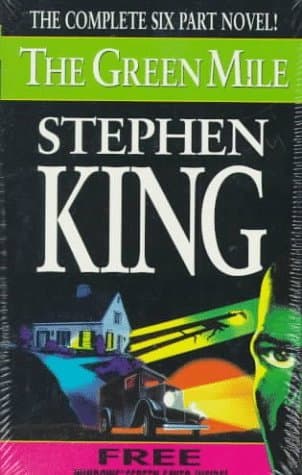
Stephen King (1996)
Genre
Thriller / Fantasy / Historical Fiction / Mystery
Reading Time
12-15 hours
Key Themes
See below
Sign in to track this book
On death row in the 1930s, a kind giant with a miraculous gift makes a prison guard question what justice means and see the wonder in the condemned.
Paul Edgecombe, an elderly man in a nursing home, starts writing his memories of being a death row supervisor in 1935 at Cold Mountain Penitentiary. He describes 'The Green Mile,' the lime-green hallway to the electric chair, 'Old Sparky.' Paul, now over 100, thinks about how certain events and people affected him then. He remembers when John Coffey arrived and the disturbing details of his conviction for killing two young girls, Cora and Kathe Detterick. Paul's story sets a thoughtful and sad mood, hinting at the unusual and tragic tale to come.
John Coffey, a very tall Black man who seems to have a child's mind, comes to E Block. His size and gentle way make him stand out right away. He fears the dark and often cries, which contrasts with the terrible crime he is accused of: killing the Detterick twins. Guards Paul Edgecombe, Brutus Howell ('Brutal'), Harry Terwilliger, and Dean Stanton are wary but also confused by Coffey's innocence. Percy Wetmore, a cruel and bad guard, immediately enjoys tormenting Coffey, which disgusts the other guards. Coffey's presence creates tension among the guards, who struggle to understand how he could have done what he is accused of.
A small mouse, later named Mr. Jingles by inmate Eduard Delacroix, lives on E Block, charming guards and prisoners. Meanwhile, Paul Edgecombe has a severe urinary tract infection, causing him great pain. One night, John Coffey puts his hand on Paul's groin, absorbing the infection as if by magic. Coffey then expels the illness as a swarm of black, buzzing insects, instantly curing Paul. This miracle shatters Paul's ideas about Coffey and his guilt, making him wonder about the gentle giant's true nature and abilities. The other guards, though not seeing the healing, notice Paul's sudden recovery.
It is time for Eduard Delacroix's execution. Percy Wetmore, who has been cruel to Delacroix, is put in charge, which worries the other guards. Percy ignores instructions to wet the sponge for Delacroix's head. As a result, when 'Old Sparky' is turned on, Delacroix dies a long, painful death, his body burning and smoking, filling the room with the smell of burnt flesh. The other guards, especially Paul and Brutal, are horrified by Percy's mean act. This event confirms their hatred for Percy and deeply upsets the E Block staff, leaving a lasting mark on their conscience and showing the darker parts of their job.
Warden Hal Moores's wife, Melinda, is dying from a brain tumor, causing her great pain and confusion. Desperate, Paul, Brutal, Dean, and Harry secretly take John Coffey out of the prison to heal her. They sedate Percy and take Coffey to the Moores' home. Coffey puts his hands on Melinda, absorbing her illness. The room fills with a black, buzzing cloud, and Melinda is instantly cured, waking up clear-headed and without pain. However, Coffey is overwhelmed by the pain and evil he has absorbed and collapses from exhaustion. This extraordinary act further convinces the guards of Coffey's innocence and his special, though difficult, gift.
After returning to E Block, John Coffey, still carrying the evil he absorbed from Melinda Moores, finds Percy Wetmore. Coffey grabs Percy, presses his hands to Percy's face, and forces Melinda's illness, along with the evil of the Detterick murders, into him. Percy immediately becomes unresponsive, then pulls out his gun and shoots inmate 'Wild Bill' Wharton many times, killing him. Percy then completely loses his mind, becoming a babbling mess committed to an asylum. The guards realize that Coffey, through his touch, has revealed the real killer of the Detterick twins, as Wharton had confessed the crime to Coffey. This act of divine retribution brings a twisted form of justice.
After Percy's breakdown and the murder of Wild Bill Wharton, the guards figure out the truth. Wharton, a truly bad person, had told John Coffey that he was the one who killed the Detterick twins. Coffey, with his ability to see and absorb pain and evil, had seen the truth in Wharton's mind and had held that great evil until he could transfer it. This discovery confirms Coffey's innocence to Paul and the other guards. The painful realization that they are about to execute an innocent, miraculous man weighs heavily on their minds, creating a terrible moral problem as the execution date gets closer.
As his execution date nears, John Coffey asks to watch a movie, 'Top Hat,' with his friends, the guards. During this time, Paul asks Coffey why he did not try to defend himself or tell the truth sooner. Coffey explains that he is tired of the world's pain, that he feels it constantly, and that it is 'like shards of glass in my head.' He expresses a deep tiredness with life, saying he is ready to die to escape the endless suffering he gets from others. He even offers to let Paul touch him to feel some of the pain he carries. His words confirm his innocence and his burden, making his upcoming execution even sadder.
The day of John Coffey's execution arrives, a sad and difficult event for Paul and the other guards, who know they are about to execute an innocent man. Paul offers Coffey a chance to escape, but Coffey refuses, repeating his wish to end his suffering. Walking down the Green Mile, Coffey asks not to have the hood placed over his head, as he fears the dark. Paul grants this request. As Coffey sits in 'Old Sparky,' he tells Paul, 'I'm sorry for it, Boss. Truly I am.' Paul, with tears, gives the signal. The execution goes smoothly, unlike Delacroix's, but the emotional cost to the guards is huge. They are forever troubled by their part in his death.
In the present, elderly Paul Edgecombe finishes his memoirs, thinking about the lasting impact of John Coffey's execution. He says the experience made him leave Cold Mountain Penitentiary soon after, taking a job at a juvenile detention center. Paul also believes Coffey's touch, when he healed his infection, somehow made him live much longer than normal. He has outlived his wife, children, and all his friends, including Mr. Jingles, who also lived an unusually long life before his recent death. Paul sees his long life as a punishment for letting an innocent man, a miracle-worker, be executed, forever burdened by the memory of the Green Mile and John Coffey.
The Protagonist
Paul begins as a hardened but fair prison guard, but his encounter with John Coffey transforms him, leaving him with an immense burden of guilt and an unnaturally long life.
The Central Figure/Miracle Worker
Coffey enters the story as a condemned man but reveals himself to be a miraculous healer, ultimately choosing death to escape the overwhelming pain of the world, leaving a profound legacy on those who knew him.
The Supporting
Brutal remains a steadfastly moral character, sharing the burden of Coffey's execution and supporting Paul throughout the ordeal.
The Antagonist
Percy's cruelty escalates throughout the story, culminating in his downfall after becoming a conduit for Coffey's transferred evil, ending up in a mental asylum.
The Supporting
Moores endures personal tragedy with his wife's illness, but experiences a miracle that, while healing his wife, deepens the moral quandary surrounding Coffey.
The Supporting
Melinda is introduced as a dying woman but is miraculously restored to health by Coffey, becoming a living testament to his powers.
The Supporting
Delacroix suffers under Percy's cruelty, finds fleeting joy with Mr. Jingles, and ultimately meets a gruesome, unjust death.
The Supporting/Antagonist
Wharton arrives as a chaotic force, is revealed as the true killer of the Detterick twins, and is killed by Percy under Coffey's influence, bringing a twisted justice.
The Supporting/Symbolic
Mr. Jingles serves as a symbol of hope and innocence, receiving a miraculous extended life from Coffey, and living far beyond his natural lifespan.
The novel explores the conflict between legal rules and true moral justice. Paul and the guards must execute John Coffey, an innocent man, even though they know his true nature and who the real killer is. This moral problem shows the flaws in a justice system that values legal steps over truth and kindness. Percy's botched execution of Delacroix further shows how random and cruel justice can be, while Coffey's retribution against Wharton and Percy offers a different, more absolute justice.
“'We each owe a death, there's no way around it, but for some, the Green Mile is only the beginning.'”
The Green Mile shows a clear contrast between deep good and absolute evil. John Coffey is pure, selfless good, able to absorb and heal the world's pain, yet he is condemned as a monster. In contrast, characters like Percy Wetmore and Wild Bill Wharton are pure evil, causing pain for their own pleasure. The story asks readers to look past appearances and labels to see true moral character. Coffey's ability to 'see' evil and absorb it is central to this theme, showing evil as a real, corrupting force.
“'He killed them with their love. He killed them with their own love, and that ain't right.'”
The story includes supernatural elements through John Coffey's healing abilities. His power to absorb sickness, injury, and even evil challenges the guards' rational world and makes them face a reality beyond their understanding. These miracles, while amazing, also bring great suffering to Coffey, who is burdened by the pain he absorbs. Paul's and Mr. Jingles's long lives, a direct result of Coffey's touch, show these inexplicable forces, blurring the lines between the natural and the divine.
“'He was God's living miracle, and we killed him anyway.'”
Paul Edgecombe's narration, from his old age, shows the lasting burden of seeing deep injustice and being part of it. He and the other guards feel great guilt for executing John Coffey, an innocent man with miraculous powers. Paul's unnaturally long life is presented as a punishment, forcing him to live with the memory of his actions and to outlive everyone he loves. The theme explores how traumatic events, especially those with moral compromises, can haunt people for a lifetime, shaping their lives and views.
“'I have lived to be 108 years old, and I have seen many things. But nothing has ever stayed with me like the Green Mile.'”
The novel shows how prejudice, especially racial prejudice, and outward appearances can lead to serious miscarriages of justice. John Coffey, a big Black man, is immediately assumed guilty of a terrible crime, fitting a stereotype, despite his gentle nature. His childlike manner is ignored, and his size is seen as proof of his capacity for violence. The guards, initially wary because of how he looks and the crime, must confront their biases as Coffey's true, innocent, and miraculous nature is revealed, making his execution even more tragic and a clear comment on societal judgments.
“'He was a big man, but gentle, like a bear. And he was afraid of the dark.'”
Paul Edgecombe recounts past events from his old age, shaping the narrative's tone and perspective.
The story is told entirely from the perspective of an elderly Paul Edgecombe, looking back on his time at Cold Mountain Penitentiary. This narrative choice allows for a reflective, melancholic, and often philosophical tone. Paul's advanced age and the distance of time lend weight to his observations, emphasizing the lasting impact of the events. It also allows him to foreshadow future events and comment on the moral implications of his actions with the wisdom of hindsight, creating a sense of inevitability and tragedy around John Coffey's fate.
The corridor to the electric chair symbolizes the journey to death and a unique moral crossroads.
The 'Green Mile' refers to the lime-green linoleum corridor that death row inmates walk on their way to 'Old Sparky,' the electric chair. It symbolizes the final journey of the condemned, but also, more profoundly, a threshold between life and death, justice and injustice. For Paul and the guards, it represents their daily work, a place where they witness the ultimate consequences of human actions and, in John Coffey's case, a place where their deepest moral convictions are tested and irrevocably altered. It is a path of no return, both for the inmates and for the conscience of those who walk them there.
Hints and clues throughout the narrative build suspense and emphasize the story's tragic outcome.
Stephen King masterfully uses foreshadowing to build tension and underscore the tragic inevitability of John Coffey's fate. Paul Edgecombe, as the elderly narrator, frequently hints at the profound impact Coffey had on his life and the terrible secret he carries, without revealing full details immediately. For example, he mentions his unnaturally long life early on, linking it to Coffey before explaining why. This technique keeps the reader engaged, building anticipation for the revelations while imbuing the narrative with a sense of melancholic doom, making Coffey's execution all the more heartbreaking when it occurs.
John Coffey embodies characteristics of a Christ-like savior, sacrificing himself for humanity's sins.
John Coffey is portrayed as a clear Christ-like figure. He is innocent, possesses miraculous healing powers, absorbs the sins and suffering of others, and is ultimately sacrificed by humanity despite his purity. His initials, J.C., are a direct reference. He willingly accepts his fate, not out of guilt, but out of a profound weariness with the world's pain, embodying a selfless sacrifice for a greater, albeit tragic, purpose. His presence forces those around him to confront their own morality and the nature of good and evil.
A symbol of innocence, resilience, and the miraculous within the grim setting.
Mr. Jingles, the intelligent mouse, serves as a powerful symbol within the bleak confines of E Block. He represents innocence, life, and resilience in a place dominated by death and despair. His ability to perform tricks brings moments of levity and humanity to the hardened guards and inmates. More importantly, his miraculous healing and unnaturally long life, granted by John Coffey, serve as tangible proof of Coffey's powers and a lasting, living testament to the supernatural events that transpired on the Green Mile, connecting Paul to that time long after everyone else is gone.
“We each owe a death, there’s no way to escape that, I know that, but sometimes it seems an awful shame.”
— Paul Edgecomb reflecting on the inevitability of death, particularly in the context of executions.
“On the day of my judgment, when I stand before God, and He asks me why I did not save that man, what will I say? That it was my job? My job.”
— Paul Edgecomb grappling with the moral implications of executing John Coffey, knowing he is innocent.
“He killed them with their love. He took their love and twisted it into something ugly, something that would kill them.”
— Paul Edgecomb describing how William Wharton (Wild Bill) used the girls' affection to lure and murder them.
“The world keeps turning, and it don't care how many hearts it breaks.”
— Paul Edgecomb reflecting on the indifference of the world to human suffering and tragedy.
“I believe that when you are in a place where you have to do what you have to do, then you do it.”
— Paul Edgecomb's pragmatic view on carrying out his duties, even the difficult ones.
“He said, 'I'm tired, boss. Tired of movin' around, mostly. Tired of all the people bein' ugly to each other. Tired of all the pain I feel and hear in the world every day.'”
— John Coffey explaining his weariness of the world and his desire for peace.
“We hurt the ones we love sometimes, but we don't mean to. We hurt them to save them from something else.”
— Paul Edgecomb contemplating the complexities of love and protection, sometimes involving difficult choices.
“You can't eat your cake and have it too, and you can't be a saint and a sinner at the same time.”
— A reflection on the impossibility of having conflicting desires or roles simultaneously.
“He was a miracle, but miracles are not always happy things.”
— Paul Edgecomb's realization that John Coffey's miraculous abilities came with immense personal suffering.
“Sometimes the light is so bright that it blinds you.”
— A metaphorical statement about how overwhelming truth or goodness can be, making it hard to see clearly.
“It seems to me that the only thing that makes life worth living is the chance to make a difference.”
— Paul Edgecomb reflecting on the meaning of life and the desire to impact others positively.
“And the older you get, the more you realize that the world is a lot more complicated than you thought it was when you were young.”
— Paul Edgecomb's wisdom gained through age, acknowledging life's complexities.
“I think that sometimes, when you’re very old, you start to feel like you’re living in a dream.”
— Paul Edgecomb describing the surreal and detached feeling of extreme old age.
“The things we do for love, and the things we do when love has gone.”
— A poignant observation on the powerful motivations behind human actions, both in love and loss.
“We all die, but some of us go on living long after we’re dead.”
— A reflection on the lasting impact of certain individuals, particularly John Coffey, even after their physical death.
Ready to see how well you understood this book? Take our interactive quiz with 10 questions.
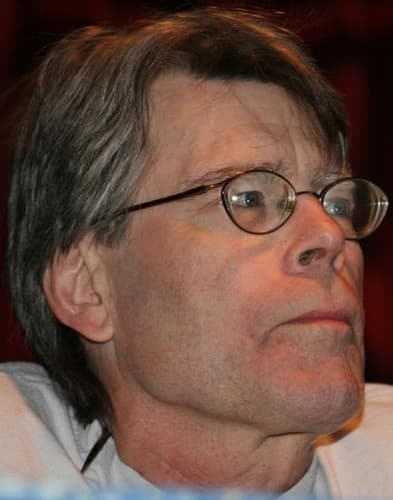
Stephen Edwin King is an American author of horror, supernatural fiction, suspense, crime, science-fiction, and fantasy novels. Described as the "King of Horror", his books have sold more than 350 million copies as of 2006, and many have been adapted into films, television series, miniseries, and comic books. King has published over 65 novels/novellas, including seven under the pen name Richard Bachman, and five non-fiction books. He has also written approximately 200 short stories, most of which have been published in book collections.







