“Human beings are essentially moral beings, and that means they are beings who are capable of good and evil.”
— Spoken by Lucas Graffe, reflecting on human nature.

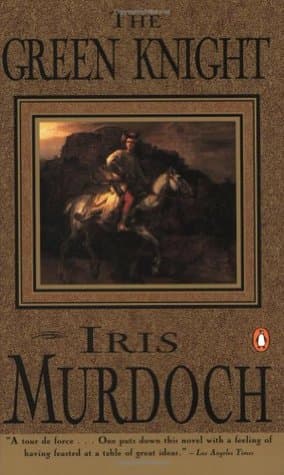
Iris Murdoch (1993)
Genre
Literary Fiction / Fantasy
Reading Time
1200 min
Key Themes
See below
Sign in to track this book
In contemporary London, a failed murder attempt unleashes a mysterious stranger whose bizarre demands for amends unravel a family's eccentric circle with unsettling, fatal consequences.
The novel begins with Lucas Graffe, consumed by jealousy and resentment toward his half-brother Clement. Lucas ambushes Clement in a London park, intending to kill him. Lucas sees Clement as charming but self-absorbed, always overshadowing him. As Lucas prepares the fatal blow, a large, mysterious man intervenes. Startled, Lucas hits the stranger, leaves him for dead, and flees. Clement, unharmed but shaken, reports an unknown attacker to the police, not naming Lucas. This act starts a series of events that will disrupt the Graffe family and their friends.
To Lucas's horror and Clement's surprise, the stranger, Peter Mir, reappears alive and unharmed days later. Mir, with his imposing and mysterious presence, confronts Lucas and Clement. He doesn't demand justice or revenge, but rather a series of odd and intrusive 'reparations.' These initially include a room in their shared house and his integration into their lives. Mir's calm, almost otherworldly insistence, combined with the brothers' guilt and confusion, forces them to agree, setting the stage for his influence on their household and social circle.
Peter Mir quickly becomes an unsettling yet compelling presence in the Graffe household. He observes everyone with unnerving intensity and begins to involve himself in the lives of the family and their close friends. Mir's demands grow beyond lodging; he starts to dictate parts of their daily routines, offer cryptic advice, and subtly expose hidden truths and unspoken desires. His presence makes characters like Bellamy, Louise, and Aleph face their moral flaws, repressed emotions, and complex relationships, creating growing tension and psychological unease.
As Peter Mir's influence grows, the complex relationships among the Graffe family and friends unravel, revealing long-held secrets and conflicts. Many characters are caught in unrequited loves, hidden jealousies, and moral compromises. Mir's questions and insights expose the romantic ties between Clement and Louise, Lucas's unacknowledged feelings for Louise, and the history involving their deceased mother figure, Mrs. Graffe. Bellamy's quiet devotion to Clement and Aleph's cautious affection for Lucas also become clearer, creating a volatile emotional scene that Mir seems to control.
The novel's title and Mir's nature increasingly link to the legend of Sir Gawain and the Green Knight. Mir, with his strange demands and apparent resilience, acts like the Green Knight, challenging the established order and testing moral strength. Lucas, tormented by his violence and Mir's presence, finds himself in a modern Gawain-like situation, forced to face his honor, courage, and the results of his actions. Clement also must look beyond his charm and confront his own moral ambiguities, as Mir's game of reparation becomes a deep test for everyone involved.
Peter Mir's demands escalate, becoming more bizarre and morally challenging. He manipulates characters into uncomfortable situations, making them make hard choices that show their true selves. For example, he might make one character confess a secret, another give up a cherished item, or another perform an act of public shame. These growing challenges create great psychological pressure, especially on Lucas, who feels trapped by his crime and Mir's relentless, almost spiritual, pursuit of amends. The characters struggle with forgiveness, redemption, and the true cost of their past wrongs, under Mir's watchful eye.
Art, especially music and literature, plays a role in the story, expressing and reflecting the characters' inner lives. Bellamy, the musician, struggles with his artistic integrity and unrequited love for Clement, finding solace or frustration in his music. References to classical literature and philosophy are in the dialogue, showing the intellectual and spiritual currents of the characters' struggles. Mir himself often speaks in riddles and parables, raising everyday conflicts to a more symbolic, spiritual level, echoing the allegorical nature of the Green Knight legend. Art also offers a temporary escape from the growing tension for some.
The climax of Mir's game comes when he makes his most profound and unsettling demand, which directly confronts Lucas and Clement with the seriousness of Lucas's attempted murder. This demand forces the brothers to acknowledge their deep animosity and the potential for violence in their complex relationship. The specifics of Mir's final challenge are highly symbolic, meant to test their ability for true reconciliation, self-sacrifice, and forgiveness. It brings to a head all the unresolved tensions, hidden truths, and moral ambiguities Mir has exposed, pushing both brothers to their psychological and emotional limits.
The growing tensions and Mir's final demand lead to a tragic event. This event, whether directly or indirectly caused by Mir, marks a turning point for the characters, especially Lucas and Clement. It forces the surviving characters to re-evaluate their lives, relationships, and understanding of morality and justice. While not all issues are resolved, a form of resolution is reached for some, though it is tinged with sorrow and the lasting impact of Mir's intervention. The characters are changed forever by the unsettling experience of the 'Green Knight's' visit.
After the tragic climax, the surviving characters piece together their disrupted lives. Lucas, Clement, Louise, Bellamy, and Aleph must deal with the psychological and emotional scars left by Peter Mir and the subsequent events. The novel ends with a sense of lasting change and introspection. Characters must confront their own involvement, their capacity for both good and evil, and the lasting power of love, jealousy, and forgiveness. The experience is a transformative, if painful, passage for many, leaving them with a deeper, though more somber, understanding of themselves and human nature.
The Protagonist/Antagonist
Lucas begins as a resentful, violent man, but through Mir's influence, he is forced to confront his inner demons and seek a form of redemption, leading to a tragic but transformative self-awareness.
The Protagonist
Clement starts as a somewhat superficial and self-absorbed character, but Mir's intervention forces him to confront his moral ambiguities and the impact of his charm on others, leading to a more profound understanding of responsibility.
The Antagonist/Catalyst
Mir's arc is less about personal development and more about fulfilling his role as a moral arbiter and catalyst, remaining an inscrutable force throughout the narrative.
The Supporting
Louise's arc involves a loss of innocence and a gradual, painful realization of the complexities and moral ambiguities of the people she loves.
The Supporting
Bellamy's arc involves a confrontation with his unrequited love and artistic purpose, leading to a deeper understanding of his own identity and desires.
The Supporting
Aleph's arc sees her initial rational resistance give way to a deeper engagement with the moral and spiritual questions raised by Mir, leading to a re-evaluation of her own beliefs.
The Mentioned
Her influence is static, serving as a foundational element of the brothers' relationship, not undergoing development.
The Mentioned
The dog's role is symbolic, its presence or absence reflecting the state of the household and the characters' moral landscape.
Jealousy is central to the novel, mainly seen in Lucas's deep resentment toward his charismatic half-brother Clement. This envy drives Lucas's attempted murder, an act born from feeling constantly overshadowed and unloved. Mir's intervention makes Lucas face the destructive nature of these emotions, showing how they poison relationships and lead to extreme acts. The theme also explores how unacknowledged resentment can fester in a family, creating unspoken tension and potential violence, as seen in the subtle dynamics between the brothers before the attack.
““Jealousy is a terrible thing, Lucas. It eats you up, it makes you blind.””
The novel explores moral responsibility and reparation, especially through Peter Mir. Mir's demands are not for typical justice but for a deep, existential 'reparation' that makes characters face their past actions, hidden motives, and moral flaws. This theme questions what true atonement means, suggesting it goes beyond legal consequences to a painful process of self-reckoning and real change. Lucas, in particular, must deal with his attempted murder and the complex, often uncomfortable, steps needed for true amends, affecting him and his entire social circle.
““You struck me, Lucas. And the wound requires more than a simple apology. It requires... reparation.””
Murdoch explores the unclear lines between good and evil, suggesting these are not simple categories but complex parts of human nature. Lucas, despite his violent act, is shown with psychological depth, making him sometimes sympathetic. Clement, outwardly charming, has his own self-absorption and moral complacency. Mir, while acting as a moral judge, uses intrusive and even cruel methods, blurring the lines between helpful intervention and manipulative torment. The novel suggests that evil can be in both overt violence and subtle neglect or self-deception, making characters face the 'darkness' within themselves.
““We are all capable of terrible things, given the right circumstances. And the wrong ones.””
The novel's complex relationships are driven by various forms of love, desire, and unrequited affection. Lucas's unacknowledged love for Louise and his view of Clement's easy charm with women fuel his jealousy. Bellamy's quiet devotion to Clement shows the pain of unreturned love. The interactions between Clement and Louise, though seemingly normal, are tinged with Clement's casual disregard. Mir's presence makes these hidden desires and emotional imbalances public, forcing characters to face the true nature of their affections and the results of their emotional choices, often leading to heartbreak or painful revelations.
““Love, when it is unreturned, is a kind of torment, isn't it? A private, consuming fire.””
The novel skillfully reuses biblical and medieval themes in a modern London setting, exploring how spiritual questions persist in a secular world. Peter Mir, as the 'Green Knight,' embodies an ancient, mystical force that challenges the characters' rational, modern existence. His demands and pronouncements often carry spiritual weight, prompting introspection on sin, redemption, and moral truth. The characters, despite their intelligence, grapple with ideas of divine judgment or karma, suggesting that fundamental spiritual dilemmas remain relevant even in a world that tries to explain everything through psychology or science. The novel uses old stories to illuminate timeless human struggles.
““The old stories still have power, Lucas. More power than you imagine. They tell us who we are.””
A direct allegorical parallel to the medieval Arthurian legend.
The novel explicitly uses the 'Green Knight' motif from the Arthurian legend of Sir Gawain and the Green Knight. Peter Mir embodies the enigmatic Green Knight, appearing miraculously after a seemingly fatal blow and demanding a 'return' of the initial violence. This device elevates the contemporary plot to an allegorical level, transforming Lucas's attempted murder into a modern-day test of honor, courage, and moral integrity. It provides a framework for Mir's bizarre demands, which serve as tests of character, forcing Lucas and Clement, and by extension their circle, to confront their moral failings and the consequences of their actions, just as Gawain was tested by the Green Knight.
While largely third-person, the narrative often filters events through subjective character perceptions.
While the novel generally employs a third-person omniscient perspective, it subtly incorporates elements of an unreliable narrator by frequently filtering events and character motivations through the highly subjective and often biased perceptions of characters like Lucas. Lucas's intense jealousy and resentment color his interpretation of Clement's actions and the world around him. This device creates ambiguity, making the reader question the true nature of events and characters, particularly Clement's perceived charm or Mir's true intentions. It emphasizes the theme that truth is often subjective and shaped by individual psychology, adding layers of complexity to the moral dilemmas presented.
The urban park as a modern 'wilderness' for moral confrontation.
The London park where Lucas attempts to murder Clement and where Mir first appears serves as a crucial symbolic setting. In contrast to the domestic intimacy of the Graffe house, the park functions as a modern 'wilderness' or a liminal space where civilized rules break down and primal instincts emerge. It is a place of both natural beauty and hidden danger, mirroring the internal landscapes of the characters. This setting establishes the initial act of violence as outside the bounds of conventional society, setting the stage for Mir's unconventional 'justice' to unfold, blurring the lines between the wild and the civilized, the ancient and the contemporary.
Peter Mir acts as a disruptive force that unearths hidden truths.
Peter Mir functions as a classic catalyst character. His unexpected arrival and peculiar demands are the primary drivers of the plot, disrupting the established equilibrium of the Graffe family and their friends. He doesn't necessarily undergo significant personal change himself, but his presence forces every other character to confront their own moral failings, repressed desires, and unresolved conflicts. Mir's uncanny ability to see through pretenses and expose hidden truths accelerates the unraveling of relationships and the revelation of long-buried secrets, acting as an external force that initiates profound internal transformations within the other characters, leading to the novel's dramatic conclusion.
“Human beings are essentially moral beings, and that means they are beings who are capable of good and evil.”
— Spoken by Lucas Graffe, reflecting on human nature.
“Love is not a feeling, it is a capacity to see.”
— Jake reflecting on the nature of love and perception.
“The world is full of signs and wonders, if only we have the eyes to see them.”
— Moyra pondering the hidden meanings in everyday life.
“To be good is to be able to imagine the reality of other people.”
— A reflection on empathy as a core component of goodness.
“We live in a world of illusion, but the illusions are often more real than reality itself.”
— Lucas Graffe musing on the nature of perception and truth.
“Art is the attempt to create a perfect object in an imperfect world.”
— A character's definition of art and its aspiration.
“Every life is a mystery, even to the one who lives it.”
— Jake contemplating the enigmatic nature of individual existence.
“The greatest freedom is the freedom to choose what is good.”
— A philosophical statement on true liberty.
“There are some things that cannot be explained, only experienced.”
— Moyra discussing the limits of rational understanding.
“The past is not dead, it is not even past.”
— Lucas Graffe reflecting on the enduring influence of history and memory.
“We are all seeking something, a meaning, a pattern, a truth.”
— A general reflection on the human quest for understanding.
“Happiness is a by-product of attention.”
— Jake considering the nature of happiness and its origins.
“The soul is a dark forest where good and evil battle.”
— A metaphorical description of the inner self.
“To be truly alive is to be aware of the precariousness of life.”
— A character reflecting on the fragility and preciousness of existence.
Ready to see how well you understood this book? Take our interactive quiz with 10 questions.
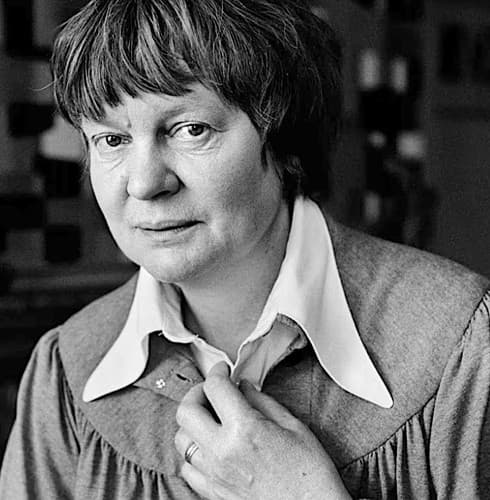
Dame Jean Iris Murdoch was an Irish and British novelist and philosopher. Murdoch is best known for her novels about good and evil, sexual relationships, morality, and the power of the unconscious. Her first published novel, Under the Net (1954), was selected in 1998 as one of Modern Library's 100 best English-language novels of the 20th century. Her 1978 novel The Sea, the Sea won the Booker Prize. In 1987, she was made a Dame by Queen Elizabeth II for services to literature. In 2008, The Times ranked Murdoch twelfth on a list of "The 50 greatest British writers since 1945".







